Lute Quotes Hazbin Hotel: Complete Analysis & Insights

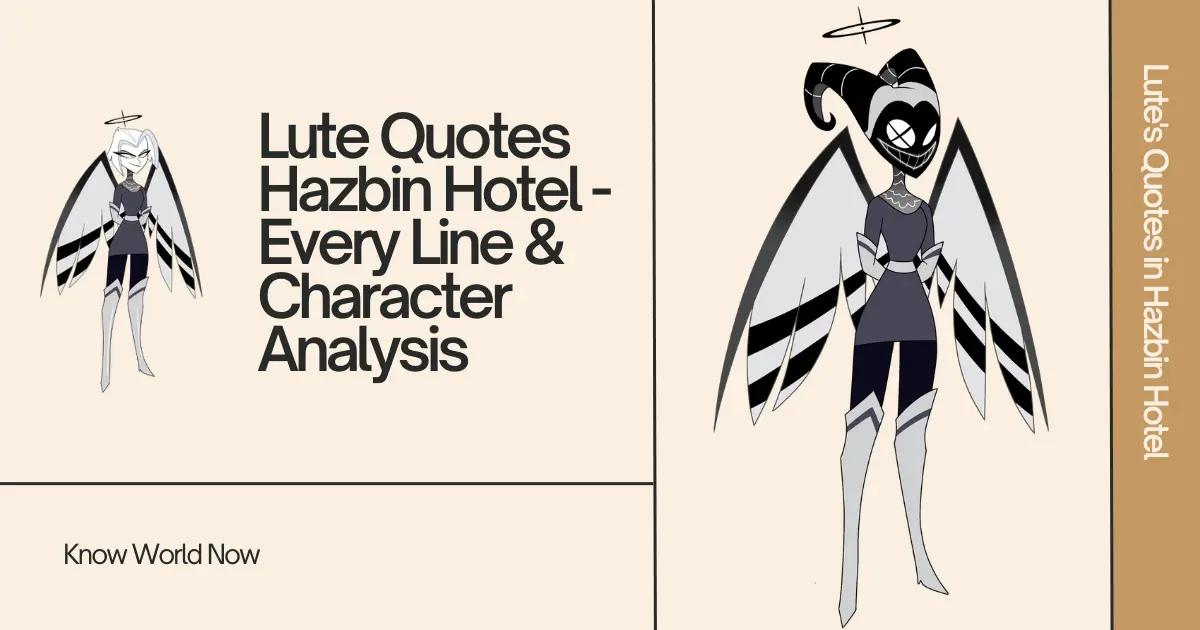
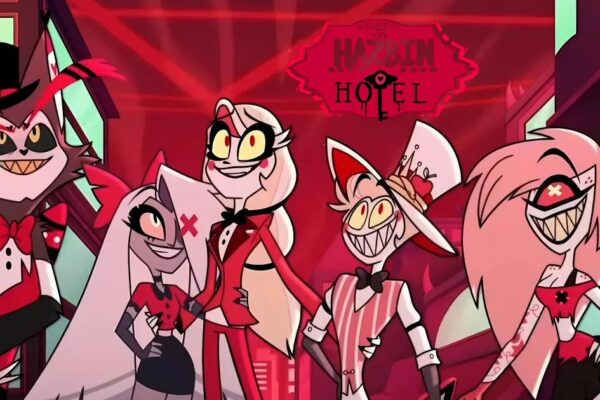
When it comes to the most ruthlessly loyal and uncompromising characters in Hazbin Hotel, Lute stands out as a fierce exorcist whose dialogue cuts as sharply as her blade. The Lute quotes Hazbin Hotel fans have been analyzing reveal a complex antagonist whose unwavering devotion to Heaven’s mission and to Adam himself drives much of the conflict in Season 1. From her cold declarations about extermination to her passionate defense of Heaven’s hierarchy, Lute’s words provide crucial insights into the angelic perspective on the eternal war between Heaven and Hell. Understanding her most memorable lines isn’t just about appreciating quotable moments—it’s about grasping the ideological foundation that makes her such a compelling foil to Charlie’s redemption mission and Vaggie’s journey of transformation.
Lute’s dialogue throughout the series showcases her as more than just a soldier following orders. Her quotes reveal deep-seated beliefs about justice, punishment, and the natural order of the universe as Heaven sees it. Whether she’s coldly discussing the annual extermination or passionately defending Adam’s actions, every word she speaks reinforces her position as someone who genuinely believes in the righteousness of her cause. This makes her particularly dangerous—and particularly interesting—as an antagonist who isn’t simply evil, but rather someone operating from a completely different moral framework than the protagonists.
Who Is Lute in Hazbin Hotel? Character Overview
Lute serves as Adam’s lieutenant and second-in-command among Heaven’s exorcist angels, making her one of the most powerful figures in the celestial hierarchy dedicated to Hell’s annual purge. Her appearance is striking and militaristic: she wears the standard exorcist uniform consisting of a black and white bodysuit with a LED mask that displays an “X” over one eye, giving her an intimidating, dehumanized appearance. When unmasked, Lute has pale skin, white hair typically pulled back in a high ponytail, and golden eyes that reflect her angelic nature. Her wings are large and powerful, befitting her status as an elite warrior among the exorcists.
The Lute Hazbin Hotel personality is defined by absolute loyalty, military discipline, and unwavering conviction in Heaven’s mission. Unlike Adam, who displays crude humor and casual arrogance, Lute maintains a serious, professional demeanor that rarely cracks. She represents the true believer—someone who has fully internalized Heaven’s ideology and executes it without question or mercy. Her dedication goes beyond mere duty; she appears to genuinely believe that exterminating sinners is not just necessary but morally righteous, making her ideologically opposed to everything Charlie’s Hazbin Hotel represents.
What makes Lute particularly compelling is her relationship with Adam and Lute dynamic, where she serves not just as his subordinate but as his most devoted follower. Her respect for him borders on reverence, and she consistently defends his decisions even when others might question them. This loyalty becomes a defining characteristic that influences nearly every quote and action she takes throughout the season. The Lute Hazbin Hotel voice actor, Jessica Vosk, brings a cold intensity to the character that perfectly captures her militant dedication and barely-contained fury toward Hell’s denizens.
Understanding Lute’s backstory in Hazbin Hotel remains somewhat mysterious, as the show hasn’t fully explored her origins or what led her to become such a devoted exorcist. However, her actions and words suggest she’s been part of Heaven’s military structure for a considerable time, rising to become Adam’s most trusted lieutenant. Her position indicates both exceptional combat skill and complete ideological alignment with Heaven’s approach to dealing with Hell’s overpopulation problem through violent extermination rather than redemption.
Lute's Most Iconic Quotes from Season 1
The most memorable Lute quotes Hazbin Hotel Season 1 delivers come from moments where her true nature is on full display. One of her earliest and most chilling lines occurs during the opening extermination sequence: “This is the justice sinners deserve. Quick, clean, permanent.” This quote immediately establishes her worldview—she doesn’t see extermination as a necessary evil but as righteous justice being served. The clinical language she uses (“quick, clean, permanent”) reveals how she’s compartmentalized the violence into something procedural rather than personal, though her enthusiasm suggests otherwise.
During the meeting in Heaven where Charlie presents her redemption hotel concept, Lute’s contempt is palpable in her dismissive statement: “A sinner is a sinner is a sinner. There is no redemption, no second chances. They made their choices in life, and now they face the consequences.” This quote encapsulates the fundamental ideological conflict at the heart of Hazbin Hotel. While Charlie believes in growth and change, Lute sees identity as fixed and immutable. To her, someone who ends up in Hell has revealed their true nature, and that nature cannot be altered or improved. This rigid thinking makes her the perfect antagonist to Charlie’s optimistic vision.
One of the most revealing Lute Hazbin Hotel dialogue moments comes when she’s speaking privately with Adam about the hotel: “Sir, we should have destroyed that abomination the moment we heard about it. Every day it exists is an insult to everything we stand for.” This quote shows that Lute views the Hazbin Hotel not just as a failed experiment but as a fundamental threat to Heaven’s authority and ideology. Her use of “abomination” indicates she sees the very concept of redemption for sinners as morally offensive, not just impractical. The deference in calling Adam “sir” also highlights her military mindset and respect for hierarchy.
When confronted with evidence that might challenge her worldview, Lute responds with characteristic stubbornness: “I don’t need to see proof. I know what sinners are capable of, and more importantly, what they’re not capable of—change.” This willful rejection of evidence demonstrates that her beliefs aren’t based on empirical observation but on deep-seated conviction. It’s a quote that reveals the danger of ideological certainty and foreshadows her inability to accept any outcome that contradicts her established beliefs about the nature of sin and redemption.
Perhaps one of her most coldly pragmatic quotes comes when discussing the extermination numbers: “We’re not doing this for sport, we’re doing this for Heaven. Every sinner we eliminate is one less threat to the natural order.” While she claims it’s not for sport, her visible enthusiasm during exterminations suggests otherwise. This quote attempts to frame the violence as necessary maintenance of cosmic balance, revealing how Heaven justifies its annual massacre. The phrase “natural order” is particularly telling—it suggests Lute believes in a divinely ordained hierarchy where sinners occupy the lowest rung and deserve whatever fate befalls them.
Quotes Revealing Lute's Loyalty to Adam
The relationship between Adam and Lute is one of the most complex dynamics in the series, and Lute’s quotes about him reveal depths of devotion that go beyond simple military loyalty. When another angel questions Adam’s crude behavior, Lute immediately defends him: “Adam is the first man, the father of humanity. He’s earned the right to act however he pleases. Everything we have exists because of him.” This quote shows how Lute has elevated Adam to an almost mythological status in her mind. She doesn’t just respect his authority—she reveres his historical significance and believes his position as the first human soul in Heaven grants him unlimited latitude in his behavior.
Did Lute have a crush on Adam? This question circulates frequently among fans, and her quotes provide intriguing evidence. When Adam makes one of his typical crude jokes, Lute responds with uncharacteristic softness: “Sir, you’re absolutely right. Your wisdom is… unparalleled.” The pause before “unparalleled” and her tone suggest her feelings might extend beyond professional admiration. While the show never explicitly confirms romantic feelings, the intensity of her devotion and the way she looks at him in certain scenes has led many fans to interpret her loyalty as having romantic undertones, or at least deep personal attachment beyond duty.
One of the most telling Lute exorcist quotes about her relationship with Adam comes after he makes a decision she might privately disagree with: “If Adam believes this is the right course of action, then it is. I trust his judgment completely.” This level of unconditional trust is remarkable, especially given that Adam is often impulsive and motivated by ego rather than strategy. Lute’s willingness to surrender her own judgment to his demonstrates either profound faith in his leadership or an emotional attachment that overrides her own tactical instincts. For someone as competent and intelligent as Lute clearly is, this blind faith is particularly striking.
When Adam is threatened or disrespected, Lute’s protective instincts emerge forcefully: “You will show proper respect to Adam, or you’ll answer to me. He is the first soul, the original man, and your superior in every conceivable way.” The vehemence in her defense goes beyond what military protocol would require. She takes personal offense at any slight against Adam, suggesting her identity has become intertwined with serving and protecting him. This quote also reveals how she uses his historical status as a shield against criticism, as if his ancient origins somehow validate his current behavior and decisions.
Perhaps most poignantly, after Adam suffers a setback, Lute’s concern is evident: “Sir, are you alright? You don’t need to prove anything to anyone. You’re already perfect.” The word “perfect” is particularly significant—it’s not a term one would typically use for a superior officer in a purely professional relationship. This quote has fueled speculation about the Hazbin Hotel Lute love interest question, as her emotional investment in Adam’s wellbeing and self-esteem seems to transcend duty. Whether romantic or not, her attachment to him is clearly one of the defining aspects of her character and motivation throughout the series.
Lute's Quotes About Extermination and Hell
When it comes to the annual extermination, Lute’s dialogue reveals a chilling combination of ideological conviction and barely-concealed enthusiasm. During a planning session for the next extermination, she states: “Hell is a cancer, and we are the cure. Every year we cut away the diseased tissue before it can spread.” This medical metaphor is particularly disturbing because it frames mass killing as healing rather than violence. By dehumanizing sinners as “diseased tissue,” Lute psychologically distances herself from the reality of what she’s doing, allowing her to maintain her self-image as righteous while committing acts that would otherwise be considered monstrous.
Her cold pragmatism about the extermination’s purpose comes through in another memorable quote: “Overpopulation in Hell isn’t just their problem—it’s a threat to the entire cosmic order. We’re maintaining balance, nothing more, nothing less.” This quote reveals the official justification Heaven uses for the exterminations: population control to prevent Hell from becoming powerful enough to threaten Heaven. However, Lute’s delivery and the context suggest she’s internalized this reasoning completely, never questioning whether mass murder is truly the only solution to overpopulation. Her phrase “nothing more, nothing less” attempts to strip the moral complexity from the situation, reducing it to simple mathematics.
When discussing specific sinners, Lute’s contempt is absolute: “They had their chance at life and they squandered it. They chose vice over virtue, selfishness over sacrifice. Hell is exactly where they belong, and extermination is mercy compared to what they deserve.” This quote is particularly revealing because it shows how Lute has constructed a moral framework where killing sinners is actually doing them a favor—”mercy” in her words. This twisted logic allows her to maintain cognitive consistency between her self-image as a righteous angel and her actions as an executioner. The binary thinking (“vice over virtue, selfishness over sacrifice”) also shows her inability to recognize moral complexity or gradations of wrongdoing.
One of her most chilling statements comes when she’s preparing for an extermination: “Remember, they’re not people anymore. They’re sinners. They gave up their humanity when they chose evil. What we do today is no different than clearing out vermin.” This quote to her fellow exorcists reveals the dehumanization tactics Heaven employs to make the exterminations psychologically bearable for the angels carrying them out. By redefining sinners as “not people” and comparing them to “vermin,” Lute removes the moral weight from killing them. This type of rhetoric has real-world parallels to how groups throughout history have justified atrocities by first dehumanizing their victims.
Her response to the suggestion that some sinners might deserve a second chance is immediate and harsh: “Second chances are for the living. The dead made their choices, and death is the final judgment. There is no appeals process, no parole, no redemption. Only justice.” This quote encapsulates the fundamental theological disagreement at the heart of Hazbin Hotel. While Charlie believes death should be a new beginning with opportunities for growth, Lute sees it as a final verdict that cannot be appealed or altered. Her version of “justice” is purely punitive, with no possibility of rehabilitation or transformation, making her the perfect embodiment of the rigid, unforgiving system Charlie is trying to change.
Character Development Through Lute's Dialogue
Tracking Lute’s character development through her quotes reveals subtle but significant shifts in her certainty and emotional state as Season 1 progresses. Early in the season, her statements are delivered with absolute confidence: “Heaven’s way is the only way. There is no alternative, no compromise, no middle ground.” This early quote shows her at her most ideologically rigid, unable to even conceive of other approaches to the Heaven-Hell conflict. Her worldview is binary and absolute, with no room for nuance or doubt.
However, as she witnesses Charlie’s determination and the genuine bonds forming at the Hazbin Hotel, small cracks begin to appear in her certainty, though she fights against them. In a moment of private reflection, she mutters: “They’re just playing pretend. Sinners can’t change. They can’t. If they could…” The trailing off is significant—it’s one of the few times Lute doesn’t complete a thought, suggesting she’s encountered an idea she’s not ready to fully articulate even to herself. The implication of “if they could” would undermine everything she’s built her identity around, so she literally cannot finish the sentence.
When confronted with evidence that contradicts her beliefs, Lute’s response becomes more emotional rather than less: “I don’t care what I’m seeing. I know the truth. Sinners are sinners, and nothing—NOTHING—will ever change that fundamental fact.” The emphasis on “nothing” and the rising emotion in her voice (as noted in the script directions) reveal that she’s no longer speaking from a place of calm certainty but from defensive desperation. This quote shows character development not through change of belief but through the increasing effort required to maintain those beliefs in the face of contradictory evidence.
After Adam’s defeat in the season finale, Lute’s dialogue takes on a new quality—one of grief mixed with rage: “They’ll pay for this. All of them. I’ll make sure every single sinner in that hotel suffers for what they’ve done.” This shift from ideological opposition to personal vendetta represents significant character development. Earlier, Lute framed everything in terms of cosmic justice and Heaven’s mission. Now, her motivation has become personal revenge, showing how the loss of Adam has transformed her from a disciplined soldier into someone driven by emotion. This sets up her likely role in Season 2 as someone whose judgment is clouded by grief and anger.
One of the most significant moments of development comes in her final quote of the season, delivered while looking at her severed arm (did Lute lose her arm? Yes, during the final battle): “This changes nothing. If anything, it makes me more certain. They’re monsters, all of them, and I’ll prove it.” The physical loss she’s suffered has only hardened her resolve rather than causing reflection. This quote reveals that Lute is on a trajectory not toward redemption or understanding, but toward becoming even more extreme in her beliefs. The personal cost she’s paid has been reframed in her mind as further evidence that she was right all along, demonstrating how confirmation bias can make people double down on beliefs even when those beliefs lead to their own harm.
Lute vs. Vaggie: Contrasting Quotes and Ideologies
The ideological contrast between Lute and Vaggie is one of the most compelling aspects of Hazbin Hotel, as both are former exorcists who made radically different choices. Lute’s contempt for Vaggie is evident in her scathing assessment: “Vaggie was weak. She let sentimentality corrupt her duty. She’s a traitor to everything we stand for, and she deserves whatever fate Hell has in store for her.” This quote reveals how Lute interprets Vaggie’s choice to spare a sinner—she sees it not as moral growth or compassion, but as weakness and corruption. The word “sentimentality” is particularly telling, suggesting Lute views empathy itself as a flaw that undermines proper judgment.
When the two finally confront each other, Lute’s words are designed to cut deep: “You were one of us, Vaggie. You were strong, dedicated, righteous. And you threw it all away for what? For sinners who will never appreciate your sacrifice? For a princess playing hotel manager? You disgust me.” This quote attempts to shame Vaggie by reminding her of what she gave up, but it also reveals what Lute values: strength, dedication, and righteousness as defined by Heaven’s standards. Her inability to understand why someone would sacrifice their position for moral principles shows the limitation of her worldview. The personal nature of “you disgust me” also suggests Lute takes Vaggie’s defection as a personal betrayal, not just a tactical loss.
Vaggie’s response to Lute provides a perfect contrast: “I didn’t throw anything away. I found something worth fighting for—actual redemption, actual change, actual hope. Something you’ll never understand because you’re too busy following orders to think for yourself.” While this is Vaggie’s quote, Lute’s reaction to it is equally revealing. She responds with barely controlled fury: “I don’t need to think for myself. Heaven’s wisdom is greater than any individual’s judgment. That’s what you never understood—it’s not about us, it’s about the greater good.” This exchange perfectly encapsulates their fundamental difference: Vaggie has embraced individual moral responsibility, while Lute has surrendered hers to institutional authority.
The contrast between their approaches to former comrades is stark. Where Vaggie expresses sadness about fighting her former sisters-in-arms, Lute shows no such hesitation: “Traitors deserve no mercy, no matter what they once were to us. The moment Vaggie chose sinners over Heaven, she became the enemy. It’s that simple.” The phrase “it’s that simple” reveals how Lute’s binary thinking prevents her from experiencing the emotional complexity that Vaggie struggles with. For Lute, loyalty is absolute and betrayal is unforgivable, with no room for understanding the moral reasoning that might lead someone to make different choices.
Perhaps most tellingly, when someone suggests that Vaggie’s choice shows courage, Lute’s response is immediate: “Courage? She abandoned her post, betrayed her oath, and sided with the very creatures we’re sworn to eliminate. That’s not courage, that’s cowardice. Real courage is doing your duty even when it’s difficult, even when your heart might waver. Real courage is what we exorcists show every single day.” This quote reveals that Lute has redefined courage to mean obedience and emotional suppression. She cannot conceive of courage as standing up against unjust authority or following one’s conscience against institutional pressure. This fundamental misunderstanding of what moral courage actually means highlights why Lute and Vaggie can never reconcile—they’re operating from completely incompatible moral frameworks.
What Lute's Quotes Tell Us About Heaven's Hierarchy
Through Lute’s dialogue, we gain crucial insights into how Heaven’s power structure operates and the ideology that sustains it. When explaining Heaven’s decision-making process, she states: “The Seraphim have decreed this is how things must be. Their wisdom is infinite, their judgment perfect. We don’t question, we execute.” This quote reveals a rigid hierarchical system where questioning authority is not just discouraged but considered fundamentally wrong. The description of the Seraphim’s judgment as “perfect” suggests Heaven operates on the assumption of divine infallibility at the highest levels, creating a system where no decision can be challenged regardless of its consequences.
Her explanation of the exorcists’ role within this hierarchy is equally revealing: “We are Heaven’s sword, the instrument of divine justice. We don’t make policy, we enforce it. That’s the natural order—those above decide, those below obey.” This quote shows how Heaven’s military structure functions on unquestioning obedience. Lute doesn’t see herself as a moral agent making choices, but as a tool being wielded by higher powers. This abdication of personal moral responsibility is precisely what allows the exterminations to continue—the angels carrying them out have been trained to see themselves as merely following orders rather than making ethical decisions.
When discussing why Heaven doesn’t consider alternatives to extermination, Lute’s response reveals the closed system of Heaven’s thinking: “If there were a better way, the Seraphim would have found it. They’ve had millennia to consider every option. The fact that we continue with extermination proves it’s the only viable solution.” This circular reasoning—the policy is right because the authorities say so, and we know the authorities are right because they’re in charge—demonstrates how Heaven’s hierarchy prevents critical examination of its own practices. Lute has internalized this logic so completely that she cannot recognize its fundamental flaw.
Her comments about Heaven’s view of Hell’s denizens reveal the dehumanization built into the system: “Heaven’s hierarchy exists because some souls are simply worth more than others. Winners earned their place through virtue. Sinners lost their value through vice. It’s not cruel, it’s just the natural consequence of free will and moral choice.” This quote shows how Heaven justifies inequality and violence through a meritocratic framework that assumes the current system accurately reflects moral worth. By framing it as “natural consequence” rather than institutional policy, Lute obscures the active choices Heaven makes to maintain this hierarchy through violence.
Perhaps most disturbingly, when asked about accountability for Heaven’s actions, Lute responds: “Heaven doesn’t answer to anyone. We are the ultimate authority, the final word on justice and morality. Who would we answer to? We define what’s right.” This quote reveals the fundamental problem with Heaven’s hierarchy—it has placed itself above accountability, creating a system where power cannot be questioned and actions cannot be judged by any external standard. This self-appointed moral authority, combined with overwhelming military power, creates the conditions for the atrocities we see in the show. Lute’s complete acceptance of this framework shows how even well-intentioned individuals can become complicit in systemic violence when they surrender their individual moral judgment to institutional authority.
Fan-Favorite Lute Quotes and Their Context
Among the Lute quotes Hazbin Hotel fans most frequently reference and share, several stand out for their memorable delivery and insight into her character. One of the most popular comes from her first major scene: “Mercy is for the weak. Justice is for the strong.” This quote has become iconic because it perfectly encapsulates Lute’s worldview in a single, quotable phrase. Fans appreciate it for its stark simplicity and the way it immediately establishes her as someone who has completely rejected compassion as a virtue. The quote has spawned countless memes and discussions about the nature of strength and whether true power requires the capacity for mercy.
Another fan-favorite moment comes from her interaction with Adam when he’s being his typical crude self: “Sir, with all due respect, you’re a genius.” What makes this quote memorable is the context—Adam has just made a particularly juvenile joke, and Lute’s deadpan delivery of this line reveals either her complete sincerity in believing everything he says is brilliant, or a level of sarcasm so subtle it’s impossible to detect. Fans on Reddit have debated endlessly whether this is Lute genuinely worshipping Adam or her displaying a dry sense of humor. Either interpretation adds depth to her character and makes the line endlessly rewatchable.
The Lute quotes Hazbin Hotel funny category includes her exasperated response to Adam’s antics: “Sir, we’re supposed to be inspiring fear and respect, not… whatever this is.” This line has become a favorite because it’s one of the few times Lute shows frustration with Adam’s behavior, revealing that even her legendary patience has limits. The pause before “whatever this is” has become a meme format, with fans inserting it into various contexts. It humanizes Lute slightly, showing that beneath the rigid soldier exterior, she’s occasionally bewildered by the chaos around her.
One of the most chilling quotes that fans love to reference comes during an extermination scene: “This is what we were made for. This is our purpose. Doesn’t it feel right?” The disturbing enthusiasm in her voice as she says this has made it a favorite for analysis and discussion. Fans debate whether Lute genuinely feels fulfilled by violence or whether she’s trying to convince herself that the exterminations are righteous. The quote has sparked numerous character studies examining whether Lute is a true believer or someone who has suppressed doubt so deeply she can no longer access it.
Perhaps the most poignant fan-favorite comes from the season finale, after she’s lost her arm and Adam: “I’ll finish what we started. I promise.” The simple, quiet delivery of this line, contrasted with her usual intensity, has resonated deeply with fans. It’s become a rallying cry for those who appreciate Lute as a complex antagonist rather than a simple villain. The quote suggests both grief and determination, showing that her loyalty to Adam and Heaven’s mission will continue even after devastating personal loss. Fans have created extensive fan art and analysis around this moment, recognizing it as a pivotal character beat that sets up her arc for future seasons.
Lute's Quotes in the Season Finale: Analysis
The season finale provides some of Lute’s most emotionally charged and revealing dialogue, as her carefully maintained composure finally cracks under the weight of events. As the battle at the Hazbin Hotel intensifies, her tactical assessment becomes personal: “They’re fighting back. They’re actually fighting back. This isn’t how it’s supposed to go.” This quote reveals that Lute expected the usual extermination pattern—angels descending, sinners fleeing or dying quickly, mission accomplished. The fact that the hotel’s residents are mounting an effective defense has shaken her worldview. The repetition of “fighting back” shows her struggling to process something that shouldn’t be possible in her understanding of how Heaven and Hell interact.
When she witnesses Sir Pentious’s sacrifice and apparent redemption, her reaction is one of denial and rage: “No. No, that’s not possible. Sinners don’t— they can’t— this is a trick, some kind of demonic deception!” The fragmented nature of this quote, with multiple false starts, shows Lute at her most psychologically vulnerable. She’s witnessing direct evidence that contradicts everything she believes, and her mind is literally unable to process it coherently. Rather than accept what she’s seeing, she immediately retreats to conspiracy thinking, deciding it must be a trick rather than genuine redemption. This moment is crucial because it shows that even direct evidence won’t change Lute’s beliefs—she’s too invested in her worldview to abandon it.
During her confrontation with Vaggie, Lute’s dialogue becomes increasingly vicious: “You think you’ve won something here? You think this changes anything? All you’ve done is prove that sinners will fight dirty, will use every trick, will stop at nothing. You’ve proven we were right to exterminate you!” This quote demonstrates the mental gymnastics Lute performs to maintain her beliefs. The hotel residents’ successful defense, which should logically demonstrate their capacity for growth, courage, and community, is instead reinterpreted as evidence of their inherent wickedness. She’s using their very success against them, showing how confirmation bias can twist any evidence to support pre-existing beliefs.
The moment when Adam falls is when Lute’s dialogue becomes most emotionally raw: “Adam! No, no, no— get up! You have to get up! You’re the first man, you can’t— you can’t die! This isn’t how this ends!” The desperation in her voice strips away all her military discipline, revealing the depth of her attachment to him. The phrase “this isn’t how this ends” is particularly poignant because it shows Lute believed in a narrative where Heaven always wins and Adam, as the first man, was essentially immortal or at least invincible. Reality crashing into her expectations leaves her completely unmoored.
Her final quote of the season, delivered while cradling her severed arm and looking at Adam’s body, has become one of the most analyzed lines in the series: “They’ll pay. All of them. I’ll make them understand what they’ve done. I’ll make them regret ever thinking they could win against Heaven.” This quote signals Lute’s transformation from disciplined soldier to personal avenger. The shift from “we” to “I” is significant—she’s no longer speaking on behalf of Heaven’s institutional authority but from personal grief and rage. The promise to make them “understand what they’ve done” suggests she wants them to feel the same pain she’s feeling, moving beyond the cold efficiency of previous exterminations to something more sadistic and personal. This sets up her likely role in Season 2 as someone whose judgment is compromised by emotion, making her potentially more dangerous but also more vulnerable.
What to Expect from Lute in Season 2
Based on her final quotes and character trajectory, Lute in Season 2 will likely be driven by grief-fueled vengeance rather than ideological conviction. Her transformation from dutiful soldier to personal avenger suggests we’ll see a more unhinged, emotionally volatile version of the character. The question “will Lute die in Hazbin Hotel Season 2” has become a major point of fan speculation, with many predicting that her emotional state will lead her to take increasingly reckless actions that could result in her downfall. Her loss of an arm already symbolizes her vulnerability, and her compromised judgment makes her a tragic figure heading toward potential destruction.
We can expect her dialogue in Season 2 to reflect this shift. Where her Season 1 quotes were about Heaven’s mission and cosmic justice, Season 2 will likely feature more personal, emotionally charged statements about revenge and making Charlie’s group pay for Adam’s death. She may become increasingly isolated from other angels if her obsession with vengeance conflicts with Heaven’s broader strategic interests. This could lead to fascinating quotes where she questions or defies Heaven’s authority for the first time, not out of moral awakening but because her personal vendetta takes priority over institutional loyalty.
The Lute Hazbin Hotel S2 storyline might also explore what happens when her rigid worldview continues to be challenged by evidence of redemption. If more sinners achieve redemption or if Heaven’s other angels begin questioning the extermination policy, Lute may find herself increasingly alone in her convictions. Her quotes could become more desperate and defensive as she fights to maintain beliefs that fewer and fewer people share. This isolation could either push her toward a breaking point where she finally questions her assumptions, or drive her deeper into extremism as she decides everyone else has been corrupted or deceived.
There’s also potential for exploration of what did Lute tell Lilith, as the show has hinted at connections between Heaven’s leadership and Hell’s former queen. If Lute was involved in whatever arrangement exists between Heaven and Lilith, Season 2 could reveal quotes and scenes that recontextualize her actions in Season 1. This could add layers to her character, showing she’s been operating with information the audience didn’t have, or it could reveal she’s been manipulated by forces she doesn’t fully understand.
Finally, we may see Lute forced to confront the question of why is Lute called Lute in Hazbin Hotel—whether her name has symbolic significance related to music, harmony, or discord. If the show explores her backstory more deeply, we might learn about her origins, what led her to become an exorcist, and whether she’s always been as rigid as she appears or if something happened to make her this way. Her quotes in flashbacks could provide context that makes her current extremism more understandable, even if not sympathetic. The character has tremendous potential for development, whether that leads to redemption, destruction, or something more complex that defies easy categorization.
The Lute Hazbin Hotel character arc in Season 2 will likely serve as a dark mirror to the redemption arcs happening at the hotel. While Charlie’s residents move toward growth and change, Lute may spiral downward, showing what happens when someone refuses to question their beliefs even when those beliefs lead to suffering. Her quotes will probably become increasingly tragic as we watch someone who could have been a hero in different circumstances become consumed by grief, rage, and the inability to accept that she might have been wrong. Whether she ultimately finds some form of redemption herself or becomes a cautionary tale about the dangers of ideological rigidity remains one of the most compelling questions heading into the new season.
Frequently Asked Questions
Why is Lute called Lute in Hazbin Hotel?
Lute is named after the stringed musical instrument, fitting the musical theme of Heaven’s exorcist army in Hazbin Hotel. Her name parallels Adam’s biblical connection, as both characters represent Heaven’s forces with names that carry historical and cultural significance. The name also reflects her role as a loyal “instrument” of Heaven’s will, executing orders without question.
Did Lute have a crush on Adam in Hazbin Hotel?
While not explicitly confirmed as romantic, Lute’s intense devotion to Adam goes beyond professional loyalty. Many Lute quotes Hazbin Hotel fans have analyzed suggest deep emotional attachment, particularly her passionate defense of him and her devastation at his death. Whether this represents romantic love, hero worship, or fanatical loyalty remains intentionally ambiguous in the series.
Did Lute lose her arm in Hazbin Hotel?
Yes, Lute loses her left arm during the climactic battle in Season 1 when Vaggie severs it during their confrontation. This injury becomes a physical manifestation of her defeat and serves as a permanent reminder of the failed extermination. The loss of her arm significantly impacts her character arc and intensifies her hatred toward the hotel’s residents.
What is Lute's personality in Hazbin Hotel?
Lute is characterized by unwavering loyalty, ruthless efficiency, and absolute devotion to Heaven’s hierarchy and mission. The Lute quotes Hazbin Hotel showcases reveal a character who is disciplined, militant, and completely committed to the extermination of sinners without mercy or doubt. She displays no sympathy for demons and views Heaven’s authority as absolute and unquestionable.
Why does Lute hate Vaggie so much in Hazbin Hotel?
Lute’s hatred for Vaggie stems from viewing her as a traitor to Heaven who abandoned her sacred duty as an exorcist. Vaggie’s decision to spare a demon child and subsequently join the Hazbin Hotel represents everything Lute despises—weakness, betrayal, and sympathy for sinners. This personal betrayal, combined with Vaggie’s relationship with Charlie, makes her a particular target of Lute’s contempt.
Who does Lute call an abomination in Hazbin Hotel?
Lute refers to the demons and sinners in Hell as abominations throughout the series, viewing them as irredeemable filth that must be exterminated. She particularly directs this term toward Vaggie after discovering her former colleague has sided with Hell’s residents. Her language reflects her black-and-white worldview where anything associated with Hell is inherently evil and deserving of destruction.
Why is Lute so angry in Hazbin Hotel?
Lute’s anger stems from her fanatical belief in Heaven’s righteousness and her fury at anything that challenges that order. Her rage intensifies after Adam’s death, which she views as an unforgivable crime against Heaven’s authority. The best Lute quotes Hazbin Hotel features show her anger is rooted in absolute conviction—she genuinely believes demons are irredeemable threats that must be eliminated.
Is Lute a heavenborn angel in Hazbin Hotel?
While not explicitly confirmed in Season 1, evidence suggests Lute is likely a heavenborn angel rather than a human soul who ascended to Heaven. Her position as an exorcist lieutenant, her unwavering adherence to Heaven’s hierarchy, and her complete lack of empathy for sinners all point to her being created in Heaven. This would explain her absolute devotion to the extermination mission without moral conflict.
What does Lute symbolize in Hazbin Hotel?
Lute symbolizes blind obedience to authority and the dangers of absolute moral certainty without compassion or self-reflection. She represents the antagonistic force of rigid hierarchy and the belief that some beings are inherently beyond redemption. Her character serves as a foil to Charlie’s philosophy of redemption, embodying the institutional resistance to change and mercy.
Who is Lute to Adam in Hazbin Hotel?
Lute serves as Adam’s lieutenant and second-in-command of the exorcist army, functioning as his most loyal and capable soldier. Their relationship goes beyond military hierarchy, with Lute showing intense personal devotion to Adam that influences her every action. After his death, she becomes driven by vengeance on his behalf, suggesting their bond was deeply significant to her identity and purpose.
You May Also Like

Vox Hazbin Hotel: Complete Character Guide & Analysis
Angel Dust Hazbin Hotel: Complete Character Guide 2026
Alastor Hazbin Hotel: Complete Guide to the Radio Demon