Adam and Lute Hazbin Hotel: Relationship, Powers & Fate

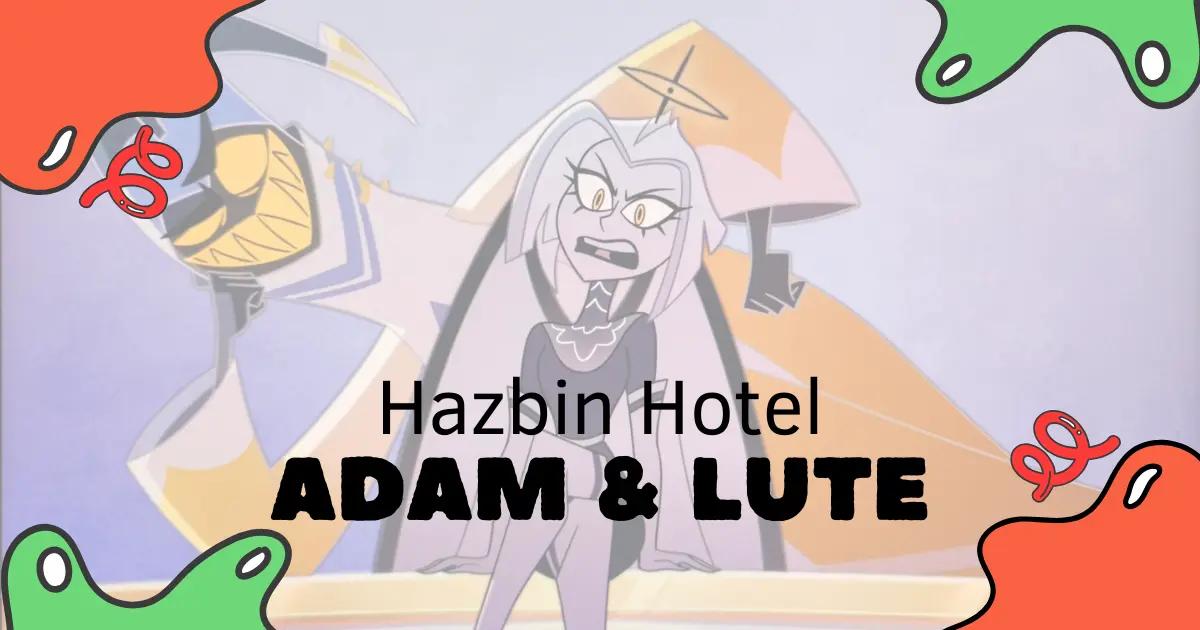
The relationship between Adam and Lute in Hazbin Hotel represents one of the most complex and emotionally charged dynamics in the series. As the leader of the Exorcist angels and his fiercely loyal lieutenant, these two characters from Hazbin Hotel showcase a bond built on devotion, hierarchy, and unwavering dedication to their mission of exterminating sinners in Hell. Their story takes a dramatic turn in the season finale when Adam meets his end, leaving Lute to grapple with loss, rage, and an uncertain future. Understanding their relationship, individual powers, and ultimate fates provides crucial insight into the broader narrative of Hazbin Hotel and sets the stage for compelling developments in future seasons.
Who Are Adam and Lute in Hazbin Hotel?
Adam is introduced as the first man ever created, now serving as the commander of Heaven’s Exorcist army in Hazbin Hotel. His character embodies arrogance, misogyny, and a crude sense of humor that masks his position of immense authority. Despite being a biblical figure, Adam is portrayed as anything but saintly—he’s vulgar, self-centered, and takes pleasure in the annual exterminations of Hell’s denizens. His appearance features a distinctive LED mask that displays various expressions, golden robes, and angelic wings that mark his status as a powerful heavenly being.
Lute serves as Adam’s second-in-command and the lieutenant of the Exorcist angels. She is characterized by her unwavering loyalty, military discipline, and fierce dedication to both Adam and their mission. Lute’s appearance includes her signature horned Exorcist mask, which she wears during missions, and her combat-ready angelic armor. Without her mask, Lute has been depicted with white hair and sharp features that reflect her stern personality. Her devotion to Adam goes beyond mere professional duty—it borders on fanatical loyalty that defines her entire existence.
The Exorcists represent Heaven’s solution to Hell’s overpopulation problem, conducting annual purges to reduce the number of sinners. Both Adam and Lute believe wholeheartedly in their mission, viewing demons as irredeemable creatures deserving of permanent destruction. This ideology puts them in direct conflict with Charlie Morningstar’s redemption hotel concept, setting up the central conflict of the series.
Adam and Lute's Relationship Explained
The relationship between Adam and Lute operates on multiple levels—professional hierarchy, mentor-student dynamic, and something that resembles deep personal connection. Adam treats Lute as his most trusted subordinate, relying on her to execute orders, maintain discipline among the Exorcist ranks, and serve as his right hand in all matters. He demonstrates a level of comfort and openness with Lute that he doesn’t show others, often making crude jokes and sharing his unfiltered thoughts in her presence.
For Lute, Adam represents everything—her commander, her purpose, and the embodiment of heavenly authority she serves without question. Her loyalty transcends typical military devotion; she hangs on his every word, defends his decisions even when they seem questionable, and views him as the ultimate authority. This creates a power dynamic where Lute’s entire identity is wrapped up in serving Adam and the Exorcist mission.
Many fans have questioned whether Adam and Lute are dating or if their relationship contains romantic elements. The show presents their bond as complex but not explicitly romantic. Lute’s devotion could be interpreted as having romantic undertones, but it’s more accurately described as fanatical loyalty mixed with deep respect for authority. Adam, meanwhile, seems to view Lute as his most capable and reliable subordinate rather than a romantic interest. The question “is Lute Adam’s daughter” has also circulated among fans, but there’s no canonical evidence supporting a familial relationship—their connection is built on military hierarchy and shared purpose.
Their interactions reveal a comfortable familiarity. Adam doesn’t filter himself around Lute, and she tolerates his crude behavior without complaint. This suggests a long-standing relationship where both parties understand their roles perfectly. Lute serves as Adam’s enforcer, the one who carries out his will with precision and brutality, while Adam provides her with purpose and direction.
Adam's Powers and Abilities in Hazbin Hotel
Adam’s powers position him as one of the most formidable beings in the Hazbin Hotel universe. As the first human soul and commander of Heaven’s forces, he possesses abilities that far exceed those of ordinary angels or demons. His power set includes both divine authority and devastating combat capabilities that make him a genuine threat to even the strongest denizens of Hell.
Adam’s primary offensive ability involves generating and projecting powerful golden energy beams from his hands and guitar. These holy attacks can obliterate demons instantly, as demonstrated throughout the series when he casually destroys sinners with minimal effort. His guitar serves as both a weapon and a symbol of his personality—he can channel destructive energy through it to create devastating area-of-effect attacks that can level entire sections of Hell.
His angelic physiology grants him superhuman strength, durability, and flight capabilities. Adam can engage in aerial combat with ease, maneuvering through the skies while launching attacks. His durability is particularly noteworthy—he can withstand significant damage that would destroy lesser beings, though he’s not invincible as the season finale tragically proves.
Beyond raw power, Adam possesses divine authority that commands respect and obedience from other angels. His position as the first man gives him a unique status in Heaven’s hierarchy, allowing him to lead the Exorcists and make decisions about the annual purges without significant oversight. This authority extends to his ability to inspire and command loyalty from warriors like Lute, who follow his orders without hesitation.
Adam’s LED mask isn’t just decorative—it appears to be connected to his emotional state and possibly his power regulation. The mask displays different expressions and can project his voice with amplified authority. Some fans speculate it may also serve as a focus for his abilities or a limiter on his full power, though this hasn’t been explicitly confirmed in the series.
Lute's Powers and Abilities
Lute’s powers establish her as the second most dangerous Exorcist in Heaven’s army. While she may not match Adam’s raw destructive output, her combat skills, tactical intelligence, and ruthless efficiency make her a formidable warrior in her own right. Her abilities are honed through countless exterminations, making her a master of demon-slaying techniques.
Lute’s primary weapon is an angelic spear that can permanently kill demons—a crucial ability since most weapons in Hell can’t truly destroy demonic entities. She wields this weapon with exceptional skill, demonstrating precise strikes, defensive maneuvers, and the ability to engage multiple opponents simultaneously. Her combat style emphasizes speed, precision, and lethal efficiency rather than flashy displays of power.
Her physical capabilities include enhanced strength that allows her to overpower most demons in close combat, superhuman speed that makes her a blur in battle, and the durability to withstand significant punishment. Lute’s angelic wings grant her excellent aerial mobility, allowing her to pursue fleeing targets or gain tactical advantages through vertical positioning during fights.
What truly distinguishes Lute is her tactical mind and leadership capabilities. She coordinates Exorcist operations, maintains unit cohesion during chaotic battles, and adapts strategies on the fly. Her ability to assess threats, prioritize targets, and execute complex battle plans makes her invaluable to Adam’s command structure. She doesn’t just follow orders—she interprets Adam’s intentions and ensures they’re carried out with maximum effectiveness.
Lute’s personality traits function almost like abilities themselves. Her unwavering determination means she never retreats or shows mercy, her discipline prevents emotional compromises during missions, and her loyalty ensures she’ll fight to the death for Adam and the Exorcist cause. These psychological strengths make her predictable in some ways but also incredibly dangerous because she never wavers or second-guesses her actions.
After losing her arm in battle, Lute demonstrates remarkable resilience by continuing to fight and lead despite the injury. This showcases not just her physical toughness but her mental fortitude—pain and loss don’t deter her from her mission. Her ability to function at high capacity even while severely wounded speaks to both her training and her fanatical dedication.
Adam's Death: What Happened in the Season Finale?
The death of Adam in Hazbin Hotel represents one of the most shocking and pivotal moments in the series. During the climactic battle at the Hazbin Hotel, Adam leads the Exorcist forces in an all-out assault intended to destroy Charlie’s redemption project once and for all. The battle escalates into a full-scale war between Heaven’s forces and Hell’s defenders, with Adam personally engaging the hotel’s most powerful protectors.
Adam’s downfall begins when he underestimates his opponents, particularly the combined efforts of Charlie, Lucifer, and other hotel residents. His arrogance—a defining character trait throughout the series—blinds him to the genuine threat posed by Hell’s defenders when they fight with purpose and unity. During the intense combat, Adam sustains increasing damage despite his formidable powers, with multiple attacks gradually wearing down his defenses.
The fatal blow comes from Niffty, the small but surprisingly dangerous hotel resident, who manages to stab Adam with an angelic blade. This moment shocks viewers because Niffty seems like one of the least threatening characters, yet she delivers the killing strike to Heaven’s most powerful warrior. The use of an angelic weapon is crucial—only such weapons can permanently kill angels, which is why Adam’s death is final rather than temporary.
In his final moments, Adam looks at Lute and smiles—a gesture that has sparked intense discussion among fans. The question “why did Adam smile at Lute when he died” has multiple possible interpretations. Some viewers believe the smile represents acceptance of his fate, others see it as a final acknowledgment of Lute’s loyalty and service, while some interpret it as Adam’s way of telling Lute to continue their mission without him. The ambiguity of this moment adds emotional depth to an already tragic scene.
Adam’s death fundamentally changes the power dynamics in Hazbin Hotel. It proves that angels aren’t invincible, that Heaven’s forces can be defeated, and that the annual exterminations aren’t guaranteed to continue unopposed. His demise also removes the primary antagonist driving the Exorcist agenda, creating a power vacuum that will have significant consequences for both Heaven and Hell.
Lute's Fate After Adam's Death
The aftermath of Adam’s death devastates Lute on multiple levels. Her reaction combines grief, rage, and a complete loss of the purpose that defined her existence. Witnessing Adam’s death—especially after losing her arm in the same battle—leaves Lute physically and emotionally shattered. Her world, which revolved entirely around serving Adam and executing the Exorcist mission under his command, suddenly collapses.
In the immediate aftermath, Lute displays intense anger and a thirst for vengeance. Her Lute quotes during and after the battle reveal her mental state—she vows revenge against those responsible for Adam’s death and refuses to accept that the Exorcists could be defeated. This rage becomes her new driving force, replacing the loyalty to Adam that previously motivated her actions.
The question “does Lute die in Hazbin Hotel” is one fans frequently ask, but as of the season finale, Lute survives despite her severe injuries. She retreats with the remaining Exorcist forces, but her survival comes with profound psychological trauma. Without Adam’s leadership and direction, Lute must navigate an uncertain future where her role and purpose are no longer clear.
Lute’s character arc after Adam’s death appears poised for significant development. Several narrative paths seem possible: she could become the new leader of the Exorcists, driven by vengeance to continue and intensify the exterminations; she could spiral into self-destructive behavior as she struggles with grief and loss of purpose; or she might undergo a transformation that challenges her previously unquestioned beliefs about Heaven, Hell, and redemption.
Her missing arm serves as a constant physical reminder of the battle that took Adam from her. This injury also raises questions about angelic healing capabilities and whether Lute will fight at diminished capacity or find ways to compensate. Some fan theories suggest she might receive an angelic prosthetic or develop new fighting techniques adapted to her injury.
The psychological impact of Adam’s death on Lute cannot be overstated. Her entire identity was constructed around serving him—without that anchor, she faces an existential crisis. Will she find new purpose, or will her grief and rage consume her? The answer to this question will likely drive major plot developments in future seasons.
The Dynamic Between Adam and Lute: Loyalty and Devotion
The dynamic between Adam and Lute exemplifies a relationship built on absolute hierarchy, unwavering loyalty, and mutual dependence within their respective roles. This bond, while not romantic in the traditional sense, represents one of the most intense connections in Hazbin Hotel, characterized by Lute’s complete devotion to Adam and his mission.
Adam’s leadership style with Lute reveals a complex mix of casual disrespect and genuine reliance. He makes crude jokes, dismisses concerns, and generally behaves as though his authority is absolute and unquestionable. Yet beneath this arrogant exterior, Adam clearly values Lute’s capabilities and trusts her implicitly to execute his orders. He doesn’t micromanage her actions because he knows she’ll interpret his intentions correctly and act accordingly.
Lute’s devotion manifests in multiple ways throughout the series. She defends Adam’s decisions even when other angels question them, she executes orders with brutal efficiency regardless of personal cost, and she structures her entire worldview around Adam’s ideology. This level of loyalty goes beyond professional duty—it’s almost religious in its intensity, with Lute treating Adam’s words as gospel truth that requires no examination or doubt.
The power imbalance in their relationship is stark and intentional. Adam holds all the authority while Lute exists to serve and obey. This dynamic raises interesting questions about agency, autonomy, and the nature of loyalty. Does Lute follow Adam because she genuinely believes in their mission, or has she been conditioned to obey without question? The show suggests both factors play a role, creating a complex psychological portrait of a warrior whose identity is inseparable from her commander.
Their interactions also reveal moments of genuine connection beyond mere hierarchy. Adam’s final smile at Lute suggests he recognized her devotion and perhaps felt something resembling affection or respect for his loyal lieutenant. Similarly, Lute’s devastation at his death indicates her feelings transcended simple professional loyalty—she genuinely cared about Adam as a person, not just as her commander.
This relationship serves as a commentary on blind loyalty, authoritarian leadership, and the dangers of building one’s entire identity around serving another person. Lute’s complete devotion to Adam leaves her vulnerable and directionless when he’s gone, illustrating how such intense loyalty can become a weakness rather than a strength.
Adam and Lute vs Other Characters: Power Comparisons
Comparing Adam and Lute’s powers against other major characters in Hazbin Hotel provides context for their threat level and importance to the story. These power comparisons help fans understand where these Exorcist angels rank in the show’s hierarchy of strength and influence.
Adam versus Lucifer represents the most significant power gap. As the King of Hell and a fallen angel of immense power, Lucifer ultimately proves superior to Adam in their confrontation. While Adam possesses formidable abilities and divine authority, Lucifer’s ancient power and experience give him the edge. Their battle demonstrates that Adam, despite being Heaven’s champion, cannot match the raw power of Hell’s ruler when Lucifer fights seriously.
Adam versus Alastor presents an interesting matchup. Alastor, the Radio Demon, is one of Hell’s most powerful overlords, but Adam’s angelic abilities give him a significant advantage. The show suggests that Adam could defeat Alastor in direct combat due to his holy powers being particularly effective against demons. However, Alastor’s cunning and unpredictability might allow him to survive or escape rather than engage in a straightforward fight he’d likely lose.
Lute versus Charlie showcases the difference between raw combat ability and potential power. Charlie, as Lucifer’s daughter, possesses enormous latent power but lacks combat experience and training. Lute’s superior fighting skills and ruthless efficiency would give her the advantage in most scenarios, though Charlie’s demonic resilience and growing confidence make her increasingly formidable. Their confrontations highlight how skill and determination can sometimes overcome raw power differences.
Lute versus Vaggie creates a particularly compelling comparison since Vaggie is a former Exorcist herself. Both possess similar training and angelic weapons, making their potential conflicts highly personal and evenly matched. Vaggie’s defection and subsequent character growth might give her an edge in motivation and adaptability, while Lute’s continued service maintains her combat sharpness and unwavering focus.
Adam and Lute versus the combined forces of the Hazbin Hotel demonstrates that teamwork and unity can overcome superior individual power. The season finale proves that when Hell’s defenders work together with purpose and coordination, they can defeat even Heaven’s most powerful warriors. This outcome emphasizes the show’s themes about redemption, cooperation, and the strength found in genuine connections.
The Exorcists as a whole, led by Adam and Lute, represent Heaven’s military might. Their annual exterminations go largely unopposed because most demons lack the weapons, organization, or courage to fight back effectively. However, the hotel’s successful defense proves that organized resistance with proper weapons can challenge and even defeat the Exorcist forces, fundamentally changing the balance of power between Heaven and Hell.
What's Next for Lute in Hazbin Hotel Season 2?
Speculation about Lute in Hazbin Hotel Season 2 centers on how she’ll respond to Adam’s death and what role she’ll play in the ongoing conflict between Heaven and Hell. Several narrative possibilities emerge from her current situation, each offering compelling storytelling potential that could drive major plot developments.
The most likely scenario involves Lute assuming leadership of the Exorcist forces, driven by a desire for vengeance against those who killed Adam. This path would position her as the primary antagonist for Season 2, potentially making her even more dangerous than Adam because her grief and rage remove any restraint or humor that tempered Adam’s cruelty. A vengeance-driven Lute could escalate the conflict to new levels, perhaps advocating for more frequent or more brutal exterminations.
Another possibility explores Lute’s psychological breakdown as she struggles with grief and loss of purpose. Without Adam’s guidance, she might question the Exorcist mission for the first time, leading to an identity crisis that could make her vulnerable to manipulation or cause her to make reckless decisions. This character arc would provide emotional depth and explore the consequences of building one’s entire existence around serving another person.
Some fan theories suggest Lute might encounter information that challenges her worldview about Heaven, Hell, and redemption. If she discovers that Heaven’s leadership has been dishonest about certain aspects of the exterminations or learns uncomfortable truths about Adam’s past, it could trigger a crisis of faith. This narrative path could lead to Lute becoming a more complex character who must choose between blind loyalty to Heaven’s system and acknowledging uncomfortable realities.
The question “will Lute die in Hazbin Hotel Season 2” generates significant fan discussion. While killing off Lute would be dramatically impactful, keeping her alive offers more storytelling potential. Her character can serve as a bridge between Heaven and Hell, a representation of grief and vengeance, or potentially even a path toward redemption if the writers choose to take her in that direction.
Lute’s relationship with other Exorcists will likely become more prominent in Season 2. As their potential new leader, she’ll need to maintain their loyalty and effectiveness while dealing with her own trauma. Some Exorcists might question her leadership or the mission itself after witnessing Adam’s defeat, creating internal conflicts within Heaven’s forces that could be exploited by Hell’s defenders.
The backstory of Lute remains largely unexplored, and Season 2 could provide flashbacks or revelations about how she became an Exorcist and why she developed such intense loyalty to Adam. Understanding her origins would add depth to her character and help explain her current psychological state. Fans are particularly interested in learning about Lute’s age, her life before becoming an Exorcist, and what experiences shaped her into the ruthless warrior she became.
Lute’s appearance and outfit in Season 2 might evolve to reflect her changed circumstances. Without her mask during non-combat scenes, viewers might see more of her emotional state reflected in her expressions. Her missing arm could be addressed through angelic healing, a prosthetic replacement, or she might adapt her fighting style to accommodate the injury, each choice carrying different symbolic meanings about her character development.
The possibility of Lute developing a love interest has been discussed in fan communities, though this seems unlikely given her character’s current trajectory. Her devotion to Adam and the Exorcist mission left little room for romantic relationships, and his death has filled her with grief and rage rather than opening her to new connections. However, unexpected character developments could always surprise viewers.
Ultimately, Lute’s role in Season 2 will likely explore themes of grief, vengeance, loyalty, and the possibility of change. Whether she becomes a more dangerous antagonist, undergoes a redemptive arc, or follows an entirely unexpected path, her character represents one of the most compelling narrative threads moving forward. The loss of Adam forces Lute to define herself independently for perhaps the first time, and how she navigates that challenge will significantly impact the show’s future direction.
The relationship between Adam and Lute in Hazbin Hotel ultimately serves as a tragic exploration of loyalty, power, and the consequences of unwavering devotion. Their dynamic—built on hierarchy, shared purpose, and mutual dependence—creates one of the series’ most emotionally complex connections. Adam’s death doesn’t just remove a powerful antagonist; it fundamentally transforms Lute’s character and sets up compelling conflicts for future seasons. As fans eagerly await Season 2, the question of how Lute will evolve without Adam remains one of the most intriguing mysteries in the Hazbin Hotel narrative, promising dramatic developments that will reshape the conflict between Heaven and Hell.
Frequently Asked Questions
Was Lute in love with Adam in Hazbin Hotel?
While the show doesn’t explicitly confirm romantic love, Lute’s devotion to Adam goes far beyond typical loyalty between commander and subordinate. Her extreme emotional reaction to his death, combined with her unwavering dedication throughout the series, suggests deep feelings that could be interpreted as love, worship, or profound attachment. The relationship between adam and lute hazbin hotel is intentionally left ambiguous, allowing viewers to interpret the nature of their bond based on Lute’s intense devotion and grief.
What happened to Adam at the end of Hazbin Hotel Season 1?
Adam dies during the battle at the Hazbin Hotel in the season finale after being stabbed by Niffty with an angelic blade. His death marks a pivotal moment in the series, as the first man and leader of the Exorcists falls to the very demons he sought to exterminate. Before dying, Adam shares a final smile with Lute, a moment that carries significant emotional weight and leaves his lieutenant devastated and seeking revenge.
Why does Lute blame Charlie for Adam's death?
Lute holds Charlie directly responsible for Adam’s death because the battle took place at Charlie’s hotel and her redemption project brought about the conflict that led to his demise. In Lute’s perspective, if Charlie hadn’t interfered with the natural order and challenged Heaven’s authority, Adam would still be alive. This blame fuels Lute’s rage and desire for vengeance, making her a likely antagonist in future seasons of the series.
What are Adam's powers in Hazbin Hotel?
As the first human soul and commander of Heaven’s army, Adam possesses immense angelic powers including superhuman strength, flight, energy projection, and the ability to wield angelic weapons. He can fire powerful energy blasts from his hands and guitar-axe weapon, and his physical strength allows him to overpower most demons easily. Adam’s power level is among the highest shown in the series, making him a formidable opponent even against powerful overlords like Alastor.
Is Lute hallucinating Adam after his death?
The series hints that Lute may be experiencing visions or hallucinations of Adam following his death, though this hasn’t been fully confirmed in Season 1. Her trauma and grief are so profound that seeing or hearing Adam would be a natural psychological response to her loss. Whether these are genuine supernatural manifestations or grief-induced hallucinations remains a mystery that will likely be explored in Season 2.
Who is stronger: Adam or Alastor in Hazbin Hotel?
Adam is definitively stronger than Alastor, as demonstrated in their direct confrontation during the finale battle. Adam easily overpowers Alastor, breaking his staff and nearly killing the Radio Demon, forcing Alastor to retreat. As an angelic being and the first man, Adam’s power level exceeds that of even the most powerful overlords in Hell, though his arrogance ultimately contributes to his downfall.
Why does Lute hate Vaggie so much?
Lute’s hatred for Vaggie stems from viewing her as a traitor to Heaven and the Exorcist cause. Vaggie was once an Exorcist angel who showed mercy to a demon child, leading to her exile and the loss of her eye and wings—punishment likely delivered by Lute herself. The dynamic between adam and lute hazbin hotel and their mission makes Vaggie’s defection a personal betrayal that Lute cannot forgive, especially since Vaggie now fights alongside Charlie against Heaven.
Why did Adam smile at Lute before he died?
Adam’s final smile to Lute before his death is one of the most debated moments in the series. It could represent acceptance of his fate, a final gesture of reassurance to his loyal lieutenant, or acknowledgment of their bond. Some fans interpret it as Adam’s way of telling Lute it’s okay to let go, while others see it as a knowing look that suggests their story isn’t over, hinting at possible resurrection or continued connection beyond death.
What is Lute's role in Hazbin Hotel?
Lute serves as Adam’s second-in-command and the lieutenant of the Exorcist angels, the elite force responsible for the annual extermination of sinners in Hell. She represents unwavering loyalty, military discipline, and absolute devotion to Heaven’s mission. After Adam’s death, Lute’s role evolves into that of a grief-stricken warrior seeking vengeance, positioning her as a major threat to the Hazbin Hotel and its inhabitants in future seasons.
Are Adam and Lute dating in Hazbin Hotel?
The show never explicitly portrays adam and lute hazbin hotel as a romantic couple, maintaining an ambiguous relationship that could be interpreted multiple ways. Their dynamic appears to be primarily hierarchical—commander and devoted subordinate—though Lute’s extreme devotion suggests feelings that transcend professional loyalty. The creators have intentionally left their relationship open to interpretation, allowing fans to view it as romantic, platonic worship, or deep comradeship forged through their shared mission.
You May Also Like

Vox Hazbin Hotel: Complete Character Guide & Analysis

Angel Dust Hazbin Hotel: Complete Character Guide 2026
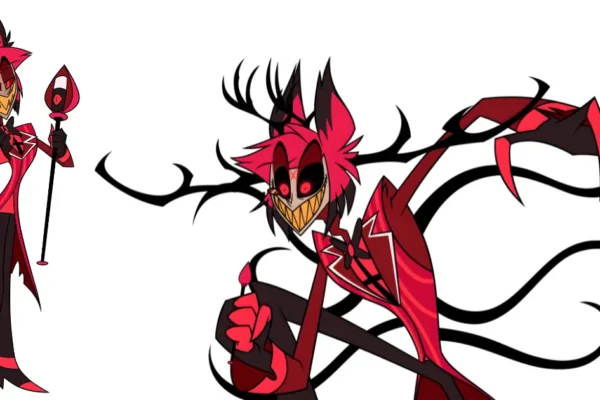
Alastor Hazbin Hotel: Complete Guide to the Radio Demon