Best Outdoor Solar Lights in 2026: Types & Complete Buying Guide

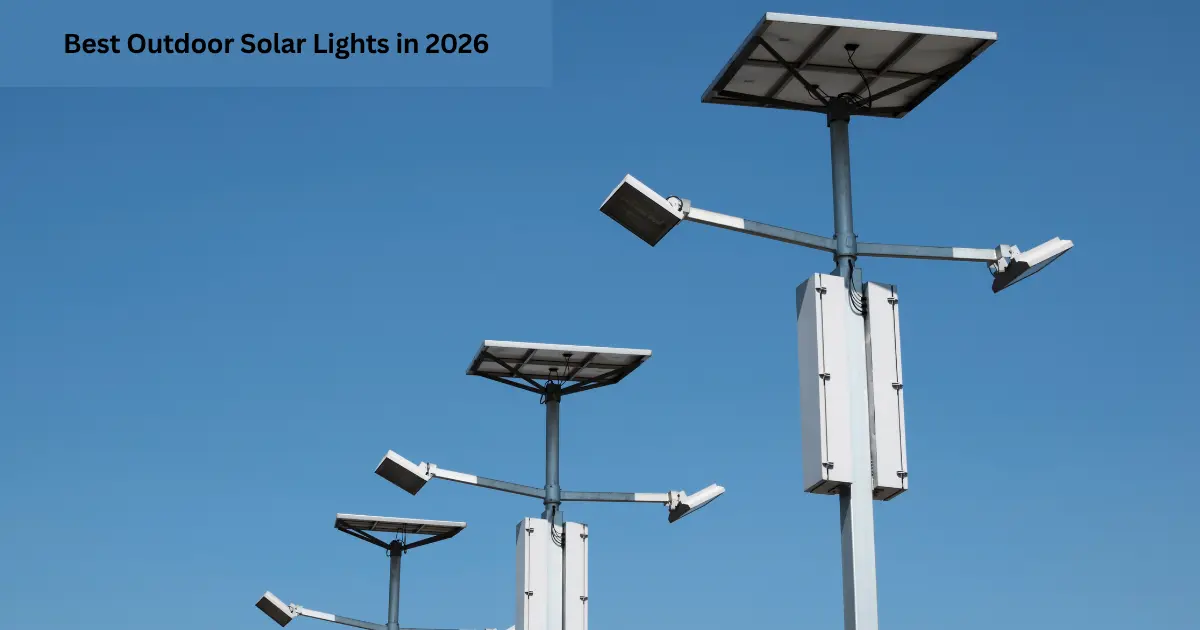
Outdoor solar lights are one of the easiest, cheapest ways to brighten a yard — no wiring, no electricity bill, and they switch on automatically at dusk. But with dozens of types and a flood of cheap options, picking the right ones is the hard part. This 2026 guide breaks down every type of outdoor solar light, what to look for before you buy, and exactly which kind is best for pathways, gardens, patios, and security.
Quick Answer: Which Outdoor Solar Lights Are Best?
Key Takeaways
How Outdoor Solar Lights Work
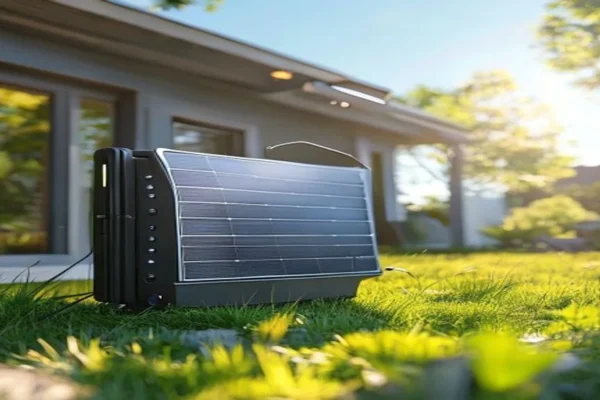
Every solar light follows the same simple cycle. During the day, a small solar panel converts sunlight into electricity, which charges a built-in rechargeable battery. At dusk, a light sensor (and sometimes a motion sensor) automatically switches on the energy-efficient LED, running it off the stored battery power through the night. No wiring, no mains electricity, and no switches to flip — they’re completely self-contained. That’s why placement in good sunlight matters so much: the lights are only as good as the charge they collect during the day.
Types of Outdoor Solar Lights
“Outdoor solar lights” is a broad category covering everything from subtle path markers to blazing security floods. Knowing the types is the first step to choosing well — each is designed for a different job and brightness level.
| Type | Best for | Typical brightness |
|---|---|---|
| Path lights | Walkways, driveways, borders | 10–50 lumens |
| Spotlights | Trees, signs, garden features | 50–300 lumens |
| Flood / security lights | Driveways, entries, security | 700–2,000+ lumens |
| String / festoon lights | Patios, decks, ambiance | Decorative (low) |
| Garden / stake lights | Flower beds, lawn accents | 10–100 lumens |
| Deck & step lights | Stairs, deck posts, railings | 5–20 lumens |
| Lamp posts & bollards | Driveways, larger areas | 100–600 lumens |
| Christmas / decorative | Seasonal displays | Decorative |
Best Solar Light for Each Use
The fastest way to choose is to start with the job you need done, then pick the matching type. Here’s the cheat sheet.
| What you want to light | Best type | Why |
|---|---|---|
| A walkway or driveway edge | Path / stake lights | Even, low-level guidance light spaced along the route. |
| Home security | Motion-sensor flood lights | Bright bursts (700–2,000+ lm) triggered by movement. |
| Patio or deck ambiance | String / festoon lights | Warm, decorative glow for entertaining areas. |
| Trees, signs or features | Spotlights | Focused beams that highlight a specific object. |
| Flower beds & borders | Garden / stake lights | Soft accent light that blends into landscaping. |
| Stairs & steps | Deck / step lights | Low glare-free light for safe footing. |
| Driveway entrance / large area | Lamp post or bollard | Taller fixtures that spread light over a wide area. |
| Holidays & events | Solar string / Christmas lights | Seasonal decoration with no outlet needed. |
How to Choose: The Solar Light Buying Guide
Once you know the type, these are the specs that separate a light that lasts for years from a cheap one that fades after a few months. Check each before you buy.
| Factor | What to look for |
|---|---|
| Brightness (lumens) | Match to the job — ~10–50 lm for paths, 700–2,000+ lm for security. Don’t confuse lumens (output) with watts. |
| Battery | Lithium (Li-ion or LiFePO4) lasts far longer than Ni-MH; higher mAh means longer runtime. |
| Waterproof rating | IP65 minimum for rain; IP67/IP68 for very wet or exposed spots. |
| Solar panel | Monocrystalline charges best; a separate, adjustable panel helps in shaded yards. |
| Color temperature | Warm white (2700–3000K) for ambiance; cool white (5000–6500K) for security and visibility. |
| Lighting modes | Dim/bright or motion modes stretch runtime through long nights. |
| Motion sensor | For security lights — check detection range (often 10–26 ft) and angle (120–270°). |
| Build quality | Metal or ABS housing and a real warranty signal a light built to last. |
If you only remember one thing: battery and waterproofing are what most often fail on cheap solar lights. Spending a little more on a lithium battery and an IP65+ rating pays for itself in years of extra life.
Brightness Guide: How Many Lumens Do You Need?
Lumens measure how much light a fixture actually puts out — and matching lumens to the task is the difference between a tasteful glow and a blinding floodlight in the wrong place. Use this as your reference.
| Purpose | Recommended lumens |
|---|---|
| Pathway & step accent | 10–50 lm |
| Garden / ambient glow | 40–100 lm |
| Patio & string lighting | 100–200 lm |
| Spotlight (features/trees) | 100–300 lm |
| Security & flood | 700–2,000+ lm |
Want maximum output for security or a large yard? See our dedicated guide to the highest-lumens solar lights for the brightest options available.
Solar Garden Lights
Garden lights are the most popular category — the small stake lights that line beds, borders, and lawns. For gardens, choose warm white (2700–3000K) for a soft, natural look, and prioritize battery life over raw brightness; 10–100 lumens is plenty for accent lighting. Stake-style lights with a separate, angle-adjustable panel perform best where flower beds get partial shade. Buy in multi-packs for even spacing along a border.
Solar String, Festoon & Christmas Lights
For patios, pergolas, and entertaining areas, solar string (festoon) lights deliver warm, decorative ambiance with zero wiring. Look for shatterproof bulbs, a generously sized panel (string lights have many LEDs to power), and a battery that lasts the full evening. The same technology powers solar Christmas lights — a hugely popular seasonal choice since they need no outdoor outlet. For holiday displays, pick sets with multiple modes and a longer cable run, and place the panel where it gets winter sun (which is weaker and lower in the sky).
Solar Security & Motion-Sensor Flood Lights
For security, brightness and a good motion sensor matter most. Choose 700–2,000+ lumen flood lights with cool white light (5000–6500K) for maximum visibility, a wide detection angle (up to 270°), and a separate solar panel you can aim at the sun while mounting the light in shade. Models with adjustable heads and a “dim-until-motion” mode give you all-night coverage plus a bright burst when someone approaches — the best of both worlds for runtime and security.
Pros and Cons of Outdoor Solar Lights
Solar lights are brilliant for most yards, but they aren’t perfect for every situation. Here’s an honest look at both sides.
| Pros | Cons |
|---|---|
| No wiring — easy DIY install anywhere | Performance depends on sunlight (dimmer in winter/shade) |
| Zero running cost, no electricity bill | Generally less bright than wired lights |
| Automatic dusk-to-dawn operation | Batteries degrade and need replacing every 1–2 years |
| Eco-friendly and safe (no mains voltage) | Cheap models can fail quickly |
| No trenching or electrician needed | May not run all night after cloudy days |
Installation & Placement Tips
Solar lights live or die by their charge, so placement is everything. A great light in a shady spot will disappoint; a basic light in full sun will impress. Follow these four rules.
Maintenance & Troubleshooting
Solar lights need very little upkeep, but a few minutes of care keeps them bright for years.
| Task | How often | Why |
|---|---|---|
| Wipe the solar panel | Monthly | Dust and grime block charging and dim the light. |
| Replace the battery | Every 1–2 years | Rechargeable batteries lose capacity over time. |
| Check placement & shade | Seasonally | Tree growth or sun angle can reduce charging. |
| Reset after issues | As needed | A reset fixes most “won’t turn on” problems. |
Lights acting up? We have step-by-step fixes: how to charge solar lights, how to reset solar lights, and how to fix a solar light sensor. To set expectations on lifespan, see how long solar lights last.
Frequently Asked Questions
Conclusion: Choosing the Right Outdoor Solar Lights
The “best” outdoor solar light is simply the one that fits the job: subtle path lights for walkways, warm string lights for the patio, bright motion-sensor floods for security, and stake lights for the garden. Once you’ve matched the type to the task, let four specs guide your purchase — brightness, battery, waterproof rating, and panel quality — and you’ll avoid the cheap lights that fade after a season.
The bottom line
Want to go deeper? Compare the brightest options in our highest-lumens solar lights guide, learn how long solar lights last, and if anything stops working, our guides on charging and resetting solar lights will get them glowing again. Curious how the panels themselves work? See our solar panel guides.
You May Also Like
Do Smart Thermostats Really Save Money? (Honest Answer)
Spray Foam Insulation: Cost, Pros, Cons & Alternatives (2026)
Lithium vs Lead-Acid Solar Batteries: Which Is Best? (2026)