What Is a Solar Generator? (And Do You Really Need One?)

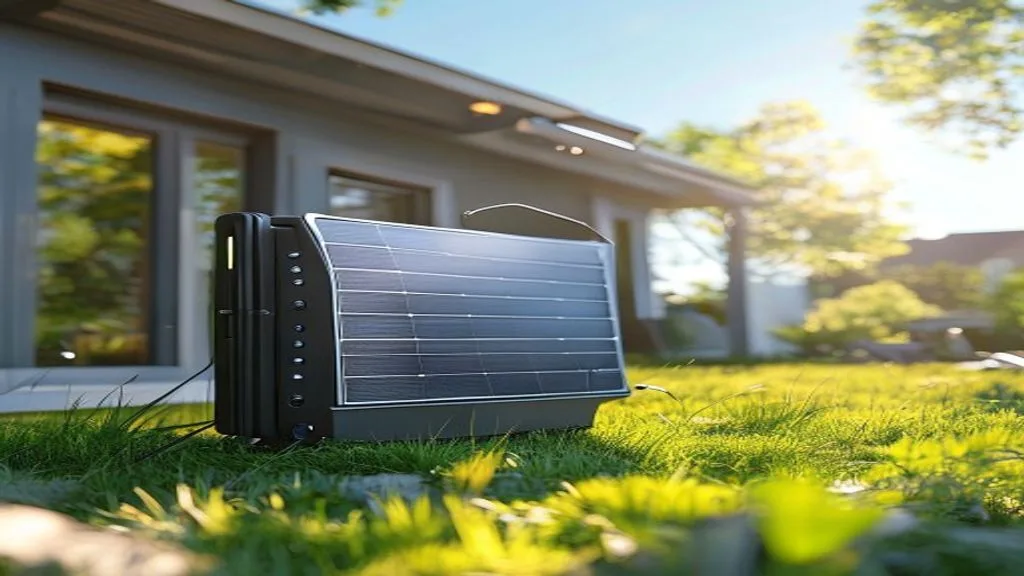
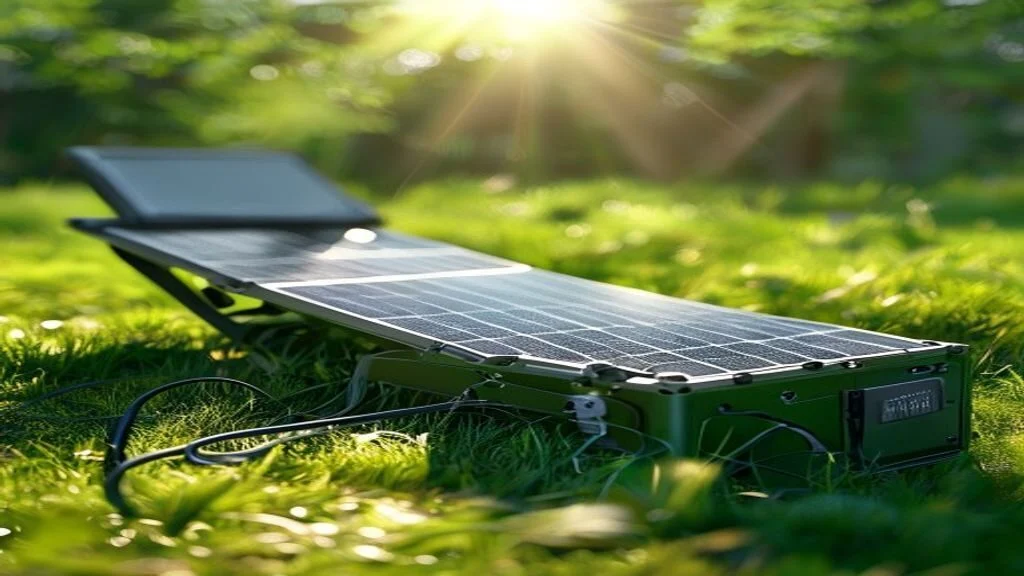
A solar generator is a battery-powered portable power station bundled with solar panels. It doesn’t generate power itself — it stores electricity in a lithium battery and converts it to household AC power, and the panels recharge that battery from sunlight. There’s no engine, no fuel and no fumes, which makes it silent and safe to run indoors. Here’s exactly how it works, what it costs, and the honest answer to whether you need one.
Quick answer: what a solar generator actually is
How a Solar Generator Works
Despite the name, nothing is “generated” inside the box. Four components do the work:
- Solar panels convert sunlight into DC electricity.
- A charge controller (built in) regulates that incoming power so it charges the battery safely.
- A lithium battery — almost always LiFePO4 in current models — stores the energy. Its size in watt-hours (Wh) determines how long you can run things.
- An inverter converts the stored DC power into 120V AC so you can plug in normal household devices.
You can also charge the battery from a wall outlet or a car socket — the solar panels are optional, which is precisely why the “generator” label is misleading. Many owners charge from the wall at home and only use panels when off-grid.
Watt-hours vs watts — the number that matters
Solar Generator vs Portable Power Station: Is There a Difference?
Functionally, almost none. A portable power station is the battery unit itself; a solar generator is that same unit sold as a kit with compatible solar panels. Every modern power station accepts solar input, so any power station becomes a “solar generator” the moment you add a panel.
| Portable power station | Solar generator | |
|---|---|---|
| What it is | Battery + inverter + ports | The same unit, bundled with panels |
| Recharges from | Wall, car, solar (panels sold separately) | Wall, car, solar (panels included) |
| Generates power? | No — stores it | No — stores it; panels harvest it |
| Typical price | $200–$2,000 | $500–$5,000 (kit) |
| Best for | Home backup, wall charging | Off-grid, multi-day outages, camping |
The practical takeaway: don’t pay a premium for the word “solar.” Compare the actual battery capacity, inverter output and panel wattage, and check whether buying the station and panels separately is cheaper — it often is. See our comparison of the best portable power station brands.
Solar Generator vs Gas Generator: Which Should You Buy?
This is the real decision. They solve the same problem in opposite ways — one stores a fixed amount of energy silently, the other makes unlimited energy noisily.

| Factor | Solar generator | Gas generator |
|---|---|---|
| Runtime | Limited by battery (hours) | Unlimited while you have fuel |
| Refuel/recharge | Hours (solar or wall) | 30 seconds (pour fuel) |
| Noise | 0–40 dB (near silent) | 60–80+ dB (lawnmower) |
| Indoor use | Safe — no emissions | Never — carbon monoxide risk |
| Max output | Typically 1,800–4,000 W | 3,000–7,000+ W |
| Maintenance | Essentially none | Oil changes, fuel stabiliser, servicing |
| Running cost | ~Free from solar | $3–$5/gallon of fuel |
| Up-front cost | $500–$5,000 | $400–$2,000 |
| Lifespan | 3,000–4,000 battery cycles | Engine hours, with upkeep |
The safety difference is not a small one
What Size Solar Generator Do You Need?
Size it to the job, not to the marketing. Add up the wattage of everything you want to run at once (that sets the inverter you need), then multiply by the hours you need it (that sets the watt-hours).

| Capacity | Solar panel pairing | Runs | Typical kit price |
|---|---|---|---|
| 300–500 Wh | 60–100 W | Phones, laptops, lights, small fan | $500–$900 |
| 700–1,000 Wh | 100–200 W | CPAP overnight, mini-fridge, camping | $900–$1,600 |
| 1,500–2,000 Wh | 200–400 W | Full fridge ~1 day, tools, RV | $1,600–$2,800 |
| 3,000 Wh+ | 400–800 W+ | Home essentials for 1–3 days | $2,800–$5,000+ |
Those figures assume roughly 850Wh usable from a 1,000Wh battery after conversion losses. Note the last bar: a microwave will run for well under an hour, and only if your inverter is rated above 1,000W. Solar generators excel at small loads for a long time, not big loads for long.
How many panels do you need to actually refill it?
Do You Really Need a Solar Generator?
Honest answer: many people who buy one would be better served by something cheaper or bigger. Here’s where it genuinely makes sense — and where it doesn’t.
Pros
- Silent and emission-free — safe to use indoors
- Zero maintenance and no fuel to store
- Runs sensitive electronics and medical devices (CPAP) cleanly
- Recharges free from the sun when off-grid
- Doubles as camping/RV power and outage backup
- LiFePO4 packs last 3,000–4,000 cycles (a decade or more)
Cons
- Limited runtime — hours, not days, without sun
- Slow to recharge compared with refuelling
- Lower peak output than a gas generator
- Expensive per watt-hour up front
- Solar recharging is weather-dependent
- Won’t run central AC, electric heat or a well pump
You probably DO want one if…
- You want backup for a fridge, phones, Wi-Fi, lights and a CPAP through outages of a few hours to a day.
- You camp, van-life or RV and want quiet power that won’t annoy neighbours.
- You live somewhere with frequent short outages rather than week-long ones.
- You need to run power indoors or in an apartment where a gas generator is impossible.
- You already have solar and want portable storage for the essentials.
You probably DON’T if…
- You need to power central air conditioning, electric heating or a well pump — get a standby or large gas generator.
- You face multi-day outages regularly and can’t rely on sun to recharge.
- You only ever charge phones and laptops — a $150 power bank does that far cheaper.
- Your goal is cutting your electricity bill — a solar generator won’t meaningfully do that; efficiency changes or rooftop solar will.
What Does a Solar Generator Cost to Run?
Almost nothing — which is the whole point. Charging from solar is free; charging a 1,000Wh unit from the wall costs about 19¢ at average US rates. Compare that with a gas generator burning $3–$5 a gallon plus oil and servicing.
| Cost | Solar generator | Gas generator |
|---|---|---|
| Up-front (typical) | $900–$1,600 (1kWh kit) | $400–$1,200 |
| Fuel/energy per full charge | $0 (solar) or ~$0.19 (wall) | $3–$5 per gallon |
| Annual maintenance | $0 | $50–$150 |
| Fuel storage | None | Cans, stabiliser, rotation |
| Expected life | 3,000–4,000 cycles | With servicing, varies |
Over years of regular use the running-cost gap closes much of the price difference — one long-term camper reported saving roughly $800 in fuel in the first year after switching from a gas generator. The trade-off you’re buying is silence and safety, not raw capability. For pairing with panels, see our guide to solar panels for off-grid living and solar battery storage.
Frequently Asked Questions
The Bottom Line
A solar generator is a portable power station bundled with solar panels — it stores energy rather than generating it, which is the single most important thing to understand before buying. That means its value comes from being silent, emission-free and safe indoors, not from unlimited runtime.
Buy one if you want clean backup for a fridge, lights, Wi-Fi and medical devices through short outages, or quiet power for camping and RV trips. Skip it if you need to run air conditioning or heating, if your outages last days without sun, or if you just need to charge a phone. And don’t pay extra for the “solar” label — price the station and panels separately and compare watt-hours, inverter watts and real panel output.
Solar generator in one line
Prices and specifications change frequently — confirm current models before buying.
You May Also Like

Do Smart Thermostats Really Save Money? (Honest Answer)

Spray Foam Insulation: Cost, Pros, Cons & Alternatives (2026)
Lithium vs Lead-Acid Solar Batteries: Which Is Best? (2026)