Hazbin Hotel Characters Hotel Rooms: Design & Details

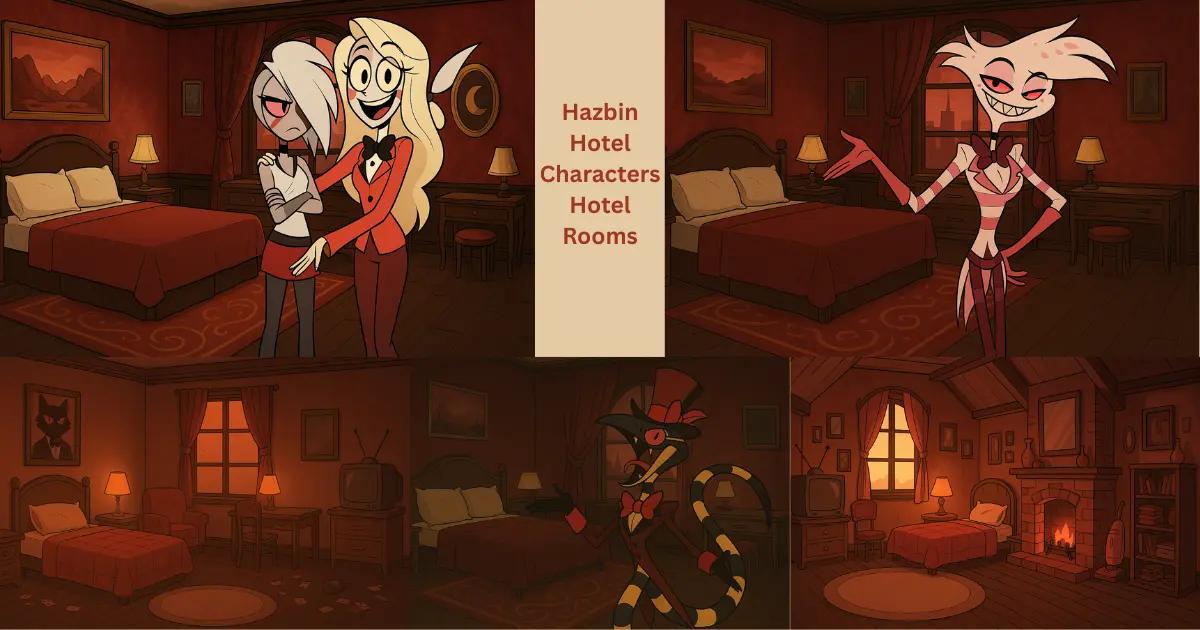
In the vibrant, chaotic world of Hazbin Hotel, every detail tells a story—and nowhere is this more evident than in the hazbin hotel characters hotel rooms. These personal spaces serve as intimate reflections of each resident’s personality, struggles, and journey toward redemption. From Charlie’s hopeful pastels to Alastor’s vintage radio-era aesthetic, the room designs in Hazbin Hotel offer fans a deeper understanding of what makes each character tick. The careful attention to color schemes, decor choices, and symbolic elements transforms these animated spaces into character studies that reveal hidden depths, past traumas, and future aspirations. Whether you’re analyzing the show for character development, gathering inspiration for fan art, or simply curious about the creative decisions behind these designs, exploring the hazbin hotel character rooms provides fascinating insights into the storytelling genius of Vivienne Medrano’s creation.
What Makes Hazbin Hotel Character Rooms Unique?
The hazbin hotel room designs stand apart from typical animated series because they function as extensions of character psychology rather than mere background settings. Each room in the Happy Hotel (later renamed Hazbin Hotel) serves multiple narrative purposes: establishing personality traits, hinting at backstories, and tracking character development throughout the series. Unlike conventional hotel rooms that maintain uniformity, these spaces embrace radical individuality that mirrors Hell’s chaotic nature.
What makes these rooms particularly compelling is their layered symbolism. Surface-level aesthetics immediately communicate basic personality traits—Angel Dust’s pink and white glamour, Alastor’s crimson vintage decor—but closer examination reveals deeper meanings. The rooms contain Easter eggs referencing each character’s past life, their sins, their coping mechanisms, and their relationships with other residents. This attention to environmental storytelling allows the animation team to convey character information without exposition-heavy dialogue.
The design philosophy behind the hazbin hotel characters hotel rooms also reflects the show’s central theme of redemption. Many rooms display contradictions: luxurious elements alongside signs of decay, cheerful colors masking darker undertones, or organized spaces hiding emotional chaos. These visual contradictions mirror the residents themselves—sinners attempting to change while struggling with their true nature. The rooms evolve subtly throughout the series, with small changes reflecting character growth or regression, making them dynamic spaces rather than static sets.
Another unique aspect is how the rooms interact with Hell’s architectural impossibility. The hotel itself defies conventional physics, and individual rooms amplify this surreal quality. Some spaces appear larger inside than physically possible, others contain windows showing impossible views, and certain rooms seem to shift based on their occupant’s emotional state. This dreamlike quality reinforces that we’re viewing a psychological landscape as much as a physical one.
Charlie Morningstar's Hotel Room: Optimism in Every Corner
The Charlie Morningstar room radiates the princess of Hell’s infectious optimism and determination to see good in everyone. Her personal space features a predominantly warm color palette dominated by reds, golds, and soft pinks—colors that balance her demonic heritage with her hopeful nature. Unlike the harsh crimsons found elsewhere in Hell, Charlie’s reds lean toward coral and rose tones, suggesting warmth rather than danger.
The room’s layout emphasizes openness and welcome. Large windows allow natural (or Hell’s equivalent) light to flood the space, and the furniture arrangement creates conversation areas rather than isolated zones. Charlie’s bed, while ornate befitting her royal status, features approachable bedding with apple motifs—a reference to her family’s connection to the biblical Fall and a symbol of knowledge and new beginnings. The headboard incorporates carved details that echo the hotel’s exterior architecture, showing her deep connection to her redemption project.
Personal touches throughout the space reveal Charlie’s multifaceted personality. Musical instruments, including her beloved ukulele, occupy places of honor, reflecting her tendency to express emotions through song. Bookshelves contain volumes on rehabilitation, psychology, and surprisingly, musical theater—showing both her serious commitment to redemption and her theatrical flair. Photographs and drawings depicting happy moments with Vaggie and other residents demonstrate her relationship-focused nature and her need to surround herself with positive memories.
The room also contains subtle reminders of her royal lineage that she can’t entirely escape. A portrait of her family hangs somewhat awkwardly, suggesting complicated feelings about her heritage. Demonic symbols appear in decorative elements, but they’re softened through artistic interpretation—turned into patterns on throw pillows or incorporated into lamp designs. This visual tension between her hellish origins and heavenly aspirations perfectly encapsulates Charlie’s internal conflict.
What’s particularly telling is what Charlie’s room lacks: there are no weapons, no defensive measures, no locked compartments. This absence speaks volumes about her trusting nature and her belief that the hotel should be a safe space. The room’s overall impression is one of controlled chaos—organized enough to function but lived-in enough to feel genuine, much like Charlie herself who balances idealism with the practical demands of running a rehabilitation center in Hell.
Vaggie's Room Design: Practicality Meets Protection
Vaggie’s personal space presents a stark contrast to Charlie’s optimistic aesthetic, instead embodying military precision and defensive awareness. The room’s color scheme relies heavily on grays, blacks, and muted purples, creating an atmosphere of controlled restraint. This palette reflects both her serious demeanor and her role as the hotel’s protector and voice of reason. The lighting tends toward functional rather than ambient, with task lighting positioned strategically throughout the space.
The furniture arrangement reveals Vaggie’s tactical mindset. Her bed is positioned against a wall with clear sightlines to the door—a defensive choice that allows her to monitor entry points even while resting. Storage solutions prioritize accessibility and organization, with weapons and tools kept within easy reach but neatly maintained. Everything has its place, and that place has been chosen for maximum efficiency. This level of organization has led some fans to speculate about neurodivergent traits, with discussions on platforms like Reddit asking “Does Vaggie have autism?” While the show hasn’t confirmed this, her systematic approach to her environment certainly suggests someone who finds comfort in order and predictability.
Personal items in Vaggie’s room are minimal but meaningful. A small collection of photographs focuses almost exclusively on Charlie, revealing where her emotional priorities lie. Her weapons aren’t just tools but are displayed with care, suggesting they’re extensions of her identity and her commitment to protecting what matters. Unlike other residents who fill their spaces with memorabilia, Vaggie keeps only what serves a purpose—either functional or deeply sentimental.
The room contains subtle hints about Vaggie’s mysterious past. Certain decorative elements incorporate moth imagery—her demonic form’s characteristic—but these are understated rather than celebrated. A few items seem out of place with her minimalist aesthetic, suggesting gifts from Charlie that Vaggie keeps despite them not matching her personal style. These objects represent her willingness to compromise and adapt for someone she loves.
Security features distinguish Vaggie’s room from others in the hotel. Reinforced door frames, additional locks, and what appears to be a hidden weapons cache demonstrate her inability to fully let her guard down, even in what should be a safe space. This defensive architecture reflects her role as Charlie’s protector but also hints at deeper trust issues and past traumas that make complete vulnerability difficult for her.
Angel Dust's Hotel Room: Glamour and Hidden Pain
The Angel Dust hotel room serves as perhaps the most visually striking and emotionally complex space in the entire hotel. Dominated by hot pinks, whites, and gold accents, the room screams for attention while simultaneously hiding deep pain beneath its glamorous surface. The aesthetic draws heavily from Hollywood Regency style mixed with modern nightclub culture, creating a space that feels both vintage and contemporary—much like Angel himself, who died in the 1940s but has adapted to Hell’s evolving culture.
What room does Angel Dust stay in? His suite is located on one of the hotel’s upper floors, and its size suggests it’s one of the more spacious accommodations—fitting for someone with an oversized personality and an extensive wardrobe. The room features a large vanity area with professional-grade lighting, multiple mirrors, and an impressive collection of cosmetics and styling products. This space isn’t just functional; it’s a shrine to self-presentation and the carefully constructed persona Angel shows the world.
The bedroom area reveals the duality of Angel’s existence. The bed itself is extravagant—a massive four-poster affair with plush pink bedding, heart-shaped pillows, and what appears to be genuine silk sheets. Yet closer inspection reveals wear and tear: stains that won’t come out, tears in the fabric hastily repaired, and an overall sense that this luxury is maintained through effort rather than genuine wealth. This visual metaphor perfectly captures Angel’s life—glamorous on the surface, damaged underneath.
Personal items scattered throughout the room tell stories of Angel’s various coping mechanisms. An extensive collection of alcohol bottles, both empty and full, occupies multiple surfaces. Drug paraphernalia is present but often partially hidden, suggesting shame mixed with dependency. His beloved pet pig, Fat Nuggets, has a designated area with toys and bedding, representing one of the few purely positive relationships in Angel’s life and his capacity for genuine affection beneath the sexual bravado.
The room contains numerous references to Angel’s work in Hell’s adult film industry, but these are displayed with an interesting mix of pride and disgust. Posters and awards are present but often positioned where they’re not immediately visible, suggesting complicated feelings about his profession. Costumes and props from various shoots are stored in a large wardrobe, kept separate from his personal clothing—a physical boundary between his work identity and his true self.
Hidden details reveal Angel’s softer side and his past. A locked drawer (shown briefly in certain scenes) contains items from his human life and family, things he can’t bring himself to display but won’t discard. Photographs of his siblings, though he claims not to care about family, are tucked away but preserved. The room also contains surprisingly wholesome items—coloring books, stuffed animals beyond Fat Nuggets, and comfort foods—suggesting the child-like vulnerability he works so hard to mask with adult content and aggressive flirtation.
Alastor's Room: The Radio Demon's Vintage Lair
The Alastor room design transports visitors to a bygone era, specifically the 1920s-1930s when radio was king and Alastor was alive. His space is a masterclass in period-accurate design mixed with unsettling supernatural elements. Deep crimsons, blacks, and rich browns dominate the color scheme, creating an atmosphere that’s simultaneously sophisticated and sinister. The lighting comes primarily from vintage fixtures—art deco lamps, candelabras, and the eerie green glow that seems to emanate from Alastor himself.
The centerpiece of Alastor’s room is an elaborate radio broadcasting setup, complete with vintage microphones, recording equipment, and what appears to be a functioning radio station. This isn’t merely decorative; it’s a workspace where the Radio Demon continues his broadcasts throughout Hell. The equipment is meticulously maintained, showing that despite Alastor’s chaotic nature, he treats his radio work with reverence. Vinyl records are organized by genre and era, suggesting a genuine appreciation for music beyond its utility for his powers.
Furniture throughout the room reflects Prohibition-era luxury. A wingback chair upholstered in burgundy leather sits near a fireplace that burns with green flames. The bed, though Alastor likely doesn’t need sleep, features an ornate wooden frame with carvings depicting various animals—particularly deer, referencing his demonic form. Antique side tables hold vintage rotary phones, old-fashioned alarm clocks, and other period-appropriate items that Alastor has preserved or recreated in Hell.
The room’s most disturbing elements are the ones that remind visitors this is a demon’s lair, not a museum. Taxidermied animals appear throughout, but their positions and expressions suggest they might not be entirely dead. Shadows move independently of their sources, and certain areas of the room seem to distort space—doors that lead to impossible places, windows showing scenes from different time periods, and corners that appear deeper than the room’s dimensions should allow.
Personal touches reveal Alastor’s complex personality. A collection of cookbooks focuses on Creole and Cajun cuisine, hinting at his New Orleans origins. Newspaper clippings from his human life are preserved in frames, though the articles themselves are often about unsolved murders—a dark reminder of his serial killer past. Musical instruments, including a vintage piano, suggest talents beyond broadcasting. The room also contains an extensive library with books on various subjects, from demonology to comedy writing, showing his intellectual curiosity.
What’s notably absent from Alastor’s room is any modern technology. No televisions, computers, or contemporary devices intrude on his carefully maintained temporal bubble. This isn’t mere nostalgia; it’s a deliberate rejection of progress and change, reflecting Alastor’s resistance to Hell’s evolution and his preference for the era when he felt most powerful and in control.
Husk's Room: A Gambler's Den of Regret
Husk’s personal space embodies the aesthetic of a rundown casino mixed with the living quarters of someone who’s given up on appearances. The color palette consists of dingy golds, faded reds, and lots of browns and blacks—colors that might have been vibrant once but have dulled with time and neglect. The lighting is dim and inconsistent, with some bulbs burned out and never replaced, creating pockets of shadow that match Husk’s perpetually dark mood.
The room’s most prominent feature is gambling paraphernalia scattered everywhere. Card tables, poker chips, dice, and slot machine parts occupy every available surface. Some of this equipment appears to be from Husk’s time as an overlord running casinos, while other pieces seem to be from compulsive gambling sessions he’s engaged in since losing his power. Empty bottles vastly outnumber full ones, creating a landscape of past drinking sessions that Husk hasn’t bothered to clean up.
Husk’s bed is functional but unmade, with sheets that clearly haven’t been changed in far too long. The mattress sags in the middle, and the pillows are flat from years of use. This isn’t the sleeping space of someone who values rest or self-care; it’s where someone passes out when drinking becomes too much. Nearby, an overflowing ashtray and the lingering smell of cigarettes complete the picture of someone engaging in every vice available to cope with existence.
Surprisingly, the room contains hints of Husk’s more refined past and hidden depths. A locked trunk, when glimpsed in certain scenes, holds military medals and photographs from his human life, suggesting service in war—possibly World War I given his apparent age at death. Musical instruments, particularly a saxophone, lean against one wall, dusty but preserved. Can Husk speak 7 languages? While the show hasn’t explicitly confirmed this specific number, his room contains books in multiple languages—Russian, German, French, and others—suggesting significant linguistic ability that he rarely demonstrates in his current defeated state.
The room also reveals Husk’s complicated relationship with Alastor. A contract document, partially visible in some scenes, is kept in a drawer rather than displayed—something Husk wants to forget but can’t destroy. Items that appear to be “gifts” from Alastor sit unused, representing the power dynamic between them. The overall disarray of the room reflects Husk’s loss of autonomy and his resentment about being owned by another demon.
What makes Husk’s room particularly sad is the evidence of abandoned attempts at improvement. A partially organized bookshelf suggests he started to tidy up but gave up. Cleaning supplies sit unused in a corner. A calendar on the wall hasn’t been updated in months. These details paint a picture of someone who occasionally tries to pull himself together but lacks the motivation or hope to sustain the effort—a visual representation of his character arc’s starting point.
Niffty's Room: Organized Chaos and 1950s Charm
Niffty’s room is a fascinating contradiction: meticulously organized yet visually overwhelming, combining 1950s housewife aesthetic with hints of obsessive behavior and darker interests. The color scheme features bright pastels—mint greens, soft pinks, baby blues, and sunny yellows—that create an almost aggressively cheerful atmosphere. Everything is clean to the point of sterility, with surfaces that gleam and not a speck of dust anywhere, reflecting Niffty’s compulsive cleaning habits.
The room’s layout mimics a 1950s teenager’s bedroom filtered through a hyperactive lens. A vintage vanity with a round mirror is surrounded by period-appropriate cosmetics and hair accessories, all arranged with military precision. The bed features a quilted bedspread in a retro pattern, with pillows fluffed to perfect symmetry. Vintage posters of 1950s heartthrobs cover the walls, but their placement follows a precise pattern—nothing is random in Niffty’s space.
Cleaning supplies occupy a place of honor in Niffty’s room, displayed almost like religious artifacts. Multiple types of mops, brooms, dusters, and specialized cleaning tools are organized by function and size. Chemical cleaners are arranged by color and purpose, labeled with Niffty’s own organizational system. This isn’t just a storage area; it’s a shrine to cleanliness that reveals the depth of her fixation.
The room contains numerous collections, each organized with obsessive attention to detail. Vintage cookbooks are alphabetized and color-coded. A button collection is sorted by size, color, and number of holes. Fabric swatches are categorized by texture and pattern. These collections suggest someone who finds comfort in categorization and control, using organization as a way to manage anxiety or other underlying issues.
Darker elements lurk beneath the cheerful surface. A collection of knives, while ostensibly for cooking, is displayed with unusual prominence and includes some that are clearly weapons rather than kitchen tools. Romance novels with increasingly dark themes are hidden behind the cheerful cookbooks. A box under the bed (glimpsed briefly) contains items related to “bad boys”—suggesting Niffty’s attraction to dangerous men isn’t just personality quirk but a deeper psychological pattern.
The room also reveals Niffty’s creative side. A sewing area features a vintage sewing machine and fabric projects in various stages of completion. Handmade decorations throughout the room showcase genuine artistic talent. A journal filled with sketches and notes suggests she documents everything obsessively, perhaps as another form of control over her environment and experiences.
Sir Pentious's Room: Victorian Villainy and Steampunk Style
Sir Pentious’s quarters blend Victorian-era grandeur with steampunk engineering, creating a space that functions as both living area and mad scientist’s laboratory. The color scheme centers on blacks, golds, and deep purples, with metallic accents throughout. Brass fixtures, copper piping, and steel reinforcements create an industrial aesthetic that contrasts with the ornate Victorian furniture and decorations.
The room’s most striking feature is the integration of Sir Pentious’s inventions and works-in-progress. Half-built war machines occupy corners, blueprints cover walls, and tools are scattered across multiple workbenches. Unlike the chaos in other rooms, this disorder is productive—the mess of someone actively creating rather than someone who’s given up. Gears, springs, and mechanical components are sorted into labeled containers, showing that beneath the apparent chaos lies an organizational system that makes sense to its creator.
Victorian elements provide a foundation for the steampunk additions. A four-poster bed features heavy velvet curtains in deep purple, offering privacy and creating a space within a space. An ornate writing desk holds both modern engineering tools and traditional quills and ink—Sir Pentious apparently enjoys the aesthetic of Victorian writing implements even while designing advanced weaponry. Portraits in gilded frames depict Sir Pentious in various heroic poses, revealing his vanity and his desire to be seen as important and impressive.
The room contains evidence of Sir Pentious’s obsession with conquest and recognition. Maps of Hell cover one wall, marked with strategic notations and planned attack routes. Newspaper clippings about other overlords are pinned to a board, with notes about their weaknesses and territories. A trophy case displays “achievements” from past schemes, though many of these “victories” are clearly minor or self-awarded, highlighting his tendency toward self-aggrandizement despite limited actual success.
His Egg Bois have a designated area within the room—a series of small beds or charging stations (their exact nature is ambiguous) where they rest when not serving their boss. This area is decorated with childish drawings the Egg Bois have made, which Sir Pentious has kept, suggesting genuine affection for his minions despite his villainous persona. Supplies for maintaining and repairing the Egg Bois are carefully organized, showing he takes his role as their creator seriously.
Personal items reveal Sir Pentious’s loneliness and desire for connection beneath his antagonistic exterior. A tea set for multiple people sits unused, suggesting hopes for social occasions that never materialize. Books on social etiquette from the Victorian era indicate he’s studied how to interact properly but struggles to apply these lessons. A journal contains plans not just for weapons but for ways to impress others and gain friends, showing that his villainy might partly stem from failed attempts at genuine connection.
Cherri Bomb's Room: Explosive Personality on Display
Cherri Bomb’s personal space explodes with color, energy, and barely controlled chaos—a perfect reflection of her anarchic personality and love of destruction. The room’s color scheme is dominated by hot pinks, electric blues, and black, with neon accents throughout creating a nightclub-meets-punk-rock aesthetic. Lighting comes from multiple sources: neon signs, black lights, and conventional fixtures with colored bulbs, creating a constantly shifting visual environment that matches Cherri’s high-energy nature.
The most prominent feature is Cherri’s extensive collection of explosives and weapons. Unlike Vaggie’s organized arsenal or Sir Pentious’s engineering projects, Cherri’s weapons are displayed with artistic flair. Bombs of various sizes are arranged by color and aesthetic appeal rather than function. Graffiti-style art on the walls depicts explosions and destruction, celebrating chaos as a form of beauty. The room includes a workbench where Cherri creates custom explosives, with materials organized in a way that makes sense to her but would appear random to others.
Music is central to Cherri’s space. A high-end sound system occupies a place of honor, with speakers positioned to create optimal sound throughout the room. Vinyl records, CDs, and digital playlists span multiple genres, though punk, rock, and electronic music dominate. Musical instruments—particularly electric guitars and drums—suggest Cherri is a musician herself, not just a consumer. The room is soundproofed (a necessity given her lifestyle), with foam panels that have been spray-painted with designs rather than left plain.
The room reveals Cherri’s artistic side beyond destruction. Graffiti and street art supplies fill multiple containers, and practice pieces cover available wall space. Some of this art is purely decorative, while other pieces contain political or social commentary, suggesting Cherri’s anarchism isn’t just about causing chaos but reflects genuine ideological positions. Stencils and spray paint in every color imaginable allow her to create art quickly and spontaneously.
Personal items show Cherri’s loyalty to friends and her capacity for genuine connection. Photographs of her and Angel Dust in various situations of mayhem are displayed prominently, showing their friendship is a central part of her identity. Gifts from Angel—some tasteful, others hilariously inappropriate—are kept and treasured. A designated area holds items she’s stolen or salvaged from various adventures, each with a story attached, creating a physical record of her experiences in Hell.
The room also contains evidence of Cherri’s Australian origins. Certain decorations and items reference her homeland, though these are mixed with her adopted Hell aesthetic. Slang written on various surfaces, music from Australian artists, and even a small collection of items from her human life (carefully preserved despite her chaotic nature) show that beneath the explosive exterior, Cherri maintains connections to her past and identity.
How Room Design Reflects Character Development
The hazbin hotel characters hotel rooms serve as visual representations of character arcs, with subtle changes throughout the series reflecting internal growth or regression. This environmental storytelling allows the animation team to show rather than tell how characters are evolving, making the rooms dynamic spaces rather than static backgrounds. Understanding these changes provides deeper insight into each character’s journey toward redemption—or their resistance to it.
Charlie’s room demonstrates the most optimistic trajectory. As the series progresses, small additions appear: more photographs of hotel residents, collaborative art projects with other characters, and organizational systems that show her growing competence as a leader. The space becomes more lived-in and less pristine, suggesting she’s spending more time actually working with residents rather than just planning in isolation. Items from other characters begin appearing—a book borrowed from Alastor, a decorative pillow from Niffty, Angel’s contribution to her music collection—showing how relationships are deepening and influencing her personal space.
Angel Dust’s room shows perhaps the most complex evolution. Early in his stay, the space is all performance—every element carefully curated to project an image. As his character develops and he begins genuinely engaging with redemption, subtle changes appear. The room becomes slightly less pristine, suggesting he’s spending less energy on maintaining appearances. Items related to Fat Nuggets increase, showing his capacity for care expanding. Most significantly, certain destructive elements—excessive alcohol, drug paraphernalia—begin to decrease (though not disappear), reflecting his struggles with addiction and his incremental progress.
Husk’s room transformation is subtle but meaningful. The space remains messy, but the type of mess changes. Early chaos is purely destructive—bottles, cigarette butts, evidence of giving up. Later, the mess includes books he’s actually reading, musical instruments he’s played recently, and cleaning supplies he’s at least attempted to use. The room never becomes neat, but it shifts from the space of someone who’s given up entirely to someone who’s occasionally trying, even if success is limited.
Vaggie’s room shows minimal change, which itself is significant. Her space remains organized and defensive, but tiny additions appear: small gifts from Charlie displayed despite not matching her aesthetic, a photograph of the entire hotel staff she’s allowed herself to keep visible, a single decorative item that serves no practical purpose. These microscopic changes reflect her slow, cautious opening up to others while maintaining her core protective nature.
Alastor’s room is notable for its resistance to change. While other characters’ spaces evolve, Alastor’s remains frozen in time—a visual representation of his refusal to change or engage genuinely with redemption. Any additions to his space are carefully curated to fit his established aesthetic, never disrupting his controlled environment. This stagnation contrasts sharply with other rooms’ evolution, highlighting Alastor’s role as someone observing the redemption experiment rather than participating in it.
The physical condition of rooms also reflects character states. During moments of crisis or regression, rooms become more chaotic or show signs of neglect. Angel’s room becomes messier during particularly difficult periods with Valentino. Husk’s space accumulates more bottles when he’s especially depressed. Charlie’s room becomes almost frantically organized when she’s stressed, with everything arranged to perfection as a coping mechanism. These visual cues allow viewers to understand character emotional states even without dialogue.
Hidden Details and Easter Eggs in Hazbin Hotel Rooms
The hazbin hotel room designs are treasure troves of Easter eggs, hidden references, and subtle details that reward careful viewing and analysis. These elements serve multiple purposes: they provide fan service for dedicated viewers, add depth to character backstories, and create connections between different aspects of the show’s mythology. Understanding these hidden details enhances appreciation for the show’s creative depth and attention to detail.
Throughout various rooms, careful observers can spot references to characters’ human lives and deaths. In Angel Dust’s room, certain items reference the 1940s and his Italian-American mob family background. A partially visible photograph shows figures that might be his family members, and certain decorative elements incorporate subtle mob symbolism. The date “1947” appears in various places—the year of his death—hidden in artwork or on objects. These details aren’t explicitly called out but reward fans who pause and examine scenes closely.
Alastor’s room contains numerous references to his serial killer past and New Orleans origins. Certain decorative patterns, when examined closely, incorporate symbols related to voodoo and Creole culture. Newspaper clippings on his walls, though often blurred in the background, contain actual text referencing unsolved murders from the 1920s-1930s. His record collection includes artists who were popular during his lifetime, with some albums that would have been released just before his death in 1933, suggesting these were among his final acquisitions as a human.
Charlie’s room includes subtle references to her family’s mythology. Apple motifs appear throughout, referencing Lucifer’s role in the biblical Fall. Certain decorative elements incorporate snake imagery (her father’s symbol) and angelic symbols (her mother’s heritage), showing how she’s caught between these two influences. A family portrait in the background shows details about her parents’ relationship and her childhood that aren’t explicitly discussed in dialogue but add depth to her backstory.
Interconnections between rooms provide additional layers of meaning. Items that appear in multiple characters’ spaces suggest relationships and interactions. A book might appear in Alastor’s room in one episode and later show up in Charlie’s, suggesting he lent it to her. Angel Dust’s room contains items that match things in Cherri Bomb’s space, showing they’ve exchanged gifts or stolen matching items during their adventures. These visual connections create a sense of community and relationship development without requiring explicit scenes.
Some Easter eggs reference the broader Hazbin Hotel All characters universe and Vivienne Medrano’s other works. Posters in various rooms advertise businesses or events that appear in other episodes or in the related series “Helluva Boss.” Character cameos appear in photographs or artwork on walls. These connections create a rich, interconnected universe that extends beyond individual episodes or characters.
Symbolic objects carry meaning that becomes clear only with character development. An item that seems merely decorative early in the series gains significance as backstory is revealed. A locked box in one character’s room might be shown opened later, with its contents revealing important information. A photograph positioned face-down might be turned over during a moment of character growth, showing the person is ready to confront that memory.
Fans on Reddit and other platforms have created extensive catalogs of these Easter eggs, with communities dedicated to spotting and interpreting hidden details. Some discoveries are confirmed by the creative team, while others remain fan theories, but all contribute to the rich analytical culture surrounding the show. This level of detail rewards multiple viewings and creates an engaged fan community that actively participates in uncovering the show’s depths.
Comparing Hotel Rooms to Character Backstories
The relationship between hazbin hotel characters hotel rooms and their backstories creates a visual language that communicates character history without extensive exposition. Each room serves as a three-dimensional autobiography, with objects, colors, and arrangements telling stories about who these characters were, what they’ve experienced, and how their pasts continue influencing their present. This environmental storytelling is particularly effective in an animated medium where every detail can be intentionally designed.
Angel Dust’s room provides perhaps the clearest example of this connection. The 1940s aesthetic elements reference his human life and death during that era, while the sex work-related items reflect his afterlife in Hell’s adult entertainment industry. The juxtaposition of glamorous, expensive items with signs of damage and wear mirrors his backstory: born into a wealthy mob family, he had access to luxury, but his lifestyle and choices led to degradation and exploitation. The room’s contradictions—beautiful but broken, luxurious but sad—perfectly encapsulate his character arc from privileged human to exploited demon.
Alastor’s vintage radio equipment and 1920s-1930s aesthetic directly connect to his human life as a radio host and serial killer during that period. Every element of his room reflects his refusal to move beyond that era, suggesting his time as a human was when he felt most powerful and in control. The preservation of this aesthetic in Hell represents his attempt to maintain that power and identity. The room’s unsettling elements—taxidermied animals, impossible spaces, supernatural phenomena—reflect how his human predatory nature has been amplified by his demonic powers.
Husk’s military medals and multilingual books reference a human life that was likely more accomplished and purposeful than his current existence. The contrast between these remnants of past achievement and his current state of alcoholic despair tells a story of fall from grace. His room’s deterioration mirrors his character’s degradation from powerful overlord to Alastor’s servant, with the space physically manifesting his loss of autonomy and self-respect. The gambling paraphernalia everywhere shows how the vice that likely contributed to his downfall continues to dominate his existence.
Sir Pentious’s Victorian aesthetic and engineering focus connect to his human life during the Industrial Revolution era. His room suggests someone who was probably an inventor or engineer in life, whose skills translated into his demonic form and abilities. The combination of Victorian propriety (formal furniture, proper tea sets) with chaotic invention (half-built machines, scattered tools) reflects the tension between his desire for recognition and respect and his actual incompetence at achieving his goals. The room shows someone trying to maintain dignity and importance while constantly failing at his schemes.
Niffty’s 1950s aesthetic connects to her human life during that era, but the obsessive organization and cleanliness suggest deeper psychological issues that likely predated her death. The room implies someone who used control over her environment to manage anxiety or other mental health challenges, a coping mechanism that has intensified in Hell. The darker elements hidden throughout the space suggest that beneath the cheerful housewife persona lies someone with more complex and potentially disturbing interests—a duality that probably existed during her human life as well.
Charlie’s room, interestingly, shows less direct connection to a human backstory because she was born in Hell. Instead, her space reflects the influence of her parents—demonic elements from her father, hints of angelic influence from her mother—and her own attempts to forge an identity separate from their legacy. The room’s optimistic aesthetic represents her choice to reject Hell’s typical cruelty and embrace hope, making her space a statement of rebellion against her environment rather than a reflection of past experiences.
The evolution of rooms throughout the series also connects to how characters process their backstories. As characters confront their pasts, their rooms change to reflect this processing. Items that were hidden might be displayed, suggesting acceptance. Conversely, new items might be locked away as characters discover painful truths. The physical space becomes a map of psychological journey, with each change representing a step in character development.
Understanding these connections enhances appreciation for the show’s storytelling sophistication. Rather than relying solely on flashbacks or exposition to communicate backstory, the creative team uses environmental design to show character history constantly. Every time viewers see a character’s room, they’re seeing a visual summary of that character’s entire existence—past, present, and the trajectory toward their future. This layered approach to storytelling rewards attentive viewing and creates rich material for analysis and discussion.
The question “Is Hazbin Hotel ok for a 14-year-old?” often arises given the show’s mature themes, and examining the rooms provides insight into this concern. The spaces contain references to violence, substance abuse, sex work, and other adult content that’s integral to character backstories and current situations. These aren’t gratuitous additions but essential elements of who these characters are and what they’re trying to overcome. The rooms’ designs communicate that this is a show dealing with serious, mature themes through the lens of dark comedy and musical theater, making it more appropriate for older teens and adults who can engage with these topics critically.
The hazbin hotel characters hotel rooms ultimately serve as more than just settings—they’re narrative devices that communicate volumes about character without requiring dialogue. They create a visual language that fans can learn to read, discovering new details with each viewing and gaining deeper understanding of the characters they’ve come to love. Whether you’re analyzing the show for its storytelling techniques, gathering inspiration for fan creations, or simply enjoying the rich world-building, the rooms of Hazbin Hotel offer endless material for exploration and appreciation.
Frequently Asked Questions
What room does Angel Dust stay in at Hazbin Hotel?
Angel Dust stays in Room 4 at the Hazbin Hotel, which features a distinctly flamboyant and provocative design that reflects his personality. The hazbin hotel characters hotel rooms are carefully designed to match each resident, and Angel’s space showcases hot pink and white color schemes with bold patterns, plush furnishings, and theatrical décor. His room includes personal touches like fashion magazines, makeup vanities, and memorabilia from his adult film career, creating a space that’s both his sanctuary and a reflection of his complex identity.
How do you describe Angel Dust's room in Hazbin Hotel?
Angel Dust’s room is best described as glamorous, bold, and unapologetically flamboyant with a color palette dominated by hot pinks, whites, and blacks. The space features luxurious textures including velvet, silk, and faux fur, along with dramatic lighting that creates a boudoir-like atmosphere. Personal items scattered throughout—including wigs, makeup collections, and photos—reveal both his public persona and private vulnerabilities, making it one of the most personality-driven hazbin hotel characters hotel rooms in the series.
What is the style of the Hazbin Hotel architecture?
The Hazbin Hotel architecture combines Art Deco elegance with Gothic Revival elements, creating a distinctive 1920s-1930s aesthetic with a hellish twist. The building features ornate details, dramatic arches, stained glass windows, and vintage signage that evokes old Hollywood glamour mixed with infernal imagery. This architectural style extends into the individual hazbin hotel characters hotel rooms, where period-appropriate design elements are customized to reflect each resident’s unique personality and backstory.
Does each Hazbin Hotel character's room reflect their personality?
Yes, each hazbin hotel characters hotel room is meticulously designed to reflect the resident’s personality, history, and emotional state. Charlie’s room features warm, hopeful colors and redemption-themed décor, while Alastor’s space embraces 1930s radio-era aesthetics with vintage equipment and darker tones. The creators use color psychology, personal artifacts, and design motifs to visually communicate each character’s inner world, making the rooms essential storytelling tools that deepen viewers’ understanding of the characters.
What does Alastor's room look like in Hazbin Hotel?
Alastor’s room embodies 1930s radio-era sophistication with a sinister edge, featuring deep reds, blacks, and vintage browns throughout the space. The room contains antique radio equipment, old-fashioned furniture, and décor reminiscent of the Golden Age of Radio, reflecting his identity as the Radio Demon. Subtle horror elements and occult symbols are woven into the design, creating an atmosphere that’s both nostalgically charming and unsettlingly dark—perfectly capturing Alastor’s duality.
Who is the most popular Hazbin Hotel character?
Angel Dust and Alastor consistently rank as the most popular Hazbin Hotel characters among fans, with both generating significant fan art, discussions, and merchandise sales. Angel Dust resonates with audiences due to his complex portrayal of trauma, identity, and resilience, while Alastor captivates fans with his mysterious powers, charismatic villainy, and vintage aesthetic. Charlie, as the protagonist, also maintains strong popularity, and the hazbin hotel characters hotel rooms for each of these favorites receive particular attention from the fanbase for their detailed design work.
Is Hazbin Hotel appropriate for a 14-year-old?
Hazbin Hotel is rated TV-MA and contains mature content including strong language, sexual themes, violence, and discussions of addiction and abuse, making it generally inappropriate for 14-year-olds. The show deals with adult themes like sex work, substance abuse, trauma, and redemption in explicit ways that are intended for mature audiences. Parents should preview the content and consider their individual teen’s maturity level before allowing them to watch, as the series doesn’t shy away from graphic imagery and complex, dark subject matter.
What is Charlie Morningstar's room like at the hotel?
Charlie Morningstar’s room at the Hazbin Hotel reflects her optimistic, compassionate nature with warm pastels, particularly pinks and golds that echo her royal heritage. The space features redemption-themed artwork, motivational posters, and personal mementos that showcase her genuine belief in second chances for Hell’s residents. Among all the hazbin hotel characters hotel rooms, Charlie’s stands out as the brightest and most hopeful, with organized spaces for planning her rehabilitation programs and cozy areas that make guests feel welcome and safe.
Can you visit different rooms in Hazbin Hotel?
Throughout the Hazbin Hotel series, viewers get glimpses into various hazbin hotel characters hotel rooms as the story progresses and character relationships deepen. The show uses these room reveals as significant storytelling moments that provide insight into characters’ private lives, vulnerabilities, and personal growth. While not every room has been fully shown in detail, the creators have confirmed that each resident’s space is thoughtfully designed, and fans eagerly anticipate more room tours as the series continues to develop.
What design elements are common in Hazbin Hotel character rooms?
Common design elements across hazbin hotel characters hotel rooms include period-appropriate furnishings that match each character’s era of death, personalized color schemes reflecting their emotional states, and symbolic objects that hint at their backstories. The rooms consistently feature a blend of vintage aesthetics with hellish or supernatural touches, creating spaces that feel both grounded in specific time periods and otherworldly. Each room also incorporates the character’s signature colors and motifs, making them instantly recognizable while maintaining the hotel’s overall Art Deco-Gothic architectural style.
You May Also Like

Hazbin Hotel Guide: Cast, Episodes & Where to Watch
Lute Quotes Hazbin Hotel: Complete Analysis & Insights