
Dust Suppression Guide: Methods, Systems & Best Practices

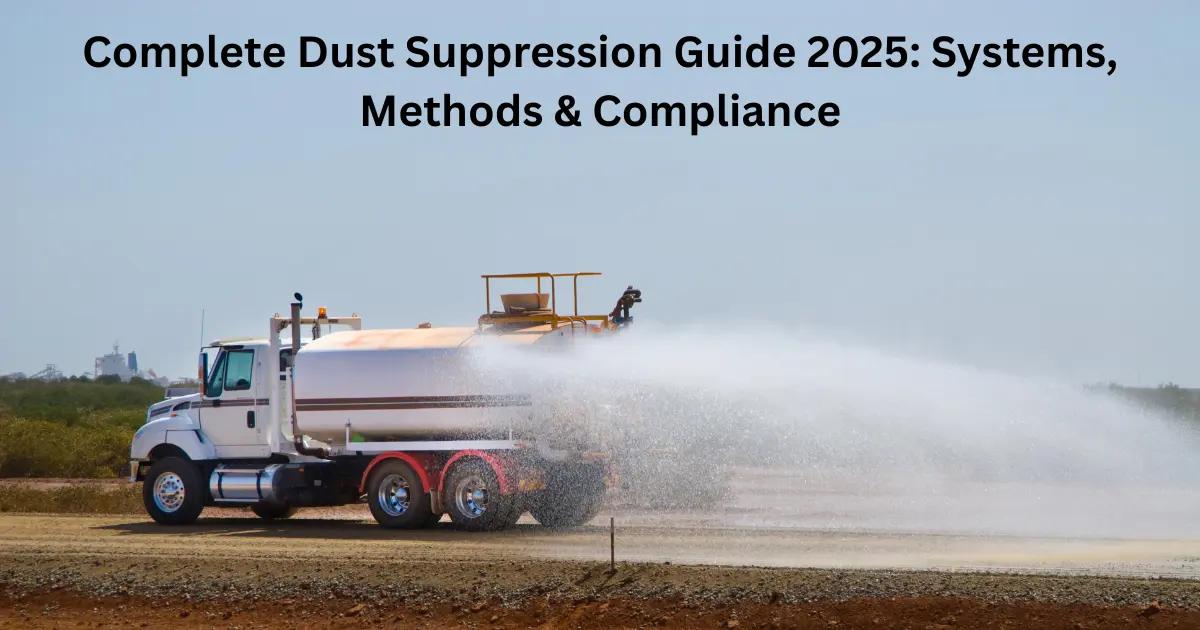
Dust suppression is the systematic process of controlling and minimizing airborne particulate matter in industrial, construction, and mining environments through various mechanical, chemical, and water-based methods. Whether you’re managing a construction site, operating a quarry, overseeing an industrial facility, or maintaining unpaved roads, effective dust control isn’t just about cleanliness—it’s a critical safety, health, and regulatory compliance issue that can significantly impact your operations, worker wellbeing, and bottom line. This comprehensive guide covers everything you need to know about implementing successful dust suppression strategies, from understanding the fundamental principles to selecting the right systems and achieving measurable results.
What Is Dust Suppression and Why It Matters
Dust suppression refers to the application of techniques, systems, and materials designed to prevent dust particles from becoming airborne or to capture and settle them once they’re suspended in the air. Unlike simple cleaning or sweeping, which often exacerbates dust problems by stirring particles into the air, proper dust suppression systems work proactively to keep particles grounded or remove them from the breathing zone.
The importance of dust suppression extends far beyond aesthetic concerns. Airborne dust particles pose serious health risks, particularly respirable dust smaller than 10 micrometers that can penetrate deep into the lungs. These particles can cause or contribute to silicosis, pneumoconiosis, chronic obstructive pulmonary disease (COPD), asthma, and even lung cancer depending on the dust composition. Workers in mining, construction, manufacturing, and agricultural settings face the highest exposure risks.
From an operational perspective, uncontrolled dust creates numerous problems. It reduces visibility on work sites and roads, increasing accident risks. Dust accumulation on equipment accelerates wear and tear, leading to more frequent maintenance and shorter equipment lifespans. In many industries, dust represents lost product—whether it’s coal, minerals, grain, or other valuable materials literally blowing away. Environmental impacts include soil degradation, water contamination, and negative effects on nearby vegetation and wildlife.
Regulatory compliance provides another compelling reason for implementing robust dust control solutions. Agencies like OSHA (Occupational Safety and Health Administration) and the EPA (Environmental Protection Agency) have established strict limits on workplace dust exposure and environmental emissions. Non-compliance can result in substantial fines, work stoppages, and legal liability. Modern dust suppression isn’t optional—it’s a fundamental requirement for responsible operations.
Health Risks and Regulatory Requirements for Dust Control
Understanding the health implications of dust exposure is essential for appreciating why comprehensive dust suppression methods are necessary. Respirable crystalline silica, commonly found in construction and mining dust, is classified as a human carcinogen. OSHA’s silica standard, updated in 2016, requires employers to limit worker exposure to 50 micrograms per cubic meter of air over an eight-hour shift. This regulation has driven significant investment in dust suppression systems across multiple industries.
Coal dust presents its own set of hazards, causing coal workers’ pneumoconiosis (black lung disease) that has affected thousands of miners. Wood dust is associated with nasal cancer and respiratory issues. Metal dusts can cause metal fume fever and long-term neurological damage. Even seemingly benign dusts like flour or grain can trigger severe allergic reactions and occupational asthma. The cumulative exposure over years of work amplifies these risks, making prevention through effective dust control solutions absolutely critical.
Beyond OSHA’s workplace standards, the EPA regulates particulate matter (PM10 and PM2.5) under the National Ambient Air Quality Standards (NAAQS). Facilities that generate significant dust emissions may require permits under the Clean Air Act and must implement control measures to prevent violations. State and local regulations often impose additional requirements, particularly in areas with air quality challenges.
The regulatory landscape continues to evolve toward stricter standards. MSHA (Mine Safety and Health Administration) has implemented increasingly stringent dust exposure limits for coal miners. Construction industry regulations now mandate specific dust control methods for common tasks like cutting, grinding, and drilling. Compliance requires not just implementing dust suppression chemicals or systems, but also monitoring, documentation, and worker training programs.
Liability concerns extend beyond regulatory fines. Workers who develop dust-related diseases can pursue compensation claims and lawsuits. Companies face reputational damage when dust clouds affect neighboring properties or communities. Insurance premiums increase for facilities with poor dust control records. The total cost of inadequate dust suppression far exceeds the investment required for proper systems.
Types of Dust Suppression Systems and Methods
Modern industrial dust suppression encompasses three primary categories: water-based systems, chemical suppressants, and mechanical controls. Each approach has distinct advantages, limitations, and ideal applications. Most effective dust control solutions combine multiple methods tailored to specific site conditions, dust characteristics, and operational requirements.
Water-based systems represent the most common and versatile dust control methods. These range from simple hose-down operations to sophisticated automated misting systems with specialized dust suppression nozzles. Water works by adding weight to dust particles, causing them to settle rather than remain airborne. The effectiveness depends on droplet size, application rate, coverage area, and water quality. Advanced systems use fine mists that maximize surface area contact while minimizing water consumption.
Chemical dust suppressants enhance water’s effectiveness or provide standalone solutions where water alone proves insufficient. These products include surfactants that reduce surface tension for better dust particle penetration, binding agents that create crusts on exposed surfaces, and hygroscopic materials that absorb atmospheric moisture to maintain dampness. Chemical additives can reduce water requirements by 30-70% while extending suppression duration from hours to days or even weeks.
Mechanical dust control solutions physically capture or contain dust through barriers, enclosures, ventilation systems, and filtration equipment. These include dust collectors with baghouse or cartridge filters, wet scrubbers, cyclone separators, and localized exhaust ventilation. Mechanical controls work particularly well for point-source emissions like crushers, conveyors, and processing equipment where dust generation is concentrated and predictable.
Emerging technologies are expanding dust suppression capabilities. Foam-based systems create stable blankets that suppress dust while using minimal water. Electrostatic precipitation charges particles for more efficient capture. Atomized misting systems produce ultra-fine droplets (10-50 microns) that remain suspended longer, intercepting airborne dust more effectively. Smart systems with sensors and automated controls adjust suppression intensity based on real-time dust levels, wind conditions, and operational activities.
Integrated Dust Management Approaches
The most successful dust suppression strategies employ integrated approaches that address dust at multiple points: source control to prevent dust generation, path control to contain or capture dust in transit, and receptor control to protect workers and the environment. This hierarchy prioritizes elimination and engineering controls over administrative measures and personal protective equipment, aligning with OSHA’s preferred control methods.
Source control modifications might include adjusting drop heights on conveyors, reducing vehicle speeds, optimizing moisture content in materials, or redesigning processes to minimize dust generation. Path controls include wind barriers, enclosures, water sprays, and ventilation systems. Receptor controls encompass air monitoring, exposure limits, respirators, and exclusion zones. Comprehensive programs integrate all three levels for maximum effectiveness.
Water-Based Dust Suppression Techniques
Water remains the foundation of most dust control solutions due to its availability, safety, and effectiveness. However, successful water-based dust suppression requires more sophistication than simply spraying water randomly. The key lies in optimizing droplet size, application rate, coverage pattern, and timing to match specific dust characteristics and environmental conditions.
Dust suppression water tanks and delivery systems vary widely in scale and complexity. Small operations might use a simple water cart or dust suppression truck equipped with spray bars to wet down roads and work areas. These mobile units typically hold 2,000-10,000 gallons and can cover several acres per fill. Larger operations employ dedicated dust suppression machines with computerized controls, GPS tracking, and variable-rate application systems that adjust water flow based on location and conditions.
Fixed spray systems offer advantages for stationary dust sources. Dust suppression nozzles mounted on pipes or booms provide consistent coverage at material transfer points, along conveyors, around crushers, and at loading areas. Modern nozzle designs optimize droplet size distribution—too large and droplets fall without intercepting dust; too small and they evaporate before making contact. The ideal range typically falls between 50-200 microns for most applications, though this varies with dust particle size and ambient conditions.
Misting systems represent advanced water-based technology, producing extremely fine droplets (10-50 microns) through high-pressure pumps (800-1,200 PSI) and specialized nozzles. These systems create a fog-like cloud that remains suspended in the air, intercepting dust particles through collision. Misting systems excel in enclosed or semi-enclosed spaces like tunnels, transfer stations, and processing facilities. They use 50-90% less water than conventional spraying while often achieving superior dust capture rates.
Water Quality and Additives
Water quality significantly impacts suppression effectiveness. Hard water with high mineral content can clog nozzles and reduce spray efficiency. Suspended solids accelerate wear on pumps and nozzles. In freezing climates, water-based systems require antifreeze additives or heated storage. Recycled water from process operations offers cost savings but may require filtration and treatment to prevent equipment damage and maintain performance.
Adding surfactants or wetting agents to water improves penetration and coverage. These dust suppression liquids reduce surface tension, allowing water to spread more effectively across dust particles and surfaces. Typical application rates range from 0.1-1.0% by volume. Some formulations include binding agents that create a temporary crust as water evaporates, extending suppression duration between applications. For roads and haul routes, specialized dust suppression chemicals for roads can provide weeks of control from a single application.
Chemical Dust Suppressants and Additives
Chemical dust suppressants offer solutions where water alone proves inadequate or impractical. These products fall into several categories based on their suppression mechanisms: hygroscopic agents, petroleum-based products, synthetic polymers, organic non-petroleum products, and electrochemical stabilizers. Selecting the appropriate dust suppression chemicals requires understanding site conditions, environmental constraints, cost considerations, and performance requirements.
Hygroscopic salts like calcium chloride and magnesium chloride absorb moisture from the atmosphere, keeping treated surfaces damp even after the initial application water evaporates. These products work exceptionally well for unpaved roads and haul routes, reducing dust by 80-95% compared to untreated surfaces. Application rates typically range from 0.5-2.0 pounds per square yard, with effectiveness lasting weeks to months depending on traffic volume and weather. The primary limitation is potential corrosion of vehicles and equipment, plus environmental concerns about salt runoff in sensitive areas.
Petroleum-based suppressants include emulsified asphalts, petroleum resins, and waste oils. These products bind dust particles together and to the surface, creating a cohesive layer resistant to wind and traffic erosion. They’re particularly effective for long-term road stabilization and can last an entire season with proper application. However, environmental regulations increasingly restrict petroleum product use due to concerns about soil and water contamination. Many jurisdictions prohibit waste oil application entirely.
Synthetic polymer emulsions represent newer technology offering excellent performance with reduced environmental impact. These acrylic, vinyl, or polyurethane-based products form flexible, water-resistant films that bind dust particles while allowing moisture permeation. They work across a wide temperature range, resist UV degradation, and typically last 3-12 months depending on traffic and weather. Application costs run higher than traditional suppressants, but longevity and performance often justify the investment.
Organic and Bio-Based Suppressants
Environmental concerns have driven development of organic dust control solutions derived from plant materials, starches, and natural gums. Lignosulfonates (wood pulp byproducts) have been used for decades as economical dust suppressants. They bind particles through adhesive properties and attract moisture hygroscopically. Modern formulations include vegetable oils, molasses-based products, and enzymatic solutions that modify soil particle interactions.
These bio-based suppressants offer environmental advantages—they’re biodegradable, non-toxic, and often approved for use near waterways and sensitive habitats. Performance varies considerably by product and application. Some match or exceed synthetic alternatives, while others provide shorter-duration control. Cost-effectiveness depends on local availability, application frequency requirements, and specific site conditions. Testing different products under actual operating conditions helps identify optimal solutions.
Mechanical Dust Control Solutions
Mechanical dust suppression systems physically capture, contain, or filter dust particles rather than relying on water or chemicals to settle them. These engineered solutions prove essential for high-concentration dust sources, enclosed operations, and situations where wet suppression creates problems like freezing, material contamination, or process interference.
Dust collectors represent the most common mechanical control approach. Baghouse systems use fabric filter bags to capture particles as dust-laden air passes through. They achieve 99%+ collection efficiency for particles down to 0.5 microns, making them suitable for even the finest dusts. Baghouses handle large air volumes and work across wide temperature ranges. Maintenance involves periodic bag replacement and compressed air pulse-cleaning to dislodge accumulated dust. A typical dust suppression system for crusher plant operations might include multiple baghouse units strategically positioned at crushing, screening, and transfer points.
Cartridge collectors offer advantages for smaller operations or where space is limited. They use pleated filter cartridges instead of bags, providing more filter area in a compact footprint. Cartridge systems excel for fine dust applications and typically cost less to install than comparably sized baghouses. However, cartridge replacement costs can be higher, and they handle lower air volumes than large baghouse installations.
Wet scrubbers use water sprays or pools to capture dust particles from exhaust air streams. They’re particularly effective for hot, moist, or sticky dusts that would blind fabric filters. Wet scrubbers also handle sparks and combustible dusts more safely than dry collectors. The tradeoff involves wastewater generation requiring treatment or disposal, plus higher energy consumption for moving air through water resistance. Venturi scrubbers, packed tower scrubbers, and spray tower designs serve different applications and dust characteristics.
Ventilation and Containment Systems
Local exhaust ventilation (LEV) captures dust at its source before it disperses into the work environment. Properly designed LEV systems include hoods positioned near dust generation points, ductwork to transport captured air, air cleaning devices (filters or scrubbers), and fans to move air through the system. Effective LEV requires adequate capture velocity, proper hood design, and regular maintenance to prevent dust buildup in ducts.
Enclosures and barriers provide passive dust containment. Partial or complete enclosures around dust-generating equipment limit dispersion while allowing necessary access for operation and maintenance. Flexible strip curtains, rigid panels, and inflatable structures all serve containment functions. Wind fences and barriers reduce wind-driven dust transport from stockpiles, roads, and open work areas. Strategic placement based on prevailing wind patterns maximizes effectiveness while minimizing visual and operational impacts.
Dust Suppression for Construction Sites
Construction sites present unique dust control challenges due to constantly changing conditions, multiple dust sources, temporary nature of operations, and diverse activities occurring simultaneously. Effective dust suppression in construction requires adaptable strategies that integrate with project workflows without significantly impeding productivity.
Understanding how to control dust in construction site environments starts with identifying primary dust sources: earth-moving activities, vehicle traffic on unpaved areas, material handling, cutting and grinding operations, demolition work, and wind erosion of exposed soils. Each source requires tailored control measures. Excavation and grading operations benefit from water trucks or dust suppression trucks that apply water or chemical suppressants to active work areas and haul routes. Application timing matters—wetting soil just before disturbance provides optimal suppression.
Vehicle traffic generates substantial dust on unpaved roads and staging areas. Controlling this source involves multiple approaches: applying water or dust suppressants to road surfaces, limiting vehicle speeds (typically 15-25 mph maximum), establishing designated travel routes to minimize disturbed area, and using wheel wash stations to prevent tracking dirt onto paved public roads. Some projects install temporary gravel or crushed stone surfaces on high-traffic routes, significantly reducing dust generation compared to bare soil.
Cutting, grinding, sawing, and drilling operations create concentrated dust clouds containing respirable silica and other hazardous particles. OSHA’s silica standard mandates specific controls for common construction tasks. These include using tools with integrated water delivery or vacuum dust collection, wet-cutting methods for concrete and masonry, and local exhaust ventilation for enclosed operations. Many modern power tools include built-in dust suppression features or accept vacuum attachments for compliance.
Demolition and Material Handling Controls
Demolition activities rank among the dustiest construction operations. Effective controls include wetting materials before and during demolition, using water curtains or misting systems around the work area, erecting barriers or enclosures to contain dust, and carefully controlling debris drop heights. Mechanical demolition with equipment like excavators with shear attachments typically generates less dust than explosive or impact methods. Segregating and removing hazardous materials (asbestos, lead paint) before general demolition prevents contamination of demolition debris.
Material loading, unloading, and stockpiling create dust through disturbance and wind erosion. Minimizing drop heights, using chutes or conveyors instead of free-falling material, wetting stockpiles, and covering inactive piles with tarps or applying chemical crusts all reduce dust emissions. Locating stockpiles away from property boundaries and downwind of sensitive receptors minimizes off-site impacts. Some jurisdictions require dust monitoring at property lines with automatic suppression system activation when threshold levels are exceeded.
Mining and Quarry Dust Control Strategies
Mining and quarrying operations face some of the most severe dust challenges in industry. Dust suppression system in mines must address multiple sources: drilling and blasting, crushing and screening, conveyor transfer points, haul roads, stockpiles, and wind erosion of disturbed areas. The scale of operations, remote locations, harsh environmental conditions, and continuous production schedules demand robust, reliable dust control solutions.
Drilling operations generate substantial respirable dust, particularly when penetrating silica-rich rock formations. Modern drill rigs incorporate dust suppression systems that inject water or foam into the drill hole, capturing dust at the source. Dry dust collectors with high-efficiency filters provide an alternative where water use is problematic. Blast hole drilling in surface mines may use either wet or dry suppression depending on rock type, climate, and subsequent blasting requirements. Underground mining drilling exclusively uses wet suppression to protect miners from respirable dust exposure.
Blasting creates massive dust clouds that can travel miles under adverse conditions. While complete elimination is impossible, several measures reduce blast dust: using water-filled stemming materials, timing blasts for favorable weather conditions, applying water sprays immediately after detonation, and using foam blankets over blast areas. Some operations employ atomized misting systems positioned around blast zones that activate automatically when detonation occurs, knocking down dust before it disperses widely.
Crushing and screening operations concentrate dust generation at predictable points, making them ideal candidates for engineered dust suppression system for crusher plant applications. Comprehensive systems include water sprays at feed points, enclosed transfer chutes with extraction ventilation, misting systems within screening enclosures, and dust collectors on discharge points. Proper system design considers material characteristics, throughput rates, and climate conditions. Automated controls adjust suppression intensity based on production rates and measured dust levels.
Haul Road and Stockpile Management
Unpaved haul roads in mines and quarries generate enormous dust quantities from heavy truck traffic. A single loaded haul truck can generate several pounds of dust per mile traveled on dry, untreated roads. Effective road dust suppression combines multiple strategies: regular watering with dust suppression water trucks, chemical suppressant application, road surface maintenance to eliminate potholes and loose material, speed limits, and traffic management to minimize unnecessary trips.
Chemical treatment of haul roads provides longer-lasting suppression than water alone. Dust suppression chemicals for roads like calcium chloride, magnesium chloride, or synthetic polymers can reduce watering frequency by 50-80% while improving dust control effectiveness. Application typically occurs 2-6 times annually depending on traffic volume, climate, and product selection. Some operations use waste products like lignin sulfonate or molasses-based suppressants for cost savings and environmental benefits.
Stockpile dust control requires different approaches than active work areas. Wind erosion from inactive stockpiles can continue 24/7, making them significant long-term dust sources. Controls include chemical crusting agents that form wind-resistant surface layers, vegetative covers for long-term stockpiles, physical barriers like tarps or geotextiles, wind fences to reduce wind velocity across pile surfaces, and water sprays or misting systems for active stockpiles. Proper pile shaping—avoiding steep slopes and sharp edges—reduces wind erosion potential.
Industrial Facility Dust Management
Manufacturing and processing facilities face dust challenges distinct from construction or mining. Industrial dust suppression must maintain product quality, protect sensitive equipment, ensure worker safety, and prevent environmental emissions—all while supporting continuous production schedules. The specific approach depends on facility type, dust characteristics, process requirements, and regulatory constraints.
Process dust from manufacturing operations often requires capture at the source through local exhaust ventilation and filtration. Woodworking facilities, metal fabrication shops, food processing plants, pharmaceutical manufacturers, and chemical processors all generate process dust requiring control. Dust collectors sized for specific air volumes and particle characteristics provide primary control. Baghouse systems, cartridge collectors, or wet scrubbers connect to individual machines or serve multiple collection points through ducted networks.
Material handling within facilities creates fugitive dust at transfer points, conveyor systems, and storage areas. Enclosed conveyors with extraction ventilation prevent dust escape. Transfer chutes designed to minimize material turbulence and air entrainment reduce dust generation. Dust suppression nozzles positioned at strategic points knock down airborne particles before they disperse. Some facilities use foam suppression systems that create stable blankets over materials during handling, using minimal water while providing excellent dust control.
Housekeeping practices significantly impact overall dust levels in industrial facilities. Regular cleaning using vacuum systems with HEPA filtration removes accumulated dust before it becomes airborne. Avoiding compressed air blowing and dry sweeping prevents dust resuspension. Wet cleaning methods or specialized industrial vacuum systems designed for dust collection maintain cleanliness without creating exposure hazards. Establishing cleaning schedules and assigning responsibilities ensures consistent implementation.
Facility-Wide Dust Monitoring and Control
Advanced facilities implement comprehensive dust monitoring systems with real-time sensors positioned throughout the operation. These systems track particulate concentrations, trigger alarms when thresholds are exceeded, and activate suppression systems automatically. Data logging provides documentation for regulatory compliance and helps identify problem areas requiring additional controls. Integration with building management systems allows coordinated control of ventilation, suppression, and process equipment.
Ventilation system design critically affects facility dust levels. Proper air balance prevents dust migration between work areas and into offices or clean spaces. Negative pressure in dusty areas relative to adjacent spaces contains dust within controlled zones. Make-up air systems provide filtered replacement air for exhaust systems. Regular maintenance including filter changes, duct cleaning, and airflow testing maintains system effectiveness over time.
Road and Haul Road Dust Suppression
Unpaved roads generate more dust per vehicle mile than virtually any other source, making road dust suppression a priority for mining operations, construction sites, industrial facilities, and rural communities. Effective control requires understanding dust generation mechanisms, selecting appropriate suppressants, and implementing proper application and maintenance programs.
Dust generation on unpaved roads occurs through two primary mechanisms: vehicle-induced turbulence that lifts loose surface particles, and abrasion of aggregate particles by tires creating new fines. The amount of dust generated increases exponentially with vehicle speed and weight. A loaded haul truck traveling 30 mph generates roughly four times more dust than the same truck at 15 mph. This relationship makes speed control a critical component of any road dust suppression program.
Water application remains the most common road dust control method due to low material cost and availability. However, water alone provides only temporary suppression—typically 1-3 hours in dry conditions before reapplication is needed. This limitation makes water-only approaches labor-intensive and costly for high-traffic roads. Dust suppression water tanks mounted on trucks distribute water via spray bars, with application rates typically ranging from 0.1-0.5 gallons per square yard per application. Optimal timing involves applying water just before peak traffic periods.
Chemical dust suppressants dramatically extend suppression duration and reduce water requirements. Hygroscopic salts like calcium chloride or magnesium chloride absorb atmospheric moisture, keeping road surfaces damp for weeks between applications. Typical application involves diluting the product 25-35% by weight in water and applying at 0.25-0.5 gallons per square yard. Initial applications may require higher rates to build up adequate salt concentration in the road surface. Subsequent maintenance applications use lower rates to replace salt lost to traffic and leaching.
Long-Term Road Stabilization
For permanent or semi-permanent unpaved roads, stabilization products provide season-long or multi-year dust control. Synthetic polymer emulsions penetrate the road surface and bind particles together, creating a cohesive, water-resistant layer. These products typically require surface preparation including grading and compaction, followed by application at 0.1-0.3 gallons per square yard. Curing takes 24-72 hours depending on weather conditions. Properly applied polymer treatments can last 1-3 years with minimal maintenance.
Petroleum-based products like emulsified asphalts provide similar long-term stabilization at lower cost but with greater environmental concerns. Many operations are transitioning to bio-based alternatives derived from vegetable oils, lignin, or other renewable materials. These products offer environmental advantages while providing performance comparable to synthetic options. Cost-effectiveness depends on local availability, application requirements, and expected service life.
Road surface maintenance significantly affects dust control effectiveness regardless of suppressant type. Grading to maintain proper crown and drainage, filling potholes and ruts, and adding aggregate to replace material lost to traffic all improve suppression performance and extend treatment life. Establishing regular maintenance schedules based on traffic volume and weather conditions optimizes road conditions while minimizing dust generation.
Choosing the Right Dust Suppression System
Selecting appropriate dust control solutions requires systematic evaluation of multiple factors: dust source characteristics, site conditions, regulatory requirements, budget constraints, and operational considerations. No single system works optimally for all applications—successful dust suppression matches technology to specific needs.
Dust characterization provides the foundation for system selection. Particle size distribution determines which control methods will be effective—coarse dusts respond well to simple water sprays, while fine respirable particles require misting systems or mechanical collection. Dust composition affects health hazards, regulatory requirements, and chemical compatibility. Hygroscopic dusts may need less water than hydrophobic materials. Combustible dusts require explosion-proof equipment and special handling procedures.
Site environmental conditions constrain technology options. Water availability limits wet suppression approaches in arid regions or where water costs are prohibitive. Freezing temperatures require heated water systems, antifreeze additives, or alternative dry suppression methods. High winds demand more aggressive suppression or physical barriers. Proximity to sensitive receptors (residences, water bodies, agricultural areas) may restrict chemical suppressant options and require more stringent control levels.
Operational factors influence system practicality and cost-effectiveness. Continuous operations justify investment in automated systems with remote monitoring and control. Intermittent or mobile operations may require portable equipment. Integration with existing processes and equipment affects installation complexity and cost. Maintenance requirements and spare parts availability impact long-term reliability and operating costs. Worker training needs and safety considerations factor into implementation success.
Regulatory Compliance and Performance Requirements
Understanding applicable regulations establishes minimum performance requirements. OSHA permissible exposure limits (PELs) for specific dusts determine required control effectiveness in worker breathing zones. EPA emission limits may mandate specific control technologies or efficiency levels. State and local regulations often impose additional requirements. Permit conditions may specify monitoring, reporting, and maintenance protocols. Compliance-driven system selection ensures regulatory obligations are met while avoiding over-engineering and unnecessary costs.
Performance specifications should address both dust concentration targets and operational requirements. Required dust reduction percentage, acceptable residual dust levels, coverage area, application frequency, and system uptime expectations all define performance criteria. Testing and validation protocols verify that installed systems meet specifications. Many dust suppression companies offer performance guarantees backed by monitoring data, providing assurance that investments will deliver expected results.
Cost Analysis and ROI of Dust Control Solutions
Evaluating dust suppression system price and return on investment requires comprehensive cost analysis extending beyond initial purchase price. Total cost of ownership includes capital costs, installation expenses, operating costs (water, chemicals, electricity), maintenance costs, and eventual replacement or disposal costs. Benefits include regulatory compliance, reduced health and liability risks, improved equipment longevity, decreased product loss, and enhanced community relations.
Capital costs for dust suppression systems vary enormously based on scale and technology. A basic dust suppression bottle or manual spray system might cost a few hundred dollars, while a comprehensive dust suppression system for sale for a large industrial facility could exceed $1 million. Mobile equipment like dust suppression trucks or water carts range from $50,000 for small units to $500,000+ for large-capacity specialized vehicles. Fixed misting systems typically cost $10,000-100,000 depending on coverage area and sophistication. Dust collectors range from $5,000 for small cartridge units to $500,000+ for large baghouse installations.
Operating costs often exceed capital costs over system lifetime. Water consumption for wet suppression systems represents ongoing expense—a large mining operation might use millions of gallons annually. Chemical suppressants cost $0.50-5.00 per gallon depending on product type, with application rates and frequency determining total usage. Electricity for pumps, fans, and controls adds to operating costs. Labor for system operation, monitoring, and maintenance must be factored in. Consumables like filter bags, nozzles, and spare parts require periodic replacement.
Quantifying benefits challenges many organizations but is essential for justifying investments. Regulatory compliance avoids fines that can reach tens or hundreds of thousands of dollars per violation. Preventing dust-related illnesses reduces workers’ compensation costs, which average $50,000-200,000 per case for serious respiratory diseases. Equipment protected from dust abrasion lasts 20-50% longer, deferring replacement costs. Material loss prevention can be substantial—a coal mine losing 1% of production to dust might save $1 million+ annually with effective suppression. Improved community relations prevent costly conflicts and project delays.
Comparing Suppression Method Economics
Water-only suppression offers the lowest initial cost but highest ongoing labor and water costs. Chemical suppressants cost more per application but reduce application frequency and total water use, often providing better economics for high-traffic roads and large areas. Mechanical systems have high capital costs but low operating costs and excellent reliability, making them cost-effective for continuous operations with concentrated dust sources. Hybrid approaches combining multiple methods often optimize total cost of ownership.
Payback periods for dust control investments typically range from 6 months to 3 years depending on application and benefits realized. Operations with high regulatory risk, severe dust problems, or valuable product loss see fastest payback. Preventive investments in anticipation of regulatory changes or facility expansion may have longer payback but avoid future compliance crises. Life-cycle cost analysis over 5-10 years provides better decision framework than simple payback calculations.
Best Practices for Effective Dust Suppression
Implementing successful dust control solutions requires more than selecting and installing appropriate equipment. Best practices encompass planning, implementation, monitoring, maintenance, and continuous improvement. Organizations that excel at dust suppression treat it as an integrated management system rather than isolated equipment purchases.
Comprehensive dust management planning starts with thorough site assessment identifying all dust sources, characterizing dust properties, mapping sensitive receptors, and documenting baseline conditions. This assessment informs development of a dust management plan specifying control measures for each source, performance targets, monitoring protocols, and contingency procedures for upset conditions. The plan should address both routine operations and special situations like high winds, equipment failures, or emergency responses.
Proper system installation and commissioning ensures equipment performs as designed. This includes verifying adequate water supply and pressure for wet systems, confirming chemical injection rates and concentrations, validating air velocities and capture efficiencies for mechanical systems, and testing automated controls and interlocks. Commissioning should include training for operators and maintenance personnel covering system operation, routine maintenance procedures, troubleshooting, and safety protocols.
Regular monitoring validates control effectiveness and identifies problems before they escalate. Visual observations during routine inspections catch obvious issues like clogged nozzles, torn filter bags, or inadequate coverage. Dust monitoring using real-time instruments or gravimetric samplers quantifies airborne concentrations for comparison against targets. Monitoring should occur during various operating conditions and weather scenarios to ensure consistent performance. Documentation provides compliance records and trending data for system optimization.
Maintenance and Optimization
Preventive maintenance keeps dust suppression systems operating reliably and efficiently. Maintenance schedules should address all system components: cleaning or replacing filters, inspecting and cleaning nozzles, checking pump performance, testing automated controls, and verifying proper chemical concentrations. Establishing maintenance intervals based on manufacturer recommendations and operating experience prevents failures and extends equipment life. Maintaining spare parts inventory for critical components minimizes downtime when repairs are needed.
Continuous improvement processes identify opportunities to enhance dust control effectiveness or reduce costs. Analyzing monitoring data reveals patterns and problem areas requiring additional attention. Benchmarking against industry best practices and similar operations identifies potential improvements. Evaluating new technologies and products keeps systems current with advancing capabilities. Engaging workers who operate equipment daily often uncovers practical improvements that engineering analysis might miss.
Integrating dust control into standard operating procedures ensures consistent implementation. This includes incorporating suppression requirements into work permits, job safety analyses, and equipment operating instructions. Establishing clear responsibilities and accountability for dust control activities prevents gaps in implementation. Regular training reinforces proper procedures and updates workers on system changes or new requirements. Creating a culture where dust control is viewed as integral to operations rather than an add-on burden improves compliance and effectiveness.
Weather monitoring and adaptive control strategies optimize suppression for changing conditions. Wind speed and direction, humidity, temperature, and precipitation all affect dust generation and suppression effectiveness. Automated systems that adjust suppression intensity based on weather conditions provide optimal control while minimizing resource consumption. Manual operations benefit from weather-based protocols specifying increased suppression during high-risk conditions and reduced application when natural moisture or rain provides adequate control.
Stakeholder communication builds support for dust control programs and addresses concerns proactively. Regular updates to regulatory agencies demonstrate commitment to compliance and transparency. Community outreach explains dust control measures and provides channels for reporting concerns. Worker involvement in program development and improvement fosters buy-in and practical solutions. Management reporting on program performance, costs, and benefits maintains organizational support and resources for ongoing dust suppression efforts.
Frequently Asked Questions
What is dust suppression?
Dust suppression is the systematic process of controlling and minimizing airborne particulate matter in industrial, construction, mining, and agricultural environments. It involves using mechanical systems, water-based solutions, chemical agents, or physical barriers to prevent dust particles from becoming airborne and spreading. Effective dust suppression protects worker health, ensures regulatory compliance, improves visibility, and reduces environmental impact.
What is the best method of dust suppression?
The best dust suppression method depends on your specific application, but water-based systems with surfactants are generally the most effective and economical for most industrial and construction sites. For unpaved roads, calcium chloride or magnesium chloride applications provide longer-lasting control. High-traffic industrial facilities often benefit from automated misting systems or foam suppression technology, while enclosed spaces may require ventilation systems with dust collectors.
What chemicals are used for dust suppression?
Common dust suppression chemicals include calcium chloride, magnesium chloride, lignosulfonates, petroleum resins, synthetic polymers, and surfactants (wetting agents). Calcium chloride and magnesium chloride are hygroscopic salts that attract moisture from the air to keep surfaces damp, making them ideal for unpaved roads. Surfactants reduce water’s surface tension for better dust particle penetration, while polymer-based products create a binding crust on surfaces for long-term control.
Are dust suppression systems worth it?
Yes, dust suppression systems are absolutely worth the investment for most industrial, construction, and mining operations. They prevent costly OSHA fines (which can reach $15,625 per violation), reduce worker health issues and associated liability, improve equipment longevity by reducing abrasive wear, and increase operational efficiency through better visibility. Most businesses see a return on investment within 6-18 months through reduced cleanup costs, fewer health claims, and improved productivity.
What are the main methods of dust suppression?
The primary dust suppression methods include water spraying (with or without additives), chemical stabilization, physical barriers and enclosures, ventilation and filtration systems, and surface treatment applications. Water spraying is the most common and involves misting systems or truck-mounted sprayers. Chemical methods use binding agents or hygroscopic materials to control dust at the source, while mechanical systems capture airborne particles through filters, cyclones, or electrostatic precipitators.
Is there a device that reduces dust?
Yes, there are numerous devices designed specifically for dust suppression, including automated misting systems, dust collectors with HEPA filtration, fog cannons (atomized mist sprayers), truck-mounted water sprayers, and industrial vacuum systems. For construction and mining sites, fog cannons can project a fine mist up to 300 feet to suppress dust over large areas. Indoor facilities typically use dust collection systems that capture particles at the source through hoods and ductwork connected to filtration units.
Which is better for dust control: calcium chloride or magnesium chloride?
Magnesium chloride is generally considered superior for dust suppression on unpaved roads because it’s less corrosive to vehicles and infrastructure, works effectively at higher temperatures, and is more environmentally friendly. However, calcium chloride is more hygroscopic (absorbs more moisture), works better in extremely dry conditions, and is typically less expensive. For most applications, magnesium chloride offers the best balance of performance, safety, and environmental impact, though calcium chloride may be preferred in arid climates or budget-constrained projects.
How does a dust suppression system work?
A dust suppression system works by applying water, chemicals, or foam to dust-generating sources to increase particle weight and prevent them from becoming airborne. Water-based systems use high-pressure pumps to create fine mist droplets that collide with dust particles, causing them to fall to the ground. Chemical systems apply binding agents that create a surface crust or coat particles to prevent dispersion, while mechanical systems use negative air pressure to capture dust at the source and filter it before releasing clean air.
What is the most effective method of reducing dust exposure for workers?
The most effective method of reducing worker dust exposure follows the hierarchy of controls: elimination (removing the dust source), engineering controls (dust suppression systems and ventilation), administrative controls (limiting exposure time), and personal protective equipment (respirators). Implementing automated dust suppression systems at the point of generation provides the best protection while allowing work to continue uninterrupted. This approach is more reliable and cost-effective than relying solely on PPE, which requires ongoing training, maintenance, and compliance monitoring.
How much does a dust suppression system cost?
Dust suppression system costs vary widely depending on the application, ranging from $2,000-$10,000 for basic portable misting units to $50,000-$500,000+ for comprehensive automated systems at large industrial facilities. Water truck services typically cost $100-$300 per hour, while chemical dust suppressants range from $0.50-$3.00 per square yard depending on the product. Most operations find that the investment pays for itself through reduced cleanup costs, avoided regulatory fines, decreased equipment maintenance, and improved worker productivity.
You May Also Like

Car Finance Claims Explained: Check for Hidden Costs

Water Taxi Market 2025: Sustainable Growth Forecast & Trends

Visionary Leader Impact: Howard Wilner’s Expert Insights