eSIM vs Physical SIM: Why Travelers Are Switching in 2025

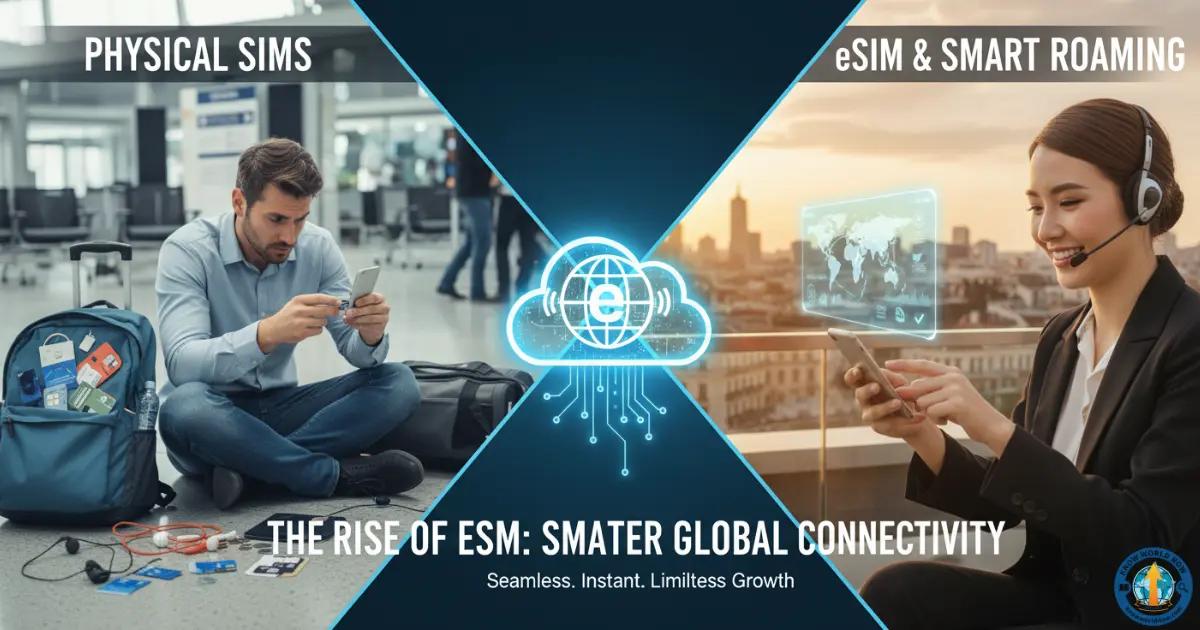
The way we stay connected while traveling internationally is undergoing a dramatic transformation. If you’ve ever fumbled with tiny SIM cards at an airport kiosk or received a shocking phone bill after a trip abroad, you’re not alone. The debate around eSIM vs physical SIM has intensified as more travelers discover that embedded SIM technology offers a smarter, more cost-effective solution to international connectivity. Traditional physical SIM cards, once the only option for mobile connectivity, are rapidly being replaced by eSIM technology that eliminates the need for physical swapping, reduces roaming fees, and provides instant activation across multiple countries. This shift isn’t just about convenience—it represents a fundamental change in how we approach international roaming and mobile connectivity while traveling.
As global travel rebounds and remote work becomes increasingly location-independent, understanding the differences between eSIM and physical SIM cards has become essential for anyone who crosses borders regularly. Whether you’re a digital nomad, frequent business traveler, or planning your first international vacation, the choice between these two technologies can significantly impact your travel experience and budget.
What Is eSIM Technology and How Does It Work?
An eSIM (embedded SIM) is a digital SIM card that’s permanently embedded into your smartphone, tablet, or smartwatch during manufacturing. Unlike traditional physical SIM cards that you insert and remove from your device, an eSIM is a small chip soldered directly onto your device’s motherboard. This programmable chip can store multiple carrier profiles and be activated remotely through software, eliminating the need for physical SIM card swapping.
The technology works through a process called remote SIM provisioning. When you want to activate a new mobile plan, you simply scan a QR code provided by your carrier or download their app. The carrier profile is then downloaded directly to your eSIM chip, and within minutes, you’re connected to their network. This entire process happens digitally—no need to visit a store, wait for a SIM card to arrive by mail, or fumble with a SIM ejector tool.
What makes eSIM particularly revolutionary for travelers is its ability to store multiple carrier profiles simultaneously. You can have your home carrier profile alongside several international carrier profiles, switching between them with just a few taps in your phone’s settings. Some devices even support dual SIM functionality, allowing you to keep your home number active for calls and texts while using a local eSIM profile for data—a feature that addresses the common question of eSIM vs physical SIM for travel scenarios.
The eSIM chip itself uses the same GSM technology as physical SIM cards, meaning there’s no inherent difference in network compatibility or signal strength. The distinction lies purely in the form factor and activation method. This addresses a common concern many travelers have when comparing eSIM vs physical SIM signal strength—the technology behind the connection remains identical.
The Hidden Costs of Traditional Physical SIM Cards for Travelers
International roaming with traditional physical SIM cards has long been one of the most frustrating and expensive aspects of travel. Major carriers typically charge exorbitant fees for international roaming—often $10-15 per day just to use your phone abroad, with data charges that can reach $15 per megabyte in some regions. A week-long trip can easily result in hundreds of dollars in unexpected charges, even with “international plans” that promise reduced rates.
Beyond the direct financial costs, physical SIM cards create numerous hidden expenses and inconveniences. Purchasing a local SIM card in each country you visit requires time spent researching providers, locating stores (often in unfamiliar areas), navigating language barriers, and dealing with varying documentation requirements. In some countries, registering a SIM card requires a local address or specific identification documents that tourists may not have readily available.
The physical nature of traditional SIM cards also introduces logistical challenges. Travelers must keep track of multiple tiny cards, risk losing their home SIM card while abroad, and deal with the hassle of swapping cards in and out of their devices—a process that often requires finding a SIM ejector tool at inconvenient moments. Each swap also means temporarily losing access to your primary phone number, making it difficult for family, friends, or business contacts to reach you.
There’s also the opportunity cost to consider. Time spent hunting for SIM cards, waiting in line at carrier stores, or troubleshooting connectivity issues is time not spent enjoying your destination. For business travelers, connectivity delays can mean missed meetings or lost productivity. The stress of wondering whether you’ll have reliable internet access when you land in a new country adds an unnecessary layer of anxiety to international travel.
Perhaps most frustratingly, physical SIM cards lock you into a single carrier’s network in each location. If you’re traveling through multiple countries, you might need to purchase a new SIM card in each one, repeating the entire process and accumulating costs. Even regional SIM cards that work across multiple countries often come with limitations, reduced speeds, or coverage gaps that leave you disconnected at critical moments.
5 Reasons Travelers Are Switching to eSIM
The migration from physical SIM cards to eSIM technology isn’t just a trend—it’s driven by tangible benefits that directly address travelers’ pain points. Understanding these advantages helps clarify the eSIM vs physical SIM pros and cons debate that many travelers encounter when planning international trips.
1. Instant Activation Before You Travel: One of the most compelling reasons travelers embrace eSIM is the ability to activate international connectivity before leaving home. Instead of arriving in a foreign country and scrambling to find a SIM card vendor, you can purchase and activate an eSIM plan from your couch days or weeks before departure. The moment your plane lands and you turn off airplane mode, you’re already connected to a local network. This pre-trip activation eliminates the stress of being disconnected in an unfamiliar airport and ensures you can immediately access maps, transportation apps, and communication tools upon arrival.
2. Multi-Country Coverage Without SIM Swapping: Modern eSIM providers offer regional and global plans that work across dozens or even hundreds of countries. A single eSIM profile can provide coverage throughout Europe, Asia, or worldwide, eliminating the need to purchase new SIM cards as you cross borders. This seamless connectivity is particularly valuable for travelers on multi-country itineraries, cruise passengers visiting multiple ports, or business travelers with complex routing. The convenience factor alone makes the eSIM or physical SIM which is better question easy to answer for frequent international travelers.
3. Dual SIM Functionality: Most eSIM-capable devices support dual SIM operation, allowing you to maintain your home number for calls and texts while using an eSIM for data. This means you don’t miss important calls from your bank, family emergencies, or two-factor authentication codes while traveling. You can receive calls and texts on your primary number without incurring roaming charges, while all your data traffic routes through the cost-effective local eSIM. This flexibility addresses a major limitation of traditional physical SIM cards, where you had to choose between staying reachable on your home number or having affordable data access.
4. Environmental and Physical Benefits: eSIM technology eliminates the need for plastic SIM cards, packaging, and shipping—a small but meaningful environmental benefit for eco-conscious travelers. More practically, you never have to worry about losing tiny SIM cards, carrying a SIM ejector tool, or damaging your device’s SIM tray through repeated swapping. The physical simplicity of eSIM means one less thing to manage in your travel kit, and no risk of being stranded without connectivity because you lost a millimeter-sized piece of plastic.
5. Flexibility to Switch Providers Instantly: If you’re unhappy with your current eSIM provider’s coverage, speeds, or pricing, switching to a different provider takes minutes rather than requiring a trip to a store or waiting for a new SIM card to arrive. This flexibility gives travelers unprecedented control over their connectivity, allowing them to optimize for the best value and performance at each destination. You can even maintain multiple eSIM profiles on your device and activate whichever offers the best rates or coverage for your current location.
How eSIM Eliminates International Roaming Fees
The financial advantage of eSIM for international travel becomes immediately apparent when you compare costs. Traditional international roaming through your home carrier typically involves daily fees ranging from $10-15, plus per-megabyte data charges that can quickly escalate. A two-week international trip using your home carrier’s roaming service can easily cost $200-300, even with a so-called “international plan.”
eSIM providers take a fundamentally different approach. Instead of routing your data through your home carrier’s network at inflated roaming rates, eSIM services connect you directly to local networks in your destination country. You’re essentially getting local rates without the hassle of purchasing a local physical SIM card. A typical eSIM data plan might offer 5GB of data valid for 30 days in Europe for $15-25, or 10GB of global data for $40-50—a fraction of what traditional roaming would cost for the same usage.
The savings become even more dramatic for frequent travelers or those visiting multiple countries. Regional eSIM plans that cover entire continents eliminate the need to purchase separate SIM cards in each country. For example, a European regional eSIM might provide 10GB of data valid across 30+ countries for around $30, whereas purchasing physical SIM cards in three different countries could easily cost $60-90 for similar data allowances.
Beyond the direct cost savings, eSIM technology helps you avoid bill shock—those unexpected charges that appear on your statement weeks after returning home. With prepaid eSIM plans, you pay upfront for a specific data allowance, and once it’s consumed, your service simply stops rather than continuing to rack up charges. This predictability allows for better budget management and eliminates the anxiety of wondering what your next phone bill will look like.
The competitive eSIM market also works in travelers’ favor. Dozens of eSIM providers compete on price, coverage, and data allowances, driving costs down and value up. This competition addresses concerns about eSIM and physical sim which is more expensive—while physical SIM cards have relatively stable pricing controlled by local carriers, eSIM providers frequently offer promotions, bundle deals, and competitive pricing that can reduce costs even further.
For digital nomads and long-term travelers, the savings compound significantly. Instead of paying monthly roaming fees or purchasing new physical SIM cards every few weeks, a single eSIM provider with global coverage can provide consistent, affordable connectivity across an entire journey. Some travelers report saving thousands of dollars annually by switching from traditional roaming to eSIM-based solutions.
eSIM vs Physical SIM: Side-by-Side Comparison
Understanding the practical differences between these technologies helps clarify which option best suits your travel needs. Here’s a comprehensive comparison addressing the key factors travelers consider:
| Feature | eSIM | Physical SIM |
|---|---|---|
| Activation Time | Instant (minutes via QR code or app) | Requires store visit or mail delivery (hours to days) |
| International Roaming Costs | Local rates through direct network connection ($15-50 for typical travel data) | Expensive roaming fees ($10-15/day plus data charges) or new SIM purchase in each country |
| Multi-Country Coverage | Single profile can cover 30-150+ countries | Requires new SIM card in each country or expensive roaming |
| Device Compatibility | Requires eSIM-capable device (iPhone XS and newer, recent Android flagships) | Works with virtually all mobile devices |
| Setup Complexity | Scan QR code or use app (2-5 minutes) | Physical insertion, potential SIM tray issues, need for ejector tool |
| Dual SIM Capability | Easy to maintain home number + travel data simultaneously | Requires dual SIM device or swapping cards (lose home number access) |
| Risk of Loss/Damage | Zero (embedded in device) | Can be lost, damaged, or misplaced easily |
| Provider Switching | Instant (switch profiles in settings) | Requires obtaining new physical card |
| Environmental Impact | No plastic waste, no shipping | Plastic cards, packaging, shipping emissions |
| Network Performance | Identical to physical SIM (same network technology) | Identical to eSIM (same network technology) |
When examining eSIM vs physical SIM signal strength, it’s important to understand that both technologies use identical cellular radio technology. The eSIM chip communicates with cell towers using the same protocols and frequencies as a physical SIM card. Any perceived differences in signal strength are due to network selection, carrier quality, or device antenna design—not the SIM technology itself. This fact often surprises people searching for information about eSIM vs physical SIM signal strength reddit discussions, where anecdotal experiences sometimes suggest differences that aren’t technically supported.
The question of eSIM vs physical SIM which is faster similarly comes down to network selection rather than the SIM technology. An eSIM connected to a 5G network will deliver the same speeds as a physical SIM on the same network. The advantage eSIM offers is flexibility—you can more easily switch to a provider with better network infrastructure in your location, potentially giving you access to faster speeds through better carrier selection rather than through the technology itself.
For iPhone users specifically, the eSIM vs physical SIM iPhone comparison favors eSIM for international travel. Recent iPhone models (XS and newer) support eSIM alongside a physical SIM slot, and the iPhone 14 and newer models sold in the United States are eSIM-only. Apple’s implementation makes switching between eSIM profiles particularly seamless, with clear settings menus and carrier integration that simplifies the activation process.
Which Devices Support eSIM Technology?
eSIM adoption has accelerated rapidly, but not all devices support the technology yet. Understanding device compatibility is crucial before planning to rely on eSIM for your travels. The good news is that most flagship smartphones released in the past few years include eSIM capability, and the list continues to expand.
Apple Devices: Apple has been a strong proponent of eSIM technology. All iPhone models from the iPhone XS, XS Max, and XR (released in 2018) onward support eSIM. This includes the iPhone 11 series, iPhone 12 series, iPhone 13 series, iPhone 14 series, iPhone 15 series, and the latest iPhone 16 series. Notably, iPhone 14 and newer models sold in the United States are eSIM-only, with no physical SIM card slot at all. Recent iPad models, including iPad Pro (2018 and later), iPad Air (2019 and later), and iPad (2019 and later) also support eSIM. The Apple Watch Series 3 and newer cellular models use eSIM technology as well.
Samsung Devices: Samsung’s flagship Galaxy series has embraced eSIM starting with the Galaxy S20 series. Supported models include the Galaxy S20, S21, S22, S23, and S24 series, as well as the Galaxy Z Fold and Z Flip foldable devices from the 2020 models onward. The Galaxy Note 20 series also supports eSIM. However, it’s important to note that eSIM availability can vary by region and carrier—some Samsung devices sold in certain markets may have the eSIM functionality disabled.
Google Pixel Devices: Google Pixel phones have supported eSIM since the Pixel 3 and Pixel 3 XL. All subsequent Pixel models, including the Pixel 4, 5, 6, 7, 8, and the latest Pixel 9 series, offer eSIM capability. Google has been particularly supportive of eSIM for international travelers, with straightforward activation processes and good carrier compatibility.
Other Android Manufacturers: Many other Android manufacturers have added eSIM support to their flagship devices. This includes select models from Motorola (Razr series), Huawei (P40 and newer in some markets), Oppo (Find X3 Pro and newer), and OnePlus (newer flagship models). However, eSIM support on Android devices can be inconsistent, with availability often depending on the specific model variant and the market where it was purchased.
Tablets and Wearables: Beyond smartphones, eSIM technology has expanded to tablets and smartwatches. Microsoft Surface Pro devices with LTE support eSIM, as do cellular versions of the Samsung Galaxy Watch series and various other smartwatches designed for independent connectivity.
Before purchasing an eSIM plan for travel, verify that your specific device model supports eSIM and that the functionality isn’t carrier-locked. You can typically check this in your device settings—on iPhone, look for “eSIM” or “Add Cellular Plan” in Settings > Cellular; on Android, check Settings > Network & Internet > Mobile Network for eSIM options. Some devices purchased through carriers may have eSIM functionality locked until the device is fully paid off or unlocked, so confirm your device’s status before relying on eSIM for international travel.
How to Activate eSIM for International Travel (Step-by-Step)
Activating an eSIM for international travel is remarkably straightforward, though the exact process varies slightly depending on your device and chosen provider. Here’s a comprehensive guide that works for most scenarios:
Step 1: Verify Device Compatibility and Unlock Status
Before purchasing an eSIM plan, confirm your device supports eSIM technology and is carrier-unlocked. On iPhone, go to Settings > General > About and look for “Available SIM” or “Digital SIM” information. On Android, navigate to Settings > Network & Internet > Mobile Network and look for eSIM options. If your device is carrier-locked, contact your carrier to request an unlock—most carriers will unlock devices that are fully paid off or out of contract.
Step 2: Research and Choose an eSIM Provider
Select an eSIM provider based on your destination, data needs, and budget. Consider factors like coverage area (single country, regional, or global), data allowance, validity period, and whether the plan includes calls and texts or is data-only. Read recent reviews to verify the provider’s reliability and customer service quality. Popular options include Airalo, Holafly, Nomad, Ubigi, and carrier-specific options from providers like T-Mobile, Vodafone, or Orange.
Step 3: Purchase Your eSIM Plan
Visit your chosen provider’s website or download their mobile app. Create an account, select your destination and desired plan, and complete the purchase. Most providers accept major credit cards and digital payment methods. You’ll receive a confirmation email containing either a QR code or instructions for app-based activation. Some providers deliver the QR code immediately, while others may take a few minutes to generate your eSIM profile.
Step 4: Install the eSIM Profile
For QR code activation on iPhone: Go to Settings > Cellular > Add Cellular Plan, then scan the QR code provided by your eSIM provider using your device’s camera. Follow the on-screen prompts to add the plan. For Android devices, the process is similar: Settings > Network & Internet > Mobile Network > Add Carrier, then scan the QR code.
For app-based activation: Some providers offer direct installation through their mobile app, eliminating the need for QR code scanning. Simply download the provider’s app, log in to your account, and follow the prompts to install your purchased eSIM profile directly to your device.
Step 5: Label and Configure Your eSIM
Once installed, your device will prompt you to label the new eSIM plan (e.g., “Travel Data” or “Europe eSIM”). This helps you distinguish between your home SIM and travel eSIM if you’re using dual SIM functionality. Configure which line you want to use for cellular data, calls, and messages. For most travelers, the optimal setup is using the eSIM for data while keeping your home SIM active for calls and texts.
Step 6: Activate at Your Destination
Many eSIM plans don’t activate until you connect to a network in your destination country, preserving your validity period. Keep your eSIM profile installed but turned off until you arrive. When you land, disable airplane mode and enable your eSIM in your device settings. The eSIM should automatically connect to a local network within a few minutes. You may need to enable data roaming for the eSIM profile in your settings.
Step 7: Verify Connection and Troubleshoot if Needed
Once activated, verify you have a data connection by opening a web browser or app that requires internet access. Check that you’re connected to the correct network and that your data is routing through the eSIM rather than your home SIM. If you experience connection issues, try restarting your device, manually selecting a network in your cellular settings, or toggling airplane mode on and off. Most eSIM providers offer customer support through their apps or websites if you encounter persistent problems.
The entire process typically takes 5-10 minutes and can be completed before you leave home, ensuring you have connectivity the moment you arrive at your destination. This convenience is one of the primary reasons travelers find the answer to is eSIM or physical SIM better for travel increasingly favors eSIM technology.
Best eSIM Providers for International Travelers
The eSIM market has grown rapidly, with numerous providers competing to offer the best coverage, pricing, and user experience. Choosing the right provider depends on your specific travel patterns, destinations, and connectivity needs. Here are the leading eSIM providers that consistently receive positive reviews from international travelers:
Airalo has emerged as one of the most popular eSIM providers globally, offering coverage in over 200 countries and regions. Their strength lies in their extensive selection of local, regional, and global plans with transparent pricing. Airalo’s user-friendly app makes purchasing and managing eSIM profiles straightforward, and their customer support is generally responsive. Plans range from budget-friendly options for short trips to comprehensive global packages for frequent travelers. Their regional plans for Europe, Asia, and other continents offer particularly good value for multi-country itineraries.
Holafly specializes in unlimited data plans, making them ideal for travelers who need heavy data usage for work, streaming, or constant navigation. Unlike many competitors who sell fixed data allowances, Holafly’s plans offer unlimited data for specific time periods (typically 5, 7, 10, 15, or 30 days) in various countries. This eliminates the anxiety of monitoring data consumption and potentially running out at inconvenient times. Their coverage focuses primarily on popular travel destinations in Europe, Asia, and the Americas, with particularly strong networks in Spain, Italy, France, and Japan.
Nomad distinguishes itself through competitive pricing and a rewards program that gives returning customers discounts on future purchases. They offer both regional and country-specific plans with good coverage across Europe, Asia, and North America. Nomad’s plans include a mix of data-only and plans that include local phone numbers for calls and texts—useful for travelers who need to make local calls for restaurant reservations, tour bookings, or business purposes. Their app interface is clean and intuitive, making it easy to manage multiple eSIM profiles.
Ubigi provides extensive global coverage with a focus on reliability and consistent network quality. They partner with major carriers in each region to ensure strong signal strength and fast data speeds. Ubigi offers both prepaid plans and pay-as-you-go options, giving travelers flexibility in how they manage their data usage. Their plans work well for both short trips and extended travel, with regional packages that cover entire continents at competitive rates. Ubigi is particularly strong in Europe and North America.
GigSky targets premium travelers and business users with high-quality network partnerships and excellent customer support. While their pricing tends to be slightly higher than budget competitors, they compensate with superior network reliability and faster data speeds. GigSky offers global coverage with a single eSIM profile that works across 190+ countries, eliminating the need to purchase separate plans for each destination. This convenience makes them popular among frequent international business travelers who prioritize reliability over cost savings.
Maya Mobile focuses on long-term travelers and digital nomads with plans that extend up to 180 days. Their pricing structure rewards longer commitments, making them cost-effective for extended stays or slow travel. Maya offers both regional and global plans with generous data allowances, and their customer service is known for being particularly helpful with technical issues and setup questions.
When selecting among these providers, consider these factors: coverage in your specific destinations (not all providers have equally strong networks everywhere), data allowance versus trip duration, whether you need calls and texts or just data, pricing relative to your budget, user reviews for your specific destination, and customer support availability. Many experienced travelers maintain accounts with multiple eSIM providers, purchasing plans from whichever offers the best value for each specific trip. This flexibility is one of the key advantages of eSIM technology—you’re not locked into a single provider and can optimize for the best deal each time you travel.
Common eSIM Myths Debunked
Despite eSIM technology’s growing adoption, several misconceptions persist that prevent some travelers from making the switch. Understanding the reality behind these myths helps make informed decisions about whether eSIM is right for your travel needs.
Myth 1: “eSIM has weaker signal strength than physical SIM cards”
This is perhaps the most common misconception, frequently discussed in eSIM vs physical SIM reddit threads. The reality is that eSIM and physical SIM cards use identical cellular radio technology to connect to networks. The eSIM chip communicates with cell towers using the same protocols, frequencies, and signal processing as a physical SIM card. Any perceived signal differences are due to network selection, carrier quality, device antenna design, or location-specific coverage—not the SIM technology itself. In fact, because eSIM allows you to easily switch between multiple carrier profiles, you may actually achieve better connectivity by selecting the carrier with the strongest network in your location.
Myth 2: “Do eSIMs drain battery faster than physical SIM cards?”
Concerns about eSIM vs physical SIM battery consumption are understandable but unfounded. The eSIM chip itself consumes negligible power—essentially the same as a physical SIM card reader. What can drain battery faster is using dual SIM functionality (having both your home SIM and an eSIM active simultaneously), as your device maintains connections to two networks. However, this battery impact is the same whether you’re using two physical SIMs or a combination of physical and eSIM. The eSIM technology itself doesn’t inherently consume more power. If you notice increased battery drain while traveling with eSIM, it’s more likely due to increased usage (navigation, translation apps, constant connectivity) rather than the eSIM technology.
Myth 3: “eSIM is complicated and technical to set up”
Many travelers assume eSIM activation requires technical expertise or complex configuration. In reality, activating an eSIM is typically simpler than dealing with physical SIM cards. The process involves scanning a QR code or clicking a button in an app—no need to find a SIM ejector tool, remove your device case, or risk damaging the SIM tray. Most eSIM providers have streamlined their activation processes to be user-friendly, with clear step-by-step instructions and customer support available if needed. The entire setup usually takes less than five minutes, and you can complete it from the comfort of your home before traveling.
Myth 4: “Why is eSIM not popular? It must have serious drawbacks”
eSIM adoption is actually accelerating rapidly—it’s not that eSIM isn’t popular, but rather that awareness is still catching up with availability. In markets where eSIM-only devices have launched (like the iPhone 14 in the United States), adoption has been swift. The perception of limited popularity often stems from the fact that eSIM is relatively new compared to physical SIM cards’ decades-long history. Additionally, some carriers have been slow to support eSIM or make the option visible to customers, creating the impression that it’s niche technology. In reality, eSIM is the future of mobile connectivity, with major manufacturers and carriers investing heavily in the ecosystem.
Myth 5: “eSIM doesn’t work in all countries”
While it’s true that eSIM coverage isn’t universal, major eSIM providers now offer connectivity in 150-200+ countries—covering virtually all popular travel destinations and many remote locations. The question isn’t whether eSIM works in a country, but rather which eSIM provider offers the best coverage and pricing there. Even in countries where eSIM adoption is slower, travelers can typically find at least one provider with reliable service. The coverage gap is narrowing rapidly as more carriers worldwide support eSIM technology.
Myth 6: “You can’t use eSIM for calls and texts, only data”
Many eSIM plans are data-only, which leads to the misconception that eSIM can’t support voice calls and SMS. In reality, eSIM technology fully supports calls and texts—it’s simply that many travel-focused eSIM providers offer data-only plans because that’s what most travelers need (they can use messaging apps and VoIP for communication). However, numerous eSIM providers do offer plans that include local phone numbers with calling and texting capabilities. Additionally, with dual SIM functionality, you can keep your home number active for calls and texts while using the eSIM purely for data.
Myth 7: “eSIM is always more expensive than buying local SIM cards”
The cost comparison depends on your specific situation. For single-country visits where you have time to research and purchase an optimal local SIM card, physical SIMs might sometimes be marginally cheaper. However, when you factor in the time cost of finding and purchasing SIM cards, the convenience of pre-activation, multi-country coverage, and the ability to avoid expensive roaming fees, eSIM often provides better overall value. For multi-country trips, eSIM is almost always more cost-effective than purchasing separate physical SIM cards in each location. The competitive eSIM market has also driven prices down significantly, with many plans now matching or beating local SIM card pricing.
Is eSIM Right for Your Travel Needs?
Determining whether to switch from physical SIM cards to eSIM for your international travel depends on several factors specific to your situation, devices, and travel patterns. Understanding when eSIM offers clear advantages—and when physical SIM cards might still be preferable—helps you make the right choice.
eSIM is ideal if you: Travel internationally multiple times per year, as the convenience and cost savings compound with frequent use. Visit multiple countries on single trips, where eSIM’s regional coverage eliminates the need for multiple SIM card purchases. Value convenience and time, preferring to activate connectivity before leaving home rather than hunting for SIM cards upon arrival. Own an eSIM-capable device (iPhone XS or newer, recent Samsung Galaxy, Google Pixel, or other compatible smartphone). Need to maintain access to your home phone number for two-factor authentication, important calls, or business purposes while abroad. Travel to popular destinations where eSIM coverage is extensive and competitive. Work remotely or need reliable connectivity for business purposes while traveling. Want predictable costs without the risk of bill shock from unexpected roaming charges.
Physical SIM cards might still be better if you: Own an older device that doesn’t support eSIM technology and aren’t planning to upgrade soon. Travel exclusively to a single country where local SIM cards are extremely cheap and readily available. Stay in one location for extended periods (several months), where long-term local SIM contracts might offer better value. Need maximum data allowances at the absolute lowest cost and have time to research and purchase optimal local SIMs. Travel to remote or less-developed regions where eSIM coverage may be limited or nonexistent. Prefer having a physical backup option in case of technical issues with eSIM activation. Are uncomfortable with digital activation processes and prefer the tangibility of physical cards.
For many travelers, the optimal approach combines both technologies. You might use eSIM for most international travel while keeping a physical SIM card slot available for specific situations where local SIM cards offer unique advantages—like extremely long stays or destinations with limited eSIM support. The dual SIM capability of most modern smartphones makes this hybrid approach practical and flexible.
When evaluating which is better eSIM or physical SIM in iPhone or other devices, consider your specific use case rather than seeking a universal answer. A digital nomad traveling through Southeast Asia for six months might find a combination of eSIM for initial connectivity and local physical SIMs for extended stays most cost-effective. A business traveler making frequent short trips to major cities would likely benefit most from eSIM’s convenience and instant activation. A vacation traveler visiting a single country for two weeks could go either way, depending on their comfort with technology and desire for pre-trip preparation.
The trajectory of mobile connectivity clearly favors eSIM as the future standard. Major device manufacturers are moving toward eSIM-only designs, carriers are expanding eSIM support, and the provider ecosystem continues to mature with better pricing and coverage. Even if you’re not ready to switch entirely to eSIM today, familiarizing yourself with the technology and trying it on your next international trip can help you understand its benefits firsthand. Many travelers who initially approached eSIM with skepticism find that after one successful trip using the technology, they never want to return to the hassle of physical SIM cards.
Ultimately, the question of is eSIM better than physical SIM has a nuanced answer: for most modern travelers with compatible devices visiting popular destinations, eSIM offers superior convenience, comparable or better pricing, and greater flexibility. The technology eliminates many of the traditional pain points of international connectivity while introducing minimal new complications. As eSIM adoption continues to grow and the ecosystem matures, the advantages will only become more pronounced, making now an excellent time to explore whether this technology can improve your travel experience.
Frequently Asked Questions
Is eSIM better than physical SIM for international travel?
Yes, eSIM is generally better than physical SIM for international travel due to instant activation, lower costs, and greater flexibility. With eSIM, you can purchase and activate international data plans before you even board your flight, eliminating the need to find local SIM vendors or pay expensive roaming fees. You can also switch between multiple carriers and plans without physically swapping SIM cards, making it ideal for multi-country trips.
What are the main disadvantages of eSIM?
The primary disadvantages of eSIM include limited device compatibility, as not all smartphones support the technology yet, and potential difficulties when switching phones since you can’t simply pop out a card. Some travelers also find that eSIM options may be limited in certain countries or with specific carriers. Additionally, if your phone is lost or damaged, transferring your eSIM to a new device requires contacting your carrier rather than simply moving a physical card.
Do eSIMs drain battery faster than physical SIMs?
No, eSIMs do not inherently drain battery faster than physical SIMs. Both technologies function similarly in terms of power consumption when connecting to cellular networks. However, if you’re running dual SIM mode (keeping both your home eSIM and a travel eSIM active simultaneously), your battery may drain slightly faster due to maintaining two network connections, regardless of whether you’re using eSIM vs physical SIM technology.
How much does an eSIM typically cost for international travel?
International travel eSIM plans typically cost between $5 to $50 depending on the destination, data allowance, and duration. For example, a 7-day plan with 3GB of data for Europe might cost $10-15, while a 30-day plan with 10GB could run $30-40. These prices are generally 50-80% cheaper than traditional international roaming charges from your home carrier, making eSIM a cost-effective choice for travelers.
Should you turn off your primary SIM when using an eSIM abroad?
You don’t necessarily need to turn off your primary SIM when using an eSIM for travel, but you should disable data roaming on it to avoid unexpected charges. Most travelers keep their home SIM active for receiving calls and texts (often free or low-cost) while routing all data through their travel eSIM. This dual-SIM setup allows you to maintain your home number for important calls while enjoying affordable local data rates.
Is an eSIM tied to a specific phone?
Yes, once activated, an eSIM is tied to the specific device it was installed on and cannot be easily transferred like a physical SIM card. If you get a new phone, you’ll typically need to contact your eSIM provider to deactivate the profile on your old device and receive a new QR code to activate it on your new phone. Some eSIM providers allow one free transfer, while others may charge a small fee for reissuing the eSIM profile.
What are the pros and cons of eSIM vs physical SIM?
The main pros of eSIM include instant digital activation, no physical card to lose or damage, ability to store multiple carrier profiles, and easier switching between plans. Cons include limited device compatibility, difficulty transferring between phones, and less universal acceptance in some regions. Physical SIMs offer universal compatibility, easy phone transfers, and work in any unlocked device, but require physical handling, can be lost, and take up space in your device.
Why isn’t eSIM more popular if it’s better for travel?
eSIM adoption has been slower than expected due to several factors: many people are unaware the technology exists, not all smartphones support it yet (particularly budget models), and some carriers have been slow to offer eSIM options. Additionally, travelers who don’t frequently go abroad may not see the immediate benefit, and there’s a general comfort with the familiar physical SIM card system. However, eSIM usage is rapidly growing, especially among frequent international travelers who’ve discovered its advantages.
Does eSIM affect signal strength compared to physical SIM?
No, eSIM does not affect signal strength compared to physical SIM cards. Both technologies connect to cellular networks in exactly the same way and deliver identical signal quality and network performance. The choice between eSIM vs physical SIM comes down to convenience, flexibility, and compatibility rather than any difference in connection quality or speed.
Is there any reason not to get an eSIM for international travel?
You might want to stick with a physical SIM if your phone doesn’t support eSIM technology, if you frequently switch between multiple devices, or if you’re traveling to a country where eSIM options are limited or more expensive than local physical SIMs. Additionally, if you prefer having a physical backup that you can easily move to another phone in case of device failure, a physical SIM might provide more peace of mind for your specific travel needs.
You May Also Like

Reducing Cyber Risk: Practical Guide for UK Businesses 2024

Biogas Odour Control: Carbon Filtration Systems Guide