Mohammad Amir: Career, Scandal, Comeback & Net Worth 2024

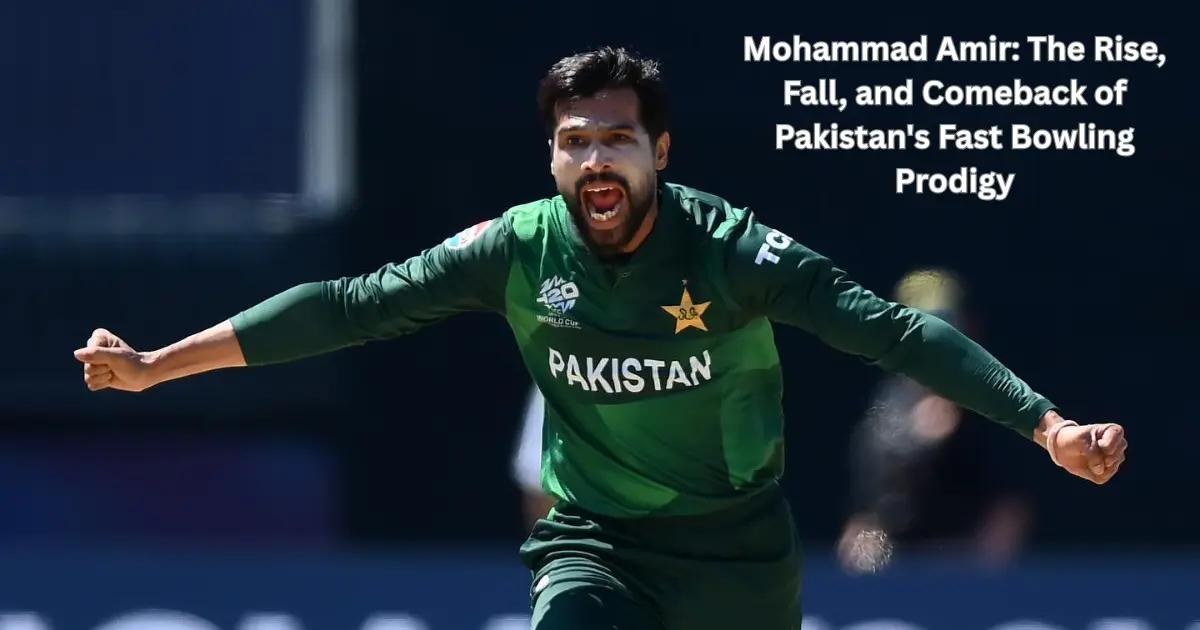
Mohammad Amir is one of cricket’s most polarizing figures—a left-arm fast bowler who possessed extraordinary talent but became infamous for his involvement in the 2010 spot-fixing scandal that rocked international cricket. At just 18 years old, Amir was hailed as Pakistan’s next great fast bowling prodigy, drawing comparisons to legends like Wasim Akram. His natural swing, deceptive pace, and maturity beyond his years made him a nightmare for batsmen worldwide. However, his promising career came to a screeching halt when he was caught in a match-fixing conspiracy during Pakistan’s tour of England in 2010. What followed was a five-year ban, imprisonment, public vilification, and one of cricket’s most debated comebacks. Today, Mohammad Amir represents both the heights of sporting talent and the depths of poor judgment—a cautionary tale about redemption, second chances, and whether past mistakes can ever be truly forgiven.
Who is Mohammad Amir? Pakistan's Youngest Fast Bowling Sensation
Born on April 13, 1992, in Gujar Khan, a small town in Punjab, Pakistan, Mohammad Amir grew up in modest circumstances with cricket as his escape and ambition. His natural athleticism and left-arm bowling action caught attention early in local cricket circles. Unlike many Pakistani fast bowlers who rely purely on pace, Amir’s strength was his ability to swing the ball both ways at high speed—a rare combination that makes batsmen vulnerable even on flat pitches.
Amir’s rise through Pakistan’s domestic cricket system was meteoric. He made his first-class debut for Rawalpindi in 2007 at just 15 years old, immediately impressing selectors with his control and maturity. His bowling action was smooth and repeatable, generating late swing that troubled even experienced batsmen. By 2009, at age 17, he had forced his way into Pakistan’s national team setup, becoming one of the youngest players to represent the country in international cricket.
The Mohammad Amir age factor became a talking point—here was a teenager competing against the world’s best batsmen and not just surviving but dominating. His left-arm angle, combined with his ability to move the ball away from right-handers and into left-handers, made him a unique weapon in Pakistan’s bowling arsenal. Cricket experts immediately recognized his potential, with many predicting he would become one of the greatest fast bowlers Pakistan had ever produced.
Standing at approximately 5 feet 10 inches, Amir wasn’t the tallest fast bowler, but his smooth run-up and whippy action generated genuine pace. The Mohammad Amir bowling speed consistently touched 140-145 km/h (87-90 mph), with his fastest recorded delivery reaching approximately 148.7 km/h (92.4 mph). More importantly than raw speed, his ability to swing the ball at pace made him virtually unplayable on helpful conditions.
Early Career Breakthrough: The 2009-2010 Dominance
Mohammad Amir’s international debut came in a Twenty20 match against England in August 2009, but it was his Test debut later that year against Sri Lanka that truly announced his arrival. In only his second Test match, playing in Colombo, the 17-year-old Amir took 5 wickets for 52 runs in the first innings, showcasing control and skill far beyond his years. His ability to swing the ball late and maintain a consistent line made him an instant threat.
The 2009-2010 period represented the peak of Amir’s early promise. During Pakistan’s tour of Australia in 2009-2010, he tormented Australian batsmen with his swing bowling, taking crucial wickets and earning widespread praise. In the Sydney Test, he claimed 6 wickets in the match, including dismissing Australian captain Ricky Ponting. International cricket commentators were running out of superlatives to describe the teenager’s performances.
His One Day International (ODI) performances were equally impressive. Amir’s ability to swing the new ball made him a potent weapon in the powerplay overs, while his variations and slower balls proved effective in the death overs. By mid-2010, Mohammad Amir career statistics showed he had taken 51 Test wickets at an average of 28.17 and 25 ODI wickets at 30.72—remarkable figures for someone still in his teens.
The cricketing world watched in awe as Amir formed a formidable partnership with fellow fast bowlers Mohammad Asif and Umar Gul. Pakistan’s pace attack was feared globally, and Amir was considered the crown jewel—the youngest, the most talented, and the one with the brightest future. Major cricket nations began planning specifically for how to counter his swing bowling, a testament to his impact at such a young age.
During Pakistan’s tour of England in summer 2010, Amir continued his excellent form. At Lord’s, the home of cricket, he bowled with pace and precision, taking 4 wickets in England’s first innings. Everything seemed to be going perfectly for the young fast bowler. His performances suggested he was on track to become one of cricket’s all-time greats. Then came August 26, 2010—the day that would change everything.
The 2010 Spot-Fixing Scandal: What Really Happened
The Mohammad Amir spot fixing scandal broke on August 26, 2010, when the British tabloid News of the World published allegations that certain Pakistan players had been involved in spot-fixing during the fourth Test match against England at Lord’s. Spot-fixing differs from match-fixing in that players manipulate specific moments in a game rather than the overall result—making it harder to detect but equally corrupt.
According to the investigation, Pakistan’s captain Salman Butt and bowlers Mohammad Asif and Mohammad Amir had agreed to bowl no-balls at predetermined moments in exchange for money. An undercover reporter had captured Pakistan’s agent Mazhar Majeed on video claiming he could arrange for specific no-balls to be bowled at exact times. The video showed Majeed accepting £150,000 and predicting when these no-balls would occur—predictions that came true during the match.
Amir bowled three deliberate no-balls during the Lord’s Test, overstepping the crease by significant margins at the exact overs Majeed had predicted. The evidence was damning. While Amir was just 18 years old at the time, the deliberate nature of the no-balls—far larger oversteps than typical bowling errors—made it clear this was intentional. The cricketing world was shocked that such a talented young player would risk everything for what was reportedly a relatively small payment.
The scandal didn’t just involve the three players. Mazhar Majeed, who acted as an agent and middleman, was the orchestrator who connected corrupt bookmakers with the players. Captain Salman Butt was accused of being the ringleader who recruited the younger players into the scheme. The investigation revealed a web of corruption that had potentially been ongoing for some time, with the Lord’s Test simply being where they were finally caught.
What made the Mohammad Amir spot fixing case particularly tragic was his age and the circumstances. Many argued that as an 18-year-old from a poor background, Amir was manipulated by older, more experienced players and agents. Others countered that he was old enough to know right from wrong and that his talent made the betrayal even worse. The debate about his culpability versus his victimhood would continue for years.
The Investigation and Evidence
The International Cricket Council (ICC) launched an immediate investigation, working with British police and the Crown Prosecution Service. Mobile phone records, bank transactions, and witness testimonies were examined. The undercover footage from News of the World became central evidence, showing Majeed counting out cash and explaining the spot-fixing arrangement in detail.
Amir initially denied the allegations, but as evidence mounted, his position became untenable. The no-balls he bowled were analyzed frame-by-frame, showing deliberate oversteps far beyond normal bowling errors. Cricket experts testified that bowlers of Amir’s caliber and experience don’t accidentally overstep by such large margins, especially not at the exact moments predicted by a bookmaker’s agent.
The scandal sent shockwaves through cricket. Pakistan cricket, already battling a reputation for corruption, faced its darkest hour. Fans felt betrayed, sponsors withdrew support, and the integrity of the sport was questioned. For Mohammad Amir, the teenager who had been cricket’s brightest young star just weeks earlier, the fall from grace was catastrophic.
Consequences: Ban, Imprisonment, and Public Backlash
In February 2011, the ICC’s Anti-Corruption Tribunal found Mohammad Amir guilty of spot-fixing and banned him from all forms of cricket for five years. The tribunal acknowledged his young age and that he was likely influenced by senior players, but emphasized that corruption in any form could not be tolerated. The five-year ban meant Amir would miss his entire early twenties—the prime years for a fast bowler.
The legal consequences were equally severe. In November 2011, a British court sentenced Amir to six months in prison for his role in the conspiracy to cheat and accept corrupt payments. He served three months in a young offenders’ institution in England before being released and deported to Pakistan. The sight of the teenage cricket prodigy in prison clothes shocked the sporting world and served as a stark warning about the consequences of corruption.
Salman Butt received a 10-year ban and 30 months in prison, while Mohammad Asif got a 7-year ban and 12 months imprisonment. Mazhar Majeed, the agent who orchestrated the scheme, was sentenced to 2 years and 8 months in prison. The sentences sent a clear message that cricket corruption would be prosecuted criminally, not just through sporting sanctions.
The public backlash in Pakistan was intense and divided. Many fans felt betrayed by players who had represented their country’s honor. Amir’s posters were torn down, his endorsements vanished, and he became a symbol of shame. However, a significant portion of the public, particularly those who knew his humble background, argued he deserved sympathy as a young man led astray by corrupt elders.
During his ban, Amir faced severe financial difficulties. His cricket earnings stopped, legal fees mounted, and his family struggled. The psychological toll was immense—depression, public humiliation, and the loss of his identity as a cricketer. He later described this period as the darkest of his life, contemplating whether he would ever play cricket again and whether the public would ever forgive him.
The Debate Over Redemption
From the moment of his conviction, debates raged about whether Amir deserved a second chance. Supporters argued that he was barely an adult when he made his mistake, that he showed genuine remorse, and that cricket should offer redemption to those who serve their punishment. Critics countered that corruption strikes at cricket’s heart, that his talent made the betrayal worse, and that allowing him back would send the wrong message.
Former cricketers were divided. Some, like Wasim Akram, advocated for giving Amir another opportunity, emphasizing his youth and potential for rehabilitation. Others, including several former England players, argued that lifetime bans should apply to anyone involved in corruption, regardless of age. The debate reflected broader questions about justice, forgiveness, and whether sporting talent should influence punishment.
The Comeback Journey: Return to Domestic Cricket (2015-2016)
Mohammad Amir’s five-year ban ended in September 2015, and he immediately began the long road back to cricket. His first steps were in domestic cricket, where he needed to prove his fitness, regain his skills, and demonstrate he had learned from his mistakes. The Pakistan Cricket Board (PCB) imposed additional requirements, including anti-corruption education and counseling, before allowing his return.
In January 2016, Amir made his return to domestic cricket playing for Pakistan Television (PTV) in the National One-Day Cup. The comeback was emotional—Amir broke down in tears after taking his first wicket back, overwhelmed by the moment. His performances were closely watched, with every wicket analyzed to see if the old magic remained. Early signs were promising; his bowling action looked unchanged, and his ability to swing the ball was still evident.
The Mohammad Amir comeback in domestic cricket showed he hadn’t lost his skills during the ban. He took 30 wickets in his first domestic season back, proving his fitness and form. His performances in the Pakistan Super League (PSL), playing for Karachi Kings, further demonstrated he could still compete at high levels. The swing, the pace, and the intelligence were all still there.
However, his return wasn’t universally welcomed. Some teammates were reportedly uncomfortable playing alongside him, and opposition players made their feelings known. Crowds were mixed—some cheered his redemption story, while others booed and held up signs reminding him of his past. Amir handled the pressure with maturity, repeatedly expressing remorse and promising to earn back trust through performances.
The psychological challenge was perhaps greater than the physical one. Amir had to rebuild his confidence, knowing that every mistake would be scrutinized and every success questioned. He worked with sports psychologists and mentors to develop mental resilience. His public statements during this period emphasized humility, gratitude for a second chance, and determination to prove himself worthy of redemption.
International Return: Pakistan's Controversial Decision
In March 2016, just months after returning to domestic cricket, the Pakistan Cricket Board made the controversial decision to select Mohammad Amir for the national team’s tour of New Zealand. The decision sparked immediate controversy both within Pakistan and internationally. The PCB argued that Amir had served his punishment, shown genuine remorse, and deserved the opportunity to represent his country again.
The selection divided the Pakistan cricket team. Some senior players, including captain Shahid Afridi, initially opposed Amir’s return, arguing it was too soon and that it sent the wrong message. Others, including coach Waqar Younis, supported giving him another chance. The PCB ultimately decided that sporting merit and rehabilitation should prevail, clearing the way for Amir’s international comeback.
Amir’s first international match back was a T20I against New Zealand on January 15, 2016. He took 2 wickets for 28 runs, showing glimpses of his old form. The emotional weight of the moment was visible—Amir celebrated wickets with restrained joy, aware that he was being watched by millions judging whether he deserved to be there. His performances in New Zealand were solid if not spectacular, taking 5 wickets in 3 T20Is.
The international cricket community’s reaction was mixed. The International Cricket Council (ICC) had no objection since Amir had completed his ban, but several former players and commentators questioned whether someone convicted of corruption should ever represent their country again. English cricket fans, in particular, were hostile when Pakistan toured England in 2016—the scene of Amir’s crime.
Pakistan’s decision to fast-track Amir’s return to international cricket was partly pragmatic. The team needed quality fast bowlers, and Amir’s talent was undeniable. The 2016 ICC World Twenty20 was approaching, and Pakistan saw Amir as a potential match-winner. His selection proved justified when he performed well in the tournament, taking 6 wickets and showing he could handle the pressure of major international competitions.
The 2017 ICC Champions Trophy Triumph
Mohammad Amir’s redemption story reached its peak at the 2017 ICC Champions Trophy in England—the same country where his career had fallen apart seven years earlier. Playing at the venue of his greatest shame, Amir produced performances that reminded the world why he had been considered special. In the final against India at The Oval, he took 3 crucial wickets for 16 runs, dismantling India’s top order and setting up Pakistan’s stunning victory.
His spell in the Champions Trophy final was vintage Amir—swinging the ball at pace, finding edges, and bowling with intelligence and aggression. The sight of him celebrating Pakistan’s victory at The Oval, where he had once brought shame to the sport, was powerfully symbolic. For many, this performance represented complete redemption; for others, it was simply good cricket that didn’t erase past sins.
Post-Comeback Performances: Statistics and Key Matches
After his return to international cricket in 2016, Mohammad Amir career statistics showed he remained an effective bowler, though perhaps not quite reaching the heights many had predicted before his ban. In Test cricket, he added 61 wickets post-comeback at an average of 30.47, bringing his career total to 119 Test wickets at an average of 30.47 from 36 matches. His ability to swing the ball remained his primary weapon, particularly in English and New Zealand conditions.
In ODI cricket, Amir’s post-comeback record was more impressive. He took 81 wickets in 61 matches at an average of 29.34 and an economy rate of 4.89—excellent figures in modern limited-overs cricket. His ability to take wickets in the powerplay and control runs in the death overs made him valuable in Pakistan’s ODI setup. He finished his ODI career with 119 wickets from 61 matches.
His T20I statistics showed 59 wickets from 50 matches at an average of 22.20 and an economy rate of 7.00. In the shortest format, Amir’s variations, including slower balls and yorkers, proved particularly effective. He became one of Pakistan’s most reliable T20 bowlers, especially in pressure situations during major tournaments.
Memorable Post-Comeback Performances
Beyond the 2017 Champions Trophy final, several performances stood out during Amir’s comeback phase. Against England at Lord’s in 2018, he took 5 wickets for 72 runs in the first Test—a performance laden with symbolism given the venue’s significance in his story. His ability to swing the ball in English conditions remained exceptional, troubling England’s batsmen throughout the series.
In the 2019 Cricket World Cup, Amir took 17 wickets in 8 matches, finishing as Pakistan’s leading wicket-taker in the tournament. His performances included crucial wickets against Australia, England, and New Zealand, showing he could still perform on the biggest stages. However, Pakistan’s early exit from the tournament was disappointing, and Amir faced criticism for some expensive spells.
Against Australia in the 2018 Test series in the UAE, Amir took 13 wickets across two matches, including a five-wicket haul in Dubai. His reverse swing and ability to extract bounce from flat pitches demonstrated his evolution as a bowler. He had learned to be effective even in conditions that didn’t naturally suit his swing bowling.
Retirement and Unretirement: Mohammad Amir's Career Decisions
In December 2020, Mohammad Amir shocked the cricket world by announcing his retirement from international cricket at just 28 years old—an age when most fast bowlers are in their prime. His decision came amid tensions with Pakistan’s team management, particularly with head coach Misbah-ul-Haq and bowling coach Waqar Younis. Amir cited mental torture and lack of support from the management as reasons for his retirement.
The Mohammad Amir retirement announcement revealed deeper issues within Pakistan cricket. Amir felt he was being unfairly treated and not given consistent opportunities despite good performances. He expressed frustration with being dropped and recalled repeatedly, making it difficult to plan his career. His emotional retirement press conference highlighted the ongoing challenges he faced in being fully accepted back into the Pakistan cricket setup.
However, Amir’s retirement from international cricket didn’t mean retirement from all cricket. He continued playing in various T20 franchise leagues around the world, including the Pakistan Super League, Caribbean Premier League, and Bangladesh Premier League. His performances in these leagues showed he still had the skills and hunger to compete, raising questions about whether his international retirement was truly permanent.
In a surprising turn in 2024, reports emerged that Amir was considering reversing his retirement and making himself available for Pakistan selection again. This potential unretirement sparked fresh debates about whether Pakistan should welcome him back or move on with younger players. The Pakistan Cricket Board’s response was cautious, indicating that any return would need to be based on current form and fitness rather than past reputation.
Franchise Cricket Career
Since stepping away from international cricket, Amir has become a sought-after player in T20 franchise leagues worldwide. His experience, ability to bowl in powerplay and death overs, and proven track record in pressure situations make him valuable to franchises. He has played for teams including Karachi Kings (PSL), Barbados Tridents (CPL), Khulna Tigers (BPL), and several others.
His franchise cricket earnings have been substantial, with reports suggesting he commands fees of $100,000-150,000 per tournament depending on the league. This financial security through franchise cricket partly explains his willingness to retire from international cricket, where central contracts and match fees are lower than what top T20 specialists can earn on the franchise circuit.
Legacy and Impact: Talent vs. Controversy
Mohammad Amir’s legacy in cricket will forever be complicated by the duality of extraordinary talent and serious misconduct. On pure cricketing ability, he ranks among the most gifted left-arm fast bowlers Pakistan has produced. His natural swing, smooth action, and ability to perform in pressure situations placed him in elite company. Had his career followed a conventional path, many believe he would have taken 300+ Test wickets and been remembered as one of the greats.
However, the spot-fixing scandal ensures that any discussion of Amir’s career must include the context of corruption. For some cricket fans and experts, his comeback represents a successful redemption story—a young man who made a terrible mistake, paid the price, and earned a second chance through genuine remorse and hard work. For others, his return to international cricket was a betrayal of cricket’s integrity, setting a dangerous precedent that talent can overcome corruption.
Amir’s impact on cricket extends beyond his personal story. His case influenced how cricket authorities handle corruption cases, particularly regarding young players. The ICC and national boards have since implemented more comprehensive anti-corruption education programs, especially targeting young players from disadvantaged backgrounds who might be vulnerable to manipulation.
Comparisons and What Could Have Been
Cricket analysts often engage in the painful exercise of imagining what Mohammad Amir’s career might have been without the five-year ban. From 2010 to 2015, he would have been aged 18-23—typically the years when fast bowlers develop from promising talents into world-class performers. Missing these crucial development years meant Amir never reached the statistical heights his early performances suggested were possible.
Comparisons with other left-arm fast bowlers highlight what was lost. Wasim Akram, Pakistan’s greatest left-arm bowler, had taken 150+ Test wickets by age 23. Mitchell Starc, Australia’s premier left-arm quick, had established himself as the world’s best by his mid-twenties. Amir’s career total of 119 Test wickets, while respectable, represents a fraction of what his talent suggested was achievable.
Mohammad Amir Net Worth and Personal Life
The Mohammad Amir net worth is estimated to be between $3-5 million USD as of 2024, accumulated through his international cricket career, franchise T20 leagues, endorsements, and business ventures. While substantial, this figure is significantly lower than what he might have earned had his career not been interrupted by the five-year ban. During his ban period, Amir faced severe financial difficulties, but his comeback allowed him to rebuild his finances.
His income sources include Pakistan Cricket Board central contracts (when he was playing internationally), match fees, Pakistan Super League salary (reportedly $100,000+ per season), earnings from other T20 leagues worldwide, and endorsement deals. Post-retirement from international cricket, his focus on franchise leagues has actually increased his annual earnings, as T20 specialists can earn more than international players who are committed to all formats.
Amir’s personal life has been relatively private, though his marriage attracted significant attention. He is married to Narjis Amir, a British-Pakistani woman he met in the UK. The couple married in 2016, shortly after his return to cricket, and have two daughters together. Narjis has been a supportive presence throughout his comeback, often seen at matches supporting him.
Addressing the common question “Is Mohammad Amir’s wife an Indian?”—no, Narjis is British-Pakistani, not Indian. This confusion likely stems from the fact that she was born and raised in the UK and has a modern, cosmopolitan background. The couple maintains a relatively low profile, splitting their time between Pakistan and the United Kingdom.
Life Beyond Cricket
Outside cricket, Amir has invested in several business ventures in Pakistan, including real estate and a sports academy aimed at identifying and training young fast bowlers. He has also been involved in charity work, particularly supporting underprivileged children’s education—perhaps influenced by his own humble beginnings and the second chance he received.
His social media presence shows a man trying to move beyond his past while acknowledging it. He regularly posts about cricket, family life, and motivational messages about overcoming adversity. His Instagram and Twitter accounts have millions of followers, indicating that despite the controversy, he retains significant public interest and support.
Where is Mohammad Amir Now? Current Status 2024
As of 2024, Mohammad Amir remains active in professional cricket, though exclusively in franchise T20 leagues rather than international cricket. Recent Mohammad Amir news indicates he continues to be a regular feature in the Pakistan Super League, where he plays for Karachi Kings, and has participated in various international T20 leagues including the Caribbean Premier League and Bangladesh Premier League.
His performances in 2023-2024 have shown he still possesses the skills that made him special, though at 32 years old, his pace has naturally declined slightly from his peak. His bowling speed now typically ranges from 135-140 km/h rather than the 145+ km/h of his youth, but his swing and experience compensate. He remains effective in T20 cricket, particularly in powerplay overs where his ability to move the ball creates wicket-taking opportunities.
Regarding the question “Will Mohammad Amir play IPL?”—as of 2024, he has not played in the Indian Premier League. Pakistani players have been unofficially excluded from the IPL since 2008 due to political tensions between India and Pakistan. Despite his talent and the fact that he would be a valuable addition to any IPL franchise, the political situation makes his participation highly unlikely unless there is a significant diplomatic shift between the two countries.
There have been periodic rumors about Amir making himself available for Pakistan selection again, particularly ahead of major tournaments. In early 2024, reports suggested he was in discussions with the Pakistan Cricket Board about a potential return. However, as of the latest updates, he remains retired from international cricket, focusing instead on the lucrative franchise circuit.
Public Perception Today
Public opinion about Mohammad Amir remains divided more than a decade after the spot-fixing scandal. Younger cricket fans who primarily remember his comeback performances tend to view him more favorably, seeing him as a talented player who made a mistake and paid for it. Older fans and purists often maintain that his corruption should permanently taint his legacy, regardless of subsequent performances.
In Pakistan, he retains significant popularity, particularly among fans who appreciate his working-class background and see him as someone who was led astray rather than inherently corrupt. His performances in the 2017 Champions Trophy, particularly the final against India, earned him considerable goodwill. However, critics point out that good performances don’t erase corruption, and that celebrating him sends mixed messages about integrity.
International perception varies by country. In England, where the scandal occurred, opinions remain particularly harsh, with many fans and former players maintaining that he should never have been allowed to return. In other cricket nations, views are more nuanced, with recognition that he was very young when he made his mistake and that the justice system allowed for rehabilitation.
Future Prospects
Looking ahead, Mohammad Amir’s cricketing future likely lies in franchise T20 cricket for the next few years. At 32, he has perhaps 3-5 more years of competitive cricket ahead of him, depending on fitness and form. Whether he makes another international comeback remains uncertain—it would require both his willingness to commit to Pakistan cricket’s demands and the PCB’s willingness to select him despite previous tensions.
Beyond playing, Amir has expressed interest in coaching and mentoring young fast bowlers. His experience—both the highs and devastating lows—gives him unique insights that could benefit the next generation. However, whether cricket authorities would be comfortable with someone with his history in an official coaching role remains to be seen.
His legacy will continue to be debated for decades. Was he a cautionary tale about the dangers of corruption in sport? A redemption story about second chances and forgiveness? A talented player whose potential was never fully realized due to his own poor judgment? The answer is probably all of these things—Mohammad Amir’s story is too complex for simple categorization, representing both the best and worst of what can happen in professional cricket.
What remains undeniable is that Mohammad Amir possessed rare talent. The swing, the action, the ability to perform under pressure—these were gifts that few bowlers possess. That such talent was compromised by corruption makes his story all the more tragic. Whether you view him as redeemed or forever tainted, Mohammad Amir’s journey from teenage prodigy to convicted criminal to comeback player remains one of cricket’s most compelling and controversial narratives—a reminder that in sport, as in life, talent alone is never enough without integrity.
Frequently Asked Questions
What happened with Mohammad Amir?
Mohammad Amir was involved in the 2010 spot-fixing scandal during Pakistan’s tour of England, where he deliberately bowled no-balls as part of a betting scheme orchestrated by agent Mazhar Majeed. He was banned from cricket for five years and served three months in a young offenders’ institution in the UK. After serving his ban, Mohammad Amir made a remarkable comeback to international cricket in 2016, though the controversy continued to follow his career.
Why did Mohammad Amir retire from cricket?
Mohammad Amir announced his retirement from international cricket in December 2020, citing mental torture and lack of support from the Pakistan Cricket Board (PCB) management. He expressed frustration with how he was being treated by the cricket establishment despite his comeback efforts. However, he continued playing franchise cricket around the world and later came out of retirement to play for Pakistan again in 2024.
What was the fastest ball of Mohammad Amir?
Mohammad Amir’s fastest recorded delivery was 153.7 km/h (95.5 mph), bowled during his prime years in international cricket. While not the fastest bowler in cricket history, Amir’s effectiveness came from his exceptional swing bowling, accuracy, and ability to move the ball both ways at high pace. His bowling speed typically ranged between 140-150 km/h, making him a consistently dangerous fast bowler.
When did Mohammad Amir come back to international cricket?
Mohammad Amir returned to international cricket on January 15, 2016, playing against New Zealand after completing his five-year ban for spot-fixing. His comeback was highly anticipated and controversial, with mixed reactions from fans, fellow cricketers, and cricket administrators worldwide. He proved his worth by taking wickets immediately and went on to play crucial roles in Pakistan’s 2017 Champions Trophy victory.
Is Mohammad Amir's wife an Indian?
No, Mohammad Amir’s wife, Narjis Khatun, is British-Pakistani, not Indian. The couple married in 2016 shortly after Amir’s return to international cricket. Narjis has been a supportive presence throughout Amir’s career challenges and comeback journey.
Can Mohammad Amir play in the IPL?
No, Mohammad Amir cannot play in the Indian Premier League (IPL) because the Board of Control for Cricket in India (BCCI) has a strict policy against selecting Pakistani players due to political tensions between India and Pakistan. This restriction applies to all Pakistani cricketers, regardless of their talent or achievements. Mohammad Amir has, however, played in other major T20 leagues including the Pakistan Super League, Caribbean Premier League, and Bangladesh Premier League.
What is Mohammad Amir's real name?
Mohammad Amir’s full real name is Mohammad Amir Khan. He is commonly known simply as Mohammad Amir in the cricket world. Born on April 13, 1992, in Gujjar Khan, Punjab, Pakistan, he rose to prominence as a teenage fast bowling sensation before his career was derailed by the spot-fixing scandal.
How many total wickets has Mohammad Amir taken in his career?
Mohammad Amir has taken over 400 wickets across all formats of cricket in his international and domestic career. In international cricket alone, he claimed 119 Test wickets, 81 ODI wickets, and 59 T20I wickets before his retirements and comebacks. His wicket tally is remarkable considering the five-year ban that interrupted his career during what should have been his prime years.
What did other cricketers say about Mohammad Amir's talent?
Many cricket legends praised Mohammad Amir’s exceptional talent, with Wasim Akram calling him a “once-in-a-generation bowler” and comparing him to himself. Former England captain Michael Vaughan described Amir as having the potential to be one of the greatest fast bowlers of all time before the spot-fixing scandal. Even after his ban, players like Virat Kohli and AB de Villiers acknowledged his skill and the difficulty of facing his swing bowling.
What is Mohammad Amir's net worth?
Mohammad Amir’s estimated net worth is approximately $5-7 million USD, accumulated through his international cricket career, franchise league contracts, and endorsements. Despite the five-year ban that cost him significant earnings during his prime years, Amir has earned substantial income from playing in various T20 leagues worldwide. His Pakistan Cricket Board central contract and match fees also contributed to his wealth during his active international years.
You May Also Like

Tom Walter Team Building Through Charity: Leadership Insights

Sonya C Miller Net Worth, Biography & No Limit Records

Matthew Lillard Net Worth, Career & Shaggy Voice Actor Facts