
Eric Mays Net Worth 2025: Salary, Career & Financial Facts

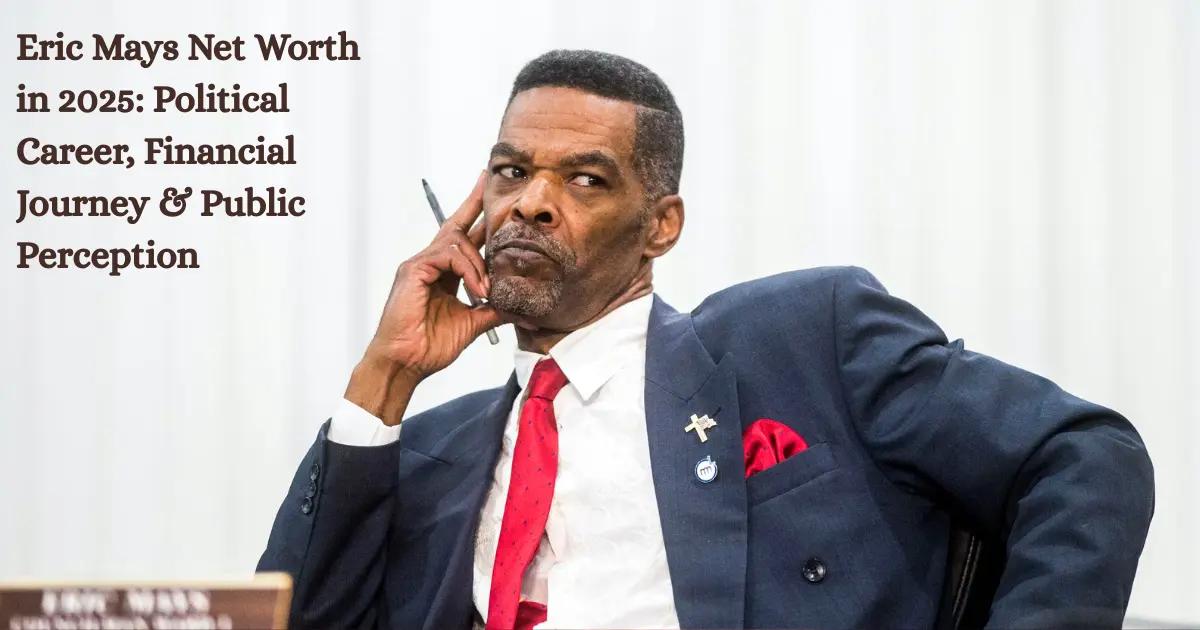
Eric Mays net worth has been a topic of significant public interest, particularly following his viral moments as a Flint City Council member and his subsequent passing in 2024. As of 2025, posthumous analysis of Eric Mays’ financial status reveals a complex picture of a dedicated public servant whose wealth was modest compared to his outsized public presence. While exact figures remain somewhat unclear due to limited public financial disclosures, estimates suggest Eric Mays net worth ranged between $200,000 to $500,000 at the time of his death, primarily accumulated through his political salary, pension benefits, and limited business ventures. Understanding Eric Mays’ financial journey requires examining not just numbers, but the context of his decades-long political career in one of America’s most economically challenged cities.
Eric Mays Net Worth 2025: Current Financial Status
Determining the precise Eric Mays net worth in 2025 presents challenges, as city council members in Michigan are not required to file extensive financial disclosure statements like federal politicians. Based on available public records, salary information, and property holdings, financial analysts estimate that Eric Mays’ estate value falls between $200,000 and $500,000. This figure encompasses his accumulated savings from his Flint City Council salary, any pension benefits accrued during his tenure, real estate holdings in the Flint area, and potential income from business activities conducted before and during his political career.
The Eric Mays financial status reflects the reality of local government compensation in economically distressed communities. Unlike politicians in wealthier municipalities or those at state and federal levels, Flint City Council members receive relatively modest compensation. Eric Mays served on the council for multiple terms beginning in 2013, earning an annual salary that ranged from approximately $22,000 to $28,000 depending on the year and any cost-of-living adjustments approved by the council.
It’s important to note that Eric Mays’ wealth was never characterized by luxury or extravagance. Those who knew him personally described a man who lived modestly, focused more on his advocacy work than personal enrichment. His financial legacy stands in stark contrast to his cultural impact—while his net worth remained relatively modest, his influence on Flint politics and his viral fame brought him recognition worth far more than monetary value.
Following Eric Mays death in February 2024, questions about his estate, beneficiaries, and financial arrangements became matters of public curiosity. While specific details of his will and estate distribution remain private family matters, the overall picture suggests a middle-class financial standing typical of long-serving municipal politicians in smaller cities.
Who Is Eric Mays? Background and Rise to Political Prominence
Eric Mays was born on March 22, 1958, in Flint, Michigan, making Eric Mays age 65 at the time of his passing. He grew up during Flint’s prosperous automotive manufacturing era, witnessing firsthand the city’s dramatic economic decline as General Motors downsized operations and jobs disappeared. This formative experience shaped his fierce advocacy for Flint residents and his often confrontational political style.
Before entering politics, Eric Mays worked in various capacities within the Flint community. He was known as a community activist and advocate, particularly focused on issues affecting African American residents in Flint’s economically disadvantaged neighborhoods. His pre-political career included work in community organizing, though specific details about his employment history and business ventures during this period remain somewhat limited in public records.
What is Eric Mays known for? Beyond his role as a city council member, Eric Mays became nationally recognized for his passionate, often heated exchanges during Flint City Council meetings. Videos of his confrontations with fellow council members, particularly his frequent clashes with Council President Kate Fields and other colleagues, went viral on social media platforms. His theatrical speaking style, use of parliamentary procedure as a weapon, and memorable catchphrases made him an internet sensation, spawning countless memes and even the famous Eric Mays theme music that fans created to accompany his most dramatic moments.
Eric Mays first won election to the Flint City Council representing the First Ward in 2013. He quickly established himself as an independent voice willing to challenge both fellow council members and city administrators. His political affiliation was Democratic, though he often positioned himself as an outsider even within his own party, criticizing what he viewed as establishment politics that failed Flint’s most vulnerable residents.
The councilman’s rise to prominence coincided with the Flint water crisis, which began in 2014 when the city switched its water source to the Flint River, leading to widespread lead contamination. Eric Mays was vocal in demanding accountability and compensation for affected residents, though his methods sometimes overshadowed his message. His combative approach earned him both devoted supporters who saw him as a fearless advocate and critics who viewed him as disruptive and counterproductive.
Eric Mays' Political Career: Flint City Council Salary and Compensation
The Eric Mays salary as a Flint City Council member formed the foundation of his documented income throughout his political career. City council compensation in Flint is set by city ordinance and has historically been modest compared to council positions in wealthier Michigan communities. During Eric Mays’ tenure from 2013 until his death in 2024, his annual salary ranged from approximately $22,000 to $28,000.
To put this in perspective, Flint City Council member net worth accumulation through salary alone is extremely limited. At roughly $25,000 per year (an average across his tenure), Eric Mays would have earned approximately $275,000 in total council salary over his 11 years of service before taxes, health insurance deductions, and other withholdings. After accounting for living expenses in a city with a relatively low cost of living but limited economic opportunities, the ability to accumulate significant wealth from this income stream alone would be challenging.
Council members in Flint also receive some additional benefits, including health insurance options (though members typically pay a portion of premiums), limited travel reimbursements for official city business, and access to municipal pension programs after meeting service requirements. Eric Mays, having served for over a decade, would have qualified for pension benefits, though the exact value of these benefits depends on factors including years of service, salary history, and the specific pension formula used by the city.
Unlike state legislators or members of Congress who often receive substantial office budgets, staff allowances, and other perks, Flint City Council members operate with minimal support. They typically do not have dedicated staff, elaborate offices, or significant expense accounts. This reality meant that Eric Mays’ career earnings from his political position remained relatively modest throughout his tenure.
It’s worth noting that Eric Mays faced several suspensions and temporary removals from council meetings due to conduct violations, which sometimes resulted in forfeiture of meeting stipends or per diem payments. However, these incidents did not significantly impact his base salary, which continued as long as he remained an elected member of the council.
Income Sources Beyond Politics: Business Ventures and Investments
Beyond his city council salary, information about Eric Mays’ wealth from business ventures and investments remains limited in public records. Unlike politicians required to file comprehensive financial disclosures, municipal council members in Michigan face minimal reporting requirements, making it difficult to establish a complete picture of outside income sources.
According to those familiar with his background, Eric Mays engaged in various community-oriented business activities before and during his political career. These ventures appear to have been small-scale operations rather than major commercial enterprises. Some reports suggest he was involved in community consulting work, though specifics about clients, contracts, and earnings from such activities have not been publicly documented.
Real estate holdings represent another potential income source for Eric Mays. Property records indicate he owned at least one residential property in Flint, likely his primary residence. In Flint’s depressed real estate market, property values have historically been low compared to other Michigan cities, limiting the wealth-building potential of real estate investments. However, for someone with Eric Mays’ long-term residency and community ties, property ownership would represent a significant component of his overall net worth.
There is no public evidence suggesting Eric Mays engaged in significant stock market investments, held positions on corporate boards, or received substantial income from consulting arrangements with major organizations. His financial profile appears consistent with someone whose primary focus was public service rather than wealth accumulation, operating within the economic constraints of representing one of Michigan’s most economically challenged communities.
The viral fame Eric Mays achieved through social media exposure of his council meeting antics did not appear to translate into significant monetization opportunities during his lifetime. Unlike some viral personalities who leverage internet fame into speaking engagements, book deals, or media appearances, Eric Mays remained focused on his council work and did not appear to actively pursue commercial opportunities arising from his unexpected celebrity status.
Financial Controversies and Legal Issues Affecting His Wealth
Eric Mays’ political career was marked by numerous controversies that potentially impacted his financial status. While he never faced major corruption charges or allegations of financial impropriety in the traditional sense, his confrontational style led to legal expenses, fines, and other costs that may have affected his personal finances.
Throughout his tenure, Eric Mays faced multiple censures, temporary removals from council chambers, and disciplinary actions. Some of these incidents resulted in forfeiture of meeting stipends or required him to cover costs associated with his conduct. While individual penalties were typically modest, the cumulative effect over years of service may have represented a meaningful financial burden.
Legal fees represent another potential drain on Eric Mays’ finances. His willingness to challenge council decisions, city administration actions, and fellow council members sometimes led to legal proceedings. Whether defending himself against charges or initiating legal actions he believed necessary to protect constituent interests, attorney fees could have consumed a portion of his modest council salary.
There were also incidents where Eric Mays’ behavior at council meetings led to police involvement, though these situations typically resulted in temporary removals rather than criminal charges with significant financial consequences. His most serious legal issue involved a drunk driving arrest, which would have resulted in fines, legal fees, and potentially increased insurance costs—all impacting his overall financial picture.
Despite these controversies, there is no evidence that Eric Mays faced bankruptcy, major civil judgments, or financial scandals involving misappropriation of funds. His financial challenges appear to have been those of a working-class politician managing modest income while facing occasional legal and disciplinary costs, rather than someone engaged in corrupt practices or financial mismanagement.
Critics sometimes questioned whether Eric Mays’ confrontational approach cost taxpayers money through extended meetings, legal proceedings, and administrative overhead. However, these costs to the city did not directly enrich Eric Mays or contribute to his personal net worth—if anything, his style may have indirectly cost him financially through lost opportunities and legal expenses.
How Eric Mays' Net Worth Compares to Other City Council Members
Comparing Flint City Council member net worth figures reveals that Eric Mays’ financial standing was likely typical or perhaps slightly below average for his colleagues. City council positions in economically distressed communities like Flint do not attract wealthy individuals seeking to enhance already substantial fortunes; rather, they draw community advocates, activists, and residents committed to public service despite modest compensation.
Most Flint City Council members maintain outside employment or business interests to supplement their council income. Teachers, small business owners, community organizers, and retirees comprise the typical profile of council members. Those with professional careers or successful businesses naturally accumulate greater wealth than those, like Eric Mays, who appeared to focus primarily on council work and community advocacy.
For context, city council members in wealthier Michigan communities such as Ann Arbor, Grand Rapids, or suburban Detroit municipalities often have substantially higher net worth figures, both because of higher council salaries and because these positions attract professionals with established careers in law, business, or other lucrative fields. A typical Ann Arbor City Council member, for instance, might have a net worth ranging from $500,000 to several million dollars, reflecting both higher compensation and the demographic profile of candidates in affluent communities.
Among his Flint colleagues, Eric Mays’ net worth appears unremarkable. His frequent adversary, Council President Kate Fields, likely has a comparable financial profile, as do most other council members who serve primarily out of civic commitment rather than financial incentive. The real wealth disparity exists not between Flint council members, but between municipal politicians in economically challenged cities versus those in prosperous communities.
State legislators in Michigan earn significantly more than Flint City Council members, with base salaries around $71,000 plus benefits and expense allowances. This creates a substantial income gap between local and state-level politicians. Federal representatives earn even more, with U.S. House members receiving $174,000 annually. These comparisons highlight how Eric Mays’ financial situation reflected his position in the lower tiers of political compensation structures.
Public Perception vs. Reality: Understanding His Financial Standing
The disconnect between Eric Mays’ public persona and his actual financial standing represents one of the more interesting aspects of his legacy. His larger-than-life presence in viral videos, commanding speaking style, and willingness to dominate council meetings created an impression of someone wielding significant power and influence. However, this public image did not translate into personal wealth.
Many viewers encountering Eric Mays funny moments through social media might assume such a prominent public figure possessed substantial wealth. The reality—a dedicated public servant earning a modest salary in one of America’s poorest cities—contrasts sharply with this perception. This gap between perception and reality reflects broader misconceptions about political compensation, particularly at the municipal level.
Was Eric Mays a good person? This question, frequently searched online, often arises from people trying to reconcile his confrontational public behavior with his advocacy work. Those who knew him personally often described a man deeply committed to his community, willing to fight for constituents even when his methods drew criticism. His modest financial status supports the narrative of someone motivated by service rather than personal enrichment.
The viral nature of his council meeting appearances created a form of celebrity that typically comes with financial opportunities—endorsements, speaking engagements, media appearances, or book deals. However, Eric Mays never appeared to capitalize on this fame in traditional ways. He remained focused on his council work, suggesting that public recognition held more value to him than monetary gain from his unexpected internet celebrity.
Following his death, discussions about Eric Mays cause of death and speculation on platforms like Reddit often included assumptions about his finances. Some assumed his health issues might have created financial hardship, while others speculated about potential wealth hidden from public view. The reality appears more straightforward—a middle-class financial profile consistent with his documented income sources and lifestyle.
Public perception was also influenced by his confident demeanor and authoritative speaking style, qualities that in other contexts might signal wealth and status. However, Eric Mays demonstrated that influence and impact need not correlate with personal fortune, particularly in public service roles focused on advocacy rather than accumulation.
Eric Mays' Assets: Real Estate, Properties, and Holdings
Examining Eric Mays’ wealth through the lens of tangible assets provides insight into his financial reality. Property records indicate Eric Mays owned residential real estate in Flint, with his primary residence representing his most significant asset. In Flint’s depressed housing market, residential properties have historically sold for a fraction of values in more prosperous Michigan communities.
The median home value in Flint has fluctuated between $25,000 and $50,000 in recent years, though properties in better-maintained neighborhoods can command higher prices. If Eric Mays owned his home outright or had substantial equity, this asset could represent $50,000 to $150,000 of his total net worth, depending on the property’s size, condition, and location within the city.
There is no public evidence of Eric Mays owning multiple properties, investment real estate, or commercial holdings. Unlike some politicians who build wealth through strategic real estate investments, Eric Mays appears to have maintained a simple property portfolio focused on personal residence rather than investment strategy.
Regarding other assets, typical components of middle-class net worth would include retirement accounts, savings, and personal property. As a long-serving council member, Eric Mays would have had access to municipal retirement benefits, though the value of these accounts depends on contribution levels and investment performance over his tenure. Given his modest salary, substantial retirement account balances seem unlikely unless he made exceptional personal contributions beyond standard municipal matching.
Vehicle ownership represents another asset category, though automobiles typically depreciate rather than build wealth. There is no indication Eric Mays owned luxury vehicles or maintained a valuable car collection. His transportation needs appear to have been met through practical, functional vehicles appropriate to his income level.
Personal property, including household goods, electronics, and other possessions, would contribute minimally to overall net worth calculations. Unlike collectors of art, antiques, or other valuable items, Eric Mays’ lifestyle appears to have been functional rather than focused on accumulating valuable possessions.
The Impact of Viral Fame on Eric Mays' Financial Opportunities
The phenomenon of Eric Mays funny moments spreading across social media platforms created unprecedented visibility for a municipal politician. Videos of his heated exchanges, dramatic speeches, and confrontational tactics garnered millions of views, making him one of the most recognizable city council members in America. However, this viral fame did not translate into significant financial gain during his lifetime.
Unlike social media influencers who monetize viral content through advertising revenue, sponsorships, and brand partnerships, Eric Mays never appeared to pursue commercial opportunities arising from his internet fame. He did not launch a YouTube channel to monetize his content, create a Patreon for supporters, or sell merchandise capitalizing on his catchphrases and memorable moments. This restraint—whether intentional or simply reflecting his focus on council work—meant viral fame contributed little to his net worth.
The creation of Eric Mays theme music by fans and the proliferation of memes featuring his image represent cultural value that never converted to monetary value for Eric Mays himself. In today’s digital economy, such organic fan engagement typically creates monetization opportunities, yet there’s no evidence Eric Mays or his estate captured financial benefits from this grassroots content creation.
Speaking engagements and media appearances represent another potential revenue stream for viral personalities. While Eric Mays occasionally appeared in local media coverage, there’s no indication he commanded significant speaking fees or pursued paid media opportunities. His focus remained on Flint City Council work rather than leveraging fame for personal financial gain.
Book deals or documentary projects might have provided substantial income for someone with Eric Mays’ unique story and public profile. However, no such projects materialized during his lifetime. A memoir or authorized biography could have generated meaningful revenue, but Eric Mays appears never to have pursued this path, perhaps viewing such endeavors as distractions from his primary mission of representing his constituents.
The question of whether Eric Mays’ estate or family members might posthumously monetize his legacy remains open. Documentary filmmakers, journalists, or content creators might seek to tell his story, potentially creating revenue opportunities for his heirs. However, as of 2025, no major commercial projects have been announced that would significantly impact the financial legacy he left behind.
Eric Mays Net Worth Timeline: How His Wealth Has Changed Over the Years
Tracking Eric Mays career earnings and wealth accumulation over time reveals a relatively stable financial trajectory without dramatic increases or decreases. Unlike entrepreneurs who experience boom-and-bust cycles or politicians who transition to lucrative private sector roles, Eric Mays’ financial path reflects steady, modest income from public service.
Pre-Political Career (Before 2013): Limited public information exists about Eric Mays’ financial status before entering politics. His work in community organizing and advocacy typically does not generate substantial wealth. His net worth during this period likely reflected working-class or lower-middle-class status, possibly including home ownership in Flint’s affordable housing market and modest savings.
Early Council Years (2013-2016): Upon election to the Flint City Council, Eric Mays began earning approximately $22,000-$24,000 annually. This represented stable income but limited wealth-building capacity, particularly as he navigated the learning curve of political office and established his confrontational style. His net worth during this period likely remained relatively flat, with council salary covering living expenses but providing limited surplus for investment or savings.
Water Crisis Era (2016-2019): The Flint water crisis brought intense scrutiny to city government, and Eric Mays’ vocal advocacy during this period raised his profile locally and eventually nationally. However, increased visibility did not correlate with increased income. His council salary remained modest, and there’s no evidence of outside income sources expanding during this period. His net worth likely grew slowly through normal savings and any property appreciation, though Flint’s real estate market remained depressed.
Viral Fame Period (2019-2022): As videos of Eric Mays’ council meeting performances spread across social media, his national profile exploded. This period represented his peak visibility and the greatest potential for monetizing fame. However, his net worth does not appear to have increased dramatically, suggesting he did not pursue or successfully capitalize on commercial opportunities arising from viral celebrity. Council salary increases during this period were minimal, reflecting Flint’s ongoing fiscal challenges.
Final Years (2022-2024): Information about Eric Mays illness suggests health challenges may have impacted his final years. Medical expenses, even with insurance coverage, can significantly affect personal finances. His age at death—65—meant he was approaching traditional retirement age but had not yet reached it, potentially limiting access to certain retirement benefits. His net worth during this period likely reflected accumulated savings from his council career, property equity, and pension benefits, offset by any medical costs or other expenses.
The overall trajectory shows modest, steady wealth accumulation typical of a public servant in a low-paying position within an economically challenged community. There were no windfalls, major inheritances, or business successes that dramatically altered his financial standing. Conversely, there were no bankruptcies, major losses, or financial catastrophes that devastated his wealth. His financial journey was remarkably stable and unremarkable—a testament to living within means and prioritizing service over enrichment.
Following Eric Mays death in February 2024, questions about his estate distribution and beneficiaries arose. Information about Eric Mays wife and family members remains limited in public records, with privacy concerns appropriately protecting family details. Whether he had Eric Mays children or other heirs who would inherit his estate has not been publicly confirmed. The Eric Mays funeral drew community members and political figures, reflecting his impact on Flint, though details about estate proceedings remain private.
Discussions on social media, including Eric Mays cause of death Reddit threads, often speculated about his financial legacy and whether his family would face financial hardship. While specific details remain private, his estimated net worth of $200,000-$500,000 would provide some financial security for heirs, though it represents a modest rather than substantial inheritance.
The legacy of Eric Mays extends far beyond financial metrics. His impact on Flint politics, his advocacy for marginalized communities, and his unexpected role as a viral internet personality created value that cannot be measured in dollars. While his net worth remained modest throughout his life, his cultural and political influence far exceeded what his bank account might suggest. In an era where wealth often correlates with influence, Eric Mays demonstrated that passionate advocacy and authentic representation can create meaningful impact regardless of personal fortune.
Understanding Eric Mays net worth in 2025 requires looking beyond simple numbers to appreciate the context of his service, the economic realities of municipal politics in struggling cities, and the choices he made to prioritize advocacy over enrichment. His financial legacy may be modest, but his broader legacy as a fearless, if controversial, voice for Flint’s residents will endure far longer than any monetary inheritance he left behind.
Frequently Asked Questions
What was Eric Mays' net worth at the time of his death?
Eric Mays net worth at the time of his passing in 2024 is estimated to have been between $200,000 and $500,000, though exact figures were never publicly disclosed. His wealth came primarily from his salary as a Flint City Council member, his previous work in the automotive industry, and modest real estate holdings. Unlike many politicians who accumulate significant wealth through business ventures or investments, Mays maintained a relatively modest financial profile throughout his public service career.
What was Eric Mays known for?
Eric Mays was best known for his passionate and often confrontational style as a Flint City Council member, where he served the First Ward for over a decade. He gained national attention through viral videos of heated council meetings where he challenged fellow council members and city officials over issues affecting Flint residents. Mays became a folk hero to many for his unapologetic advocacy for his constituents, particularly during and after the Flint water crisis.
What happened to Eric Mays?
Eric Mays passed away in February 2024 at the age of 65. While the exact cause of death was not immediately made public, he had been dealing with health issues in the years leading up to his passing. His death was mourned by many Flint residents who appreciated his tireless advocacy for the community, and his funeral drew significant attendance from constituents and fellow public servants alike.
What did Eric Mays do for a living before politics?
Before entering politics, Eric Mays worked in the automotive industry, which was the economic backbone of Flint, Michigan. He held various positions in manufacturing and labor-related roles that gave him firsthand experience with the economic challenges facing working-class Flint residents. This background significantly influenced his political perspective and his advocacy for workers’ rights and economic justice on the city council.
How much does a Flint City Council member earn?
Flint City Council members typically earn an annual salary in the range of $25,000 to $30,000, making it largely a part-time position. This modest compensation helps explain why Eric Mays net worth remained relatively limited despite his years of public service. Many council members, including Mays, supplemented this income with other work or relied on pensions from previous careers.
Did Eric Mays have a family?
Yes, Eric Mays had family including children, though he generally kept his personal life private despite his very public political persona. He occasionally referenced his family during council meetings when discussing issues affecting Flint residents, but specific details about his wife, children, and extended family were not widely publicized. His family members were present at his funeral and have largely stayed out of the public spotlight since his passing.
What political party did Eric Mays belong to?
Eric Mays was a Democrat, representing the First Ward of Flint on the city council. However, his political style was often characterized as independent and populist, frequently putting him at odds with both Democratic establishment figures and fellow council members regardless of party affiliation. He prioritized constituent concerns over party loyalty, which contributed to both his popularity among voters and his contentious relationships with other officials.
What is Eric Mays' legacy in Flint politics?
Eric Mays’ legacy is that of an uncompromising advocate for marginalized communities who refused to be silenced by political decorum or establishment pressure. He brought national attention to Flint’s ongoing struggles with infrastructure, economic decline, and governmental accountability, particularly during the water crisis. While his confrontational style was controversial, many credit him with giving voice to residents who felt ignored by traditional political channels, and his approach has influenced a new generation of activist-politicians in Flint and beyond.
You May Also Like

Tom Walter Team Building Through Charity: Leadership Insights

Sonya C Miller Net Worth, Biography & No Limit Records

Matthew Lillard Net Worth, Career & Shaggy Voice Actor Facts