Vox Hazbin Hotel: Complete Character Guide & Analysis

Vox Hazbin Hotel is one of the most compelling antagonists in Vivienne Medrano’s animated series, serving as a powerful overlord demon with a television for a head who controls Hell’s media empire. As the charismatic yet manipulative leader of The Vees alongside Valentino and Velvette, Vox represents the dark side of corporate power and technological control in the underworld. His complex rivalry with Alastor drives much of the series’ central conflict, embodying the clash between modern technology and traditional power structures.
This television-headed demon combines electrokinesis powers with sophisticated mind control abilities, making him a formidable force in Hell’s hierarchy. Furthermore, his sleek art deco design and corporate businessman persona mask deep insecurities and an obsessive need for control. Christian Borle’s masterful voice acting brings this complex character to life, creating a villain who’s both terrifying and oddly charismatic.
TL;DR
- Vox is a major antagonist and overlord demon with a television head who controls Hell’s media empire in Hazbin Hotel
- He leads The Vees trio and has a complex rivalry with Alastor that drives key plot points throughout the series
- His powers include electrokinesis, hypnosis through screens, and surveillance capabilities across Hell’s technology networks
- Christian Borle voices this manipulative corporate villain who represents modern technology versus traditional power in the underworld
Who is Vox in Hazbin Hotel?
Vox stands as one of Hell’s most powerful overlord demons and serves as a primary antagonist throughout the Hazbin Hotel series. This television-headed media mogul controls Hell’s vast entertainment and technology networks, wielding influence that extends across the underworld’s digital infrastructure. Moreover, his corporate empire represents the modernization of Hell’s power structures, challenging traditional demonic hierarchies.
The character embodies technological dominance through his unique physiology and supernatural abilities. Vox’s television head functions as both his face and a powerful tool for manipulation, broadcasting hypnotic signals and surveillance feeds throughout Hell’s networks. Additionally, his electrokinetic powers allow him to control electronic devices, travel through electrical systems, and project his consciousness across multiple screens simultaneously.
The Vees: Hell's Modern Power Trio
The Vees represent a formidable alliance of three overlord demons who control different aspects of Hell’s entertainment industry. Vox leads this trio as the technology and media specialist, while Valentino manages the adult entertainment sector and Velvette dominates fashion and social media trends. Together, they form a corporate powerhouse that challenges older demonic establishments.
Their partnership demonstrates how modern demons adapt traditional power structures to contemporary methods. Furthermore, the Vees utilize corporate strategies, brand management, and technological innovation to expand their influence. This approach contrasts sharply with older overlords who rely on fear and brute force alone.
Vox's Role as Media Overlord
As Hell’s premier media mogul, Vox controls television networks, news broadcasts, and digital communications throughout the underworld. His media empire shapes public opinion, spreads propaganda, and monitors demon activities across Hell’s population. Consequently, his influence extends far beyond direct confrontation into psychological manipulation and information warfare.
The character’s television-based design reflects his complete integration with media technology. Vox literally becomes the medium through which information flows, making him both the messenger and the message in Hell’s communication networks. This unique position grants him unprecedented surveillance capabilities and social control mechanisms.
Narrative Significance in Hazbin Hotel
Vox’s rivalry with Alastor drives significant plot development throughout the series, representing a fundamental conflict between old and new power structures in Hell. While Alastor embodies traditional radio-era influence, Vox represents the digital age’s technological supremacy. This dynamic creates tension that affects multiple storylines and character relationships.
His presence also highlights themes of corporate corruption, media manipulation, and technological dependence within the show’s narrative framework. Additionally, Vox serves as a foil to Charlie’s redemption project, representing the forces that profit from Hell’s current state and resist positive change. Through his actions, the series explores how power structures adapt and evolve while maintaining oppressive control over society.
Vox's Character Design and Symbolism
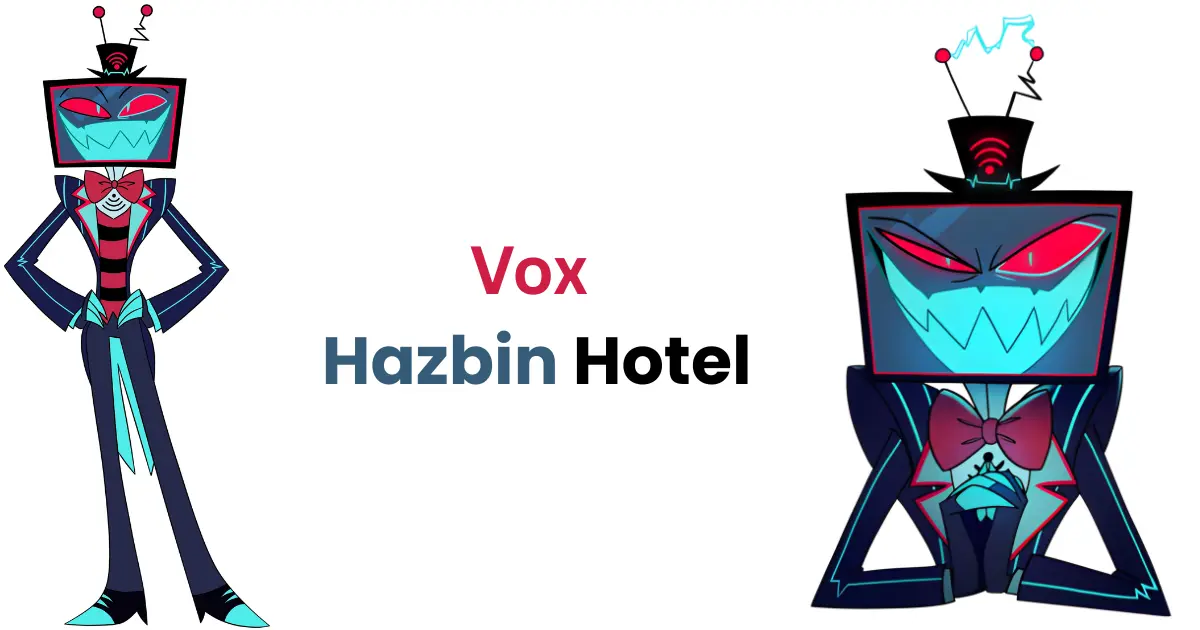
Vox’s television head design serves as the most striking visual element of his character, symbolizing his complete fusion with media technology and corporate power. The flat-screen monitor that replaces his head displays his face through digital pixels, creating a literal representation of how media personalities become their medium. This design choice emphasizes his role as Hell’s primary information broker and propaganda distributor.
Furthermore, the television head symbolizes the dehumanizing effects of corporate media culture. Vox has literally replaced his humanity with technology, suggesting his complete surrender to digital influence and power. His face changes expressions through screen displays, making his emotions appear manufactured and artificial rather than genuine.
Art Deco and Retro-Futuristic Aesthetic Elements
The character’s design incorporates art deco styling through sharp geometric patterns, angular shoulder pads, and streamlined silhouettes that reflect 1920s-1940s design sensibilities. These elements connect him to the golden age of radio and early television, establishing his historical significance in Hell’s media landscape. Additionally, his suit features clean lines and symmetrical patterns that emphasize corporate professionalism and technological precision.
Retro-futuristic elements appear throughout his design through the combination of vintage broadcasting aesthetics with modern digital technology. His television head displays contemporary flat-screen characteristics while his overall appearance maintains mid-century corporate styling. This fusion creates a timeless quality that suggests his adaptation across multiple technological eras.
Color Scheme Significance
Vox’s blue, black, and red color palette carries deep symbolic meaning throughout his character design. The dominant blue represents corporate authority, technological innovation, and cold calculation that defines his personality. Blue also symbolizes the digital realm where he exercises primary control over information and communication networks.
Black elements in his design signify power, sophistication, and the darker aspects of media manipulation. Meanwhile, red accents highlight his demonic nature and aggressive tendencies, particularly during moments of anger or confrontation. The red also connects him to Hell’s overall aesthetic while distinguishing him from Alastor’s red-dominated design through strategic placement and intensity.
Design Color Psychology
Design Reflection of Personality and Powers
Every aspect of Vox’s visual design directly reflects his core personality traits and supernatural abilities. His sharp, angular features mirror his calculating and aggressive business approach, while the smooth screen surface suggests his polished public persona that masks deeper manipulation tactics. The television head literally represents his power to broadcast influence and monitor activities throughout Hell’s population.
His corporate attire reinforces his role as a business mogul who prioritizes profit and control over personal relationships. The formal suit styling projects authority and respectability, yet the technological integration reveals his willingness to sacrifice humanity for power. This visual contradiction perfectly captures his internal conflict between maintaining appearances and embracing his demonic nature.
The design also reflects his hypnotic abilities through the screen’s capacity to display swirling patterns and flashing images. His television head becomes both a weapon and a symbol of his mental manipulation powers, allowing viewers to understand his capabilities through visual storytelling rather than exposition.
Evolution from Concept to Final Animation
The development process for Vox’s final design involved multiple iterations that refined his television head concept and corporate aesthetic. Early concept art explored different screen shapes and sizes before settling on the current flat-screen monitor design that balances visual impact with animation practicality. The creators experimented with various facial display methods to ensure his expressions remained readable and emotionally engaging.
Character designers also refined his suit styling to enhance his authoritative presence while maintaining animation efficiency. The final color palette emerged through testing different combinations that would contrast effectively with other characters, particularly during scenes with Alastor. Subsequently, the animation team developed specific techniques for rendering his screen face that could display complex expressions and hypnotic patterns without overwhelming the visual narrative.
The evolution process prioritized maintaining his symbolic significance while ensuring practical animation requirements. His final design successfully balances visual storytelling, character personality, and production feasibility, creating an iconic appearance that immediately communicates his role and powers to audiences.
Powers and Abilities
Vox possesses a comprehensive suite of technological powers that establish him as one of Hell’s most formidable overlords. His abilities center around electrokinesis, allowing him to generate, manipulate, and control electrical energy with devastating precision. Furthermore, his television head serves as both a weapon and a conduit for his supernatural capabilities, making him a unique threat in the Hazbin Hotel universe.
Electrokinesis and Electrical Manipulation
Vox’s electrokinetic powers enable him to control electricity in multiple forms and applications. He can generate powerful electrical discharges that damage opponents and infrastructure alike. Additionally, his control extends to manipulating existing electrical systems, allowing him to overload circuits, cause blackouts, or redirect power for strategic advantage.
His electrical abilities manifest through concentrated energy blasts that he projects from his screen face or hands. Moreover, he can create electrical barriers and shields for defensive purposes. The intensity of his electrical output varies from subtle manipulations to devastating attacks that can incapacitate multiple enemies simultaneously.
Hypnosis and Mind Control Through Screens
The hypnotic capabilities of Vox represent his most insidious power, utilizing his television screen face to entrance and control victims. His screen displays mesmerizing patterns and spirals that capture viewers’ attention and override their free will. Consequently, he can implant suggestions, extract information, or force compliance through sustained visual contact.
His mind control abilities extend beyond direct hypnosis to include subtle influence and psychological manipulation. He can project compelling images and messages that shape opinions and behaviors over time. This power proves particularly effective when combined with his media empire, allowing him to influence large populations through broadcast hypnosis.
Surveillance and Monitoring Capabilities
Vox’s surveillance network encompasses virtually every electronic device in Hell’s Pride Ring. He can access cameras, microphones, and screens throughout the city to monitor activities and gather intelligence. This omnipresent watching capability makes him an invaluable information broker and a dangerous enemy to cross.
- Real-time monitoring through security cameras and devices
- Audio surveillance via electronic communication systems
- Data collection from digital transactions and interactions
- Remote activation of dormant recording equipment
His monitoring abilities also include digital eavesdropping on phone calls, text messages, and internet communications. Subsequently, this comprehensive surveillance network provides him with strategic advantages in business dealings and territorial disputes with other overlords.
Technology Integration and Digital Presence
The technological integration powers of Vox allow him to merge with and control various electronic devices seamlessly. He can inhabit televisions, computers, smartphones, and other digital equipment, transforming them into extensions of his consciousness. This ability enables him to be present in multiple locations simultaneously through different devices.
His digital presence manifests as the ability to exist within electronic networks and systems. He can navigate through internet connections, cable networks, and wireless signals as easily as walking through physical space. This digital mobility grants him unprecedented access to information and strategic positions throughout Hell’s technological infrastructure.
Teleportation Through Electronic Devices
Vox’s teleportation abilities function exclusively through electronic devices, allowing him to travel instantly between any connected screens or electrical systems. He can emerge from televisions, computer monitors, smartphones, or any device with a display screen. This power provides him with exceptional mobility and escape options during confrontations.
The teleportation process appears as him diving into one screen and emerging from another, often accompanied by electrical disturbances and screen static. However, this ability requires functional electronic devices at both origin and destination points, limiting his options in areas without adequate technology.
Limitations and Weaknesses
Despite his formidable abilities, Vox faces significant limitations that can be exploited by knowledgeable opponents. His powers depend heavily on electrical infrastructure and electronic devices, making him vulnerable in areas without modern technology. Additionally, electromagnetic pulses or power outages can severely restrict his capabilities and force him into purely physical confrontations.
Power Limitations
His emotional vulnerabilities also create exploitable weaknesses, particularly his obsession with Alastor and need for validation. This fixation can cloud his judgment and lead to strategic mistakes. Furthermore, his reliance on technology makes him predictable to opponents who understand his patterns and can anticipate his electronic-based attacks and movements.
Personality and Character Traits
Vox embodies the quintessential corporate executive persona, displaying the calculating nature of a modern media mogul combined with the manipulative tendencies of a skilled businessman. His character represents the intersection of technology obsession and narcissistic ambition, creating a complex antagonist whose personality drives much of the series’ central conflict. Furthermore, his sophisticated exterior masks deep-seated insecurities that manifest through his desperate need for control and validation.
Corporate Manipulation and Business Acumen
The television demon operates with the ruthless efficiency of a corporate shark, utilizing his business background to manipulate situations and individuals for personal gain. Vox’s manipulative nature extends beyond simple deception to sophisticated psychological warfare, employing corporate tactics to undermine his opponents. Additionally, his understanding of modern business practices allows him to exploit Hell’s economic systems effectively.
His corporate persona influences every aspect of his interactions, from calculated networking to strategic alliance-building within Hell’s power structure. Moreover, this businessman mentality creates a stark contrast with more traditional demons like Alastor, whose old-fashioned approach clashes with Vox’s modern methodologies. Consequently, their philosophical differences fuel ongoing tensions throughout the series.
Technology Obsession and Modernization Drive
Vox’s obsession with modernization represents more than mere preference—it defines his entire worldview and approach to power acquisition. His technological fixation stems from a belief that innovation and progress provide the ultimate path to dominance in Hell’s hierarchy. Therefore, he constantly seeks to upgrade and expand his electronic empire while dismissing traditional methods as obsolete.
This modernization drive manifests through his relentless pursuit of technological advancement and his disdain for outdated practices. His passion for technology creates both strength and vulnerability, as his dependence on electronic systems can be exploited by savvy opponents. Nevertheless, his technological expertise positions him as a formidable force in Hell’s evolving landscape.
Narcissistic Tendencies and Control Issues
The media overlord exhibits classic narcissistic traits through his constant need for admiration, grandiose self-perception, and inability to handle criticism or rejection. His narcissism drives his compulsive need to be the center of attention and the dominant force in any situation. Subsequently, these tendencies create friction with other powerful demons who refuse to acknowledge his perceived superiority.
Pros
- Charismatic leadership abilities
- Strategic thinking and planning
- Technological innovation skills
- Business networking expertise
Cons
- Emotional instability under pressure
- Obsessive behavior patterns
- Inability to accept defeat
- Vulnerability to manipulation through ego
His control issues extend beyond personal relationships to encompass his entire domain, as Vox demands absolute authority over his technological empire. This need for control creates internal conflict when faced with situations beyond his influence, particularly regarding Alastor’s independence. Ultimately, his controlling nature becomes both a source of power and a significant character flaw.
Hidden Insecurities Behind the Facade
Beneath his confident exterior, Vox harbors deep insecurities about his worth and position within Hell’s hierarchy, particularly in comparison to more established demons. His bravado serves as a defensive mechanism to mask feelings of inadequacy and fear of being overshadowed by rivals. Consequently, these hidden vulnerabilities drive many of his most destructive behaviors and decision-making patterns.
The television demon’s insecurities become most apparent during confrontations with Alastor, where his composed facade frequently cracks under pressure. His desperate attempts to prove superiority reveal the fragile ego lurking beneath his technological prowess and corporate success. Therefore, understanding these insecurities provides crucial insight into his motivations and potential weaknesses.
Relationship with Power and Authority
Vox’s relationship with power reflects a complex mixture of genuine capability and compensatory behavior driven by his insecurities. He wields authority effectively within his technological domain but struggles to maintain composure when his power is challenged or questioned. Additionally, his approach to leadership combines corporate efficiency with authoritarian control, creating a management style that demands absolute loyalty.
His pursuit of authority extends beyond practical considerations to encompass a psychological need for validation and recognition from peers and subordinates. Furthermore, this power dynamic influences his interactions with other Overlords, as he constantly seeks to establish dominance while maintaining strategic alliances. Ultimately, his complex relationship with authority drives both his successes and his most significant failures.
Conflict Generation Through Character Flaws
The media demon’s personality traits create cascading conflicts throughout the series, as his obsessive behavior and narcissistic tendencies generate friction with virtually every character he encounters. His inability to accept rejection or defeat leads to escalating confrontations that drive major plot developments. Moreover, his technological superiority complex creates philosophical clashes with traditional demons who reject modernization.
Vox’s character demonstrates how personal insecurities and narcissistic traits can corrupt even legitimate power and technological innovation, creating a compelling antagonist whose flaws drive narrative tension.
His relationship dynamics, particularly with Alastor, serve as catalysts for broader conflicts within Hell’s power structure, as personal vendettas escalate into territorial disputes. These character-driven conflicts provide the emotional foundation for the series’ exploration of power, technology, and tradition in the supernatural realm. Consequently, Vox’s personality traits function as both character development and plot advancement mechanisms throughout the narrative.
Vox's Relationship with Alastor
The complex relationship between Vox and Alastor represents one of the most compelling dynamics in Hazbin Hotel, as their past friendship transformed into a bitter rivalry that shapes Hell’s power structure. These two Overlords once shared a partnership built on mutual respect and complementary abilities. However, their fundamental differences in philosophy and approach to power ultimately created an irreparable rift.
History of Their Past Friendship and Falling Out
Originally, Vox and Alastor formed an unlikely alliance during their early years in Hell, with the media demon’s technological prowess complementing the Radio Demon’s traditional supernatural abilities. Their partnership flourished as they carved out territories and established their respective domains of influence. Nevertheless, their relationship began deteriorating when fundamental disagreements about Hell’s future direction emerged.
The breaking point occurred when Alastor rejected Vox’s proposal to join forces permanently, viewing the media demon’s modernization efforts as corrupting Hell’s authentic nature. Subsequently, this rejection triggered Vox’s obsessive behavior and transformed their professional disagreement into a deeply personal vendetta. Their falling out became legendary among Hell’s inhabitants, as two of the most powerful Overlords shifted from allies to bitter enemies.
The Nature of Their Rivalry and Mutual Obsession
The rivalry between these Overlords transcends simple territorial disputes, as it represents a clash between two fundamentally different approaches to power and influence in Hell. Vox’s obsession with Alastor stems from his inability to accept rejection and his compulsive need to prove his technological superiority. Meanwhile, Alastor views their conflict as an amusing distraction, which further infuriates the media demon.
This mutual obsession manifests in their constant surveillance of each other’s activities and their attempts to undermine each other’s influence. Furthermore, their rivalry creates a feedback loop where each demon’s actions provoke increasingly dramatic responses from the other. Consequently, their personal vendetta escalates into a broader conflict that affects all of Hell’s power dynamics.
Contrasting Philosophies: Tradition vs. Modernization
The philosophical divide between Vox and Alastor centers on their opposing views of Hell’s evolution and the role of technology in supernatural society. Vox champions modernization and technological advancement as the path to greater power and efficiency. Conversely, Alastor advocates for maintaining Hell’s traditional methods and supernatural authenticity.
These contrasting worldviews create irreconcilable differences in their approaches to leadership and influence. Vox’s media empire represents progress and innovation, while Alastor’s radio-based power symbolizes timeless supernatural authority. Therefore, their conflict embodies the broader tension between tradition and modernization that permeates Hell’s society.
Key Confrontations and Interactions
Throughout the series, Vox and Alastor’s confrontations escalate from subtle psychological warfare to direct challenges that threaten Hell’s stability. Their public disputes become spectacles that other demons watch with fascination and fear. Additionally, these confrontations reveal the depth of their mutual understanding and the intensity of their personal animosity.
Each interaction between the two Overlords demonstrates their intimate knowledge of each other’s weaknesses and triggers. Vox’s technological attacks target Alastor’s traditional methods, while the Radio Demon’s psychological manipulation exploits the media demon’s insecurities. Ultimately, their confrontations serve as catalysts for major plot developments throughout the series.
Fan Theories About Romantic Undertones
The intensity of Vox’s obsession with Alastor has sparked numerous fan theories suggesting romantic undertones in their relationship, as the media demon’s behavior often resembles that of a spurned lover rather than a simple rival. These theories examine the emotional depth of their interactions and the personal nature of their conflict. However, the series maintains ambiguity about the true nature of their past relationship.
Fan interpretations often focus on Vox’s desperate attempts to gain Alastor’s attention and approval, viewing his technological displays as elaborate courtship rituals gone wrong. Nevertheless, the canonical material presents their relationship primarily through the lens of power dynamics and philosophical differences rather than romantic tension.
How Their Dynamic Drives Major Plot Points
The relationship between Vox and Alastor functions as a driving force for major narrative developments, as their personal vendetta influences broader conflicts within Hell’s hierarchy. Their rivalry affects alliances between other Overlords and creates opportunities for ambitious demons to exploit their mutual distraction. Moreover, their conflict provides the emotional foundation for exploring themes of power, technology, and tradition.
Charlie’s redemption project becomes entangled in their rivalry when Alastor’s involvement at the Hazbin Hotel threatens Vox’s media empire and technological dominance. Consequently, their personal conflict escalates into a battle for Hell’s future direction, with the success or failure of demon rehabilitation hanging in the balance of their ancient grudge.
Role in The Vees and Hell's Hierarchy
Vox operates as the technological backbone and strategic mastermind within The Vees, Hell’s most influential media consortium. His partnership with Valentino and Velvette creates a powerful triumvirate that controls vast sectors of Hell’s entertainment industry. Furthermore, their combined influence extends beyond media into surveillance, information brokerage, and territorial control throughout the infernal realm.
Leadership Dynamics Within The Vees
The leadership structure within The Vees demonstrates a complex balance of complementary skills and competing egos. Vox provides the technological infrastructure and strategic planning, while Valentino handles the adult entertainment empire and Velvette manages fashion and social media influence. Additionally, their collaborative approach allows each member to maintain autonomy within their specialized domains while presenting a unified front against external threats.
However, tensions occasionally surface between the trio, particularly when Valentino’s impulsive nature clashes with Vox’s calculated approach to business expansion. Despite these occasional conflicts, their partnership remains stable due to the mutual benefits each member derives from their collective power. Moreover, Vox’s diplomatic skills often serve as the mediating force that maintains harmony within the group.
Business Partnerships and Media Empire
Vox’s media empire encompasses television networks, streaming platforms, and digital communication systems that permeate every aspect of Hell’s society. His technological monopoly enables comprehensive surveillance capabilities and information control that extends far beyond entertainment. Consequently, The Vees possess unprecedented access to intelligence about other Overlords, political movements, and potential threats to their dominance.
The synergy between Vox’s broadcasting capabilities and his partners’ content creation establishes a vertically integrated entertainment conglomerate. Valentino’s adult film productions and Velvette’s fashion shows receive extensive promotion through Vox’s media channels, while their combined influence shapes public opinion and consumer behavior. Additionally, this integrated approach allows them to rapidly respond to market changes and competitor threats.
Territory Control and Influence
The Vees maintain territorial control through a combination of technological surveillance, economic leverage, and strategic alliances with lesser demons. Vox’s camera networks and communication systems provide real-time intelligence about activities throughout their claimed territories. Furthermore, their media influence allows them to shape public perception and manipulate information flows to their advantage.
Their territorial expansion strategy focuses on areas with high population density and significant commercial activity, maximizing both their audience reach and revenue potential. Vox’s technological infrastructure enables rapid deployment of surveillance systems in newly acquired territories, while his partners establish physical presence through entertainment venues and retail locations. Nevertheless, their expansion efforts sometimes conflict with the interests of established Overlords, leading to territorial disputes and power struggles.
Competition with Other Overlords
Vox’s rivalry with Alastor represents the most significant threat to The Vees’ dominance, as the Radio Demon’s traditional approach to power directly challenges their modern media empire. Their competition extends beyond personal animosity to fundamental disagreements about Hell’s future direction and the role of technology in demonic society. Moreover, Alastor’s involvement with the Hazbin Hotel poses a direct challenge to their control over Hell’s narrative and public opinion.
Other Overlords view The Vees with a mixture of respect, fear, and resentment due to their rapid rise to power and disruptive business practices. Vox’s technological advantages provide significant competitive benefits, but they also create vulnerabilities when facing opponents who understand his systems’ limitations. Additionally, the trio’s modern approach to power sometimes conflicts with Hell’s traditional hierarchical structures, creating tension with more established demonic authorities.
Power Balance Alert
The Vees’ position within Hell’s hierarchy continues to evolve as they balance expansion ambitions with the need to maintain their existing power base. Their success depends on Vox’s ability to adapt his technological systems to counter emerging threats while preserving the delicate balance of power within their own partnership. Ultimately, their role in Hell’s future will be determined by how effectively they can integrate their modern approach with the realm’s ancient power structures.
Backstory and Human Life
The mystery surrounding Vox’s human existence remains one of the most intriguing aspects of his character in Hazbin Hotel. While the series provides minimal canonical information about his life before death, several theories emerge from visual clues and character design elements. His television-themed appearance suggests a connection to the broadcasting industry during his mortal years.
Theories About His Pre-Death Identity
Fan speculation centers around Vox’s potential career in television or media during his human life. His sophisticated understanding of broadcasting technology and media manipulation indicates extensive professional experience in these fields. Additionally, his sharp business acumen and leadership abilities suggest he held executive or entrepreneurial positions before his demise.
Some theories propose that Vox worked as a television executive during the golden age of broadcasting, possibly in the 1950s or 1960s. His knowledge of media psychology and audience manipulation techniques supports this hypothesis. Furthermore, his competitive nature and desire for control align with characteristics commonly associated with ambitious media moguls of that era.
Possible Time Period of Death
Visual evidence suggests Vox died sometime during the mid-20th century, likely between 1950 and 1970 based on his aesthetic design and technological references. His television head features retro styling reminiscent of early broadcast equipment from this period. However, his advanced understanding of modern technology implies he either died later than initially assumed or adapted quickly to Hell’s technological evolution.
The timeline of Vox’s death becomes particularly significant when considering his rivalry with Alastor, who died in the 1930s. Their conflicting technological philosophies—radio versus television—mirror the actual historical transition between these media formats. Consequently, their personal animosity may reflect broader cultural shifts that occurred during their respective lifetimes.
Transformation into a Television Demon
The process of Vox’s transformation into a television-themed demon likely reflects his deepest obsessions and sins from his human life. In Hell’s twisted logic, sinners manifest physical forms that represent their earthly vices and fixations. His television head symbolizes an unhealthy relationship with media, control, and public image during his mortal existence.
Several factors may have contributed to his specific demonic form. His obsession with influence and manipulation through media channels created the foundation for his current abilities. Moreover, his desire to control narratives and shape public opinion became literally embodied in his technological powers. The television screen replacing his face represents the complete merger of his identity with his medium of choice.
Connection Between Human and Demon Forms
The relationship between Vox’s human personality and demon abilities demonstrates remarkable consistency across his existence. His technological prowess in Hell likely builds upon skills and knowledge acquired during his mortal life. Additionally, his leadership of The Vees mirrors potential executive experience from his human career.
His competitive relationship with traditional media suggests he may have struggled against established broadcasting powers during his lifetime. This historical tension could explain his intense rivalry with Alastor, whose radio-based powers represent the older medium that television eventually displaced. Furthermore, his need for constant validation and attention may stem from insecurities developed during his human existence.
Canonical Evidence vs. Fan Theories
The official Hazbin Hotel canon provides limited concrete details about Vox’s human backstory, leaving significant room for speculation and interpretation. Creator Vivienne Medrano has shared minimal information about his pre-death identity, focusing instead on his current role in Hell’s hierarchy. This deliberate ambiguity allows fans to develop elaborate theories while maintaining narrative flexibility for future revelations.
Fan communities have developed extensive headcanons about Vox’s human life, often incorporating historical research about the television industry’s development. These theories range from plausible career-based explanations to more elaborate scenarios involving corporate corruption and media manipulation. However, until official sources provide additional information, these remain speculative interpretations rather than established facts.
The distinction between canonical information and fan speculation becomes crucial when discussing Vox’s character development and motivations. While his television-themed design clearly indicates a connection to broadcasting, the specific details of his human life remain open to interpretation. This uncertainty adds to his mystique while allowing viewers to project their own understanding of media industry dynamics onto his character.
Voice Acting and Performance
Christian Borle brings exceptional theatrical expertise to Vox’s character through his distinguished Broadway background and versatile vocal range. His performance transforms the television-headed demon from a simple antagonist into a complex, charismatic figure with distinct personality layers. Borle’s vocal choices emphasize Vox’s corporate sophistication while revealing underlying insecurities and obsessive tendencies.
Christian Borle's Vocal Interpretation
The voice actor delivers Vox’s dialogue with a smooth, professional tone that mirrors modern media personalities and tech executives. Borle modulates his voice to reflect different emotional states, shifting from confident boardroom presentations to frustrated outbursts when discussing Alastor. His vocal performance captures the character’s duality as both a powerful overlord and an attention-seeking individual desperate for validation.
Additionally, Borle incorporates subtle electronic distortions and static effects that complement Vox’s television-based design. These vocal embellishments enhance the character’s technological nature while maintaining clarity and emotional resonance. The performance demonstrates how voice acting can bridge the gap between supernatural elements and relatable human emotions.
Character Enhancement Through Performance
Borle’s vocal work significantly amplifies Vox’s personality traits through strategic emphasis and timing. His delivery of corporate jargon and media buzzwords reveals the character’s professional background while exposing his manipulative nature. The voice actor uses pace variations to highlight Vox’s calculating mind during strategic discussions and his emotional volatility during personal confrontations.
Furthermore, the performance adds depth to Vox’s relationships with other characters, particularly through vocal chemistry during ensemble scenes. Borle’s interactions with other voice actors create believable dynamics that enhance the overall narrative impact. His vocal choices make Vox’s obsession with modern technology and social media influence feel authentic rather than cartoonish.
Musical Numbers and Singing Performances
Christian Borle’s musical theater expertise shines through Vox’s singing performances, which blend contemporary pop sensibilities with theatrical showmanship. His vocal range accommodates both smooth crooning during promotional segments and powerful belting during confrontational musical numbers. The singing style reflects Vox’s media personality while revealing his competitive nature and desire for spotlight dominance.
Moreover, Borle’s musical interpretations incorporate electronic music elements that align with Vox’s technological theme. His rhythmic delivery and melodic choices enhance the character’s modern appeal while maintaining the show’s overall musical cohesion. These performances demonstrate how voice acting and singing can work together to create memorable character moments.
Behind-the-Scenes Voice Work Insights
Recording sessions for Vox required extensive collaboration between Borle and the sound design team to achieve the character’s unique vocal signature. The production team layered digital effects over Borle’s natural voice to create the television static and electronic distortions that define Vox’s speech patterns. This technical approach allows the character’s supernatural nature to enhance rather than overshadow the emotional performance.
Additionally, Borle worked closely with creator Vivienne Medrano to develop Vox’s vocal personality and speech patterns. The collaborative process involved experimenting with different approaches to corporate speak, technological terminology, and emotional vulnerability. These creative decisions shaped how audiences perceive and connect with the character across various scenes and story arcs.
Fan Reception and Critical Response
Fans consistently praise Christian Borle’s voice acting for bringing sophistication and nuance to Vox’s character portrayal. Social media discussions frequently highlight his ability to balance the character’s villainous aspects with sympathetic qualities that make him compelling rather than simply antagonistic. The performance has generated significant positive feedback from both casual viewers and dedicated Hazbin Hotel enthusiasts.
Critics have noted how Borle’s theatrical background enhances the show’s musical elements while maintaining character consistency throughout dramatic scenes. His vocal work receives particular acclaim for avoiding common voice acting pitfalls like over-the-top delivery or inconsistent characterization. The performance contributes significantly to Vox’s popularity within the fandom and his effectiveness as a complex antagonist.
Christian Borle’s vocal performance transforms Vox from a simple tech villain into a multifaceted character with genuine emotional depth
Vox in Season 2 and Future Development
Season 2 promises significant character development for Vox as the series explores deeper themes of power, technology, and redemption. Creator Vivienne Medrano has hinted at expanding Vox’s backstory while developing his complex relationships with other Overlords. Furthermore, the upcoming season will likely address his obsessive rivalry with Alastor and explore the technological evolution of Hell’s media landscape.
Expected Character Arc Progression
Vox’s character arc will likely focus on his struggle between maintaining corporate power and confronting personal vulnerabilities. The series has established his need for control through technology, suggesting future episodes will challenge this dependency. Moreover, his relationship with the other Vees (Valentino and Velvette) may face strain as individual ambitions clash with collective goals.
Character development will probably explore Vox’s human past and the circumstances surrounding his death. This backstory exploration could reveal why he embraces technological enhancement so completely. Additionally, his evolution may involve learning to form genuine connections rather than manipulative business relationships.
Potential Storylines and Conflicts
Season 2 storylines may pit Vox against emerging technological threats or supernatural forces that challenge his media empire. The series could introduce new Overlords who compete for Hell’s communication networks. Consequently, Vox might face situations where his technological advantages prove insufficient against older, more traditional forms of demonic power.
Internal conflicts within the Vees alliance present rich storytelling opportunities for future episodes. Valentino’s impulsive nature and Velvette’s social media focus may create tension with Vox’s calculated approach. These dynamics could force Vox to choose between personal loyalty and business efficiency.
Relationship Developments with Other Characters
Vox’s obsessive relationship with Alastor will likely receive significant attention in upcoming episodes. Their rivalry combines personal history with opposing philosophies about technology versus tradition. Season 2 may reveal the specific incident that transformed their apparent friendship into bitter antagonism.
His interactions with Charlie and the Hotel residents could evolve beyond simple opposition. Vox might encounter situations that challenge his cynical worldview about redemption. Furthermore, his technological resources could become unexpectedly valuable for the Hotel’s mission, creating moral dilemmas about cooperation versus competition.
Fan Theories and Speculation
Popular fan theories suggest Vox and Alastor shared a romantic relationship before their falling out. This speculation stems from Vox’s intense emotional reactions and obsessive behavior toward the Radio Demon. However, official sources have neither confirmed nor denied these romantic implications.
Another prevalent theory proposes that Vox’s technological enhancements hide significant physical or emotional damage from his human life. Fans speculate that his screen-head represents an attempt to escape painful memories or trauma. This theory aligns with the show’s themes about masks and authentic identity.
Some fans theorize that Vox will eventually ally with Charlie’s redemption project, possibly through a redemption arc of his own. This speculation suggests his corporate facade conceals genuine desire for connection and meaning. Nevertheless, such character development would require significant events to challenge his current worldview.
Creator Hints and Official Announcements
Vivienne Medrano has confirmed that Season 2 will explore the Overlords’ histories and power structures more thoroughly. She has specifically mentioned plans to develop Vox’s character beyond his antagonistic role. Additionally, the creator has hinted at musical numbers featuring Vox that will showcase different aspects of his personality.
Official announcements indicate that Christian Borle will return to voice Vox throughout Season 2 and beyond. The production team has praised his contribution to the character’s complexity and depth. Moreover, merchandise featuring Vox continues to expand, suggesting the character’s importance in future storylines.
Recent creator interviews suggest that Vox’s role will expand beyond simple antagonist to become a more nuanced character with understandable motivations. This development promises to add layers to his interactions with both villainous and heroic characters. Ultimately, Season 2 appears positioned to transform Vox from a compelling villain into a truly complex character worthy of the series’ reputation for sophisticated storytelling.
Fan Culture and Merchandise
Vox Hazbin Hotel has inspired an incredibly passionate fanbase that creates diverse content across multiple platforms. Furthermore, fans express their appreciation through art, cosplay, and creative interpretations that often explore his character beyond the show’s canon. The community actively engages with both official merchandise and fan-created content.
Popular Fan Art Trends and Interpretations
Vox fanart frequently depicts him in various scenarios that expand upon his television-themed powers and corporate persona. Artists commonly create pieces showing his human form before his death, often imagining him as a 1950s television executive or broadcaster. Additionally, many fan artists explore romantic dynamics between Vox and other characters, particularly focusing on his complex relationship with Alastor.
Digital artists particularly enjoy drawing Vox’s screen-face displaying different emotions and expressions. Moreover, cyberpunk and retro-futuristic aesthetics dominate much of the artwork, reflecting his technological nature. Some artists create alternate universe interpretations where Vox appears as different types of media devices or explores redemption storylines.
Official Merchandise and Collectibles
Vox Hazbin Hotel merch includes official pins, posters, and apparel featuring his distinctive design. The Vox plush has become particularly popular among collectors, showcasing his television head and sharp suit in soft toy form. Additionally, official art prints and stickers frequently feature Vox alongside other Overlords from the series.
Limited edition collectibles often sell out quickly due to high demand from fans. Furthermore, official merchandise tends to focus on his iconic television screen face and corporate aesthetic. The production team regularly releases new items featuring Vox, indicating his popularity among the fanbase.
Cosplay Popularity and Community Creations
Cosplayers face unique challenges when recreating Vox’s television head, leading to innovative solutions using LED screens, tablets, and custom electronics. Many cosplayers create impressive working displays that show different expressions and static effects. Additionally, the sharp business suit aspect of his design makes him accessible to cosplayers with varying skill levels.
Convention appearances of Vox cosplayers often draw significant attention due to the technical complexity involved. Moreover, some cosplayers collaborate to create group costumes featuring multiple Overlords or VVV members. The cosplay community shares tutorials and tips for creating the electronic components needed for accurate Vox representations.
Memes and Internet Culture
Internet memes featuring Vox often play on his television-based powers and corporate personality. Fans create humorous content about his obsession with modern technology and his rivalry with the old-fashioned Alastor. Additionally, his dramatic expressions during “Stayed Gone” have become popular reaction images across social media platforms.
The character’s corporate speak and business terminology inspire memes about modern workplace culture. Furthermore, fans frequently joke about his apparent jealousy and competitiveness, creating relatable content about professional rivalries. His technological glitches and screen malfunctions also provide material for humorous fan content.
Fan Fiction and Creative Content
Fan fiction writers explore Vox’s backstory extensively, often creating detailed narratives about his human life and death. Many stories focus on his relationship dynamics with other characters, particularly examining his complex feelings toward Alastor. Additionally, redemption arcs and character development stories remain popular themes in the fan fiction community.
Writers frequently explore themes of technology versus tradition through Vox’s interactions with other demons. Moreover, alternate universe stories often place him in different time periods or scenarios while maintaining his core personality traits. The fan fiction community actively discusses character interpretations and shares theories about his future development.
Profile Picture and Avatar Usage
Vox pfp usage has become widespread across social media platforms, with fans using his various expressions as profile pictures. His screen-face design translates particularly well to small avatar formats, maintaining recognizability even at reduced sizes. Additionally, animated versions of his expressions serve as popular Discord and Twitter profile images.
Fan-created profile picture sets featuring different Vox expressions circulate widely within the community. Furthermore, his corporate aesthetic appeals to users who want professional-looking yet distinctive avatars. The character’s popularity as profile picture material reflects his strong visual design and memorable personality traits.
Frequently Asked Questions
Who is Vox in Hazbin Hotel?
Vox is a powerful overlord demon and major antagonist in Hazbin Hotel who has a television for a head. He controls Hell’s media empire and leads The Vees alongside Valentino and Velvette. As a media mogul, he wields influence through technology, surveillance, and mind control across Hell’s digital networks.
Who voices Vox in Hazbin Hotel?
Christian Borle provides the voice for Vox in Hazbin Hotel. His masterful voice acting brings depth to this complex character, creating a villain who is both terrifying and oddly charismatic with his corporate businessman persona.
What are Vox's powers and abilities?
Vox possesses several powerful abilities including electrokinesis (control over electricity), hypnosis through screens, and surveillance capabilities across Hell’s technology networks. He can travel through electrical systems, project his consciousness across multiple screens, and control electronic devices throughout Hell.
Who was Vox before he died?
While Vox’s exact human backstory hasn’t been fully revealed in the series, his corporate businessman persona and art deco design aesthetic suggest he likely lived during the early-to-mid 20th century when television technology was emerging. His character embodies the evolution of media and technology.
Why is Vox obsessed with Alastor?
Vox’s obsession with Alastor stems from their complex rivalry that represents the clash between modern technology and traditional power structures. Alastor’s old-fashioned radio-based powers and dismissive attitude toward modern technology directly challenge Vox’s technological dominance, creating deep insecurity and competitive obsession.
Did Vox have a crush on Alastor?
The series hints at complex feelings between Vox and Alastor that go beyond simple rivalry. While not explicitly confirmed as romantic, their dynamic suggests Vox may have had deeper feelings for Alastor that were rejected, contributing to his current obsessive antagonism toward the Radio Demon.
What are The Vees in Hazbin Hotel?
The Vees are a trio of overlord demons consisting of Vox (media/technology), Valentino (adult entertainment), and Velvette (fashion/social media). Together, they form a modern corporate powerhouse that challenges traditional demonic hierarchies through business strategies and technological innovation.
How old is Vox in Hazbin Hotel?
Vox’s exact age hasn’t been officially confirmed, but based on his television-head design and corporate aesthetic, he likely died sometime in the mid-20th century when television technology was becoming mainstream. As a demon, he would have spent decades building his media empire in Hell.
Will Vox appear in Hazbin Hotel Season 2?
While official details about Hazbin Hotel Season 2 are limited, Vox’s importance as a major antagonist and his unresolved rivalry with Alastor strongly suggest he will continue to play a significant role in future episodes of the series.
What is Vox's relationship with Valentino and Velvette?
Vox leads The Vees as the technology specialist, working alongside Valentino (adult entertainment) and Velvette (fashion/social media). Their partnership represents a modern approach to demonic power, utilizing corporate strategies and brand management rather than traditional fear-based control methods.
Where can I find official Vox Hazbin Hotel merchandise?
Official Vox merchandise including plushies, figures, and apparel can be found through Vivienne Medrano’s official stores and licensed retailers. Popular items include Vox plush toys, profile picture designs, and collectible figures featuring his distinctive television-head design.
What makes Vox different from other Hazbin Hotel villains?
Unlike traditional demons who rely on brute force, Vox represents corporate villainy and technological control. His manipulation through media, surveillance capabilities, and psychological warfare make him a uniquely modern antagonist who embodies the dangers of unchecked technological power and corporate influence.
You May Also Like
Angel Dust Hazbin Hotel: Complete Character Guide 2026
Alastor Hazbin Hotel: Complete Guide to the Radio Demon
Hazbin Hotel Guide: Cast, Episodes & Where to Watch