How Much to Tip for a Facial? 2024 Tipping Guide

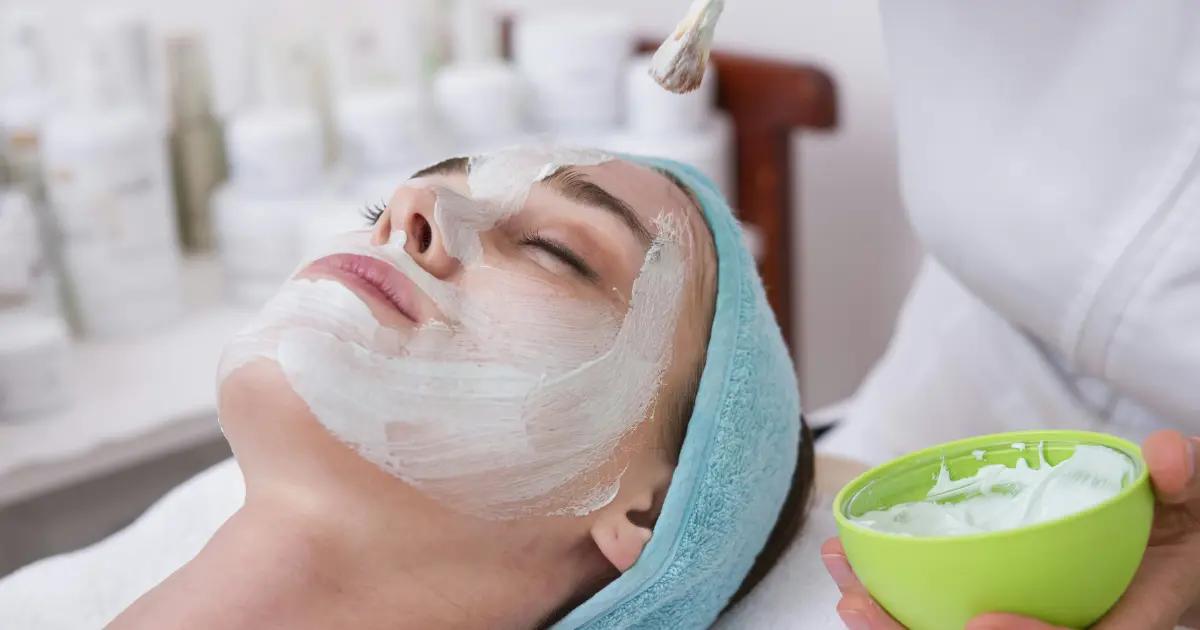
When you’re relaxing in a spa chair after a rejuvenating facial treatment, the last thing you want is anxiety about how much to tip for a facial. Whether you’ve just enjoyed a luxurious $150 treatment or a quick $50 session, understanding proper facial tipping etiquette ensures you show appreciation for your esthetician’s expertise while staying within your budget. The standard recommendation is to tip 15-20% of the service cost before tax, but several factors can influence this amount—from the type of spa you visit to whether you received add-on services or worked with multiple providers.
Tipping culture in the beauty and wellness industry can feel confusing, especially when navigating the differences between day spas, medical spas, and dermatology offices. This comprehensive guide will walk you through every scenario you might encounter, from calculating the right tip for discounted packages to understanding whether cash or credit card tips work best for your esthetician. By the end, you’ll have the confidence to tip appropriately in any facial service situation.
Standard Tipping Percentage for Facials
The industry standard for tipping for facial services falls between 15% and 20% of the total service cost before any discounts or taxes are applied. This percentage aligns with tipping practices across most personal service industries, from hairstyling to massage therapy. For a straightforward calculation, most clients find that 20% has become the new baseline for good service, while 15% is acceptable for adequate service.
To answer the common question of how much do you tip an esthetician for a facial at specific price points: for a $50 facial, a $10 tip (20%) is appropriate; for a $90 facial, tip $18; for a $130 facial, you should tip $26; and for a $150 facial, a $30 tip is standard. If you’ve received a $500 luxury facial with premium products and extended time, a $100 tip (20%) properly reflects the esthetician’s skill and the service quality.
Many people wonder about how much to tip for 1 hour facial treatments specifically. The duration doesn’t change the percentage—you should still calculate based on the service price. A one-hour facial typically costs between $75-$150 depending on location and spa type, so your tip would range from $15-$30 for standard service quality.
Using a tip calculator can simplify the math, especially when you’re calculating percentages on unusual amounts. Most smartphone calculator apps can quickly compute 20% by multiplying the service cost by 0.20, or you can use dedicated tipping apps that factor in service quality ratings.
When to Tip More Than 20%
Certain circumstances warrant increasing your tip esthetician facial amount beyond the standard 20%. Exceptional service that goes above and beyond deserves recognition through a more generous tip, typically 25-30% of the service cost.
Consider tipping more when your esthetician spends extra time addressing your specific skin concerns without charging additional fees, customizes your treatment with premium products at no extra cost, or provides valuable skincare education and personalized recommendations. If your esthetician accommodates a last-minute appointment, works outside normal business hours to fit you in, or shows exceptional attention to detail that produces remarkable results, these situations merit additional compensation.
Holiday appointments also traditionally receive higher tips—many clients increase their usual tip by 50-100% during the December holiday season as a year-end thank you to service providers they see regularly. If you’re a regular client who has built a relationship with your esthetician, showing extra appreciation during holidays strengthens that professional relationship.
First-time clients who receive extraordinary service that exceeds expectations should also consider tipping above 20%. This sets a positive tone for future appointments and signals that you value quality service. Similarly, if your esthetician successfully treats a challenging skin condition or provides visible improvement in a single session, acknowledging their expertise with a higher tip is appropriate.
Should You Tip the Salon Owner?
The question of whether to tip an esthetician who owns her own business creates considerable confusion in spa tipping etiquette. Traditional tipping wisdom suggested that business owners set their own prices and therefore don’t need tips, but modern practices have evolved significantly.
The current consensus among etiquette experts is that you should tip the owner unless they explicitly state otherwise. Many small business owners, particularly solo estheticians, rely on tips as part of their income just like their employees do. Owning the business doesn’t necessarily mean higher earnings—owners often have significant overhead costs including rent, insurance, product inventory, and equipment maintenance that employees don’t shoulder.
However, some spa owners do have policies against accepting tips for themselves. In upscale establishments or medical spas, the owner may be a licensed physician or nurse practitioner who considers tipping inappropriate for their professional role. When in doubt, you can discreetly ask the receptionist about the spa’s tipping policy regarding the owner, or simply offer the tip—if the owner declines, they’ll let you know.
At independent studios like Serenity Esthetics SPA, where the owner may also be your service provider, tipping remains appropriate and appreciated. These professionals provide the same hands-on service as any employee esthetician, and your tip acknowledges their skill and the quality experience they’ve created.
Tipping on Discounted or Package Facials
One of the most frequently asked questions in spa tipping guide discussions involves how to calculate tips when you’ve purchased a discounted service, package deal, or used a promotional offer. The golden rule: always tip on the original, full-price value of the service, not the discounted amount you paid.
When you purchase a facial package—such as a “buy five, get one free” deal or a monthly membership that reduces per-service costs—your esthetician still provides the same level of service, uses the same products, and invests the same time and expertise. The discount reflects a business decision by the spa to encourage loyalty or increase bookings; it shouldn’t reduce your service provider’s compensation.
For example, if you book a day facial in South Dakota that normally costs $120 but you’re paying $90 through a package deal, calculate your 20% tip on the $120 value ($24), not on the $90 you actually paid ($18). This practice ensures your esthetician receives fair compensation regardless of promotional pricing.
The same principle applies to Groupon deals, first-time client discounts, birthday specials, or any other promotional offer. If you received a $100 facial for $50 through a daily deal site, tip $20 (20% of $100). Many estheticians actually receive a reduced commission on discounted services, so maintaining the tip based on full value becomes even more important for their income.
Gift certificate situations follow similar logic. If someone gave you a gift certificate for a facial, tip based on the service’s full retail value. The gift-giver has already paid for the service itself; the tip is your personal responsibility as the recipient of the service.
How to Split Tips Between Multiple Providers
Many facial appointments involve multiple service providers—perhaps an assistant who performs the initial cleansing, a primary esthetician who does the main treatment, and a receptionist who provides exceptional customer service. Understanding how much to tip at spa facilities with multiple touchpoints requires a strategic approach.
When multiple professionals contribute to your service, you have two options: tip each person individually based on their contribution, or provide one larger tip and ask the receptionist to split it appropriately. The individual approach offers more control and allows you to recognize exceptional performance by specific team members.
For a facial where an assistant handles the first 15 minutes and your primary esthetician completes the remaining 45 minutes, consider splitting your 20% tip proportionally—perhaps 5% ($7.50 on a $150 facial) for the assistant and 15% ($22.50) for the primary esthetician. If both provided equal time and service quality, split the 20% evenly between them.
Some high-end spas employ a team approach where you might interact with a consultation specialist, a treatment esthetician, and a post-care advisor. In these cases, ask the receptionist about the spa’s tipping protocol. Many luxury establishments have a tip-pooling system where all service providers share gratuities, or they may provide guidance on how to distribute tips among the team.
If you receive a facial combined with other services—such as a facial followed by a massage from a different therapist—tip each provider separately based on their individual service cost. For a $100 facial and $100 massage, you’d tip $20 to your esthetician and $20 to your massage therapist, for a total of $40 in tips.
Tipping Etiquette at Medical Spas vs Day Spas
The distinction between medical spas (med spas) and traditional day spas significantly impacts tipping expectations, creating confusion about whether you tip for a facial at a medical spa versus a day spa. Understanding these differences helps you navigate each environment appropriately.
At traditional day spas, tipping follows the standard 15-20% guideline for all services, including basic facials, aromatherapy treatments, and relaxation-focused services. Day spas operate similarly to salons, where service providers typically earn a base wage plus tips, making gratuities an expected part of their compensation structure.
Medical spas present a more nuanced situation. These facilities, often supervised by physicians or nurse practitioners, offer medical-grade treatments alongside traditional spa services. For basic facials and standard esthetic services at a med spa, tipping 15-20% remains appropriate. However, when it comes to medical procedures, tipping practices differ.
Many people ask, “do you tip for botox at a med spa?” The answer depends on who performs the service. If a licensed esthetician provides the treatment under medical supervision, tipping is appropriate. However, if a physician, nurse practitioner, or physician assistant administers the Botox, tipping is generally not expected—these medical professionals set their fees to include their expertise, and tipping can be considered inappropriate in a medical context.
The question “do you tip for microneedling” or “do you tip esthetician for microneedling” follows similar logic. When an esthetician performs microneedling as an esthetic procedure, a 15-20% tip is standard. However, do you tip an esthetician at a dermatologist office for the same procedure? In a medical dermatology setting, tipping is less common and sometimes discouraged, as the environment operates under medical practice standards rather than spa service standards.
For laser facial treatments and whether you tip for hydrafacial procedures, consider who performs the service and the setting. A HydraFacial performed by an esthetician at a day spa warrants a standard tip. The same treatment at a medical office by a medical assistant may not require tipping, though it’s never offensive to offer. When wondering “do you tip for hydrafacial at medspa” specifically, a 15-20% tip is appropriate when an esthetician or spa technician provides the service.
If you’re unsure about how much to tip esthetician for laser treatment, consider that laser treatments often cost significantly more than traditional facials ($200-$500+). The 15-20% guideline still applies, though some clients feel comfortable tipping a flat amount ($30-$50) for very expensive procedures rather than a percentage that might seem excessive.
What If You're Unhappy With Your Facial?
Navigating tipping when you’ve had a disappointing experience requires balancing social expectations with your legitimate dissatisfaction. While tipping is customary, it’s not mandatory when service falls significantly below acceptable standards.
If your facial was merely adequate but didn’t meet your expectations—perhaps the results weren’t as dramatic as you hoped, or the experience felt rushed—a reduced tip of 10-15% communicates your disappointment while acknowledging the esthetician’s effort. This approach works when the service was competent but unremarkable.
For genuinely poor service—such as an esthetician who was rude, used incorrect products that caused irritation, or clearly didn’t follow proper sanitation protocols—you’re justified in leaving a minimal tip or no tip at all. However, before leaving without tipping, speak with the spa manager about your concerns. Most reputable establishments want to address problems and may offer a complimentary follow-up service or refund.
When the issue stems from factors beyond the esthetician’s control—such as uncomfortable room temperature, noisy environment, or scheduling problems—these shouldn’t affect your tip to the service provider. In these cases, tip normally but provide feedback to management about the facility issues.
If you experienced an allergic reaction or skin irritation from products used during the facial, this warrants an immediate conversation with both the esthetician and management. While the esthetician should have conducted a proper consultation to identify potential sensitivities, allergic reactions can be unpredictable. Use your judgment about tipping based on whether the esthetician followed proper protocols and responded appropriately when the issue arose.
For situations where you’re genuinely unsure whether to tip after a mediocre experience, consider that many service industry workers rely heavily on tips for their income. If the esthetician made a genuine effort and the issues were minor, erring on the side of a modest tip (10-15%) while providing constructive feedback maintains goodwill and helps the provider improve.
Cash vs Credit Card Tips: What Estheticians Prefer
The method you use to deliver your tip can impact how much your esthetician actually receives, making the cash versus credit card decision more significant than many clients realize. Understanding these differences helps ensure your gratuity reaches your service provider in full.
Cash tips remain the gold standard in the spa industry for several compelling reasons. When you tip in cash, your esthetician receives 100% of the gratuity immediately, without deductions for credit card processing fees or delays for payroll processing. Cash tips also provide flexibility for the recipient—they can use the money immediately without waiting for a paycheck, and the cash doesn’t necessarily need to be reported as income (though legally it should be).
Many estheticians prefer cash because some spa management systems deduct credit card processing fees (typically 2-3%) from tips charged to cards, meaning a $20 credit card tip might only net them $19.40. Additionally, credit card tips often get distributed through payroll, which means they’re subject to automatic tax withholding and may not reach the esthetician for several days or even weeks.
However, credit card tips offer convenience for clients who don’t carry cash and provide a clear paper trail for your records. If you’re using a credit card for the entire transaction, adding the tip to your card is perfectly acceptable—just be aware that your esthetician may receive slightly less than the full amount and will wait longer to access it.
Some spas have policies requiring all tips to go through their payment system rather than accepting cash directly. These policies help with accounting and ensure proper tax reporting, but they may also mean the spa takes a percentage or delays distribution. When booking at a new spa, you can discreetly ask the receptionist about their tipping policy and whether cash or card is preferred.
A hybrid approach works well for many clients: pay for the service itself with a credit card for points or record-keeping, but bring cash specifically for the tip. This gives you the convenience of cashless payment while ensuring your esthetician receives the full tip amount immediately.
If you forget to bring cash and must tip on your card, consider increasing the tip slightly to offset any processing fees the esthetician might incur. Adding an extra dollar or two to a credit card tip demonstrates thoughtfulness about how payment processing affects service workers.
Tipping for Add-On Services During Your Facial
Many facial appointments expand beyond the basic service to include add-ons like extractions, specialized masks, LED light therapy, or extended massage portions. Understanding how much to tip for facial and massage combinations or other enhanced services ensures you compensate appropriately for the additional time and expertise.
When your esthetician includes complimentary add-ons—such as a longer face massage, a premium mask upgrade, or additional extractions at no extra charge—increase your tip to reflect the added value. If these extras would normally cost an additional $20-30, add that amount to your tip calculation base. For example, if your $100 facial included $25 worth of complimentary add-ons, tip 20% of $125 ($25) rather than just the $100 base price.
For paid add-ons that appear as separate line items on your bill, include these in your tip calculation. If you paid $100 for a basic facial plus $30 for a collagen mask add-on, calculate your 20% tip on the combined $130 total, resulting in a $26 tip. This approach ensures you’re tipping on the full value of services your esthetician provided.
Some add-ons require specialized skills or certifications that warrant additional recognition. Services like microcurrent therapy, high-frequency treatments, or advanced exfoliation techniques demonstrate expertise beyond basic facial training. When your esthetician performs these specialized treatments skillfully, consider tipping toward the higher end of the 20-25% range.
Package deals that combine a facial with other services—such as a “facial and massage combo”—should be tipped as a whole if one provider performs both services, or split between providers if different professionals handle each portion. For a $200 combination service performed entirely by your esthetician, a $40 tip (20%) is appropriate. If an esthetician does your $100 facial and a massage therapist provides a $100 massage, tip each provider $20 separately.
When add-ons significantly extend your appointment time—turning a scheduled 60-minute facial into a 90-minute experience—acknowledge the extra time in your tip, even if the price didn’t increase proportionally. Estheticians often have back-to-back appointments, and spending extra time with you may impact their schedule and earning potential for the day.
For situations where you’re receiving multiple treatments in one visit—such as a facial, brow waxing, and lash tinting all performed by the same esthetician—calculate your tip on the total cost of all services combined. This comprehensive approach ensures fair compensation for the full scope of work your provider completed during your appointment.
Frequently Asked Questions
How much should you tip for a facial?
The standard tip for a facial is 15-20% of the service cost before tax. For example, if your facial costs $100, you should tip between $15 and $20. This percentage applies whether you’re getting a basic facial or a more advanced treatment, and it’s the industry-standard way to show appreciation for your esthetician’s skill and service.
How much do I tip for a 0 facial?
For a $150 facial, you should tip between $22.50 and $30 (15-20%). Most clients tip around $25-$30 for this price point, especially if the service was exceptional. If your esthetician provided personalized skincare advice or went above and beyond with the treatment, consider tipping on the higher end of this range.
Is a good tip for a facial?
A $20 tip is appropriate for facials priced between $100 and $130. For a $100 facial, $20 represents a generous 20% tip, while for a $130 facial, it falls closer to 15%. If your facial cost significantly more than $130, you may want to increase your tip to maintain the standard 15-20% range.
How much should I tip for a 0 facial?
For a $200 facial, the appropriate tip range is $30-$40 based on the standard 15-20% guideline. High-end facials at this price point often involve specialized techniques, premium products, and extended treatment time, so tipping $40 is common for exceptional service. Consider the complexity of the treatment and the esthetician’s expertise when determining your final tip amount.
Do you tip for a facial at a medical spa?
Yes, you should still tip for facials at medical spas, though tipping practices can vary slightly from traditional day spas. The standard 15-20% guideline applies for estheticians performing facials, even in a medical setting. However, if a licensed medical professional like a dermatologist or nurse practitioner performs a medical-grade treatment, tipping may not be expected—check the facility’s policy if you’re unsure.
How much do you tip for a facial?
For a $90 facial, you should tip between $13.50 and $18 following the 15-20% standard. Most people round up to $15-$20 for convenience. If you’re a regular client or received particularly attentive service, leaning toward the $18-$20 range shows extra appreciation for your esthetician’s work.
Should I tip more for longer facial treatments?
The tip amount should be based on the total service cost rather than treatment duration, as longer facials typically cost more anyway. A 90-minute facial that costs $175 would warrant a $26-$35 tip (15-20%), while a 60-minute facial at $100 would get $15-$20. The percentage-based approach automatically accounts for the time, expertise, and products involved in extended treatments.
Do you tip the esthetician if they own the spa?
Traditional etiquette suggests you don’t need to tip business owners, but modern spa culture has shifted toward tipping regardless of ownership. Many spa owners who still perform services appreciate tips as recognition of their work, not just their business. When in doubt, offer the tip—the owner can always decline if they have a no-tipping policy for themselves.
How much should I tip for a facial and massage package?
For combination services like a facial and massage, tip 15-20% on the total package price. If different professionals performed each service, split your tip accordingly—for example, on a $250 package with a $150 massage and $100 facial, you might tip $22.50-$30 to the massage therapist and $15-$20 to the esthetician. Always bring cash to ensure each service provider receives their portion directly.
Can I tip less than 15% for a facial if I wasn't satisfied?
If you experienced poor service or unsatisfactory results, you can tip less than the standard 15%, but consider speaking with management about your concerns first. A 10% tip signals that something was wrong while still acknowledging the service, whereas no tip should be reserved for truly unacceptable experiences. Most reputable spas want to address service issues and may offer to make things right before you leave.
You May Also Like

High Taper Fade: Complete Guide, Styles & How to Get It

Mid Taper Fade Guide: Styles, Tips & How to Get One