
HGV Drivers: Complete US Guide to UK Truck Driving Terms

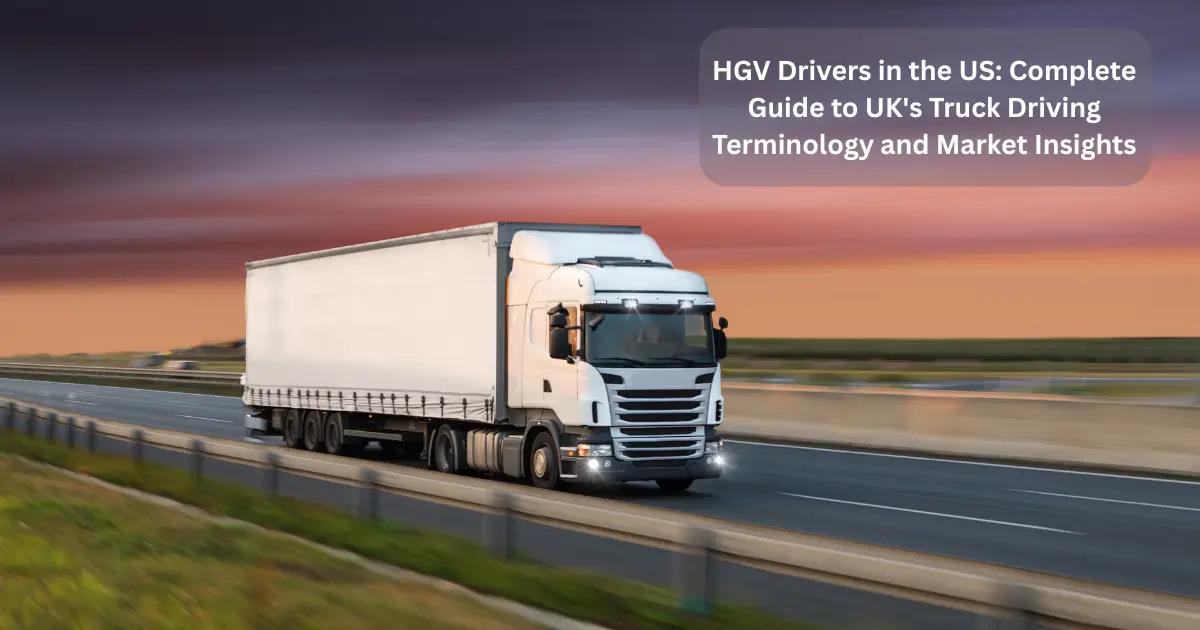
If you’ve encountered the term HGV drivers while browsing UK job boards, watching British trucking content, or researching international driving opportunities, you might be wondering what it means and how it relates to commercial driving in the United States. HGV stands for Heavy Goods Vehicle, which is the UK’s equivalent to what Americans call commercial trucks or big rigs. For US-based drivers holding a Commercial Driver’s License (CDL), understanding HGV terminology is essential if you’re considering working abroad, exploring international trucking markets, or simply trying to make sense of British transportation industry discussions. The UK trucking sector has experienced significant shifts in recent years, including a notable driver shortage that has created unprecedented opportunities for qualified professionals. Whether you’re a seasoned CDL holder curious about overseas prospects or someone researching the global trucking landscape, this comprehensive guide will clarify the differences between UK and US commercial driving systems, explain licensing requirements, compare salary expectations, and outline pathways for American drivers interested in the British market.
What Does HGV Stand For? (UK vs US Terminology Explained)
HGV stands for Heavy Goods Vehicle, the official British term for large commercial trucks used to transport goods. In the United States, these same vehicles are commonly referred to as semi-trucks, tractor-trailers, 18-wheelers, or simply commercial trucks. The term “HGV driver” describes a professional who operates these large vehicles in the UK, equivalent to what Americans call a truck driver or commercial driver.
The terminology difference reflects broader variations in language between British and American English, but the fundamental job remains remarkably similar. An HGV driver in London performs essentially the same role as a CDL Class A driver hauling freight from Los Angeles to Chicago—both operate large commercial vehicles requiring specialized training, licensing, and skills. Understanding this equivalence is crucial for anyone researching international driving opportunities or trying to interpret UK-based trucking content.
In the UK, you’ll also encounter the term “LGV” (Large Goods Vehicle), which is interchangeable with HGV in modern usage. Historically, the UK used LGV as the official designation, but HGV has become more prevalent in everyday conversation and job postings. Additionally, British drivers and the general public often use “lorry” as the casual term for these vehicles, similar to how Americans might say “big rig” or “semi.” When browsing hgv drivers jobs online, you’ll see these terms used interchangeably across different platforms and regions.
The UK also categorizes smaller commercial vehicles differently. What Americans might call a box truck or delivery van falls under different classifications in Britain, with specific licensing requirements that don’t necessarily require a full HGV license. This distinction matters when comparing job requirements and understanding which positions truly require the advanced qualifications equivalent to a US CDL Class A or B.
HGV Driver vs CDL Driver: Key Differences Between UK and US
While HGV drivers and CDL drivers perform fundamentally similar roles, several key differences distinguish the UK and US commercial driving systems. Understanding these distinctions is essential for anyone considering cross-border career opportunities or comparing the two markets.
The most obvious difference is the licensing system itself. In the United States, the Commercial Driver’s License (CDL) serves as the primary credential, with Class A, B, and C designations indicating the types of vehicles a driver can operate. The UK uses a category-based system (C1, C, C+E) that we’ll explore in detail later, but the core concept remains similar—different license levels authorize operation of different vehicle types and configurations.
Driving on the left side of the road represents perhaps the most immediately noticeable practical difference for American drivers considering UK opportunities. British HGV drivers navigate left-hand traffic with right-hand drive vehicles, which requires significant adjustment for those accustomed to US road systems. This fundamental difference affects everything from overtaking maneuvers to navigating roundabouts, which are far more common in the UK than in most parts of America.
Road infrastructure and typical route characteristics also differ substantially. The UK’s road network features narrower lanes, tighter turns, and more congested urban areas compared to many US highways. British HGV drivers regularly navigate medieval town centers and rural villages with roads that predate motor vehicles, requiring exceptional maneuvering skills. American truck drivers, particularly those running long-haul routes across western states, often enjoy wider highways and more spacious truck stops designed specifically for large commercial vehicles.
Regulatory frameworks show both similarities and differences. Both countries mandate hours-of-service regulations to prevent driver fatigue, but the specific rules vary. The UK follows EU-derived regulations (despite Brexit) that limit driving time and mandate rest periods, while the US uses the Federal Motor Carrier Safety Administration (FMCSA) hours-of-service rules. Electronic logging devices (ELDs) are mandatory in both countries, though the UK uses tachographs—digital devices that record driving time, speed, and rest periods with slightly different functionality than American ELDs.
HGV License Categories in the UK (Compared to US CDL Classes)
The UK’s HGV license system uses letter-and-number categories that parallel but don’t directly match US CDL classifications. Understanding these categories is crucial for American drivers evaluating whether their qualifications translate to UK opportunities or for anyone researching the British commercial driving landscape.
The Category C1 license in the UK authorizes drivers to operate vehicles weighing between 3,500 kg and 7,500 kg (approximately 7,700 to 16,500 pounds). This roughly corresponds to smaller commercial vehicles that might require a CDL Class B in the United States, though the weight thresholds differ. C1 drivers can haul trailers up to 750 kg, making this category suitable for delivery drivers operating medium-sized box trucks or small refrigerated vehicles.
The Category C license represents the standard HGV qualification, permitting drivers to operate rigid vehicles over 7,500 kg with trailers up to 750 kg. This category is comparable to a US CDL Class B, covering single-unit trucks without articulated trailers. Many local delivery positions, waste collection jobs, and construction vehicle operations fall under this category. Drivers holding a Category C license can operate substantial commercial vehicles but cannot legally drive articulated lorries (tractor-trailers).
Category C+E (also written as CE or Class 1) is the UK’s highest HGV classification, equivalent to a US CDL Class A. This license authorizes drivers to operate articulated vehicles—the combination of a tractor unit and semi-trailer that Americans recognize as an 18-wheeler or semi-truck. The C+E qualification is essential for long-distance haulage, international freight operations, and most high-paying trucking positions. This is what most people envision when they think of professional HGV drivers in the UK.
Additional endorsements and certifications exist in both systems. UK drivers may need ADR certification for hazardous materials (equivalent to the US HAZMAT endorsement), while passenger transport requires different qualifications entirely (PCV licenses in the UK, passenger endorsements on CDLs in America). The Driver Certificate of Professional Competence (CPC) is mandatory for professional HGV drivers in the UK, requiring periodic training to maintain—somewhat similar to continuing education requirements some US states impose on CDL holders.
One significant difference: the UK requires drivers to obtain categories progressively in many cases. You typically can’t jump directly to C+E without first holding a Category C license, though accelerated training programs exist. In the US, drivers can often obtain a Class A CDL directly through comprehensive training programs without necessarily holding a Class B first, though some training schools recommend the progressive approach.
How to Become an HGV Driver in the UK (Requirements & Process)
The pathway to becoming an HGV driver in the UK involves several distinct steps, with requirements that differ in some respects from obtaining a CDL in the United States. For American drivers considering UK opportunities or anyone researching the British system, understanding this process provides valuable context about the profession’s entry requirements.
First, candidates must hold a full UK car driving license (Category B) and be at least 18 years old, though most insurance companies and employers prefer drivers aged 21 or older for commercial positions. Unlike the US, where some states allow CDL holders as young as 18 for intrastate commerce, UK regulations permit younger drivers but practical employment opportunities remain limited until drivers reach their early twenties.
The next step involves obtaining a provisional HGV license by applying to the Driver and Vehicle Licensing Agency (DVLA). This process includes completing a D4 medical examination form certified by a doctor, ensuring the applicant meets vision, hearing, and general health standards necessary for commercial driving. The medical requirements are generally comparable to the US DOT physical examination, though administered through the UK’s National Health Service or private physicians.
Prospective HGV drivers must then complete the Driver Certificate of Professional Competence (CPC) theory tests, which consist of two parts: multiple-choice questions and hazard perception. These tests cover road safety, vehicle systems, and professional driving knowledge. This requirement has no direct US equivalent, though it’s somewhat similar to the general knowledge and combination vehicle tests required for American CDL applicants.
Practical training represents the most significant investment of time and money. Candidates must complete professional HGV training with an approved driving school, typically involving 20-40 hours of instruction depending on the license category sought and the individual’s aptitude. Training costs vary considerably, ranging from £1,500 to £3,000 ($1,850 to $3,700) for Category C and potentially more for C+E, though government funding programs and employer-sponsored training can reduce or eliminate these costs.
The practical driving test itself is comprehensive, lasting approximately 90 minutes and including off-road maneuvers (reversing exercises, coupling/uncoupling for articulated vehicles) and on-road driving assessment. Examiners evaluate vehicle control, road positioning, awareness, and professional driving standards. Pass rates vary, but many candidates require multiple attempts, similar to CDL testing in the United States where first-time pass rates hover around 50-60% depending on the state and vehicle class.
After passing the practical test, new HGV drivers must complete the Driver CPC practical demonstration test, a separate examination focusing on vehicle safety checks and coupling procedures. Only after successfully completing all these components can a driver legally operate commercial vehicles professionally in the UK. The entire process typically takes 6-12 weeks from start to finish, assuming no failed tests or scheduling delays.
For those wondering how to get a HGV licence for free, several pathways exist. The UK government has periodically offered funding schemes to address the driver shortage, including Skills Bootcamps that cover training costs. Some employers, particularly large logistics companies and supermarket chains, sponsor candidates through training in exchange for employment commitments. Organizations like Jobcentre Plus sometimes fund training for unemployed individuals seeking to enter the profession. While “free” training usually comes with obligations or eligibility requirements, these programs have made HGV careers more accessible to those who couldn’t otherwise afford the upfront costs.
HGV Driver Salary in the UK vs US Truck Driver Pay
Understanding HGV driver salary expectations is crucial for anyone considering the profession or comparing opportunities between the UK and United States. Compensation structures, benefits, and earning potential differ significantly between the two countries, influenced by market conditions, regulatory frameworks, and industry practices.
In the UK, the average HGV driver salary ranges from £30,000 to £45,000 annually ($37,000 to $55,000), with significant variation based on license category, experience, route type, and employer. Entry-level Category C drivers typically earn toward the lower end of this range, while experienced C+E drivers working long-haul or specialized routes command premium rates. The HGV salary UK per month for a mid-level driver averages £2,500 to £3,500 ($3,100 to $4,300) before taxes.
Breaking down HGV salary UK per hour, most drivers earn between £12 and £18 per hour, though this varies considerably by region and employer. London and southeastern England typically offer higher rates due to cost of living and demand, with some HGV driver salary London positions reaching £20+ per hour ($25+) for experienced professionals. However, these higher wages must be weighed against significantly higher living costs in the capital region.
Specialized roles command premium compensation. Tanker drivers, those with ADR certification for hazardous materials, and drivers operating specialized equipment often earn 10-20% above standard rates. Long distance lorry driver salary UK positions, particularly those involving European routes (though reduced post-Brexit), can reach £50,000+ annually for experienced professionals willing to spend extended periods away from home.
In comparison, US truck drivers’ earnings show both similarities and notable differences. According to the Bureau of Labor Statistics, the median annual wage for heavy and tractor-trailer truck drivers in the United States is approximately $48,000, with the top 10% earning over $72,000. However, HGV driver salary USA comparisons require careful context—American drivers often work longer hours, face different tax structures, and navigate a more fragmented healthcare system that affects net compensation.
US owner-operators and independent contractors can earn substantially more than company drivers, with some grossing $150,000+ annually, though expenses significantly reduce net income. The UK has fewer owner-operator opportunities, with most HGV drivers working as employees with benefits including paid holidays, sick leave, and pension contributions—advantages that American drivers often lack unless working for premium carriers.
Regional variations within both countries significantly impact earnings. In the US, drivers in the Northeast and West Coast typically earn more than those in Southern or Midwest states, similar to how London-based HGV drivers out-earn those in rural Wales or Scotland. Cost of living adjustments make direct salary comparisons challenging—a £35,000 salary in northern England might provide similar purchasing power to $55,000 in a mid-sized American city.
The driver shortage in both countries has driven wages upward in recent years. UK HGV driver salaries increased by 15-25% between 2021 and 2023 as companies competed for limited talent, with some offering signing bonuses of £1,000-£5,000. Similarly, US carriers have raised pay, improved benefits, and offered retention bonuses to attract and keep qualified CDL drivers. This trend has made both professions more financially attractive than in previous decades.
Benefits packages differ substantially between the two countries. UK HGV drivers typically receive 28+ days of paid annual leave (including public holidays), statutory sick pay, and employer pension contributions. American truck drivers rarely receive comparable paid time off, though health insurance, retirement matching, and performance bonuses are common at larger carriers. When evaluating do HGV drivers get paid well, total compensation including benefits provides a more accurate picture than base salary alone.
UK HGV Driver Shortage: Market Insights and Opportunities
The HGV drivers shortage in the United Kingdom has become one of the most significant labor market challenges facing the British economy, creating unprecedented opportunities for qualified drivers while simultaneously disrupting supply chains and contributing to inflation. Understanding this shortage provides crucial context for anyone considering entering the profession or evaluating the UK trucking market.
The shortage reached crisis levels in 2021, with estimates suggesting the UK lacked between 60,000 and 100,000 qualified HGV drivers. Multiple factors contributed to this deficit: Brexit reduced the number of European drivers working in Britain, the COVID-19 pandemic disrupted training and testing, an aging workforce saw retirements accelerate, and improved working conditions in other sectors lured drivers away from trucking. The Driver and Vehicle Standards Agency (DVSA) testing backlog further exacerbated the problem, preventing new drivers from entering the profession even as demand surged.
This shortage manifested in highly visible ways. British consumers encountered empty supermarket shelves, particularly for fresh produce and chilled goods. Fuel stations ran dry in September 2021, not due to petroleum shortages but because insufficient drivers couldn’t deliver fuel to retail locations. Restaurants and hospitality businesses struggled to receive deliveries, and manufacturing operations faced disruptions due to delayed component shipments. The crisis demonstrated how critical HGV drivers are to modern economic functioning.
The question are HGV drivers still in demand has a resounding answer: absolutely. While the acute crisis of 2021 has moderated somewhat, the UK continues to face structural driver shortages projected to persist for years. The Road Haulage Association estimates ongoing shortfalls of 40,000-50,000 drivers, with demographic trends suggesting the problem will worsen unless significant interventions occur. The average age of UK HGV drivers exceeds 55, with insufficient younger workers entering the profession to replace retiring veterans.
This sustained demand has transformed the profession’s attractiveness. Employers have dramatically improved compensation, working conditions, and benefits to attract and retain drivers. Many companies now offer guaranteed home time, modern equipment, respect for work-life balance, and career development opportunities that were rare in the industry a decade ago. The stereotype of trucking as a low-status, poorly compensated career has begun to shift as the market recognizes drivers’ essential value.
Government interventions have attempted to address the shortage with mixed results. Temporary visa programs allowed European drivers to work in the UK on short-term contracts, though uptake was limited. Funding for HGV driver training programs increased, with Skills Bootcamps and other initiatives reducing barriers to entry. The DVSA increased testing capacity and streamlined processes to reduce the backlog. However, these measures have proven insufficient to fully resolve the structural shortage.
The shortage has also accelerated industry modernization. Companies are investing in driver retention programs, improving facilities, and exploring technology solutions including autonomous vehicles for certain applications. While fully autonomous HGVs remain years away from widespread deployment, the driver shortage has intensified research and development efforts. In the near term, however, human drivers remain irreplaceable, ensuring continued strong demand for qualified professionals.
For job seekers, this shortage translates to exceptional opportunities. Candidates with HGV licenses can be selective about employers, negotiate favorable terms, and enjoy job security rare in many other sectors. Searching for HGV drivers jobs near me typically yields numerous options across various sectors—retail logistics, construction, waste management, food distribution, and specialized haulage. The variety allows drivers to find positions matching their preferences for route types, home time, and working conditions.
Can US CDL Drivers Work as HGV Drivers in the UK?
Many American commercial drivers wonder whether their CDL qualifications allow them to work as HGV drivers in the United Kingdom, particularly given the driver shortage and potentially attractive opportunities. The answer is complex, involving licensing reciprocity, immigration requirements, and practical considerations that affect feasibility.
The short answer is that a US Commercial Driver’s License does not automatically transfer to UK HGV authorization. The UK does not recognize American CDLs as equivalent to British HGV licenses, meaning US drivers cannot simply arrive in Britain and begin operating commercial vehicles. This lack of reciprocity reflects different testing standards, regulatory frameworks, and vehicle specifications between the two countries.
However, American drivers can become qualified HGV operators through several pathways. The most straightforward approach involves obtaining the appropriate UK license by completing the standard licensing process described earlier. US drivers with commercial experience may find the training and testing easier than complete novices, as they already understand fundamental concepts like air brakes, weight distribution, and professional driving standards. Some training providers offer accelerated courses for experienced drivers that focus on UK-specific requirements rather than teaching basic truck operation from scratch.
The Driver and Vehicle Licensing Agency may grant some credit for foreign driving experience when processing applications, potentially reducing medical examination requirements or allowing experienced drivers to skip certain preliminary steps. However, the practical driving test and CPC requirements remain mandatory regardless of foreign qualifications. No formal “conversion” process exists that would allow a CDL holder to simply exchange their American license for a UK equivalent.
Immigration requirements present the more significant barrier for most US drivers. Post-Brexit, the UK’s points-based immigration system governs who can work in the country. HGV drivers are included on the Shortage Occupation List, which facilitates work visa applications for qualified candidates. However, securing sponsorship from a UK employer remains necessary, and most companies prefer to sponsor drivers who already hold UK licenses rather than candidates who need training.
The Skilled Worker visa route offers the most viable pathway for American drivers seriously interested in UK opportunities. This visa requires a job offer from a licensed sponsor, meeting salary thresholds (generally £25,600+ annually, easily achievable for HGV drivers), and demonstrating English language proficiency. The visa allows workers to bring dependents and can lead to permanent residency after five years, making it suitable for those considering long-term relocation rather than temporary work.
Practical considerations also affect feasibility. Adapting to left-hand traffic, narrower roads, and different vehicle configurations requires significant adjustment. American drivers accustomed to spacious Interstate highways may find British motorways and especially rural routes challenging. Cultural differences in workplace practices, communication styles, and industry norms also require adaptation. These factors don’t make UK work impossible for American drivers, but they do require realistic expectations and willingness to adapt.
Some American drivers have successfully made the transition, particularly those with British citizenship through ancestry, marriage to UK citizens, or other immigration pathways that don’t require employer sponsorship. These individuals can obtain HGV licenses and compete for positions on equal footing with British drivers. For others, the combination of licensing requirements, immigration barriers, and practical challenges makes UK HGV work more aspirational than immediately achievable.
Conversely, the question of whether UK HGV drivers can work in the United States faces similar challenges. British drivers cannot use their HGV licenses to operate commercial vehicles in America without obtaining a CDL through the standard US process. Some states have limited reciprocity agreements with certain countries, but the UK is not among them. The fundamental lesson: commercial driving licenses are not internationally portable, requiring relicensing when moving between countries.
HGV Driving Jobs: Where to Find Opportunities in the UK
For qualified drivers seeking HGV drivers jobs, the UK market offers diverse opportunities across multiple sectors, each with distinct characteristics, benefits, and requirements. Understanding where to find positions and what different sectors offer helps drivers make informed career decisions aligned with their priorities and lifestyle preferences.
Traditional job boards remain the primary resource for most drivers. Websites like Indeed, Reed, CV-Library, and Totaljobs feature thousands of HGV positions at any given time. Searching for HGV drivers jobs near me on these platforms yields local opportunities, allowing drivers to filter by license category, salary range, and employment type. These general job sites aggregate postings from numerous employers, providing broad market visibility.
Specialized trucking job boards offer more targeted opportunities. Websites like Driver Hire, Drivers Direct, and HGV Driver Jobs focus exclusively on commercial driving positions, often featuring detailed information about routes, equipment, and company culture. These platforms understand driver priorities and structure listings to highlight factors like home time, route types, and per-mile or per-hour compensation that general job boards might bury in descriptions.
Major logistics companies and retailers represent significant sources of HGV employment. Organizations like Royal Mail offer stable positions with good benefits, making Royal Mail HGV jobs particularly attractive to drivers seeking security and structured career progression. Supermarket chains including Tesco, Sainsbury’s, Asda, and Morrisons employ thousands of HGV drivers for their distribution networks, typically offering competitive pay, modern equipment, and predictable schedules.
Third-party logistics providers (3PLs) like DHL, XPO Logistics, and Wincanton operate extensive fleets serving multiple clients. These companies often have high turnover but also abundant opportunities, making them accessible entry points for newly qualified drivers. While working conditions vary, larger 3PLs typically offer professional development, diverse route experience, and potential advancement into supervisory or specialist roles.
Specialized sectors provide alternatives to general freight hauling. Tanker work (fuel, chemicals, food-grade liquids) requires additional certification but commands premium pay. Construction and aggregate hauling suits drivers who prefer varied work environments and don’t mind getting dirty. Refrigerated transport demands attention to temperature control and often involves food safety protocols. Car transport, heavy haulage, and abnormal loads represent niche sectors with specific skill requirements and compensation premiums.
Agency work offers flexibility for drivers who prefer variety or want to supplement income from a permanent position. Agencies like Driver Hire, Pertemps, and Blue Arrow place drivers in temporary assignments ranging from single-day shifts to extended contracts. While agency work typically lacks benefits and job security, it allows drivers to experience different companies, routes, and vehicle types before committing to permanent employment. Rates are often competitive, and high-performing agency drivers frequently receive permanent offers from client companies.
Direct employer websites should not be overlooked. Many companies post positions on their career pages before or instead of using job boards, particularly for specialized roles or management positions. Checking the careers sections of major logistics companies, retailers, and manufacturers can reveal opportunities not widely advertised. This approach also demonstrates initiative that employers appreciate during the hiring process.
Networking within the industry provides access to unadvertised opportunities. Driver forums, social media groups, and professional associations connect drivers with peers who share information about openings, company reputations, and working conditions. The trucking community tends to be tight-knit, with experienced drivers often helping newcomers navigate career decisions and avoid problematic employers.
Geographic considerations significantly affect opportunity availability. Urban areas and major logistics hubs like the Midlands, Northwest England, and areas surrounding London offer the highest concentration of positions. However, competition is also fiercer in these regions. Rural areas may have fewer total opportunities but also less competition, potentially allowing drivers to negotiate better terms. Willingness to relocate or accept positions requiring extended time away from home dramatically expands available options.
Future of HGV Driving: Regulations and Industry Trends
The future of HGV drivers as a profession is being shaped by technological innovation, regulatory evolution, environmental pressures, and changing workforce expectations. Understanding these trends helps current and prospective drivers anticipate how the career will evolve and what skills will remain valuable in coming years.
Autonomous vehicle technology represents the most discussed potential disruptor, though its impact on HGV driving will likely be gradual rather than sudden. While fully autonomous trucks capable of operating without human oversight remain years or decades away from widespread deployment, driver-assistance technologies are already transforming the profession. Modern HGVs increasingly feature adaptive cruise control, lane-keeping assistance, automatic emergency braking, and blind-spot monitoring that reduce driver workload and improve safety.
The concept of “platooning”—where multiple trucks travel in close formation with only the lead vehicle requiring active steering—is being tested in the UK and could become operational within the next decade. This technology would allow drivers to rest or perform administrative tasks while their vehicles follow a lead truck autonomously. Rather than eliminating driver jobs, platooning might increase efficiency while maintaining human oversight for complex situations and final-mile delivery.
Environmental regulations are driving significant changes in vehicle technology and operations. The UK government has announced plans to phase out new diesel HGV sales by 2040, with interim targets for zero-emission vehicle adoption. Electric and hydrogen fuel cell trucks are entering commercial service, though infrastructure limitations currently restrict their viability for long-haul operations. HGV drivers will increasingly need familiarity with alternative powertrains, charging/refueling protocols, and range management strategies.
The transition to zero-emission vehicles will create new specializations and potentially alter route planning. Electric HGVs currently suit predictable, shorter routes with reliable charging infrastructure—urban delivery, regional distribution, and dedicated shuttle services. Long-haul operations will likely transition more slowly, potentially creating a bifurcated market where drivers specialize in either zero-emission local/regional work or conventional long-distance haulage until technology advances sufficiently.
Regulatory frameworks continue evolving to address safety, environmental concerns, and working conditions. The UK’s retention of EU-derived regulations post-Brexit means continued alignment with European standards for vehicle specifications, driver hours, and safety requirements. However, divergence is possible in coming years as Britain develops independent policies. Drivers should expect ongoing changes to hours-of-service rules, vehicle inspection requirements, and professional qualification standards.
The Driver Certificate of Professional Competence (CPC) system exemplifies ongoing professionalization efforts. Periodic training requirements ensure drivers maintain current knowledge of regulations, safety practices, and industry developments. This trend toward continuous professional development mirrors patterns in other skilled trades and professions, elevating HGV driving from a job requiring only initial training to a career demanding ongoing learning.
Workforce demographics and expectations are reshaping industry practices. The aging driver population and difficulty attracting younger workers have forced companies to improve working conditions, compensation, and career development opportunities. The stereotype of trucking as a last-resort career for those without alternatives is gradually being replaced by recognition of HGV driving as a skilled profession deserving respect and appropriate compensation.
Efforts to diversify the driver workforce, particularly increasing female participation, are gaining momentum. Women currently represent less than 2% of UK HGV drivers, far below their participation in the overall workforce. Industry initiatives, targeted recruitment campaigns, and improvements in facilities (better rest areas, enhanced security, more inclusive workplace cultures) aim to make the profession more accessible and appealing to underrepresented groups.
The integration of data analytics and telematics is transforming fleet management and driver evaluation. Modern HGVs continuously transmit data on fuel consumption, driving behavior, vehicle health, and route efficiency. While this technology enables optimization and predictive maintenance, it also raises privacy concerns and changes the driver-employer relationship. Professional drivers increasingly need to understand how their performance is measured and how to use data to demonstrate their value.
The gig economy’s influence on trucking remains limited in the UK compared to the United States, where owner-operators and independent contractors are more common. However, digital platforms connecting drivers with loads are emerging, potentially creating more flexible working arrangements. Whether this trend empowers drivers with greater autonomy or undermines employment protections depends largely on regulatory responses and market dynamics.
Supply chain resilience has become a priority following COVID-19 disruptions and Brexit-related challenges. Companies are reassessing just-in-time logistics models, potentially increasing demand for warehousing and local distribution rather than long-haul transport. This shift could create more home-daily positions and reduce the lifestyle challenges that have historically made HGV driving unappealing to many workers.
The answer to are HGV drivers professional drivers is increasingly unambiguous: yes, and the profession’s status continues to rise. The combination of essential economic function, specialized skills, regulatory requirements, and improved compensation is elevating HGV driving to recognized professional status. This trend benefits current drivers through better treatment and attracts new talent to address persistent shortages.
Climate change adaptation will affect HGV operations in unexpected ways. Extreme weather events—flooding, heat waves, severe storms—are becoming more frequent, requiring drivers to navigate hazardous conditions and companies to develop resilience strategies. Driver training increasingly includes severe weather protocols, while route planning must account for climate-related disruptions.
International trade patterns, particularly post-Brexit arrangements, continue evolving and affecting the types of freight moving through the UK. Changes in customs procedures, border controls, and trade agreements influence demand for different types of HGV work. Drivers with experience in international operations, customs documentation, and cross-border procedures may find their skills increasingly valuable or potentially less relevant depending on how trade relationships develop.
The profession’s future appears secure despite technological and regulatory changes. While the nature of HGV driving will evolve—incorporating new technologies, adapting to environmental requirements, and responding to changing market conditions—the fundamental need for skilled professionals to move goods will persist. Drivers who embrace continuous learning, adapt to new technologies, and maintain high professional standards will find abundant opportunities in the decades ahead.
For those considering HGV driving as a career, these trends suggest entering a profession in transition but not in decline. The combination of persistent shortages, improving conditions, technological enhancement rather than replacement of human drivers, and essential economic function creates a favorable outlook. Whether you’re a US-based CDL holder exploring international opportunities, a UK resident considering career options, or simply researching the global trucking industry, understanding these dynamics provides valuable context for evaluating the profession’s prospects and making informed decisions about involvement in this critical sector of the modern economy.
Frequently Asked Questions
What is the meaning of HGV driver?
An HGV driver is a Heavy Goods Vehicle driver, which is the British term for what Americans call a commercial truck driver or CDL driver. HGV drivers operate large commercial vehicles that transport goods across the UK, requiring specialized licensing similar to the US Commercial Driver’s License system. The term is primarily used in the United Kingdom and other Commonwealth countries, while the equivalent position in America is simply called a truck driver or commercial driver.
What are HGVs called in America?
In America, HGVs are called commercial trucks, semi-trucks, big rigs, tractor-trailers, or 18-wheelers. The drivers who operate these vehicles are known as truck drivers or CDL drivers rather than HGV drivers. While the terminology differs, the job responsibilities and vehicle types are essentially the same between the UK and US commercial driving industries.
Do HGV drivers get paid well?
Yes, HGV drivers typically earn competitive wages, with UK drivers averaging £30,000-£45,000 annually ($37,000-$55,000 USD), while US CDL drivers earn between $45,000-$80,000+ depending on experience, route type, and specialization. Long-haul and specialized freight drivers generally command higher salaries than local delivery drivers. The ongoing driver shortage in both countries has pushed wages upward, making commercial driving an increasingly lucrative career choice.
Are HGV drivers still in demand?
Yes, HGV drivers remain in high demand in both the UK and United States due to persistent driver shortages and increasing freight volumes. The UK faces a shortage of approximately 40,000-50,000 qualified drivers, while the US trucking industry reports shortages exceeding 80,000 drivers. This demand translates to better wages, signing bonuses, and improved working conditions for qualified commercial drivers on both sides of the Atlantic.
How much do HGV drivers earn in the USA?
In the USA, drivers performing equivalent HGV work (commercial truck driving) earn an average of $50,000-$70,000 annually, with experienced long-haul drivers making $70,000-$90,000 or more. Owner-operators and specialized freight haulers can exceed $100,000 per year. Entry-level CDL drivers typically start around $40,000-$45,000, with significant earning potential as they gain experience and endorsements.
Are HGV drivers professional drivers?
Yes, HGV drivers are classified as professional drivers who must obtain specialized licensing, undergo extensive training, and maintain strict safety standards. Both UK HGV licenses and US CDL certifications require passing written exams, practical driving tests, medical evaluations, and ongoing compliance with hours-of-service regulations. Professional HGV drivers are held to higher legal and safety standards than regular motorists.
Does America need HGV drivers?
America desperately needs commercial truck drivers (the US equivalent of HGV drivers), with the industry facing a shortage of over 80,000 qualified drivers as of 2024. The American Trucking Associations projects this shortage could reach 160,000 by 2030 as experienced drivers retire and freight demand increases. This critical need has created excellent job opportunities with competitive salaries, benefits, and signing bonuses for qualified CDL holders.
How does Brexit affect HGV drivers?
Brexit significantly impacted HGV drivers by ending freedom of movement for EU drivers working in the UK, which exacerbated existing driver shortages and created complex border crossing procedures. Many Eastern European drivers returned home, reducing the UK’s available driver pool by thousands. For US drivers considering international opportunities, Brexit means UK employers are more open to sponsoring non-EU workers, though visa requirements remain stringent.
Why do most people quit trucking?
Most people quit trucking due to extended time away from home, irregular schedules, physical demands, and lifestyle challenges rather than pay issues. The isolation of long-haul driving, difficulty maintaining work-life balance, and health concerns from sedentary work contribute to high turnover rates. However, local and regional HGV driver positions often offer better home time and have significantly lower turnover than over-the-road positions.
What is the highest paid CDL truck driver?
The highest paid CDL truck drivers are typically specialized haulers such as oversized load drivers, hazmat transporters, and mining/oilfield drivers, who can earn $80,000-$120,000+ annually. Owner-operators in profitable niches can exceed $150,000-$200,000 per year. Ice road truckers, tanker drivers, and private fleet drivers for major corporations also command premium wages compared to standard HGV drivers in general freight.
You May Also Like

DIY Projects with License Plates: 25+ Creative Ideas

Flexible Factory Partitioning Systems: Industrial Guide 2025

KTM 1390 Super Duke R Price in India 2025: ₹18-20 Lakh Expected