Best SSD Cloning Software 2025: Top 7 Tools Compared

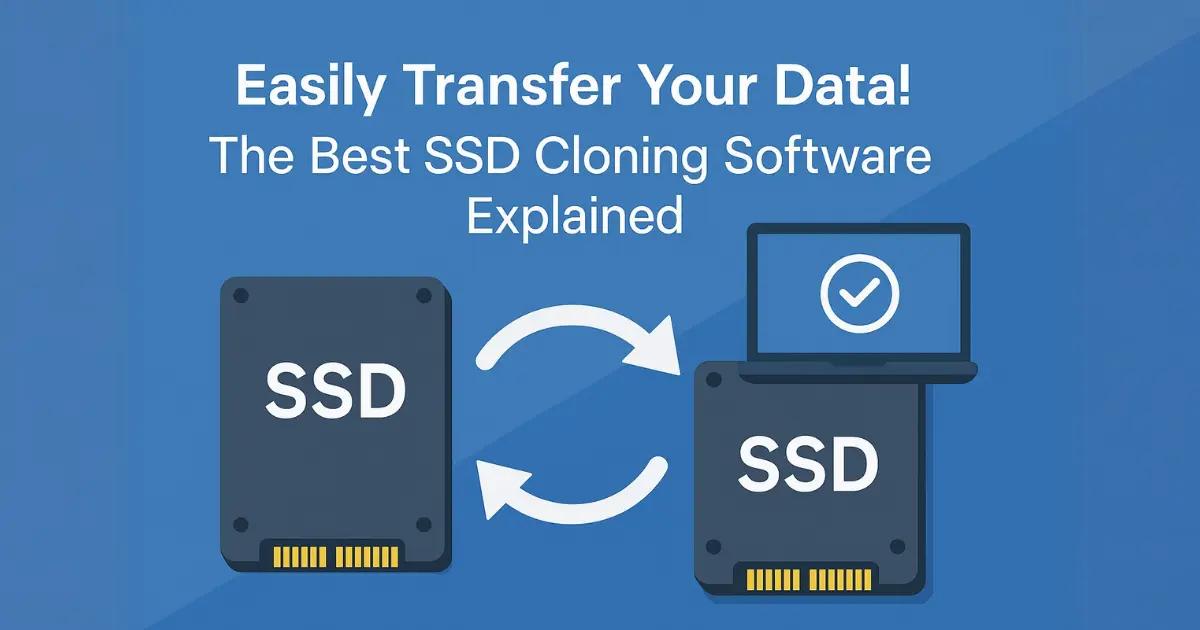
Upgrading to a new SSD should be exciting, not terrifying. Yet for millions of users, the thought of manually reinstalling Windows, reconfiguring applications, and transferring gigabytes of personal data turns what should be a simple hardware swap into a weekend-long ordeal. That’s where the best SSD cloning software becomes your lifeline—allowing you to create a perfect, bootable copy of your entire drive in hours instead of days, with zero data loss and minimal technical expertise required. Whether you’re moving from an aging HDD to a blazing-fast NVMe drive or simply upgrading to larger storage, choosing the right cloning tool makes the difference between a seamless transition and a frustrating disaster.
Why You Need SSD Cloning Software (Not Manual Transfer)
The temptation to manually copy files from your old drive to your new SSD is understandable—after all, it seems straightforward. But this approach creates catastrophic problems that most users don’t discover until it’s too late. Your operating system isn’t just a collection of files you can drag and drop; it contains boot sectors, partition tables, hidden system files, and registry entries that are intricately linked to your hardware configuration.
When you attempt manual transfer, you’ll lose your Windows activation, driver configurations, installed programs (which won’t work even if you copy their folders), and countless system settings. You’ll spend hours reinstalling applications, re-entering license keys, reconfiguring preferences, and troubleshooting compatibility issues. For business users, this downtime translates directly into lost productivity and revenue.
Professional disk cloning software solves these problems by creating a sector-by-sector or intelligent file-level copy of your entire drive. This includes the boot loader, system partition, recovery partition, and all data partitions—everything needed to boot directly from your new SSD without any additional configuration. Modern cloning tools also handle the technical complexities like partition alignment optimization for SSDs, automatic resizing to fit different capacity drives, and conversion between MBR and GPT partition schemes.
Beyond convenience, cloning software provides a safety net. The original drive remains untouched during the process, giving you a complete backup if anything goes wrong. You can test the new SSD, verify everything works perfectly, and only then wipe or repurpose your old drive. This risk-free approach is impossible with manual transfer methods.
What Makes Good SSD Cloning Software?
Not all cloning tools are created equal, and the market is flooded with options ranging from enterprise-grade solutions to free open-source utilities. Understanding what separates exceptional ssd cloning software from mediocre alternatives helps you make an informed decision that matches your technical skill level and specific needs.
Reliability and data integrity stand as the non-negotiable foundation. The software must perform bit-perfect copies without corruption, verify data after cloning, and handle bad sectors gracefully. Look for tools with proven track records—software that’s been battle-tested by millions of users across diverse hardware configurations. Reading experiences on platforms like Reddit reveals which tools consistently deliver versus those that fail with specific drive models or Windows versions.
User interface and ease of use matter tremendously, especially for non-technical users. The best software guides you through the process with clear wizards, visual representations of source and target drives, and warnings about potential issues before they occur. Advanced users appreciate granular control, but beginners need software that makes intelligent decisions automatically—like proper partition alignment and optimal cluster sizes for SSDs.
Speed and efficiency directly impact your downtime. Intelligent cloning that only copies used sectors rather than empty space can reduce a 500GB clone from 4 hours to 45 minutes. Support for SSD-specific optimizations like TRIM command compatibility and 4K alignment ensures your new drive performs at maximum speed from day one. Some tools even support hot cloning, allowing you to continue working while the clone runs in the background.
Flexibility in handling different scenarios separates professional tools from basic utilities. Can the software clone a larger drive to a smaller SSD by intelligently resizing partitions? Does it support cloning to dissimilar hardware? Can it clone SSD to NVMe drives with different sector sizes? Does it handle dynamic disks, RAID arrays, or encrypted volumes? Your specific upgrade path determines which features you’ll need.
Cost and licensing create the final consideration. Free tools like Clonezilla offer powerful functionality but require technical knowledge and patience. Manufacturer-provided software (like Samsung Data Migration or Crucial’s Acronis edition) works excellently but only with their branded SSDs. Paid solutions offer the best balance of features, support, and ease of use, with pricing ranging from $20 for home licenses to hundreds for commercial deployments.
Best SSD Cloning Software in 2025 (Comparison Table)
To help you quickly compare your options, here’s a comprehensive breakdown of the leading disk cloning software solutions available today. This table highlights key features, pricing, and ideal use cases for each tool:
| Software | Best For | Price | Key Strengths | Limitations |
|---|---|---|---|---|
| Macrium Reflect | Windows power users | Free / $70 Pro | Reliable, fast, excellent interface, incremental backups | Free version lacks advanced features |
| Clonezilla | Tech-savvy users, IT professionals | Free (open source) | Powerful, supports all file systems, network cloning | Steep learning curve, text-based interface |
| Acronis True Image | Complete backup solution seekers | $50-$100/year | Cloud backup, ransomware protection, cross-platform | Subscription model, can be resource-heavy |
| EaseUS Disk Copy | Beginners, simple migrations | Free / $20-$40 | Intuitive wizard, sector-by-sector option, good support | Free version limited to smaller drives |
| AOMEI Backupper | Budget-conscious users | Free / $50 Pro | Feature-rich free version, system backup, bootable media | Interface feels dated |
| Carbon Copy Cloner | Mac users | $40 (one-time) | Mac-optimized, incremental updates, scheduling | Mac-only, learning curve for advanced features |
This comparison provides a starting point, but your specific needs—hardware compatibility, technical comfort level, and budget—will determine the best choice. Let’s dive deeper into each option to help you make the right decision.
Macrium Reflect – Best Overall for Windows Users
For Windows users seeking the perfect balance of power, reliability, and usability, Macrium Reflect consistently earns top recommendations from both IT professionals and home users. The free version provides everything most people need for a one-time SSD upgrade, while the paid editions unlock advanced features for ongoing backup strategies.
What sets Macrium Reflect apart is its intelligent cloning wizard that automatically handles the technical complexities. The software detects your source and target drives, recommends optimal settings, and even adjusts partition sizes automatically when cloning to differently-sized SSDs. The visual disk layout makes it immediately clear which partitions will be copied and how they’ll fit on your new drive—eliminating guesswork and reducing errors.
Performance is exceptional. Macrium Reflect uses rapid delta cloning technology that only copies changed sectors on subsequent clones, dramatically reducing time for incremental backups. The initial clone runs at maximum speed your hardware allows, typically completing a 500GB drive in under an hour on modern systems. The software creates bootable rescue media automatically, ensuring you can restore even if Windows won’t start.
The free Macrium Reflect 8 version includes full disk cloning, partition cloning, and the ability to create bootable USB rescue drives. You can clone your system drive, verify the clone’s integrity, and even mount backup images to extract individual files. For home users performing occasional upgrades, this feature set is more than sufficient and rivals paid alternatives.
Paid versions (starting at $70 for Reflect Home) add differential backups, encryption, email notifications, and commercial use rights. The professional edition includes rapid delta restore, which can rebuild a system in minutes rather than hours—critical for business environments where downtime equals lost revenue.
User feedback on Reddit and tech forums consistently praises Macrium Reflect’s reliability. Unlike some competitors that fail with specific drive models or Windows configurations, Macrium handles edge cases gracefully. The active support forum and comprehensive documentation mean you’re never stuck when issues arise.
Clonezilla – Best Free SSD Cloning Tool
For users comfortable with command-line interfaces and willing to invest time learning a powerful tool, Clonezilla represents the gold standard of free disk cloning software. This open-source solution powers countless IT departments, data recovery services, and tech-savvy individuals who need enterprise-grade functionality without the enterprise price tag.
Clonezilla Live runs as a bootable Linux environment, meaning it operates independently of your installed operating system. This architecture provides several advantages: it can clone any operating system (Windows, macOS, Linux, or even exotic systems), access drives that Windows can’t read, and perform clones without Windows file-locking issues. The software supports virtually every file system imaginable—NTFS, FAT32, exFAT, ext2/3/4, Btrfs, XFS, and dozens more.
The feature set rivals commercial solutions costing hundreds of dollars. Clonezilla supports disk-to-disk cloning, disk-to-image backups, and even multicasting—allowing IT professionals to simultaneously clone one master image to dozens of computers over a network. It handles encrypted volumes, LVM partitions, and software RAID arrays that stump simpler tools. The software can clone larger drives to smaller targets by intelligently resizing partitions, and it skips bad sectors automatically to salvage failing drives.
However, Clonezilla’s power comes with complexity. The text-based interface intimidates beginners, presenting screens full of technical options that require understanding partition schemes, file systems, and boot loaders. One wrong selection can result in data loss or unbootable clones. The Clonezilla download requires creating bootable media (USB or CD), and you’ll need to restart your computer to run it—no convenient background cloning while you work.
For those willing to climb the learning curve, numerous tutorials and the comprehensive documentation make Clonezilla accessible. The Reddit community actively supports new users, and once you’ve successfully completed your first clone, subsequent operations become routine. Many users keep a Clonezilla USB drive as their emergency toolkit for system recovery and migration tasks.
Is Clonezilla still free? Absolutely. As an open-source project, Clonezilla remains completely free for personal and commercial use, with no hidden costs, trial limitations, or feature restrictions. This makes it ideal for small businesses, schools, and individuals who need professional-grade cloning without budget constraints.
Acronis True Image – Best Complete Backup Solution
When you need more than just cloning—when you want comprehensive data protection, cloud backup, and ransomware defense—Acronis True Image (now branded as Acronis Cyber Protect Home Office) delivers an all-in-one solution. This acronis cloning software approaches data security holistically, treating disk cloning as one component of a complete protection strategy.
The cloning functionality itself is excellent. Acronis provides a streamlined wizard that guides you through selecting source and target drives, with intelligent recommendations for partition layout and alignment. The software handles HDD to SSD cloning seamlessly, automatically optimizing for SSD performance characteristics. You can clone while Windows is running (hot clone) or create bootable media for offline cloning—whichever suits your workflow.
What distinguishes Acronis is the ecosystem around cloning. After migrating to your new SSD, Acronis continues protecting your data with scheduled incremental backups, cloud storage integration, and active ransomware protection that monitors for suspicious file encryption activity. The software can backup to local drives, NAS devices, or Acronis Cloud, with versions stored securely offsite. This multi-layered approach means a hardware failure, ransomware attack, or accidental deletion never results in permanent data loss.
The Universal Restore feature proves invaluable when cloning to dissimilar hardware. Unlike basic cloning tools that may fail when moving to a computer with different motherboard or chipset, Acronis adjusts drivers and system files automatically, ensuring your cloned system boots successfully even on completely different hardware. This capability is essential for IT professionals managing diverse computer fleets or users upgrading to new computers rather than just new drives.
Cross-platform support extends Acronis’s value. The same subscription covers Windows and Mac computers, with mobile apps for iOS and Android backup. You can clone your Windows desktop, backup your MacBook, and protect your smartphone photos—all from one interface with unified management.
The primary drawback is cost and subscription model. Acronis operates on annual subscriptions starting around $50 for basic plans and scaling to $100+ for advanced features and larger cloud storage. While the first-year pricing often includes discounts, ongoing costs accumulate. For users who only need one-time cloning, the subscription feels excessive compared to one-time purchase alternatives or free tools.
Performance can also be resource-intensive. Acronis’s comprehensive monitoring and active protection consume system resources that some users find noticeable on older hardware. However, for those seeking peace of mind with professional-grade data protection, the investment pays dividends in prevented disasters and simplified recovery.
EaseUS Disk Copy – Best for Beginners
When technical jargon and complex options overwhelm you, EaseUS Disk Copy cuts through the confusion with an interface so intuitive that even complete novices successfully clone drives on their first attempt. This software prioritizes accessibility without sacrificing essential functionality, making it the ideal choice for users who want reliable results without becoming storage experts.
The step-by-step wizard holds your hand through every decision. Large, clear icons represent your drives with visual capacity indicators showing used and free space. The software automatically detects whether you’re cloning to a larger or smaller drive and adjusts partition sizes accordingly. Warnings appear before potentially destructive operations, and the interface uses plain language instead of technical terminology—”Copy your old drive to your new drive” rather than “perform sector-level disk imaging.”
EaseUS offers both free and paid versions, with the free tier handling basic cloning tasks for drives up to a certain size (typically around 1TB, though limits vary by version). This makes it perfect for users upgrading from older, smaller drives to modern SSDs. The paid version (around $20-$40 depending on promotions) removes size restrictions and adds features like sector-by-sector cloning, command-line support for automation, and technical support.
The software includes SSD optimization features that automatically align partitions for 4K sectors, ensuring maximum performance from your new drive. You can choose between intelligent cloning (which only copies used space, saving time) or sector-by-sector cloning (which creates an exact bit-for-bit copy, useful for forensics or when dealing with unusual partition schemes).
One standout feature is the system migration wizard specifically designed for moving Windows to a new SSD without cloning unnecessary data partitions. If your old drive contains both your Windows installation and a large data partition, you can selectively migrate just the system, saving time and allowing you to organize your new storage layout differently.
Customer support receives consistently positive reviews. EaseUS provides email support, live chat, and an extensive knowledge base with video tutorials. For beginners who inevitably encounter questions or concerns, having responsive support transforms a potentially frustrating experience into a smooth one.
The limitations are minor for most users. The free version’s capacity restrictions mean users with larger drives must upgrade to the paid version. Advanced users may find the simplified interface limiting when they want granular control over technical parameters. However, for the target audience—people who want cloning to “just work”—these aren’t significant drawbacks.
AOMEI Backupper – Best Budget-Friendly Option
Budget constraints shouldn’t force you to compromise on reliability, and AOMEI Backupper proves that point by offering a remarkably feature-rich free version that handles most cloning scenarios without spending a penny. For users who need slightly more advanced features, the paid Professional edition costs around $50—significantly less than competitors while delivering comparable functionality.
The free AOMEI Backupper Standard includes full disk cloning, partition cloning, system cloning (OS migration), and the ability to create bootable rescue media. This feature set matches or exceeds what many competitors charge for, making it exceptional value. You can clone your entire drive to a new SSD, verify the clone’s bootability, and create a USB rescue drive for emergencies—all without opening your wallet.
What makes AOMEI particularly attractive is its system clone feature in the free version. Many competitors restrict OS migration to paid tiers, but AOMEI allows you to clone just your Windows installation and boot partitions to a new SSD, leaving data partitions behind. This targeted approach saves time when you’re upgrading your system drive but keeping your old drive for bulk storage.
The software handles intelligent sector cloning, copying only used sectors rather than empty space. This dramatically reduces clone time—a 500GB drive with 200GB used might clone in 30 minutes instead of 2 hours. AOMEI also supports SSD alignment optimization, ensuring your new drive performs at maximum speed with proper 4K alignment.
The interface, while functional, feels somewhat dated compared to sleeker competitors. The layout uses traditional Windows styling rather than modern design aesthetics, and some options are buried in menus that require exploration. However, once you understand the workflow, operations become straightforward. The software includes helpful tooltips and a comprehensive help file that explains each feature.
Advanced features in the paid Professional edition include command-line cloning for automation, dynamic disk support, and GPT/MBR conversion during cloning. The Technician edition adds commercial licensing and portable version creation, making it attractive for IT professionals managing multiple computers.
AOMEI’s backup and restore capabilities extend beyond simple cloning. The software can create scheduled backups, incremental and differential backups, and even synchronize folders in real-time. This makes it a complete data protection solution rather than just a one-time cloning tool. For users who want ongoing backup protection without subscription costs, AOMEI provides excellent long-term value.
Community feedback highlights AOMEI’s reliability across diverse hardware configurations. The software handles problematic scenarios—like cloning drives with bad sectors or unusual partition layouts—more gracefully than some higher-priced alternatives. The company provides regular updates addressing Windows compatibility and adding support for new storage technologies.
Carbon Copy Cloner – Best for Mac Users
Mac users face unique challenges when cloning drives, as macOS’s APFS file system, system integrity protection, and T2 security chip requirements demand specialized handling. Carbon Copy Cloner (CCC) stands as the definitive solution for Mac disk cloning, offering deep integration with macOS that generic cross-platform tools simply cannot match.
Unlike Windows-centric tools adapted for Mac, CCC was built specifically for macOS from the ground up. It understands APFS snapshots, handles macOS recovery partitions correctly, preserves file metadata and extended attributes, and respects macOS security policies. The software creates bootable clones that work identically to your source drive—you can literally boot from your cloned external SSD and continue working as if nothing changed.
The incremental cloning feature proves particularly valuable for Mac users who want ongoing backup protection. After the initial clone, CCC can update your backup drive with only changed files, completing updates in minutes rather than hours. You can schedule automatic clones to run nightly, ensuring your backup is never more than a day old. This transforms CCC from a one-time migration tool into a comprehensive backup solution.
CCC’s interface embraces Mac design principles with a clean, intuitive layout that feels native to macOS. Creating a clone involves selecting source and destination, choosing whether to delete items on the destination that don’t exist on the source, and clicking start. Advanced users can configure filters to exclude certain folders, set up email notifications, and create custom scripts that run before or after cloning operations.
The software excels at handling macOS-specific scenarios that confound other tools. Cloning a Mac with a T2 chip requires special handling of the secure enclave and firmware; CCC manages this automatically. When cloning to a new Mac with different hardware, CCC ensures all necessary drivers and system files transfer correctly. The software even handles FileVault-encrypted volumes, maintaining encryption on the destination or optionally removing it.
One standout feature is SafetyNet, which archives files that would otherwise be deleted during an incremental update. If you accidentally delete an important file and then run a clone, SafetyNet preserves the deleted file on your backup drive for a configurable retention period. This provides an extra layer of protection against user error.
CCC operates on a one-time purchase model of around $40, with free updates for a year and continued use of your purchased version indefinitely. This pricing structure feels refreshingly straightforward compared to subscription-based alternatives. Educational discounts and volume licensing make it affordable for schools and businesses.
The learning curve for advanced features exists, but the default settings work excellently for most users. The comprehensive documentation, video tutorials, and responsive support help users leverage CCC’s full potential. For Mac users serious about data protection and system migration, Carbon Copy Cloner represents the gold standard—reliable, powerful, and thoroughly Mac-native.
How to Clone Your SSD: Step-by-Step Guide
Understanding the cloning process demystifies what seems like a daunting task and helps you avoid common pitfalls. While specific software interfaces vary, the fundamental workflow remains consistent across all ssd migration tools. Here’s a comprehensive guide to cloning your drive successfully:
Preparation Phase
Verify your new SSD capacity. Your target drive must be equal to or larger than the used space on your source drive (not the total capacity). If your 1TB old drive has 600GB used, you can clone to a 512GB SSD only if you first reduce used space below 512GB by deleting or moving files.
Back up critical data separately. While cloning is generally safe, hardware failures or power interruptions during the process can cause problems. Copy irreplaceable files—photos, documents, project files—to an external drive or cloud storage before beginning.
Connect your new SSD properly. For desktop computers, you can install the new SSD internally alongside your old drive. For laptops with only one drive bay, use a USB-to-SATA adapter or external enclosure to connect the new SSD externally during cloning. Ensure the connection is secure—a loose cable mid-clone causes corruption.
Update your cloning software. Download the latest version to ensure compatibility with your Windows version and drive models. Older software versions may not recognize newer NVMe drives or handle Windows 11 correctly.
Cloning Process
Launch your chosen software and select the disk clone or system clone function. Disk clone copies everything; system clone copies only OS and boot partitions. For most users upgrading their primary drive, disk clone is the right choice.
Select source and destination carefully. This is the most critical step—selecting the wrong destination erases that drive permanently. Most software shows drive models, serial numbers, and capacities to help you identify drives correctly. Your source is your current working drive; destination is the new empty SSD.
Configure clone options. Enable SSD optimization or 4K alignment if available—this ensures maximum performance. Choose intelligent cloning (copies only used sectors) rather than sector-by-sector unless you have specific reasons for an exact copy. If cloning to a larger drive, enable automatic partition expansion to use the full capacity.
Review the operation summary before starting. The software should show exactly what will be copied and how partitions will be arranged on the destination. Verify this matches your expectations—particularly that your destination drive is correct.
Start the clone and wait. Cloning takes 30 minutes to several hours depending on data volume and drive speeds. Don’t interrupt the process—avoid using your computer heavily, and ensure it won’t sleep or shut down. Most software shows progress and estimated time remaining.
Post-Clone Verification
Verify the clone before removing the old drive. Shut down your computer, disconnect the old drive (or change boot priority in BIOS), and boot from the new SSD. Verify Windows starts normally, applications launch, and your files are accessible. Test thoroughly—check multiple programs, open various files, and ensure everything works identically.
Adjust BIOS settings if necessary. If your new SSD doesn’t boot, enter BIOS/UEFI settings and verify the boot order lists your new SSD first. Some systems require enabling AHCI mode for SSDs. Consult your motherboard manual for specific instructions.
Expand partitions if needed. If you cloned to a larger SSD, you may have unallocated space. Use Windows Disk Management or your cloning software to extend your main partition to use the full drive capacity.
Securely wipe or repurpose the old drive. Once you’ve confirmed the clone works perfectly for several days, you can wipe your old drive for reuse as secondary storage or securely erase it before disposal. Never simply delete files—use secure erase utilities that overwrite data multiple times.
Common SSD Cloning Problems (And How to Fix Them)
Even with excellent software, certain scenarios cause cloning failures or unexpected results. Understanding these common issues and their solutions saves hours of frustration and prevents data loss.
Clone Won't Boot
This is the most common problem, typically caused by boot partition issues. Solution: Use your cloning software’s “make bootable” or “fix boot” feature. Most tools can repair boot sectors and rebuild the boot configuration. Alternatively, use Windows installation media to access recovery options and run “bootrec /fixmbr” and “bootrec /fixboot” commands. Verify your BIOS boot mode (UEFI vs. Legacy) matches your partition scheme (GPT vs. MBR).
Destination Drive Too Small Error
This occurs when your source drive’s used space exceeds the destination capacity. Solution: Before cloning, use Windows Disk Cleanup to remove temporary files, empty the recycle bin, and delete unnecessary programs. Move large files like videos to external storage temporarily. Disable hibernation (powercfg /h off) and reduce pagefile size to free up gigabytes. Some software offers “intelligent resize” that can shrink partitions automatically if sufficient free space exists.
Clone Completes But Performance Is Slow
Your new SSD should be faster than your old drive, not slower. Solution: This usually indicates improper partition alignment. Use a tool like AS SSD Benchmark to check alignment—it should show “OK” with alignment at 4096 sectors. If misaligned, you’ll need to reclone with SSD optimization enabled. Also verify TRIM is enabled (run “fsutil behavior query DisableDeleteNotify” in Command Prompt—it should return 0) and that your SATA port is running in AHCI mode, not IDE mode.
Clone Fails Midway Through
Interrupted clones often result from bad sectors on the source drive, unstable connections, or insufficient power. Solution: Run CHKDSK on your source drive to identify and mark bad sectors before cloning. Ensure USB connections are secure and use powered USB hubs if cloning via USB. Close all programs during cloning to prevent file locks. If your source drive has many bad sectors, it may be failing—prioritize backing up data immediately and consider using recovery-oriented software like ddrescue that can work around damaged areas.
Missing Partitions After Clone
Sometimes recovery partitions or small system partitions don’t copy correctly. Solution: Use disk cloning rather than partition cloning to ensure all partitions transfer. Some software has options to “copy all partitions” versus “copy system partitions only”—choose the former. If recovery partitions are missing but Windows boots fine, you can recreate them using Windows recovery tools or manufacturer utilities, though this is optional for most users.
Cloned Drive Shows Wrong Size
Your 1TB SSD shows as 500GB after cloning from a 500GB drive. Solution: This is normal—the clone preserves the original partition layout. Use Windows Disk Management to extend your main partition into the unallocated space. Right-click the partition, select “Extend Volume,” and follow the wizard to claim the unused space.
Software Doesn't Recognize NVMe Drive
Older cloning software may not detect newer NVMe SSDs. Solution: Update to the latest software version with NVMe support. Ensure your NVMe driver is installed (check Device Manager under “Storage controllers”). Some older systems require BIOS updates to properly support NVMe drives. If your software still can’t detect the drive, try a different tool—Macrium Reflect and Clonezilla both have excellent NVMe support.
Choosing the Right Tool for Your Needs
After examining the leading options, the “best” choice depends entirely on your specific situation, technical comfort level, and budget. Here’s a quick decision framework to guide your selection:
Choose Macrium Reflect if you’re a Windows user who wants reliable, professional-grade cloning with an intuitive interface and don’t mind paying for advanced features. The free version handles one-time migrations excellently, while paid versions provide ongoing backup protection.
Choose Clonezilla if you’re technically proficient, need to clone non-Windows systems, or require advanced features like network multicasting without any budget. Accept that you’ll invest time learning the interface, but you’ll gain a powerful tool for life.
Choose Acronis True Image if you want comprehensive data protection beyond just cloning—cloud backup, ransomware protection, and cross-platform support justify the subscription cost for users serious about data security.
Choose EaseUS Disk Copy if you’re a beginner who prioritizes simplicity and clear guidance over advanced features. The affordable paid version or capable free tier makes it accessible for most home users.
Choose AOMEI Backupper if budget is your primary concern but you still want professional features. The generous free version and low-cost paid upgrade provide exceptional value for money.
Choose Carbon Copy Cloner if you’re a Mac user—period. No other tool matches its deep macOS integration and reliability for Apple hardware.
Regardless of which tool you select, the key to success lies in preparation, careful attention during the process, and thorough verification afterward. Modern best ssd cloning software has evolved to handle the technical complexities automatically, making what once required expert knowledge accessible to anyone willing to follow instructions carefully.
Beyond Cloning: Maintaining Your New SSD
Successfully cloning to your new SSD marks the beginning, not the end, of optimal drive management. SSDs require different maintenance approaches than traditional hard drives to maximize performance and longevity.
Enable TRIM immediately if it’s not already active. TRIM allows Windows to inform the SSD which data blocks are no longer in use, enabling the drive to perform garbage collection and maintain performance. Modern Windows versions enable TRIM automatically for SSDs, but verify by running “fsutil behavior query DisableDeleteNotify” in Command Prompt—a return value of 0 confirms TRIM is active.
Avoid defragmentation. Unlike hard drives, SSDs don’t benefit from defragmentation and the process causes unnecessary write cycles that reduce drive lifespan. Windows 10 and 11 automatically disable scheduled defragmentation for SSDs, but verify this in the Optimize Drives utility.
Monitor drive health regularly. Use tools like CrystalDiskInfo or your SSD manufacturer’s utility to check SMART data, which reveals drive health, temperature, and total data written. This early warning system alerts you to potential problems before catastrophic failure.
Maintain adequate free space. SSDs perform best with at least 10-20% free space, as this provides room for wear leveling and garbage collection. When drives fill beyond 80-90% capacity, performance degrades noticeably.
Keep firmware updated. SSD manufacturers release firmware updates that improve performance, fix bugs, and enhance reliability. Check your manufacturer’s website quarterly for updates and follow their installation instructions carefully.
Implement a backup strategy. Your successful clone demonstrates the value of having a complete drive copy. Establish regular backups—whether using the same cloning software on a schedule, Windows Backup, or cloud solutions—to protect against hardware failure, ransomware, or accidental deletion.
The investment in quality SSD cloning software pays dividends not just during the initial migration, but through the ongoing peace of mind that comes from having reliable backup and recovery capabilities. Whether you chose a free tool like Clonezilla or a comprehensive solution like Acronis, the ability to create perfect drive copies transforms how you approach system upgrades, hardware changes, and data protection.
Your upgraded SSD should now be running at peak performance, with all your applications, settings, and data exactly as they were—but faster, quieter, and more reliable. The hours you saved by cloning instead of manually reinstalling everything can now be spent actually using your computer rather than configuring it. That’s the true value of choosing the right cloning software for your needs.
Frequently Asked Questions
What is the best SSD cloning software?
The best SSD cloning software depends on your specific needs, but top options include Macrium Reflect, EaseUS Todo Backup, and Acronis True Image for their reliability and user-friendly interfaces. For advanced users seeking free solutions, Clonezilla offers powerful features despite a steeper learning curve. When choosing the best SSD cloning software, prioritize options that support your drive brands, offer sector-by-sector copying, and include bootable media creation.
Can you clone SSD for free?
Yes, you can clone an SSD completely free using software like Clonezilla, which is open-source and offers professional-grade cloning capabilities. Many manufacturers also provide free cloning utilities for their drives, such as Samsung Data Migration and Crucial’s Acronis True Image OEM edition. Additionally, free versions of commercial software like Macrium Reflect Free offer basic cloning features suitable for most home users.
Can you clone SSD to SSD directly?
Yes, you can clone directly from one SSD to another SSD, and it’s actually the most common upgrade scenario. Most of the best SSD cloning software supports direct SSD-to-SSD transfers when both drives are connected to your computer simultaneously via SATA or USB adapters. The process typically takes 30 minutes to several hours depending on the amount of data being transferred and the speed of your drives.
Is Clonezilla really free?
Clonezilla is completely free and open-source software licensed under the GNU General Public License, with no hidden costs, trial limitations, or premium versions. It’s maintained by the National Center for High-Performance Computing in Taiwan and is widely used by IT professionals worldwide. While it lacks the polished interface of commercial alternatives, Clonezilla offers enterprise-level cloning capabilities at no cost.
Does Microsoft have a disk cloning tool?
No, Microsoft does not include native disk cloning software in Windows 10 or Windows 11. While Windows offers backup and system image creation tools, these create image files rather than bootable clones and require restoration steps to use. For true disk cloning functionality, you’ll need to use third-party solutions among the best SSD cloning software options available.
How does cloning an SSD work?
SSD cloning creates an exact, sector-by-sector copy of your source drive to a destination drive, including the operating system, installed programs, settings, and all personal files. The software reads data from the original SSD and writes it to the new one, maintaining the partition structure and boot information so the cloned drive is immediately bootable. Unlike reinstalling Windows, cloning preserves everything exactly as it was, allowing you to swap drives without reconfiguration.
Is cloning SSDs safe?
Yes, cloning SSDs is safe when using reputable software, and the process is non-destructive to your source drive—it only reads data without modifying it. However, all data on the destination SSD will be overwritten, so ensure you’re cloning to the correct drive and have backups of any important data on the target drive. The best SSD cloning software includes safeguards to prevent accidental data loss and verify the integrity of the cloned data.
What is better than Clonezilla for ease of use?
Macrium Reflect Free and EaseUS Todo Backup are significantly easier to use than Clonezilla, offering intuitive graphical interfaces that guide users through the cloning process step-by-step. These alternatives provide wizards, visual drive selection, and progress indicators that make them accessible to beginners. While Clonezilla is more powerful for advanced scenarios, most home users will find commercial or freemium options more approachable for straightforward SSD upgrades.
How to clone SSD to SSD in Windows 11?
To clone an SSD in Windows 11, connect both drives to your computer, install your chosen cloning software, select the source SSD and destination SSD, then initiate the cloning process. Most of the best SSD cloning software will automatically adjust partitions to fit the new drive size and create bootable media if needed. After cloning completes, shut down your computer, physically replace the old drive with the new one, and boot normally—Windows 11 will run exactly as before on the new SSD.
What is the best free software for cloning SSD?
The best free software for cloning SSD includes Macrium Reflect Free for its balance of features and usability, Clonezilla for maximum control and flexibility, and manufacturer-specific tools like Samsung Data Migration if you’re using compatible drives. Macrium Reflect Free is particularly recommended for Windows users who want a straightforward experience with reliable results. Each option successfully creates bootable clones without cost, though they differ in interface complexity and advanced features.
You May Also Like

Reducing Cyber Risk: Practical Guide for UK Businesses 2024

Biogas Odour Control: Carbon Filtration Systems Guide