Ferrari Guide: History, Models, F1 Legacy & Ownership Costs

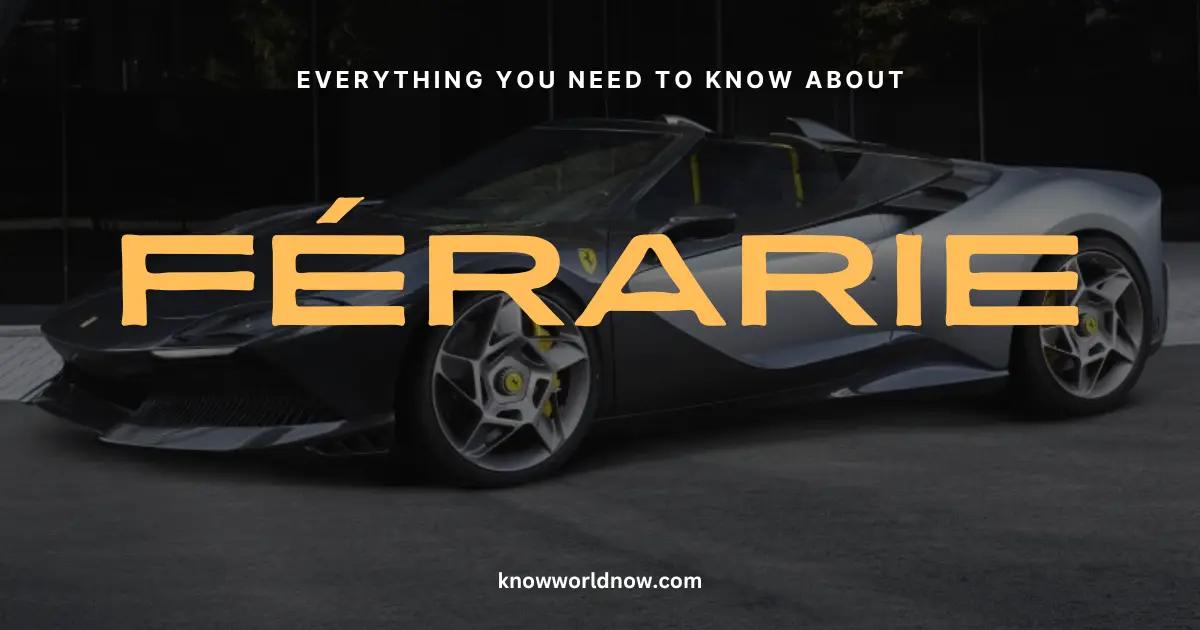
When searching for a comprehensive Ferrari guide, you’re diving into the world of automotive royalty—a brand that represents the pinnacle of Italian engineering, racing heritage, and automotive passion. Ferrari isn’t just a car manufacturer; it’s a cultural phenomenon that has captivated enthusiasts for over seven decades. Whether you’re researching Ferrari ownership costs, exploring iconic Ferrari models, or understanding the brand’s transition into electric and hybrid technology, this complete guide covers everything from Enzo Ferrari’s founding vision to the brand’s electrified future. From the legendary Ferrari 250 GTO to the groundbreaking SF90 Stradale hybrid, from Ferrari Formula 1 dominance to the realities of maintenance expenses, you’ll discover why Ferrari remains the ultimate dream for automotive enthusiasts worldwide.
What Makes Ferrari the Ultimate Luxury Sports Car Brand
Ferrari occupies a unique position in the automotive hierarchy that transcends mere transportation. The prancing horse badge represents a combination of racing pedigree, exclusivity, and emotional connection that no other manufacturer can replicate. Unlike mass-market luxury brands, Ferrari has deliberately maintained limited production numbers—typically producing fewer than 10,000 vehicles annually until recent years—ensuring that ownership remains an exclusive privilege rather than a commodity.
The brand’s mystique stems from its uncompromising focus on performance. Every Ferrari, from the entry-level Roma to the track-focused 812 Competizione, prioritizes driving dynamics and emotional engagement over practicality. The distinctive Ferrari V8 and V12 engines produce soundtracks that enthusiasts consider symphonic, while the brand’s aerodynamic designs have consistently pushed the boundaries of automotive aesthetics. Ferrari’s commitment to naturally aspirated engines lasted longer than most competitors, and even their turbocharged models maintain a visceral character that defines the driving experience.
Ferrari’s exclusivity extends beyond production numbers to purchasing requirements. The brand famously vets potential buyers, particularly for limited-edition models, creating a hierarchy among owners. This selectivity has spawned questions like “Why can’t Kardashians buy Ferraris?”—a reference to the brand’s reported reluctance to sell to celebrities who might customize vehicles in ways that conflict with Ferrari’s brand image. While such stories are often exaggerated, Ferrari does maintain strict guidelines about modifications and resale restrictions for special editions, reinforcing the brand’s control over its image.
The investment potential of certain Ferrari models further elevates the brand’s status. Classic Ferraris, particularly limited-production models from the 1950s through 1980s, have become alternative investment assets that appreciate rather than depreciate. This financial dimension adds another layer to Ferrari ownership—the possibility that your automotive passion might also prove financially prudent, something virtually unheard of with other car brands.
Ferrari History: From Enzo Ferrari to Global Icon
Understanding Ferrari history requires understanding Enzo Ferrari himself—a man whose singular vision shaped automotive culture forever. Born on February 18, 1898, in Modena, Italy, Enzo Ferrari’s early life was marked by tragedy and determination. His father and brother died during the 1916 flu pandemic, and young Enzo’s formal education was limited. However, his passion for racing and mechanical engineering drove him forward despite these setbacks.
Enzo Ferrari began his automotive career as a test driver for CMN (Costruzioni Meccaniche Nazionali) in 1918, then joined Alfa Romeo’s racing division in 1920. He became a successful racing driver himself, earning the prancing horse emblem—originally the symbol of Italian WWI flying ace Francesco Baracca—from the pilot’s mother. This symbol would become the most recognizable automotive badge in history. By 1929, Enzo founded Scuderia Ferrari as Alfa Romeo’s racing division, managing the team’s competition efforts while building his reputation as a brilliant team manager and talent scout.
The actual Ferrari automobile company emerged from a complicated separation from Alfa Romeo. In 1939, Enzo left Alfa Romeo under an agreement that prevented him from using the Ferrari name in racing for four years. He established Auto Avio Costruzioni and produced two cars for the 1940 Mille Miglia. The first true Ferrari, the Ferrari 125 S, didn’t appear until 1947, powered by a 1.5-liter V12 engine designed by Gioacchino Colombo. This V12 architecture would become Ferrari’s signature, continuing in various forms to the present day.
Personal tragedy profoundly shaped Enzo Ferrari’s later life and business decisions. His son, Alfredo “Dino” Ferrari, died in 1956 at age 24 from muscular dystrophy. Enzo Ferrari’s son death devastated the founder, who channeled his grief into creating the Dino brand of smaller-displacement Ferraris, honoring his son’s engineering contributions. Enzo became known for his austere, demanding personality—often described as difficult and uncompromising. The question “was Enzo Ferrari mean?” reflects his reputation for harsh management, but this intensity also drove the relentless pursuit of racing excellence that defined the brand.
Financial pressures in the 1960s forced Enzo to seek partnerships. After nearly selling to Ford—a deal that famously collapsed and motivated Ford’s GT40 Le Mans campaign—Ferrari sold 50% of the company to Fiat in 1969, retaining control of racing operations. Enzo Ferrari’s net worth at his death in 1988 was substantial but not astronomical by modern billionaire standards; his wealth was tied primarily to the company itself. Today, Ferrari is owned by its shareholders after being spun off from Fiat Chrysler, though the Agnelli family (who controlled Fiat) maintains significant influence. This answers the common question “who owns Ferrari and Lamborghini?”—they’re separately owned, with Lamborghini under Volkswagen Group’s Audi division.
Most Iconic Ferrari Models of All Time
Creating a definitive list of iconic Ferrari models means selecting from seven decades of automotive excellence, but certain cars transcend even Ferrari’s high standards. The Ferrari 250 series dominated the 1950s and 1960s, with variants including the 250 GT Berlinetta, 250 GT California Spyder, and the legendary 250 GTO. These cars combined elegant Pininfarina styling with competitive performance, establishing Ferrari’s dual identity as both a road car manufacturer and racing powerhouse.
The Ferrari Dino 246 GT, produced from 1969-1974, holds special significance as the car honoring Enzo’s late son. With its mid-mounted V6 engine and stunning Pininfarina design, the Dino was initially marketed without Ferrari badging to position it as a more accessible model. Today, Dinos are highly collectible, representing one of the most beautiful automotive designs ever created. The car’s relatively affordable entry point into Ferrari ownership has led some to call certain models the “poor man’s Ferrari,” though the Dino’s values have appreciated substantially.
The Ferrari Daytona (365 GTB/4) represented Ferrari’s last front-engine V12 sports car before the mid-engine revolution. Produced from 1968-1973, the Daytona’s aggressive shark-nose design and 174 mph top speed made it the world’s fastest production car when launched. Its appearance in the television series “Miami Vice” (though replicas were used) cemented its pop culture status. The Daytona epitomized the classic front-engine GT formula that Ferrari would later revive with modern models like the 812 Superfast.
The Ferrari 288 GTO, introduced in 1984, marked Ferrari’s return to homologation specials—road cars built primarily to qualify for racing. With its twin-turbocharged V8 producing 400 horsepower and aggressive bodywork, the 288 GTO was designed for Group B racing that never materialized. Only 272 were built, making it extraordinarily rare. The 288 GTO established the template for Ferrari’s subsequent special editions and launched the modern era of limited-production supercars as investment vehicles.
The Ferrari Testarossa became the poster car of the 1980s, literally—adorning countless bedroom walls with its dramatic side strakes and wide stance. Introduced in 1984, the Testarossa’s flat-12 engine produced 390 horsepower, while its Pininfarina design made it instantly recognizable. The side-mounted radiators necessitated the distinctive side strakes, turning a functional requirement into an iconic design element. The Testarossa, along with its evolutions (512 TR and F512 M), represented Ferrari’s flagship through the early 1990s.
Ferrari 250 GTO: The Most Valuable Car Ever
The Ferrari 250 GTO stands alone as the most valuable automobile ever created, with examples selling for $70 million and above in private transactions. Only 36 were built between 1962 and 1964, each one a masterpiece of engineering and design. The question “who owns the $70 million Ferrari?” typically refers to one of several 250 GTOs that have changed hands in ultra-private transactions among the world’s wealthiest collectors. Notable owners have included fashion designer Ralph Lauren, Pink Floyd drummer Nick Mason, and various business magnates who guard their ownership jealously.
The 250 GTO’s astronomical value stems from its perfect combination of rarity, racing success, and aesthetic beauty. Designed by Giotto Bizzarrini and refined by aerodynamicist Sergio Scaglietti, the GTO’s bodywork was optimized for high-speed stability while maintaining elegant proportions. The “GTO” designation stood for “Gran Turismo Omologato” (Grand Touring Homologated), indicating its purpose as a racing car with the minimum production numbers required for GT category competition.
On track, the 250 GTO dominated GT racing from 1962-1964, winning the FIA GT World Championship in 1962, 1963, and 1964. Its 3.0-liter V12 engine produced approximately 300 horsepower—modest by modern standards but perfectly suited to the car’s lightweight construction and aerodynamic efficiency. The GTO could exceed 170 mph, making it competitive against purpose-built race cars while remaining civilized enough for road use.
The 250 GTO’s value appreciation represents an unprecedented phenomenon in automotive collecting. Cars that sold for $5,000-10,000 when new, and could be purchased for $50,000-100,000 in the 1980s, now command eight-figure sums. A 250 GTO that sold for $48 million in 2018 set a public auction record, though private sales have reportedly exceeded $70 million. This appreciation far outpaces traditional investments, art, or real estate, making the 250 GTO not just a car but a financial asset class unto itself.
The exclusivity of 250 GTO ownership has created an informal club of owners who occasionally gather for private events. These gatherings represent some of the most valuable automotive assemblies in history, with billions of dollars worth of machinery in attendance. The 250 GTO’s status ensures that ownership will likely remain confined to the ultra-wealthy, with each transaction setting new benchmarks for automotive values.
Ferrari F40, F50, and Enzo: The Holy Trinity
Ferrari’s “Holy Trinity” of limited-production supercars—the F40, F50, and Enzo—represents the brand’s ultimate expression of performance technology from three distinct eras. Each was built to commemorate significant anniversaries and showcase Ferrari’s technological capabilities without compromise. These cars have become benchmarks in automotive history, influencing supercar design and establishing the template for modern limited-edition hypercars.
The Ferrari F40, introduced in 1987 to celebrate Ferrari’s 40th anniversary, was the last car personally approved by Enzo Ferrari before his death. With its twin-turbocharged 2.9-liter V8 producing 478 horsepower, the F40 could reach 201 mph, making it the first production car to exceed 200 mph. The F40’s purposeful design eliminated all unnecessary luxury—no power windows, no leather, no sound deadening—in pursuit of pure performance. Its aggressive aerodynamics, including the massive rear wing and NACA ducts, created a purposeful aesthetic that defined supercar design for the following decade.
The F40’s raw, unfiltered driving experience created a legend that persists today. Unlike modern supercars with sophisticated electronic aids, the F40 demanded skill and respect from its driver. Turbo lag was pronounced, the ride was harsh, and the steering required muscle. This analog purity has made the F40 increasingly valuable as modern cars become more refined and isolated. Originally planned for 400 units, Ferrari eventually built 1,311 F40s, though this “overproduction” hasn’t diminished values—examples now sell for $2-3 million.
The Ferrari F50, launched in 1995 for Ferrari’s 50th anniversary, took a different approach. Rather than turbocharging, the F50 used a naturally aspirated 4.7-liter V12 derived directly from Ferrari’s 1990 Formula 1 engine. With 513 horsepower and a removable hardtop, the F50 was essentially a Formula 1 car for the road. Its carbon fiber chassis and pushrod suspension represented cutting-edge technology, though the F50’s styling proved more controversial than the F40’s aggressive aesthetic.
The F50’s production was strictly limited to 349 units, and Ferrari famously required buyers to sign agreements preventing resale for at least one year. This exclusivity, combined with the F1-derived engine’s 8,500 rpm redline and screaming exhaust note, has elevated the F50’s status over time. While initially less celebrated than the F40, the F50’s values have appreciated to $3-5 million, with collectors recognizing it as the last naturally aspirated V12 Ferrari supercar before the hybrid era.
The Enzo Ferrari, named after the company’s founder and introduced in 2002, represented Ferrari’s most technologically advanced road car to that point. Its 6.0-liter V12 produced 660 horsepower, propelling the Enzo to 218 mph. The car’s Formula 1-inspired aerodynamics, including active aerodynamic elements and ground effects, generated massive downforce. Carbon-ceramic brakes, a carbon fiber monocoque, and F1-derived transmission technology made the Enzo a showcase of early 2000s racing technology.
The Enzo Ferrari car price when new was approximately $670,000, but values have appreciated dramatically. Today, Enzo Ferrari car prices range from $3-4 million for well-maintained examples. Only 400 Enzos were built (plus one additional unit auctioned for charity), ensuring exclusivity. The Enzo’s dramatic styling, with its sharp angles and prominent splitters, divided opinion initially but has aged into iconic status. The car’s significance extends beyond performance—it represented Ferrari’s commitment to translating F1 technology to road cars, a philosophy that continues with modern models like the SF90 and LaFerrari.
Modern Ferrari Supercars: 488, F8, SF90, and 296
Ferrari’s modern lineup represents the culmination of decades of engineering evolution, with each model targeting specific performance niches while maintaining the brand’s core values. The transition from naturally aspirated to turbocharged engines, and more recently to hybrid powertrains, marks the most significant technological shift in Ferrari’s history, yet the brand has managed to preserve the emotional engagement that defines the ownership experience.
The Ferrari 488 GTB, introduced in 2015, marked Ferrari’s return to turbocharging for its mid-engine V8 platform. The 3.9-liter twin-turbo V8 produced 661 horsepower, delivering explosive acceleration while improving efficiency and emissions. The 488’s sophisticated aerodynamics generated 50% more downforce than its predecessor (the 458 Italia) while maintaining Ferrari’s tradition of beautiful proportions. The 488 Pista variant, introduced in 2018, increased output to 710 horsepower and reduced weight, creating one of the most track-focused Ferraris ever offered to the public.
The Ferrari F8 Tributo, launched in 2019, evolved the 488’s formula with refined aerodynamics and increased power—720 horsepower from the same 3.9-liter twin-turbo V8. The F8’s design paid homage to the 308 GTB with its distinctive rear louvres, while incorporating modern aerodynamic solutions like the S-Duct that channels air over the body for increased downforce. The F8 represents the pinnacle of Ferrari’s traditional mid-engine V8 platform before the brand’s shift toward hybridization.
The Ferrari SF90 Stradale represents Ferrari’s most radical departure from tradition—a plug-in hybrid supercar combining a 4.0-liter twin-turbo V8 with three electric motors for a combined 986 horsepower. Introduced in 2019, the SF90 can drive up to 15 miles on electric power alone, yet delivers hypercar performance with a 2.5-second 0-60 mph time and 211 mph top speed. The SF90’s all-wheel-drive system, with electric motors powering the front wheels, provides unprecedented traction and handling dynamics. This model answers the question “which model is the first Ferrari PHEV hybrid car?”—the SF90 Stradale pioneered Ferrari’s electrified future.
The Ferrari 296 GTB, introduced in 2021, downsizes to a 3.0-liter V6 engine—the first V6 in a road-going Ferrari since the Dino. Combined with an electric motor, the hybrid system produces 819 horsepower, proving that cylinder count doesn’t determine Ferrari character. The 296’s compact dimensions and mid-engine layout create exceptional handling balance, while the V6’s 120-degree configuration maintains Ferrari’s signature exhaust note. The 296 represents Ferrari’s strategy for meeting emissions regulations while preserving performance—a smaller displacement engine augmented by electric power.
These modern Ferraris incorporate technologies unimaginable in earlier eras: adaptive suspension, torque vectoring, advanced aerodynamics with active elements, and sophisticated driver aids that can be adjusted or disabled based on skill level. Yet Ferrari has carefully calibrated these systems to enhance rather than isolate the driving experience, maintaining the emotional connection that defines the brand.
Ferrari Motorsport Legacy and Formula 1 Dominance
Ferrari’s motorsport legacy is unparalleled in automotive history, with the brand’s racing DNA informing every road car produced. Unlike manufacturers who entered racing to promote road car sales, Ferrari built road cars primarily to fund racing operations—a philosophy that persisted throughout Enzo Ferrari’s lifetime. This racing-first mentality created a unique culture where competition success validated engineering approaches that subsequently appeared in production models.
Ferrari Formula 1 participation represents the longest continuous involvement of any team in the championship’s history. Ferrari has competed in every F1 season since the championship’s inception in 1950, an unbroken record spanning over seven decades. This continuity has made Ferrari synonymous with Formula 1 itself—the sport’s most recognizable team and the benchmark against which all others are measured. The team’s Maranello headquarters houses a museum documenting this history, while the Fiorano test track allows continuous development that bridges racing and road car programs.
Ferrari’s sports car racing achievements extend beyond Formula 1 to include dominance in endurance racing. The brand won the 24 Hours of Le Mans nine times between 1949 and 1965, with victories often coming against purpose-built race cars. The Ferrari 250 GTO’s GT racing success, the 250 LM’s overall Le Mans victory in 1965, and the 512’s battles against Porsche 917s in the early 1970s created legendary racing moments. Ferrari’s withdrawal from prototype racing after 1973 marked the end of an era, though the brand returned to GT racing with programs like the 458 GT and 488 GTE that continued winning traditions.
The relationship between Ferrari’s racing and road car divisions has always been symbiotic. Technologies developed for competition—from aerodynamics to materials science to engine management systems—migrate to production models after proving themselves on track. The F40’s twin-turbo V8 derived from the 288 GTO Evoluzione race car. The Enzo’s carbon fiber construction and active aerodynamics came directly from F1. The SF90’s hybrid system incorporates lessons from Ferrari’s F1 KERS (Kinetic Energy Recovery System) development. This technology transfer justifies Ferrari’s massive racing expenditures as research and development for future road cars.
Ferrari’s racing heritage also influences brand perception and customer loyalty. Owners don’t just buy a car; they buy into a racing legacy that includes legendary drivers like Alberto Ascari, Juan Manuel Fangio, Phil Hill, Niki Lauda, Michael Schumacher, and countless others who drove Ferrari to victory. The brand’s racing success validates the engineering excellence of road cars, creating an emotional connection that transcends mere transportation. This heritage explains why Ferrari can command premium pricing and maintain exclusivity—customers are purchasing a piece of motorsport history.
Ferrari's Record-Breaking F1 Championships
Ferrari’s Formula 1 championship record stands as the most successful in the sport’s history, though recent years have seen challenges to this dominance. The team has won 16 Constructors’ Championships and 15 Drivers’ Championships, more than any other team. These statistics, however, don’t fully capture the drama, innovation, and legendary moments that define Ferrari’s F1 story.
The early years established Ferrari’s reputation. Alberto Ascari won back-to-back Drivers’ Championships in 1952 and 1953, driving the Ferrari 500 F2. These victories came during F1’s Formula 2 era, when the championship adopted F2 regulations due to insufficient F1 entries. Juan Manuel Fangio won Ferrari’s third Drivers’ Championship in 1956, though his single season with the team was marked by tragedy—teammate Eugenio Castellotti’s death and the aftermath of the 1955 Le Mans disaster that had killed over 80 spectators.
The 1960s brought both triumph and tragedy. Phil Hill became America’s first F1 World Champion driving for Ferrari in 1961, though his championship was overshadowed by teammate Wolfgang von Trips’ fatal accident at Monza. John Surtees won Ferrari’s next championship in 1964, becoming the only person to win world championships on both two wheels (motorcycles) and four wheels. These championships came during Ferrari’s sports car racing dominance, when the brand competed across multiple categories simultaneously.
A long championship drought followed, with Ferrari failing to win a Drivers’ Championship from 1964 to 1975. Niki Lauda ended this drought, winning in 1975 and 1977 despite his near-fatal accident at the Nürburgring in 1976. Lauda’s rivalry with James Hunt, dramatized in the film “Rush,” represents one of F1’s most compelling stories. Jody Scheckter won Ferrari’s next championship in 1979, after which another drought began—this time lasting 21 years.
The Michael Schumacher era (2000-2004) represents Ferrari’s most dominant period. Schumacher and technical director Ross Brawn, along with designer Rory Byrne, created an unprecedented dynasty. Five consecutive Drivers’ Championships (2000-2004) and six consecutive Constructors’ Championships (1999-2004) established new records. The Ferrari F2004, driven by Schumacher in 2004, won 15 of 18 races and is considered one of the most dominant F1 cars ever built. This era’s success validated Ferrari’s massive investment in F1 and created a generation of fans who associated Ferrari with invincibility.
Since Schumacher’s retirement, Ferrari has struggled to recapture championship form. Kimi Räikkönen won the 2007 Drivers’ Championship, Ferrari’s most recent title. The team has come close multiple times—Sebastian Vettel finished championship runner-up in 2017 and 2018—but strategic errors, reliability issues, and strong competition from Mercedes and Red Bull have prevented additional titles. This championship drought, now exceeding 15 years for the Drivers’ title, has frustrated the passionate Ferrari fanbase and created pressure for the team to return to winning ways.
The True Cost of Owning a Ferrari
Understanding Ferrari ownership costs requires looking far beyond the purchase price. While a new Ferrari Roma starts around $230,000 and a 296 GTB approaches $320,000, these figures represent only the beginning of the financial commitment. The true cost of Ferrari ownership encompasses maintenance, insurance, depreciation (or appreciation), storage, and the opportunity cost of capital tied up in a depreciating asset—though certain models appreciate instead.
The purchase process itself differs from typical car buying. Ferrari allocates limited-production models to established customers with ownership history, creating a hierarchy where newcomers typically start with “entry-level” models like the Roma or Portofino before gaining access to more exclusive offerings. This system means your first Ferrari might not be your dream Ferrari—it’s an entry point into the brand’s ecosystem. Some buyers purchase Ferraris they don’t particularly want simply to establish the relationship necessary for future allocations of limited editions.
Financing a Ferrari, while possible, comes with considerations beyond typical auto loans. Interest rates for exotic cars typically run higher than conventional vehicles, and lenders may require larger down payments (20-30%) due to the specialized nature of the collateral. Some buyers pay cash to avoid interest costs, while others finance strategically if they can invest the capital at returns exceeding the loan rate. The question becomes whether tying up $300,000+ in a depreciating asset makes financial sense compared to financing and investing the difference.
Insurance costs vary dramatically based on the model, driver age, location, and coverage levels. A 30-year-old driver in California might pay $5,000-10,000 annually to insure a 488 GTB, while a 50-year-old with a clean record in a lower-cost state might pay $3,000-5,000. Limited-production models like the F40 or Enzo require agreed-value policies that can cost $10,000-20,000 annually. Many owners reduce insurance costs by limiting annual mileage and storing cars in secure facilities, though this defeats the purpose of ownership for those who actually want to drive their Ferraris.
Storage and security represent additional costs. Many Ferrari owners maintain climate-controlled garage space, sometimes in specialized exotic car storage facilities that charge $500-1,500 monthly. These facilities offer security, maintenance services, and sometimes even concierge services for vehicle transportation. For owners in urban areas without suitable garage space, professional storage becomes necessary to protect a six-figure investment from weather, theft, and vandalism.
Depreciation patterns vary wildly across Ferrari’s lineup. Modern, high-production models like the 488 or F8 Tributo typically depreciate 20-30% in the first three years, then stabilize. A $300,000 Ferrari might be worth $200,000-220,000 after three years of normal use. However, limited-production models often appreciate immediately. The LaFerrari, which sold for approximately $1.4 million new, now commands $3-5 million. The SF90 Stradale, despite being a current model, trades above MSRP due to limited availability. Understanding which models will appreciate versus depreciate is crucial for minimizing ownership costs.
Ferrari Maintenance Costs and Service Intervals
Ferrari maintenance costs represent one of the most significant ongoing expenses of ownership, often shocking new owners who underestimate the financial commitment. The question “how much does an oil change cost on a Ferrari?” typically yields answers ranging from $1,000 to $3,000 depending on the model and service provider. This isn’t simply expensive oil—it’s specialized synthetic lubricants, extensive labor due to engine access requirements, and the premium charged by Ferrari-certified technicians.
Ferrari’s recommended service intervals vary by model but typically follow a pattern: annual service regardless of mileage, with major services at specific intervals. Modern Ferraris often require service every 12 months or 7,500-10,000 miles, whichever comes first. Annual service for a 488 GTB might cost $2,000-3,000, covering oil changes, fluid checks, brake inspection, and diagnostic scans. Major services at 3-year or 30,000-mile intervals can cost $8,000-12,000, including timing belt replacement (on older models), clutch inspection, and comprehensive system checks.
Older Ferrari models, particularly those with timing belts rather than chains, require belt replacement every 3-5 years regardless of mileage. This service, often called the “major service” or “belt service,” requires removing the engine or significant disassembly to access the timing components. Costs range from $8,000-15,000 depending on the model. The Ferrari 355, for example, requires engine removal for belt service, making it one of the most expensive maintenance procedures in the automotive world. This requirement has earned certain Ferrari models reputations as “maintenance nightmares” despite their driving excellence.
Modern Ferraris have improved significantly in maintenance accessibility. The 488, F8, and newer models use timing chains rather than belts, eliminating the expensive belt service. Service intervals have extended, and engine access has improved. Ferrari’s seven-year maintenance program, included with new purchases, covers scheduled maintenance for the first seven years of ownership—a significant value addition that reduces the cost barrier for new buyers. This program transfers to subsequent owners if the car is sold within the seven-year period, adding to resale value.
Beyond scheduled maintenance, repair costs can be astronomical. A clutch replacement on a 488 GTB costs $8,000-12,000. Brake rotor and pad replacement runs $4,000-6,000 for carbon-ceramic brakes (standard on many models). Suspension components, exhaust systems, and electronic modules all carry premium pricing. Labor rates at Ferrari dealerships typically range from $150-250 per hour, though complex jobs might command higher rates. Independent specialists often charge less—$100-150 per hour—but not all owners trust their Ferraris to non-factory service.
Tire costs add another dimension to ownership expenses. High-performance tires for a 488 GTB cost $2,000-3,000 per set and might last only 5,000-10,000 miles depending on driving style. Track use accelerates tire wear dramatically—a single track day might consume 20-30% of tire life. Owners who regularly track their Ferraris budget $5,000-10,000 annually for tires alone. These costs explain why many Ferrari owners limit driving, preserving both the vehicle and their bank accounts.
Ferrari Insurance, Depreciation, and Resale Value
Ferrari insurance costs reflect the high value, repair expenses, and theft risk associated with exotic cars. Insurers classify Ferraris as high-risk vehicles due to their performance capabilities and the statistical likelihood of claims. Comprehensive coverage for a $300,000 Ferrari typically costs $5,000-10,000 annually, though rates vary based on numerous factors including driver age, location, driving record, annual mileage, and storage arrangements.
Specialty exotic car insurance providers often offer better rates and coverage than mainstream insurers. Companies like Hagerty, Grundy, and American Collectors Insurance understand exotic car ownership and offer agreed-value policies that guarantee payout amounts in case of total loss. These policies typically require limited annual mileage (2,500-5,000 miles), secure storage, and sometimes proof of another daily-driver vehicle. The trade-off for lower premiums is restricted use, which suits collectors but not enthusiasts who want to drive regularly.
Standard auto insurance policies often provide inadequate coverage for Ferraris. Actual cash value policies might not reflect true market value, particularly for appreciating models. Replacement cost coverage sounds better but may not account for market appreciation or the difficulty of finding replacement vehicles. Gap insurance, which covers the difference between insurance payout and loan balance, becomes crucial for financed Ferraris that depreciate rapidly. Owners should carefully review policy terms, ensuring coverage matches the vehicle’s true value and their usage patterns.
Ferrari depreciation patterns defy typical automotive economics. While most cars lose 50-60% of their value in five years, Ferraris follow more complex trajectories. High-production models like the California, Portofino, and Roma depreciate significantly in early years—often 30-40% in three years—then stabilize. These models serve as “entry-level” Ferraris, and their higher production numbers (2,000-3,000 units annually) limit collectibility. Buyers seeking to minimize depreciation should avoid these models or purchase used examples that have already absorbed initial value loss.
Mid-range models like the 488, F8, and 812 Superfast depreciate more slowly—typically 20-30% in three years—then hold value relatively well. These cars represent Ferrari’s core sports car lineup, with production limited to 1,000-2,000 units annually. Their combination of performance, usability, and limited availability creates steady demand in the used market. Well-maintained examples with desirable specifications (manual transmission on older models, attractive colors, limited options) depreciate least.
Limited-production models and special editions often appreciate immediately and continuously. The LaFerrari, 812 Competizione, SF90 XX, and similar models trade above MSRP from delivery. Buyers fortunate enough to receive allocations can profit substantially by selling immediately, though Ferrari’s resale restrictions and threat of blacklisting from future allocations discourage this practice. Long-term appreciation potential makes these models investment-grade assets, though market timing and economic conditions affect values.
Classic Ferrari resale values have appreciated dramatically over the past two decades. A 1990s Ferrari F40 that sold for $400,000 in 2000 now commands $2-3 million. A 1960s 275 GTB that traded for $100,000 in the 1990s now exceeds $2 million. This appreciation has created a collector market where certain Ferraris function as alternative investments, stored in climate-controlled facilities and rarely driven. The tension between preservation for investment and actual use defines modern Ferrari collecting.
Ferrari's Future: Electric and Hybrid Innovation
Ferrari’s transition toward electrification represents the most significant technological shift in the brand’s history, challenging core assumptions about what defines a Ferrari. The company has committed to offering hybrid or electric versions of all models by 2030, with a fully electric Ferrari planned for 2025. This transformation balances regulatory requirements, environmental concerns, and customer expectations while attempting to preserve the emotional engagement that defines the brand.
The SF90 Stradale pioneered Ferrari’s hybrid strategy, demonstrating that electrification could enhance rather than compromise performance. Its plug-in hybrid system delivers 986 horsepower, all-wheel-drive traction, and the ability to drive 15 miles on electricity alone—capabilities impossible with purely internal combustion powertrains. The SF90’s success validated Ferrari’s approach: use electric motors to augment performance while maintaining the visceral V8 soundtrack that customers expect. This formula will likely extend across Ferrari’s lineup in coming years.
The 296 GTB’s V6 hybrid system represents another step in Ferrari’s electrification journey. By downsizing to six cylinders and augmenting with electric power, Ferrari maintains performance while improving efficiency and reducing emissions. The 296’s 819 horsepower proves that cylinder count doesn’t determine character—the car’s 120-degree V6 produces a distinctive sound, while the electric motor fills torque gaps and enables electric-only driving. This approach suggests Ferrari’s future: smaller displacement engines enhanced by electric motors.
Ferrari electric cars represent the ultimate challenge to brand identity. Can a silent, electric Ferrari still be a Ferrari? The company insists yes, pointing to performance, handling, and design as defining characteristics beyond engine sound. Ferrari’s first EV, planned for 2025, will reportedly offer over 1,000 horsepower, advanced aerodynamics, and driving dynamics that honor the brand’s heritage. The company has invested heavily in battery technology, electric motor design, and thermal management to ensure this vehicle meets Ferrari standards.
Ferrari’s electrification strategy differs from mass-market manufacturers. Rather than rushing to eliminate internal combustion, Ferrari is gradually transitioning while maintaining emotional engagement. The company will continue offering V12 engines in flagship models like the 812 Competizione and Purosangue for as long as regulations permit. Hybrid systems will become standard across the range, with pure EVs offered alongside rather than replacing combustion engines. This multi-powertrain approach acknowledges that different customers have different priorities.
The technological challenges of electric Ferraris extend beyond powertrains. Battery weight conflicts with Ferrari’s traditional emphasis on low mass and agile handling. Current battery technology would add 500-800 pounds to a typical Ferrari, fundamentally altering weight distribution and dynamics. Ferrari’s engineers are developing lightweight battery solutions, advanced materials, and chassis designs that accommodate battery mass while preserving handling characteristics. The company’s F1 experience with hybrid systems and energy recovery provides relevant expertise, though road car requirements differ significantly from racing.
Ferrari Purosangue: The Brand's First SUV
The Ferrari Purosangue represents one of the most controversial decisions in the brand’s history—Ferrari’s entry into the SUV market. Announced in 2022 and delivered in 2023, the Purosangue (Italian for “thoroughbred”) challenges fundamental assumptions about what Ferrari should build. Yet the vehicle’s development reflects careful consideration of market realities, customer demands, and the need to fund racing programs and future technology development.
Ferrari adamantly refuses to call the Purosangue an SUV, instead terming it a “four-door, four-seater” sports car. This semantic distinction reflects the company’s sensitivity about brand dilution. The Purosangue’s proportions differ from typical SUVs—it sits lower, with a longer hood and more aggressive stance. The design incorporates Ferrari styling cues including the signature grille, sculpted side vents, and quad exhaust outlets. Ferrari’s designers worked to create a vehicle that looks like a Ferrari first and a utility vehicle second.
Under the Purosangue’s controversial body lies authentic Ferrari engineering. The 6.5-liter naturally aspirated V12 engine produces 715 horsepower, making it the most powerful SUV in the world. The engine’s 8,250 rpm redline and distinctive Ferrari soundtrack differentiate it from turbocharged competitors. The chassis uses Ferrari’s latest suspension technology, including active dampers and rear-wheel steering, to deliver handling dynamics that supposedly justify the sports car classification. The Purosangue’s performance—0-60 mph in 3.3 seconds and a 193 mph top speed—exceeds most dedicated sports cars.
The Purosangue’s interior accommodates four adults in genuine comfort, with rear seats that fold to increase cargo capacity. This practicality represents a significant departure from Ferrari’s traditional two-seat sports cars and cramped 2+2 configurations. The vehicle targets customers who want Ferrari performance and prestige but need space for family, luggage, or daily usability. This demographic includes existing Ferrari owners seeking a more practical option and new customers for whom traditional Ferraris are too compromised for regular use.
Market reception has been mixed but generally positive. Enthusiasts criticize the Purosangue as brand dilution, arguing that Ferrari should focus on sports cars rather than chasing SUV profits. However, the vehicle’s performance and engineering have impressed reviewers, while customer demand has exceeded supply. Ferrari has limited Purosangue production to approximately 20% of total output, ensuring it doesn’t dominate the lineup. This constraint maintains exclusivity while generating revenue to fund sports car development and racing programs.
The Purosangue’s pricing starts around $400,000, positioning it above competitors like the Lamborghini Urus, Aston Martin DBX, and Bentley Bentayga. This premium reflects Ferrari’s brand positioning and the V12 engine’s exclusivity—most competitor SUVs use V8 or V6 power. The Purosangue’s resale value will likely remain strong due to limited production and Ferrari’s brand strength, though long-term collectibility remains uncertain. The vehicle represents Ferrari’s pragmatic response to market realities while attempting to preserve brand integrity through engineering excellence and production limits.
Is Buying a Ferrari Worth It? Final Verdict
Determining whether buying a Ferrari is “worth it” depends entirely on individual circumstances, priorities, and expectations. From a purely financial perspective, Ferrari ownership rarely makes sense—the purchase price, maintenance costs, insurance, and depreciation (for most models) create a significant financial burden. A $300,000 Ferrari might cost $50,000-75,000 annually in depreciation, maintenance, insurance, and storage. This $4,000-6,000 monthly cost could fund numerous other pursuits or investments.
However, Ferrari ownership isn’t primarily a financial decision—it’s an emotional one. The experience of driving a Ferrari, the visceral engagement of a high-revving V8 or V12, the precision of the steering and chassis, and the emotional response to the design create value that transcends spreadsheets. For enthusiasts who can afford the costs without financial strain, Ferrari ownership provides experiences unavailable through any other means. The question becomes whether these experiences justify the costs relative to your personal financial situation and priorities.
The “right” Ferrari depends on your goals. Buyers seeking investment potential should focus on limited-production models with racing heritage—cars like the 812 Competizione, SF90 XX, or future special editions that will likely appreciate. These require significant capital ($500,000-1,000,000+) and allocation access, but offer potential financial returns alongside driving pleasure. Buyers prioritizing driving experience over investment should consider used examples of core models—a used 488 GTB or F8 Tributo offers 90% of the experience at 60-70% of new pricing, with depreciation already absorbed.
Entry-level models like the Roma or used California/Portofino provide Ferrari ownership at lower cost but come with higher depreciation and less collectibility. These cars suit buyers who want the badge and experience without maximum performance or investment potential. They serve as excellent daily drivers—more practical and comfortable than mid-engine models—though enthusiasts often find them less engaging. The trade-off between usability and excitement defines this segment.
For many potential buyers, alternatives deserve consideration. A used Porsche 911 GT3 offers comparable performance, better reliability, and lower costs—though without Ferrari’s prestige. A McLaren 720S provides similar speed and technology at lower used prices, though McLaren’s brand cachet doesn’t match Ferrari’s. A Lamborghini Huracán delivers exotic looks and performance with potentially lower maintenance costs. These alternatives suit buyers prioritizing driving experience over brand heritage.
The ultimate verdict: Ferrari ownership is worth it if you can comfortably afford the total costs, value the emotional experience over financial returns, and understand what you’re buying. A Ferrari isn’t transportation—it’s a passion purchase that provides joy, excitement, and connection to automotive history. For the right buyer with appropriate resources and expectations, Ferrari ownership delivers experiences that justify the costs. For buyers stretching financially or expecting practical transportation, the reality will likely disappoint. Understanding this distinction before purchasing prevents buyer’s remorse and ensures Ferrari ownership enhances rather than burdens your life.
Frequently Asked Questions
What is Ferrari's history and when was the company founded?
Ferrari was founded by Enzo Ferrari in 1947 in Maranello, Italy, though Enzo had been involved in racing since the 1920s with Scuderia Ferrari. The first car to bear the Ferrari name was the 125 S, which debuted in 1947 and immediately began winning races. Over the past 75+ years, Ferrari has evolved from a small racing-focused manufacturer into one of the world’s most prestigious luxury sports car brands, while maintaining its deep connection to motorsport and Italian craftsmanship.
How much does an oil change cost on a Ferrari?
An oil change on a Ferrari typically costs between $1,000 and $2,000 at an authorized dealer, depending on the model. Modern Ferraris like the 488 or F8 Tributo require synthetic oil and specialized filters, plus labor from certified technicians. Annual maintenance costs for Ferrari ownership can range from $7,000 to $15,000 or more, making it essential to budget beyond the initial purchase price when considering this Ferrari guide’s ownership insights.
Which car is called the poor man's Ferrari?
The Toyota MR2, particularly the second-generation model from the 1990s, is most commonly called the “poor man’s Ferrari” due to its mid-engine layout and styling reminiscent of Ferrari’s design language. Other contenders for this nickname include the Pontiac Fiero, Acura NSX, and more recently, the C8 Corvette with its mid-engine configuration. While these cars offer exotic layouts at accessible prices, they don’t replicate the true Ferrari ownership experience, heritage, or performance that this Ferrari guide explores.
Who owns the million Ferrari?
The $70 million Ferrari 250 GTO is owned by American businessman David MacNeil, founder of WeatherTech. He purchased this 1963 Ferrari 250 GTO in a private sale in 2018, making it one of the most expensive cars ever sold. Only 36 Ferrari 250 GTOs were ever produced between 1962 and 1964, and their combination of racing pedigree, rarity, and historical significance makes them the most valuable Ferraris in existence.
How long has Ferrari been in motorsport?
Ferrari has been competing in motorsport for over 95 years, starting with Scuderia Ferrari’s formation in 1929 as an Alfa Romeo racing team. As a constructor under its own name, Ferrari has competed in Formula 1 since the championship’s inception in 1950, making it the oldest and most successful team in F1 history with over 240 race wins and 16 Constructors’ Championships. This unbroken motorsport legacy is central to Ferrari’s identity and influences every road car the company produces.
Can you buy a new Ferrari if you've never owned one before?
Yes, you can buy a new Ferrari as a first-time buyer, though certain limited-edition models are typically reserved for existing customers with purchase history. Entry-level models like the Ferrari Roma or Portofino are generally available to new buyers who meet financial requirements and pass Ferrari’s vetting process. However, exclusive models like the LaFerrari, Monza SP series, or special editions require an established relationship with the brand and a history of Ferrari ownership.
What is the average income of a Ferrari owner?
The average Ferrari owner has an annual income of approximately $500,000 to $1 million or more, with a net worth typically exceeding $5 million. Most Ferrari owners are successful entrepreneurs, executives, or professionals aged 45-65 who view their Ferrari as both a passion purchase and an investment. This Ferrari guide emphasizes that ownership extends beyond the purchase price—buyers should comfortably afford ongoing maintenance, insurance, and depreciation without financial strain.
Why is Ferrari so important in automotive history?
Ferrari is important because it represents the perfect fusion of motorsport engineering, Italian design excellence, and automotive passion that has influenced the entire industry for over 75 years. The brand pioneered numerous racing technologies that eventually made their way to road cars, from advanced aerodynamics to hybrid powertrains. Ferrari’s uncompromising commitment to performance, its Formula 1 dominance, and its ability to create automotive art that appreciates in value have made it the benchmark against which all other sports car manufacturers are measured.
What was the first Ferrari hybrid car model?
The LaFerrari, launched in 2013, was Ferrari’s first hybrid production car, combining a 6.3-liter V12 engine with an electric motor for a total of 950 horsepower. This groundbreaking hypercar demonstrated Ferrari’s commitment to electrification while maintaining performance purity. Since then, Ferrari has expanded its hybrid lineup with models like the SF90 Stradale (the first plug-in hybrid Ferrari) and the 296 GTB, showing that this Ferrari guide’s coverage of future innovations is already becoming reality.
Does Fiat still own Ferrari?
No, Fiat no longer owns Ferrari—the company became fully independent in 2016 when it was spun off from Fiat Chrysler Automobiles (FCA). Ferrari now trades publicly on the New York Stock Exchange under the ticker symbol RACE, though the Agnelli family (which controls Stellantis, the successor to FCA) retains significant influence through ownership stakes. This independence has allowed Ferrari to maintain its exclusive brand positioning and make strategic decisions focused solely on preserving its luxury and performance heritage.
You May Also Like
DIY Projects with License Plates: 25+ Creative Ideas

Flexible Factory Partitioning Systems: Industrial Guide 2025
KTM 1390 Super Duke R Price in India 2025: ₹18-20 Lakh Expected