Lauren Boebert Tattoo: Photos, Meaning & Controversy Explained

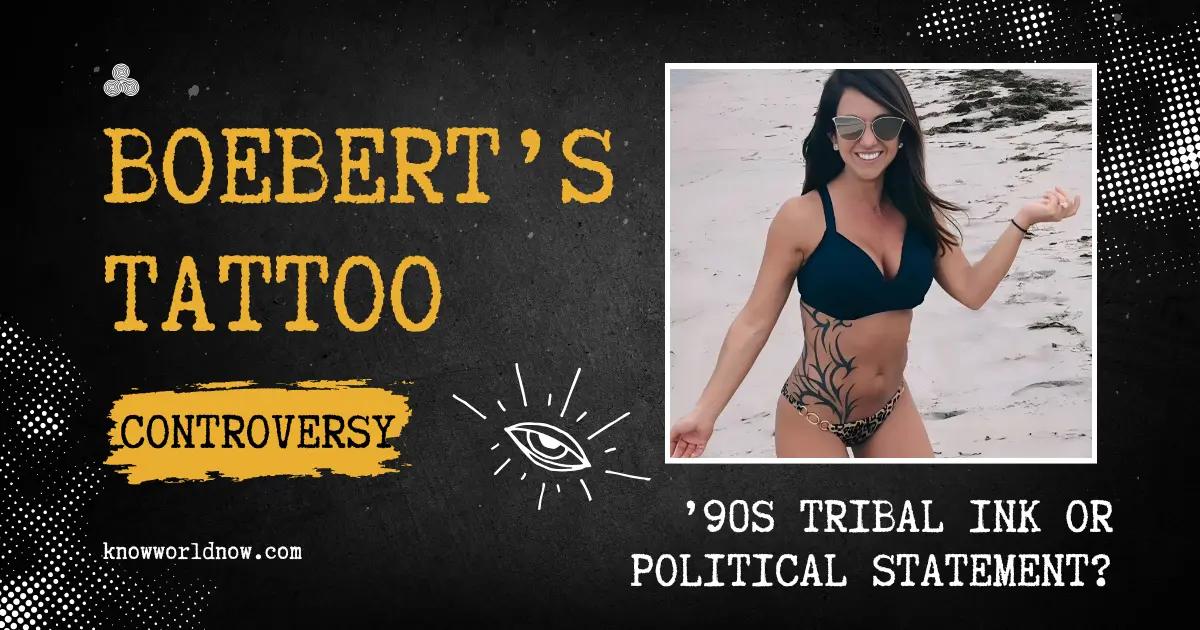
The Lauren Boebert tattoo has sparked curiosity and conversation across social media platforms, with many people searching for photos and information about the Colorado congresswoman’s body art. Representative Lauren Boebert, known for her outspoken conservative politics and controversial statements, sports a visible tribal-style tattoo that has become a topic of interest for both supporters and critics. This permanent ink offers a glimpse into her personal history before entering the political spotlight, raising questions about its origins, meaning, and whether it carries any political significance or simply represents a fashion choice from decades past.
What Tattoo Does Lauren Boebert Have?
Lauren Boebert has a tribal-style tattoo located on her upper left arm, positioned in what’s commonly referred to as the shoulder or upper bicep area. The design features the characteristic black ink patterns typical of tribal tattoos that gained massive popularity during the 1990s and early 2000s. The tattoo consists of bold, curved lines and geometric shapes that wrap partially around her arm, creating an armband-like effect that was extremely fashionable during that era.
The specific design appears to be a custom tribal pattern rather than a culturally significant symbol from any particular indigenous tradition. Like many tribal tattoos from that period, it emphasizes aesthetic appeal through symmetrical curves, points, and flowing lines rather than conveying specific cultural or spiritual meaning. The placement on the upper arm makes it occasionally visible when Boebert wears sleeveless clothing or short-sleeved shirts, though she typically dresses in professional attire that conceals the tattoo during official congressional duties.
The size of the tattoo is moderate—not a full sleeve but substantial enough to be clearly visible when exposed. The black ink has held up relatively well over the years, though like all tattoos from that era, it may show some slight fading or spreading of lines that naturally occurs with aging body art. The design doesn’t appear to have been covered up, modified, or added to since its original application, suggesting Boebert has maintained her original tattoo without regret or the desire for removal.
Photos of Lauren Boebert's Tattoo
Images of the Boebert tattoo have circulated widely online, particularly on social media platforms like Twitter, Instagram, and various news outlets. The tattoo becomes visible in photographs where she’s wearing casual clothing, campaign event attire, or during informal settings. Several photos from her earlier years, before her political career, show the tattoo more prominently, as she dressed more casually during her time running Shooters Grill, her now-closed restaurant in Rifle, Colorado.
The most commonly shared photos showing Boebert’s tattoo include campaign trail images, casual family photos, and candid shots from public events. In professional congressional settings, the tattoo is rarely visible due to her typical business attire of blazers and long-sleeved blouses. However, during summer campaign events, outdoor rallies, and less formal political gatherings, the tribal design becomes apparent, leading to renewed interest and discussion each time new photos surface.
Social media users have compiled comparison photos showing the tattoo from different angles and at various points in time, attempting to analyze whether the design has changed or if there are additional tattoos not widely known. These photo compilations often generate significant engagement, with thousands of shares and comments debating everything from the artistic quality of the work to speculation about its meaning. The visibility of such body art on a sitting congresswoman remains relatively uncommon, making each appearance of the tattoo newsworthy to certain audiences.
When Did Lauren Boebert Get Her Tattoo?
While Lauren Boebert has not publicly disclosed the exact date she got her tribal tattoo, evidence suggests she obtained it sometime in the late 1990s or early 2000s, based on the style and her age. Boebert was born in 1986, which would have made her a teenager or young adult during the peak of the tribal tattoo trend. Most people who got tribal tattoos during this era were between ages 18 and 25, suggesting Boebert likely got hers sometime between 2004 and 2011.
The tattoo appears in photographs from her pre-political life, including images from when she was working in the energy industry and later when she opened Shooters Grill in 2013. This timeline confirms the tattoo predates her political career by at least several years, if not more than a decade. The style and execution are consistent with tattoo work from that period, featuring the bold black lines and flowing patterns that dominated tattoo parlors across America during the tribal tattoo boom.
Getting tattooed during this period was increasingly common among young Americans, as tattoos were transitioning from counterculture symbols to mainstream fashion statements. The tribal style, in particular, appealed to people who wanted bold, visible body art without necessarily committing to representational imagery or text that might carry specific meanings they’d later reconsider. For someone like Boebert, who would eventually enter conservative politics, the abstract nature of tribal designs proved less potentially controversial than tattoos with explicit imagery or political messages might have been.
The '90s Tribal Tattoo Trend Explained
The tribal tattoo phenomenon that swept through American tattoo culture in the 1990s and early 2000s represents one of the most significant trends in modern tattoo history. Inspired loosely by traditional Polynesian, Maori, and other indigenous tattooing practices, Western tattoo artists created bold, black geometric designs that emphasized flowing lines, sharp points, and symmetrical patterns. These designs were rarely authentic reproductions of traditional tribal tattoos but rather artistic interpretations that prioritized aesthetic impact over cultural accuracy.
Several factors contributed to the explosive popularity of tribal tattoos during this era. Celebrity adoption played a major role, with musicians, athletes, and actors prominently displaying tribal designs. The bold black ink photographed well and looked dramatic, making it perfect for the emerging era of celebrity tabloids and entertainment television. Additionally, tribal tattoos were seen as more “acceptable” in mainstream society than other tattoo styles—they appeared artistic and sophisticated rather than rebellious or crude.
The placement of tribal tattoos also followed predictable patterns, with upper arms, shoulders, and lower backs being the most popular locations. For women specifically, shoulder and upper arm placements like Boebert’s were extremely common, as were lower back designs (often called “tramp stamps,” though this derogatory term emerged later). The tribal style allowed for customization in size and complexity while maintaining recognizable aesthetic characteristics. Tattoo artists could create unique designs for each client while working within the established visual language of curved lines, points, and geometric shapes.
Today, tribal tattoos from this era are often viewed with nostalgia or mild embarrassment, as tattoo culture has evolved significantly. Many people who got tribal tattoos during the ’90s and early 2000s have since covered them with new designs or had them removed entirely. The style is now considered somewhat dated, though it remains a clear marker of a specific cultural moment. For those interested in different tattoo styles and placements, resources like our guide on Tattoo on Boobs explore various body art options and considerations.
Is There Political Meaning Behind Boebert's Tattoo?
There is no evidence of political symbolism in Lauren Boebert’s tribal tattoo, and the design appears to be purely aesthetic rather than ideological. The abstract geometric patterns characteristic of ’90s tribal tattoos don’t incorporate recognizable political symbols, text, or imagery that would suggest any partisan meaning. Unlike tattoos that explicitly display political messages, flags, or symbols, Boebert’s tribal design represents a personal fashion choice from her youth rather than a political statement.
Some social media users have attempted to read political meaning into the tattoo, with various conspiracy theories and speculative interpretations circulating online. However, these interpretations lack credible evidence and appear to be examples of confirmation bias—people seeing what they want to see based on their existing opinions of Boebert. The reality is far simpler: she got a popular tattoo style during the era when that style was at its peak, long before entering politics.
The timing of when Boebert got her tattoo is crucial to understanding its lack of political significance. Obtained years or possibly decades before her political career began, the tattoo reflects the person she was in her late teens or twenties—not the controversial congresswoman she would later become. Many politicians have aspects of their pre-political lives that don’t align with their current public image, and a tribal tattoo from the early 2000s is relatively benign compared to other potential revelations.
That said, the mere existence of visible body art on a conservative Republican congresswoman has political implications in terms of image and perception. Conservative political culture has traditionally been more skeptical of tattoos than liberal or progressive circles, though this has changed significantly in recent decades. Boebert’s tattoo humanizes her to some audiences while potentially alienating more traditional conservative voters who view tattoos as inappropriate or unprofessional, particularly for women in positions of authority.
Public Reaction and Social Media Response
The public response to discovering Lauren Boebert’s tattoo has been mixed and often divided along political lines. Supporters generally view the tattoo as a non-issue or even as evidence that Boebert is a “regular person” rather than a career politician. They appreciate that she hasn’t attempted to hide or remove the tattoo, interpreting this as authenticity and comfort with her past choices. Some conservative supporters have defended her against criticism, arguing that personal appearance choices shouldn’t matter in evaluating a politician’s effectiveness or policy positions.
Critics and political opponents have used the tattoo as fodder for mockery and criticism, though often in ways that reveal more about changing tattoo culture than about Boebert herself. The tribal tattoo style is frequently ridiculed online as dated and regrettable, with memes and jokes about “tribal tattoos from the ’90s” being a common internet trope. When applied to Boebert, this general cultural mockery becomes politically charged, with critics using the tattoo to paint her as unsophisticated or to highlight perceived hypocrisy in her presentation as a traditional conservative.
Social media discussions about the tattoo often veer into broader debates about body autonomy, professional appearance standards, and gender expectations in politics. Female politicians face significantly more scrutiny regarding their appearance than male counterparts, and Boebert’s tattoo becomes another data point in these ongoing conversations. Some commentators have noted the double standard, pointing out that male politicians with tattoos face less criticism and that focusing on Boebert’s body art rather than her policy positions reflects sexist priorities in political discourse.
The tattoo has also sparked conversations about authenticity in politics. In an era where many politicians carefully curate every aspect of their public image, Boebert’s retention of a clearly dated tattoo style suggests either genuine comfort with her past choices or a calculated decision that removing it would appear inauthentic. Either way, the tattoo has become part of her personal brand, whether intentionally or not, contributing to her image as someone who doesn’t conform to traditional political expectations.
Other Politicians With Visible Tattoos
Lauren Boebert is far from the only politician with visible tattoos, though she may be among the most prominent conservative Republicans with obvious body art. The presence of tattoos among elected officials has increased significantly over the past two decades as tattoos have become more mainstream and as younger generations with higher rates of tattooing have entered politics. This shift reflects broader cultural changes in how tattoos are perceived in professional and political contexts.
Several notable politicians have visible or publicly known tattoos. Former Congressman Duncan Hunter had multiple tattoos from his military service, which he displayed proudly as symbols of his veteran status. Pennsylvania Lieutenant Governor John Fetterman has extensive tattoo coverage, including dates commemorating people who died violently in Braddock, Pennsylvania, where he served as mayor. His tattoos have become part of his political identity and appeal to working-class voters who see him as authentic and unconventional.
On the international stage, New Zealand Prime Minister Jacinda Ardern has a small wrist tattoo, while Canadian Prime Minister Justin Trudeau sports a raven tattoo on his left shoulder and a globe on his right arm. These examples demonstrate that tattoos are no longer disqualifying for high political office, even in relatively conservative political cultures. The acceptance of tattooed politicians varies by region, political party, and the specific nature of the tattoos in question.
The type and visibility of tattoos matter significantly in political contexts. Small, easily concealed tattoos rarely generate controversy, while large, visible designs like Boebert’s tribal tattoo or Fetterman’s extensive coverage become part of the politician’s public image. Religious tattoos, such as those explored in our article on San Judas Tadeo Tattoo, can carry different political implications depending on the politician’s constituency and the religious symbolism involved. Military-related tattoos generally receive positive reception across the political spectrum, while purely decorative tattoos like Boebert’s tribal design may be viewed more ambivalently.
The generational divide in tattoo acceptance is particularly relevant in politics. Younger voters are significantly more likely to have tattoos themselves and to view them neutrally or positively on political candidates. Older voters, particularly in conservative areas, may still harbor negative associations with tattoos, viewing them as unprofessional or indicative of poor judgment. Politicians must navigate these competing perceptions, with some choosing to conceal their tattoos in certain contexts while others embrace them as part of their authentic identity.
Has Boebert Addressed Her Tattoo Publicly?
Lauren Boebert has rarely addressed her tattoo in public statements or interviews, treating it as a non-issue rather than a topic requiring explanation or defense. This approach aligns with how many people with older tattoos handle questions about their body art—acknowledging its existence without dwelling on it or offering extensive justification. By not making the tattoo a focal point of discussion, Boebert avoids giving critics additional ammunition while also not appearing defensive about a personal choice from her youth.
When the tattoo has been mentioned in her presence or in media coverage, Boebert’s typical response has been dismissive or brief, suggesting she views it as an irrelevant distraction from substantive political issues. This strategy makes sense politically, as engaging extensively with questions about her tattoo would elevate a relatively minor personal detail to unwarranted importance. By refusing to make it a significant topic, she denies opponents the opportunity to use it as a sustained point of criticism or mockery.
The lack of public commentary also prevents Boebert from having to explain or defend the tribal tattoo style, which has become culturally controversial for reasons beyond politics. Many people who got tribal tattoos during the ’90s and early 2000s now view them as regrettable fashion choices, and the style has been widely mocked online. By not discussing the tattoo’s origins or meaning, Boebert avoids potentially embarrassing admissions about following trends or making impulsive decisions in her youth.
There’s also a strategic element to Boebert’s silence on the tattoo. In conservative political circles, extensive discussion of body modification might alienate traditional voters who view tattoos negatively. Conversely, expressing regret about the tattoo or discussing removal could appear inauthentic or pandering. The middle path—acknowledging the tattoo’s existence through its visibility while not making it a topic of conversation—allows Boebert to navigate these competing pressures without committing to a position that might backfire politically.
Some political observers have noted that Boebert’s approach to her tattoo reflects a broader trend among politicians: accepting that aspects of their pre-political lives will be scrutinized while refusing to apologize for or extensively explain every personal choice. In an era of intense background research and opposition research, politicians increasingly must decide which past actions warrant explanation and which should be treated as normal parts of a full life before entering public service. For those considering their own tattoo decisions and budgets, our $100 Tattoo Guide provides practical information about what to expect at various price points.
The Broader Context: Tattoos in Conservative Politics
The presence of Lauren Boebert’s tattoo raises interesting questions about the evolving relationship between body art and conservative politics. Traditionally, conservative political culture has been more skeptical of tattoos than liberal or progressive movements, viewing them as markers of rebellion, poor judgment, or deviation from traditional values. However, this perception has shifted dramatically over the past two decades as tattoos have become increasingly mainstream across all demographic groups, including conservatives.
Military service has played a significant role in normalizing tattoos within conservative circles. Many service members get tattoos commemorating their units, deployments, or fallen comrades, and these military tattoos are widely respected across the political spectrum. This military connection has helped create space for tattoos in conservative culture, particularly when the designs carry patriotic or service-related meanings. While Boebert’s tribal tattoo doesn’t fall into this category, the general acceptance of military tattoos has contributed to broader tattoo acceptance among conservatives.
The generational shift in tattoo prevalence also affects conservative politics. Younger conservatives are significantly more likely to have tattoos than their older counterparts, reflecting broader generational trends rather than political ideology. As these younger conservatives become more prominent in political leadership, the presence of tattoos among conservative politicians will likely increase, potentially changing cultural expectations about what a conservative politician looks like.
Religious considerations also influence how tattoos are perceived in conservative politics. Some Christian denominations view tattoos as biblically prohibited, citing Leviticus 19:28, while others interpret this passage as culturally specific to ancient Israel and not applicable to modern Christians. This theological divide creates varying attitudes toward tattoos among religious conservatives, with some viewing them as sinful and others seeing them as morally neutral personal choices. Politicians like Boebert must navigate these competing religious perspectives within their conservative base.
The specific style and content of tattoos matter significantly in conservative political contexts. Patriotic tattoos, religious symbols, and family-related designs generally receive more acceptance than purely decorative or countercultural imagery. Boebert’s tribal tattoo occupies an interesting middle ground—it’s clearly decorative rather than meaningful, but it also doesn’t contain any imagery that would be specifically offensive to conservative sensibilities. The abstract geometric patterns are politically and religiously neutral, making them less controversial than many alternative tattoo choices would be.
Cultural Shift: From Taboo to Mainstream
Lauren Boebert’s tattoo serves as a tangible marker of the dramatic cultural shift in how American society views body art. When she likely got her tribal tattoo in the late 1990s or early 2000s, tattoos were still transitioning from counterculture symbols to mainstream fashion statements. Today, approximately 30-40% of Americans have at least one tattoo, with even higher percentages among younger generations. This widespread adoption has fundamentally changed how tattoos are perceived in professional, political, and social contexts.
The workplace acceptance of tattoos has increased significantly over the past two decades. While some industries and employers still maintain strict appearance policies prohibiting visible tattoos, many others have relaxed these standards in response to changing cultural norms and the practical reality that excluding tattooed candidates would eliminate a substantial portion of the talent pool. This workplace shift parallels and reinforces the acceptance of tattoos in other professional contexts, including politics.
Media representation has played a crucial role in normalizing tattoos. Television shows, movies, and advertising increasingly feature tattooed individuals in positive or neutral roles rather than exclusively associating tattoos with criminals, rebels, or social outcasts. Celebrity culture has been particularly influential, with actors, musicians, athletes, and other public figures proudly displaying their tattoos and discussing them in interviews. This visibility has helped shift tattoos from markers of deviance to symbols of self-expression and individuality.
Despite this overall trend toward acceptance, significant pockets of tattoo skepticism remain, particularly among older Americans and in certain religious communities. These groups may still view tattoos as unprofessional, inappropriate, or morally questionable. Politicians with visible tattoos must navigate these competing cultural attitudes, appealing to tattoo-accepting constituents while not alienating more traditional voters who maintain negative views of body art.
The specific tattoo styles that are considered acceptable or desirable have also evolved significantly. The tribal tattoo style that Boebert sports was at the cutting edge of tattoo fashion when she likely got it, but is now often viewed as dated or cliché. This evolution in tattoo aesthetics means that politicians with older tattoos may find themselves defending not just the decision to get tattooed, but also their choice of a now-unfashionable style. However, this same datedness can also work in their favor, clearly marking the tattoo as a youthful decision rather than a recent choice made with political implications in mind.
The Personal Versus Political: Understanding Boebert's Tattoo in Context
Ultimately, the Lauren Boebert tattoo represents a collision between personal history and political present. The tribal design on her upper arm is a remnant of her pre-political life, a fashion choice made in her youth that has followed her into the national spotlight. Understanding the tattoo requires separating what it meant when she got it—likely nothing more than a popular aesthetic choice—from what it represents now as a visible marker on a controversial political figure.
The tattoo’s persistence on Boebert’s arm, unchanged and unremoved, suggests a level of comfort with her past choices that some find admirable and others view as stubborn. In an era when many people with ’90s tribal tattoos have sought removal or cover-ups, Boebert’s retention of her original design could be interpreted as authenticity, indifference, or simply the practical reality that tattoo removal is expensive, time-consuming, and not always successful. Whatever her reasoning, the tattoo remains a permanent part of her physical appearance and, by extension, her public image.
The fascination with Boebert’s tattoo also reflects broader cultural interests in the private lives of public figures. People are naturally curious about the personal details of politicians, celebrities, and other prominent individuals, seeking to understand them as complete human beings rather than just political actors. A tattoo offers a glimpse into someone’s past, their aesthetic preferences, and their decision-making at a particular moment in time. For a polarizing figure like Boebert, any personal detail becomes fodder for both supporters seeking to humanize her and critics looking for ammunition.
The tattoo controversy, such as it is, also highlights the different standards applied to female politicians compared to their male counterparts. While male politicians with tattoos certainly face some scrutiny, female politicians’ appearances are dissected far more thoroughly and critically. Boebert’s tattoo becomes part of a larger conversation about her clothing choices, hairstyle, makeup, and overall presentation in ways that male politicians rarely experience. This gendered dimension of the tattoo discussion reveals ongoing sexism in political culture, even as it masquerades as neutral observation or criticism.
Looking forward, Boebert’s tattoo will likely remain a minor but persistent element of her public image. As tattoos continue to become more accepted across all segments of society, the tribal design on her arm may become increasingly unremarkable. Alternatively, if she remains in politics for decades, the tattoo could become a nostalgic marker of early 21st-century culture, much like certain hairstyles or fashion choices from previous eras. Either way, the Lauren Boebert tattoo serves as a reminder that politicians are people with full lives and histories that predate their time in office, complete with the fashion choices, trends, and personal decisions that mark us all as products of our particular cultural moments.
Frequently Asked Questions
Does Lauren Boebert have a tattoo?
Yes, Lauren Boebert has a visible tribal-style tattoo that has been photographed and discussed on social media. The Lauren Boebert tattoo appears to be a ’90s-era tribal design, which was a popular tattoo trend during that decade. The congresswoman has not publicly addressed the specific meaning or story behind her body art, though it predates her political career.
What kind of tattoo does Lauren Boebert have?
Lauren Boebert has what appears to be a tribal-style tattoo, characterized by the bold black lines and geometric patterns that were extremely popular in the 1990s and early 2000s. This type of design typically features abstract, flowing shapes inspired by Polynesian and indigenous art traditions. The tattoo is visible in various photographs of the congresswoman from both before and during her time in office.
Where is Lauren Boebert's tattoo located?
The Lauren Boebert tattoo is located on her upper body, though the exact placement varies in visibility depending on her clothing choices. Photos from various events and occasions show the tribal design, which she acquired before entering politics. The tattoo occasionally becomes visible during public appearances when she wears certain outfits.
What does a tribal tattoo mean?
Tribal tattoos traditionally represented cultural heritage, social status, and spiritual beliefs in indigenous communities, particularly in Polynesian cultures. However, the ’90s tribal tattoo trend that swept Western culture was largely aesthetic rather than culturally significant. Most people who got tribal tattoos during this era chose them for their bold visual appeal rather than any specific symbolic meaning.
Who is Lauren Boebert and where does she represent?
Lauren Boebert is a Republican congresswoman who represents Colorado’s 3rd congressional district, which covers a large portion of western and southern Colorado. First elected to Congress in 2020, she is known for her conservative political positions, Second Amendment advocacy, and outspoken social media presence. Before entering politics, she owned Shooters Grill, a restaurant in Rifle, Colorado, where staff openly carried firearms.
Has Lauren Boebert commented on her tattoo?
Lauren Boebert has not made any public statements specifically addressing her tattoo or its meaning. The congresswoman typically focuses her public communications on political issues, policy positions, and conservative causes rather than personal matters. While the tattoo has generated curiosity online, it remains a minor aspect of her public profile compared to her political activities and statements.
Why are people interested in Lauren Boebert's tattoo?
Public interest in the Lauren Boebert tattoo stems from general curiosity about public figures’ personal lives and the contrast between her conservative political image and body art. Tattoos on politicians, particularly those with traditional or religious conservative bases, sometimes generate discussion about authenticity and relatability. Additionally, the ’90s tribal style offers a glimpse into her pre-political life and personal history.
Are tattoos controversial in politics?
Tattoos have become increasingly accepted in mainstream American culture, including politics, though they can still generate discussion depending on the politician’s constituency and political brand. While visible tattoos were once considered unprofessional or rebellious, younger generations view them as normal forms of self-expression. Today, several members of Congress and other elected officials have tattoos, reflecting broader cultural shifts in attitudes toward body art.
You May Also Like
Semicolon Tattoo Meaning: Complete Guide to Symbolism & Ideas
Henna Tattoo Guide: Designs, Safety, Aftercare & Meaning
Hand Tattoos: Complete Guide to Pain, Designs & Aftercare