
Pirate Swords: Complete History of the Cutlass & Types

When most people think of pirate swords, they imagine swashbuckling buccaneers wielding gleaming blades on the high seas. But what weapons did real pirates actually carry? The truth is both simpler and more fascinating than Hollywood’s romanticized versions. Pirates favored practical, brutal weapons designed for close-quarters combat on cramped ship decks—and the most iconic of these was the cutlass. This short, curved sword became synonymous with piracy during the Golden Age of Piracy (roughly 1650-1730), though pirates actually used a diverse arsenal of bladed weapons depending on availability, personal preference, and combat situations. Understanding the history and types of pirate swords reveals not just the reality of naval warfare, but also how these weapons shaped maritime culture and continue to influence our modern perception of piracy.
What Is a Pirate Sword? Understanding the Cutlass
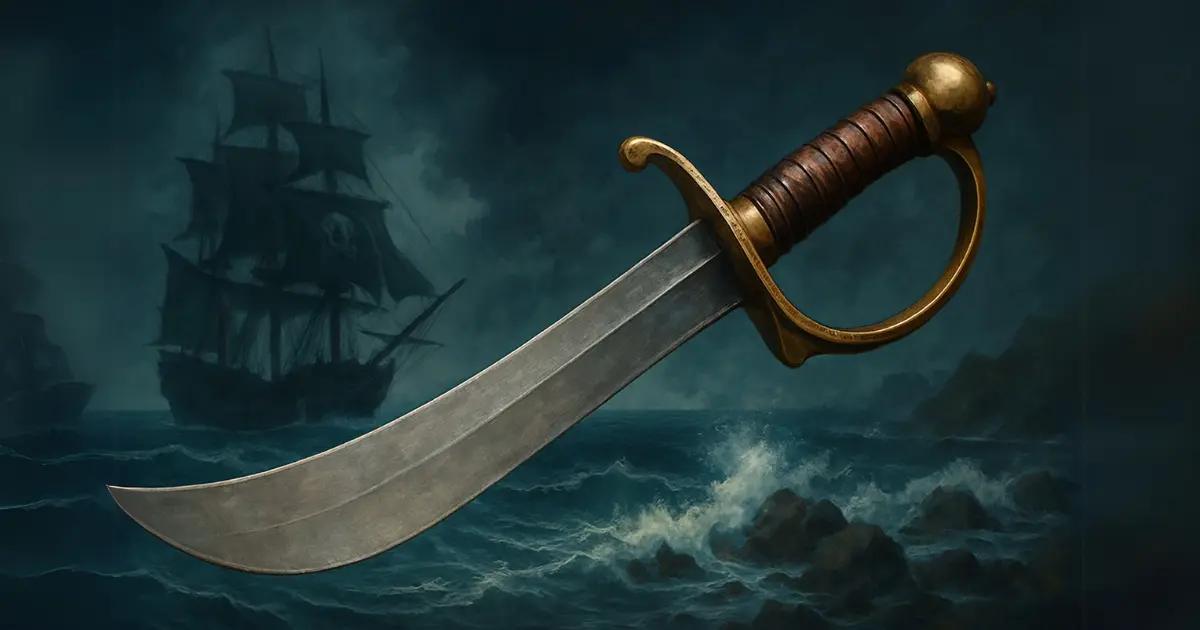
The term “pirate sword” most commonly refers to the cutlass, a short, broad-bladed sword with a slight curve and a protective basket hilt. The cutlass sword typically measured between 24 and 30 inches in blade length—significantly shorter than the rapiers and longswords used by European nobility. This compact design made it the perfect weapon for the confined spaces aboard ships, where longer blades would be impractical and dangerous to wield.
The cutlass evolved from earlier naval swords used by European navies, particularly the British Royal Navy. Its name likely derives from the French word “coutelas,” meaning knife, which itself came from the Latin “cultellus” (small knife). By the 17th century, the cutlass had become standard issue for sailors and marines, which meant pirates—many of whom were former naval personnel—were already familiar with the weapon when they turned to piracy.
What made the cutlass distinct was its emphasis on slashing rather than thrusting. The broad, curved blade could deliver devastating cuts that were effective against both opponents and ship rigging. The protective basket hilt or knuckle guard shielded the wielder’s hand from enemy blades and from the hazards of shipboard combat, such as ropes and spars. This practical design philosophy defined what we now recognize as the archetypal pirate cutlass sword.
Why Pirates Preferred the Cutlass Over Other Swords
Pirates weren’t romantic figures choosing weapons based on style—they were pragmatic fighters who needed tools that worked in their specific combat environment. The cutlass became the weapon of choice for several compelling reasons that had nothing to do with aesthetics and everything to do with survival.
First, the cutlass’s short length was ideal for fighting on crowded ship decks. During boarding actions, pirates fought in extremely close quarters, often shoulder-to-shoulder with their crewmates. A long sword like a rapier or smallsword would be nearly impossible to wield effectively in such conditions, whereas the cutlass could be swung with devastating effect in tight spaces. The curved blade also made it easier to hook and pull at enemy weapons or rigging.
Second, the cutlass required minimal training to use effectively. Unlike the rapier, which demanded years of fencing instruction to master, the cutlass was essentially a “point and chop” weapon. Pirates came from diverse backgrounds—many were merchant sailors, escaped slaves, or desperate men with no formal military training. The cutlass’s simplicity meant that even inexperienced fighters could become dangerous with just basic instruction. This democratic accessibility made it perfect for pirate crews, where skill levels varied wildly.
Third, cutlasses were readily available and relatively inexpensive. Pirates typically acquired weapons through capture, purchase at port, or from corrupt suppliers. Naval cutlasses were mass-produced and could be easily obtained, stolen from naval armories, or taken from captured ships. Unlike ornate swords that required skilled craftsmen, cutlasses could be forged by any competent blacksmith, making them accessible even in remote Caribbean ports.
Finally, the cutlass was remarkably durable and low-maintenance. The thick blade could withstand the corrosive salt air and rough handling that was inevitable at sea. It didn’t require the careful maintenance that a fine rapier demanded, and if the blade became damaged, it could often be repaired or resharpened by the ship’s carpenter or blacksmith. For pirates operating far from civilization for months at a time, this reliability was invaluable.
Types of Pirate Swords: Beyond the Cutlass
While the cutlass dominates popular imagination, types of pirate swords were actually quite varied. Pirates were opportunistic and used whatever weapons they could acquire, leading to a diverse arsenal that reflected the international nature of piracy during the Golden Age.
The Hanger or Hunting Sword was another common weapon among pirates. This single-edged sword featured a slightly curved blade, typically 20-24 inches long, and was originally designed for hunting. Hangers were popular among sailors because they were lightweight and could be worn comfortably while working. Many pirates preferred hangers for everyday carry, reserving heavier weapons for actual combat.
The Spadroon represented a transitional design between the smallsword and the military saber. This straight-bladed sword with a simple hilt was used by some pirates, particularly those with military backgrounds. The spadroon was more refined than the cutlass but still practical for shipboard use, offering better thrusting capability while maintaining adequate cutting power.
The Falchion, though more medieval in origin, occasionally appeared in pirate arsenals. This single-edged sword with a heavy, cleaver-like blade was devastating in close combat. Some Caribbean pirates used machete-like blades that were essentially modern falchions, particularly useful for cutting through jungle vegetation during raids on coastal settlements.
The Rapier and Smallsword were less common among working pirates but were sometimes carried by pirate captains or officers who wanted to project an image of refinement. These thrusting swords were status symbols more than practical weapons for shipboard combat. Famous pirates like Bartholomew Roberts, known for his flamboyant dress, might have carried such weapons as part of their carefully cultivated image.
Boarding Axes and Cutlass-Axe Hybrids blur the line between sword and tool. Some pirates used weapons that combined a short blade with an axe head, creating a versatile tool that could cut rigging, break through doors, and serve as a weapon. These hybrid weapons reflected the practical, multi-purpose thinking that characterized pirate equipment.
Regional Variations in Pirate Weapons
The pirate sword types also varied by region and cultural influence. Caribbean pirates often used weapons influenced by Spanish and French designs, while pirates operating in the Indian Ocean might carry Persian or Indian blades. Chinese pirates, who operated massive fleets in Asian waters, used traditional Chinese swords like the dao (a single-edged saber) alongside European weapons acquired through trade or capture.
The Cutlass: Design, Features, and Combat Advantages
To truly understand why the cutlass sword became the definitive pirate weapon, we need to examine its specific design features and how they translated into combat advantages. The cutlass wasn’t just a shortened sword—it was a purpose-built tool optimized for naval warfare.
The blade of a typical cutlass featured a pronounced curve, usually with a single cutting edge and a reinforced spine. This design concentrated weight toward the tip, creating a “chopping” effect that could deliver powerful cuts with relatively little effort. The curve also made it easier to withdraw the blade from an opponent or from ship rigging where it might become caught. Most cutlass blades were between 1.5 and 2 inches wide at the base, tapering slightly toward the tip.
The hilt design was equally important. Most cutlasses featured either a basket hilt (a metal cage protecting the entire hand) or a simpler knuckle guard (a metal bar protecting the fingers). These guards were essential for shipboard combat, where hands were constantly at risk from enemy weapons, ship fittings, and the chaos of close-quarters fighting. The grip was typically made of wood, bone, or wrapped cord, designed to provide secure purchase even when wet with blood or seawater.
The weight distribution of the cutlass made it an effective chopping weapon without requiring exceptional strength. A typical cutlass weighed between 2 and 3 pounds—heavy enough to deliver powerful cuts but light enough to wield for extended periods. This balance was crucial during boarding actions, which could involve sustained fighting for hours.
In combat, the cutlass excelled at several specific techniques. The curved blade could hook an opponent’s weapon and pull it aside, creating openings for attack. The reinforced tip could be used for thrusting when necessary, though this wasn’t the weapon’s primary function. The wide blade could also be used defensively to parry incoming attacks, and the basket hilt provided additional protection when blocking.
Manufacturing and Quality Variations
Not all cutlasses were created equal. Naval-issue cutlasses from major powers like Britain, France, and Spain were manufactured to military specifications and featured consistent quality. These weapons were forged from good steel and properly tempered, making them reliable in combat. Pirates fortunate enough to capture naval vessels would acquire these high-quality weapons.
However, many pirates carried locally-made or improvised cutlasses of varying quality. Caribbean blacksmiths produced cutlasses for the pirate market, and quality could range from excellent to dangerously poor. Some pirates modified their weapons, adding decorative elements or altering the blade shape to suit personal preferences. This variation means that real pirate swords found in museums show considerable diversity in craftsmanship and design details.
Famous Pirates and Their Signature Swords
While historical records rarely provide detailed descriptions of individual pirates’ weapons, some famous buccaneers are associated with particular swords or fighting styles that have become part of pirate legend. These accounts, drawn from trial records, contemporary newspapers, and the writings of historians like Marcus Rediker, give us glimpses into the personal arsenals of history’s most notorious pirates.
Blackbeard (Edward Teach) was reported to carry multiple weapons into battle, including several pistols and swords. Contemporary accounts suggest he favored intimidation as much as actual combat skill, and his fearsome appearance—complete with smoking fuses woven into his beard—was part of his tactical approach. While no specific sword is definitively linked to Blackbeard, he likely carried a standard naval cutlass along with other weapons.
Bartholomew Roberts (Black Bart) was known for his refined appearance and may have carried more elegant weapons than the typical pirate. Roberts, who captured over 400 ships during his career, was described as wearing fine clothes and might have carried a smallsword or decorated hanger as a status symbol, though he certainly had practical weapons available for actual combat.
Anne Bonny and Mary Read, two of history’s most famous female pirates, were described in trial records as fighting “with cutlass and pistol” alongside their male counterparts. Their choice of standard naval weapons rather than lighter blades demonstrates that they fought as equals in combat, using the same practical weapons as any other pirate.
Captain Kidd, though more privateer than pirate, would have carried weapons typical of a naval officer of his era—likely a hanger or spadroon for everyday wear and a cutlass for combat. Kidd’s trial records mention weapons aboard his ship but don’t specify his personal armament in detail.
The Reality vs. The Legend
It’s important to note that many famous pirate sword names found in popular culture—like “Blackbeard’s Cutlass” or “Captain Blood’s Blade”—are modern inventions. Real pirates rarely named their weapons, and the romantic notion of a pirate captain wielding a legendary, named sword is largely a creation of 19th and 20th-century fiction. Pirates viewed swords as tools, not treasured heirlooms, and would replace them without sentiment if a better weapon became available.
Pirate Swords vs. Naval and Military Swords
Understanding the differences between pirate weapons and those used by legitimate naval forces reveals much about the practical realities of maritime warfare. While pirates often used captured naval weapons, there were important distinctions in how these weapons were maintained, modified, and employed.
Naval cutlasses were standardized weapons issued to sailors and marines. British Royal Navy cutlasses, for example, followed specific patterns that changed over time but maintained consistent features: a specific blade length, a regulation hilt design, and government proof marks stamped into the blade. These weapons were part of a ship’s official armory, carefully inventoried and maintained by the ship’s armorer. Naval personnel were trained in their use according to established drill manuals.
Military swords used by army officers and cavalry were typically longer and more refined than naval cutlasses. Army officers carried smallswords or sabers that reflected their rank and social status. These weapons were often custom-made or purchased from prestigious sword makers, featuring decorative elements like engraved blades, silver hilts, and elaborate scabbards. Such weapons were impractical for pirates, who needed durability over decoration.
Pirates, by contrast, used whatever weapons they could acquire and modified them to suit their needs. A captured naval cutlass might have its blade shortened, its hilt modified, or decorative elements added. Pirates weren’t bound by regulations or military protocol, so their weapons reflected individual preferences and practical considerations. Some pirates carried multiple weapons, switching between them depending on the situation—a practice that would be impossible in a regulated military force.
The maintenance standards also differed dramatically. Naval vessels had dedicated armorers who maintained weapons according to strict standards. Pirates, operating outside legal ports and often on the run, had to make do with whatever maintenance their crew could provide. This meant pirate weapons were often in poorer condition than their naval counterparts, though experienced pirates understood the importance of keeping their weapons functional.
Combat Doctrine Differences
Naval forces trained for disciplined, coordinated combat. Boarding parties followed established tactics, with sailors and marines working together in organized groups. Pirates, while not as chaotic as popular culture suggests, relied more on individual ferocity and the psychological impact of their fearsome reputation. This difference in combat philosophy influenced weapon choice—pirates favored weapons that looked intimidating and could be used effectively by individuals with varying skill levels.
How Hollywood Changed Our Perception of Pirate Weapons
Modern perceptions of pirate swords have been profoundly shaped by film and television, often in ways that diverge significantly from historical reality. From Errol Flynn’s swashbuckling adventures to Johnny Depp’s Captain Jack Sparrow, Hollywood has created an image of pirate swordsmanship that is more fantasy than fact.
Classic pirate films from the 1930s through 1950s established many of the tropes we still recognize today. These films featured elaborate sword fights with acrobatic moves, clashing blades, and heroic duels that lasted for minutes. In reality, most pirate combat was brutal and brief—a few desperate exchanges that ended with someone dead or incapacitated. The choreographed sword fights in films like “Captain Blood” (1935) and “The Black Swan” (1942) were designed for visual excitement, not historical accuracy.
The weapons themselves were often wrong in these films. Hollywood prop departments frequently used rapiers, smallswords, or theatrical “pirate swords” that looked dramatic on screen but bore little resemblance to actual cutlasses. These weapons were lighter and longer than real cutlasses, allowing actors to perform the elaborate choreography that audiences expected. The distinctive “ring” of clashing steel—a sound effect added in post-production—became so associated with sword fighting that people now expect it, even though real sword combat sounds quite different.
Modern pirate films have made some efforts toward greater authenticity, but they still prioritize entertainment over accuracy. The “Pirates of the Caribbean” franchise, while featuring more historically-inspired weapons, still includes sword fights that would be impossible with real cutlasses. The films show characters performing complex fencing moves that require the reach and flexibility of a rapier, not the chopping power of a cutlass. However, these films did introduce more accurate cutlass designs to popular consciousness, and prop replicas from these movies have become popular collectibles.
The Impact on Collecting and Reenactment
Hollywood’s influence extends to the modern market for pirate swords for sale. Many replica swords are designed to match film versions rather than historical examples. Collectors seeking real cutlass sword for sale options must distinguish between theatrical replicas, decorative wall-hangers, and historically-accurate reproductions. This confusion has created a market where “pirate swords” range from cheap plastic toys to museum-quality reproductions costing thousands of dollars.
Reenactors and living history enthusiasts have worked to counter Hollywood’s influence by researching and recreating authentic pirate weapons. Organizations dedicated to Golden Age piracy reenactment use historically-accurate cutlasses and practice period-appropriate fighting techniques. These efforts have helped educate the public about what real pirate swords actually looked like and how they were used.
Where to See Authentic Pirate Swords Today
For those interested in viewing genuine historical pirate weapons, several museums and collections around the world house authenticated examples. These institutions provide invaluable resources for understanding what real pirate swords actually looked like and how they differed from Hollywood’s versions.
The National Maritime Museum in Greenwich, London houses one of the world’s most comprehensive collections of naval weapons, including cutlasses from the Golden Age of Piracy. Their collection includes naval-issue cutlasses that would have been identical to those used by pirates, along with documentation about their manufacture and use. The museum’s exhibits place these weapons in context, showing how they fit into the broader story of maritime warfare.
The Mel Fisher Maritime Museum in Key West, Florida displays artifacts recovered from shipwrecks, including weapons from pirate-era vessels. While definitively proving a sword belonged to pirates is difficult, the museum’s collection includes weapons that were certainly used during the period and in the regions where piracy flourished. The museum also provides excellent context about Caribbean piracy and the daily lives of sailors and pirates.
The Mariners’ Museum in Newport News, Virginia features weapons and artifacts from maritime history, including the age of piracy. Their collection includes various types of naval weapons that help visitors understand the evolution of shipboard armament. The museum’s educational programs often address the reality versus myth of pirate life, including weapons and combat.
The Pirate Soul Museum in Key West (now closed, but its collection was significant) housed one of the largest collections of pirate artifacts, including authenticated weapons. Some of these artifacts have been dispersed to other institutions, but they remain valuable resources for researchers and enthusiasts.
The Royal Armouries in Leeds, England maintains extensive collections of naval weapons, including cutlasses from various periods. Their collection is particularly valuable because it includes weapons from multiple navies, allowing for comparison of different designs and manufacturing standards. The museum’s curators have published extensively on naval weapons, making their research accessible to scholars and enthusiasts.
Shipwreck Discoveries and Archaeological Finds
Archaeological excavations of pirate-era shipwrecks continue to yield new discoveries. The wreck of the Queen Anne’s Revenge, Blackbeard’s flagship, has produced numerous artifacts including weapons. While the corrosive effects of centuries underwater have damaged many items, conservators have been able to preserve and study several swords and other weapons from the site. These finds provide direct evidence of what pirates actually carried, free from the distortions of legend and popular culture.
For those who cannot visit these museums in person, many institutions have digitized their collections, offering online access to photographs and detailed descriptions of pirate-era weapons. These digital resources have made it possible for researchers and enthusiasts worldwide to study real pirate sword museum collections without traveling.
The Legacy of Pirate Swords in Modern Culture
The cultural impact of pirate swords extends far beyond historical interest, permeating modern entertainment, gaming, and popular culture in ways that continue to evolve. The cutlass has become an instantly recognizable symbol of piracy, adventure, and rebellion against authority.
In video games, pirate swords appear in countless titles ranging from historical simulations to fantasy adventures. Games like Red Dead Redemption 2 feature pirate sword rdr2 references and collectibles that tap into players’ fascination with pirate weapons. Role-playing games like Dungeons & Dragons include the cutlass dnd as a weapon option, with specific game mechanics that reflect the historical weapon’s characteristics. These gaming implementations introduce new generations to pirate weapons, even if the representations are sometimes simplified or fantastical.
The programming and technology world has even borrowed pirate sword terminology. The cutlass python library and cutlass github projects use the name to evoke qualities like sharpness, efficiency, and cutting-edge capability. This metaphorical use demonstrates how deeply the cutlass has penetrated cultural consciousness as a symbol of effective, no-nonsense functionality.
In literature, pirate swords continue to feature prominently in historical fiction, fantasy, and young adult novels. Authors use these weapons as plot devices, character signatures, and symbols of freedom or danger. The enduring popularity of pirate fiction ensures that new generations continue to encounter romanticized versions of these weapons, perpetuating interest in the historical reality behind the legends.
Educational and Cultural Value
Beyond entertainment, pirate swords serve important educational functions. Museums use these artifacts to teach about maritime history, international trade, colonialism, and the social conditions that created piracy. The weapons become entry points for discussing larger historical themes—why people became pirates, how maritime commerce worked, and how different cultures interacted during the age of sail.
Pirate swords also feature in cultural celebrations and festivals. Pirate-themed events, from small-town festivals to large gatherings like the Pirates in Paradise festival in Key West, often include displays of replica weapons and demonstrations of historical fighting techniques. These events, while sometimes more entertainment than education, help maintain public interest in maritime history and the realities of life at sea during the Golden Age of Piracy.
Collecting Replica Pirate Swords: What to Know
The market for pirate swords for sale is vast and varied, ranging from cheap costume accessories to museum-quality reproductions. For those interested in collecting replica pirate swords, understanding the different categories and quality levels is essential to making informed purchases.
Decorative Wall-Hangers represent the lowest tier of replica swords. These are typically made from stainless steel or zinc alloy, with rat-tail tang construction (a thin rod welded to the blade and inserted into the handle). These swords are designed purely for display and are not functional weapons. They’re often sold at tourist shops, online marketplaces like pirate swords amazon, and discount retailers. While some people ask “Does Dollar Tree have pirate swords?”—and similar stores do occasionally carry cheap plastic versions—these are toys rather than collectibles. Decorative wall-hangers typically cost $20-$100 and are fine for casual display but have no historical accuracy or structural integrity.
Stage Combat Replicas are designed for theatrical use and reenactment. These swords feature proper construction with full tang blades (the blade extends through the entire handle), but they’re typically made from softer steel and have blunted edges for safety. Reputable manufacturers like Cold Steel, Windlass Steelcrafts, and Hanwei produce stage combat cutlasses that balance historical appearance with safety requirements. These replicas cost $100-$300 and are suitable for reenactors, theatrical productions, and collectors who want something more substantial than a wall-hanger.
Historical Reproductions represent the highest tier of replica swords. These are made by specialized manufacturers and custom sword makers who research historical examples and recreate them with period-appropriate materials and techniques. Companies like Arms & Armor, Albion Swords, and Del Tin produce museum-quality reproductions that accurately reflect historical cutlass designs. These swords feature proper heat treatment, historically-accurate blade geometry, and authentic construction methods. They’re fully functional weapons that could be used for cutting tests, though most collectors keep them for display and study. Historical reproductions typically cost $400-$2,000 or more, depending on the level of detail and customization.
What to Look for When Buying
When shopping for cutlass sword for sale options, several factors determine quality and value. The tang construction is crucial—always look for full tang construction where the blade extends through the entire handle. The blade should be made from carbon steel (not stainless steel, which is too brittle for functional swords). Check for proper blade geometry with appropriate thickness and taper. The hilt should be securely attached and properly proportioned.
For those seeking real cutlass sword for sale options that are historically accurate, research the specific pattern you want to reproduce. Naval cutlasses followed specific patterns that changed over time—British Pattern 1804, Pattern 1845, French Model 1833, etc. Reputable manufacturers will specify which historical pattern their reproduction follows.
The market for antique pirate swords for sale requires extreme caution. Genuine pirate-era swords are extremely rare and valuable, typically sold through specialized auction houses or reputable antique dealers. Many “antique” swords on the market are either reproductions artificially aged or legitimate antiques that have been misidentified. Unless you have expertise in authenticating historical weapons or access to expert appraisal, buying supposed antique pirate swords is risky. Prices for genuine period cutlasses start at several thousand dollars and can reach tens of thousands for documented examples with provenance.
Caring for Your Collection
Proper maintenance is essential for preserving replica pirate swords. Carbon steel blades require regular oiling to prevent rust—a light coat of mineral oil or specialized sword oil should be applied every few months, or more frequently in humid environments. Store swords in a cutlass sheath or display them in a climate-controlled environment away from moisture. Never store swords in leather scabbards long-term, as leather can trap moisture and cause corrosion.
For collectors interested in pirate swords for sale cheap, be realistic about quality expectations. Budget replicas can serve as introduction pieces or costume accessories, but they shouldn’t be expected to have historical accuracy or long-term durability. It’s often better to save for a quality reproduction than to accumulate multiple low-quality pieces.
Those looking for pirate swords for kids should prioritize safety above all else. Foam swords, wooden training swords, or plastic replicas are appropriate for children. Never give a child a functional blade or even a blunted metal sword without proper supervision and safety training. Many manufacturers produce child-safe pirate sword replicas that capture the appearance without the danger.
Conclusion: The Enduring Fascination with Pirate Swords
The story of pirate swords is ultimately a story about practicality meeting legend. The cutlass and other weapons carried by pirates were tools designed for a specific purpose—close-quarters combat in the confined spaces of wooden ships. These weapons weren’t romantic or glamorous; they were brutal, efficient instruments that reflected the harsh realities of life at sea during the Golden Age of Piracy.
Yet these practical weapons have transcended their original purpose to become powerful cultural symbols. The pirate cutlass represents freedom, adventure, and rebellion against established order. It appears in our games, our stories, and our collective imagination as a shorthand for a particular kind of daring and independence. This transformation from tool to symbol demonstrates how objects can acquire meanings far beyond their original function.
Understanding the historical reality of pirate swords—what they actually looked like, how they were used, and why pirates chose them—doesn’t diminish their mystique. Instead, it adds depth to our appreciation of these weapons and the people who wielded them. The cutlass was the weapon of sailors and outcasts, of men and women who lived on the margins of society and challenged the maritime empires of their day. Its legacy continues in museums, collections, and popular culture, ensuring that the story of pirate swords remains as sharp and compelling as the blades themselves.
Whether you’re a historian seeking to understand maritime warfare, a collector building a display of replica weapons, or simply someone fascinated by pirate lore, the world of pirate swords offers endless opportunities for discovery. From the museums that preserve authentic examples to the craftspeople who create modern reproductions, the tradition of the cutlass lives on—a testament to the enduring power of these fearsome weapons and the legends they inspired.
Frequently Asked Questions
What are pirate swords called?
Pirate swords are most commonly called cutlasses, which were the preferred weapon of buccaneers during the Golden Age of Piracy. The cutlass was a short, curved blade designed specifically for close-quarters combat on crowded ship decks. While pirates also used other weapons like sabers and hangers, the cutlass remains the most iconic and recognizable pirate sword in history.
What kind of swords did pirates use?
Pirates primarily used cutlasses, which were short swords with curved blades measuring 24-30 inches long. They also carried boarding sabers, naval hangers, and occasionally rapiers taken as plunder from captured ships. Pirates chose these pirate swords for their practicality in naval combat—they were short enough to wield in tight spaces, sturdy enough to cut through rigging and rope, and simple enough to use without extensive training.
Is a cutlass the same as a pirate sword?
Yes, a cutlass is the most famous type of pirate sword and the two terms are often used interchangeably. The cutlass became so strongly associated with pirates that it’s now considered the definitive pirate weapon. However, not all pirate swords were cutlasses—pirates used whatever weapons they could acquire, including sabers, hangers, and captured military swords.
What does a pirate cutlass look like?
A pirate cutlass features a short, broad blade with a slight curve, typically 24-30 inches in length. The blade is thick and heavy, designed for slashing rather than thrusting, with a simple crossguard or basket hilt to protect the hand. Most cutlasses had a single-edged blade that was wider near the tip, making them effective for chopping through rope, canvas, and wood as well as combat.
Is a rapier a pirate sword?
No, rapiers were not typical pirate swords, though pirates occasionally acquired them through plunder. Rapiers were long, thin thrusting swords favored by European nobility and military officers, making them impractical for the cramped conditions of ship-to-ship combat. Pirates preferred shorter, sturdier weapons like cutlasses that could withstand the brutal conditions of naval warfare and required less skill to use effectively.
How did pirates use swords in combat?
Pirates used swords primarily for slashing attacks during boarding actions and close-quarters combat on ship decks. The cutlass was swung in wide, powerful arcs to disable opponents quickly, cut through rigging, and clear obstacles during chaotic naval battles. Pirates relied on overwhelming force and intimidation rather than refined fencing techniques, making the brutally effective cutlass perfect for their fighting style.
What is Jack Sparrow's sword called?
Jack Sparrow’s sword in the Pirates of the Caribbean films is a basket-hilted cutlass with ornate decorative elements. While the movie version is more elaborate than historical pirate swords, it’s based on authentic 17th and 18th-century naval cutlass designs. The basket hilt provides hand protection while maintaining the short, curved blade characteristic of traditional pirate weapons.
Where can I see real pirate swords?
Real pirate swords can be viewed at maritime museums worldwide, including the National Maritime Museum in Greenwich, the Mel Fisher Maritime Museum in Florida, and the Pirate Soul Museum in Key West. Many of these institutions display authentic cutlasses recovered from shipwrecks and historical collections. Some museums also feature pirate swords captured during naval engagements or donated from private collections of naval artifacts.
What are the different types of pirate swords?
The main types of pirate swords include the cutlass (short, curved blade), the naval hanger (similar to a cutlass but straighter), the boarding saber (longer cavalry-style sword), and the smallsword (lighter thrusting weapon). Pirates also used machete-like weapons and various captured military swords. The cutlass remained the most popular choice due to its versatility, durability, and effectiveness in the confined spaces of ship combat.
You May Also Like

6-7 Meaning: What Six Seven Means and Where It Came From

5201314 Meaning: Chinese Number Code for ‘I Love You Forever’