The Moon Is Beautiful Isn’t It: Japanese Meaning & Response

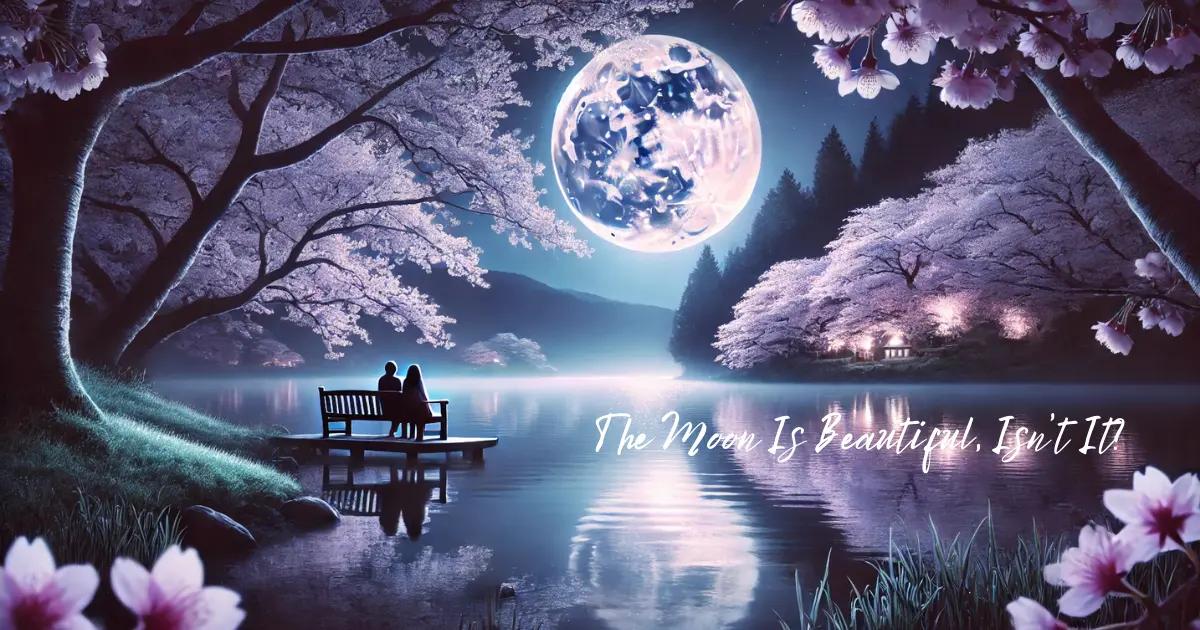
If you’ve stumbled upon the phrase “the moon is beautiful, isn’t it” while watching anime, reading manga, or scrolling through social media, you’ve discovered one of Japanese culture’s most elegant expressions of romantic love. This seemingly simple observation about lunar beauty carries a profound hidden meaning that has captivated people worldwide. The phrase tsuki ga kirei desu ne (月が綺麗ですね) translates literally to “the moon is beautiful, isn’t it,” but in Japanese romantic context, it’s understood as a poetic, indirect way of saying “I love you.” This cultural phenomenon reveals fascinating insights into Japanese communication styles, where emotions are often expressed through metaphor and subtlety rather than direct declaration.
What Does 'The Moon Is Beautiful, Isn't It' Really Mean?
At its core, the moon is beautiful isn’t it meaning goes far beyond astronomical appreciation. When someone says this phrase in a romantic context, they’re confessing their love without using the direct words “I love you.” This indirect expression allows both parties to acknowledge deep feelings while maintaining the emotional restraint valued in Japanese culture.
The phrase works on multiple levels simultaneously. On the surface, it’s a genuine comment about the moon’s beauty—something two people might observe together during an evening walk or while standing on a balcony. However, the subtext transforms this observation into an intimate confession. By sharing this moment of beauty with someone specific, the speaker is essentially saying, “Being here with you, experiencing this beautiful moment together, fills me with love.”
This dual meaning creates what linguists call “plausible deniability.” If the feelings aren’t reciprocated, both parties can retreat to the literal interpretation without embarrassment. The listener who doesn’t share romantic feelings can simply agree that yes, the moon is indeed beautiful, and the moment passes without awkwardness. This protective layer makes the phrase particularly appealing in cultures that value social harmony and face-saving.
The beauty of this expression lies in its emotional intelligence. Rather than placing pressure on the listener with a direct “I love you,” the speaker invites them to share in a moment of aesthetic appreciation. The moon is beautiful tonight becomes a test—will the other person understand the deeper meaning? Will they respond in kind? This creates a romantic tension that direct declarations often lack.
The Natsume Soseki Origin Story: Fact or Fiction?
The most popular origin story attributes this romantic phrase to Natsume Soseki, one of Japan’s most celebrated novelists from the Meiji era (1867-1912). According to legend, Soseki was teaching English to Japanese students when he encountered a translation exercise where students needed to translate “I love you” into Japanese. His students translated it directly as “我君を愛す” (ware kimi wo aisu), a literal and rather stiff rendering.
Soseki reportedly corrected them, suggesting that a Japanese person would never express love so directly. Instead, he proposed that “tsuki ga kirei desu ne” (the moon is beautiful, isn’t it) would be a more authentically Japanese way to convey the same sentiment. This anecdote has become legendary in discussions of Japanese romantic expression and cultural communication differences.
However, the historical accuracy of this story remains debated among scholars. There’s no definitive written record of this classroom exchange in Soseki’s documented works or teaching materials. Some literary historians suggest the story may be apocryphal—a later invention that gained traction because it perfectly encapsulates real differences between Western and Japanese emotional expression.
Whether Soseki actually said this or not, the story has become culturally “true” in its impact. It’s widely taught, referenced in popular culture, and has shaped how both Japanese and international audiences understand Japanese romantic communication. The Natsume Soseki moon connection has given the phrase literary prestige and historical weight, making it more than just a romantic cliché—it’s now part of Japan’s cultural heritage.
What we can verify is that Soseki’s novels frequently explored themes of unspoken emotion, indirect communication, and the tension between Western and Japanese values during Japan’s modernization. His work “Kokoro” (Heart) masterfully depicts characters struggling to express deep feelings, which aligns perfectly with the philosophy behind the moon phrase, whether he coined it or not.
The Japanese Phrase: 月が綺麗ですね (Tsuki ga Kirei Desu ne)
Understanding the linguistic construction of tsuki ga kirei desu ne helps reveal why this phrase works so effectively in Japanese. Let’s break down each component:
- 月 (tsuki) – “moon”
- が (ga) – subject marker particle
- 綺麗 (kirei) – “beautiful” or “pretty”
- です (desu) – polite copula (roughly “is”)
- ね (ne) – sentence-ending particle seeking agreement or confirmation
The final particle “ne” is particularly important. It transforms the statement into a gentle invitation for shared experience, similar to adding “isn’t it?” or “don’t you think?” in English. This particle softens the statement and explicitly requests the listener’s participation in the observation, creating intimacy through shared aesthetic appreciation.
The moon is beautiful isn’t it pronunciation in romanized Japanese is approximately: “tsu-kee gah kee-ray dess neh.” The rhythm is gentle and flowing, with the “ne” at the end rising slightly in intonation, like asking a question. Native speakers deliver this phrase with a soft, contemplative tone that matches the romantic subtext.
The choice of “kirei” (beautiful) rather than other aesthetic terms is also significant. “Kirei” suggests a pure, clean, elegant beauty—not passionate or overwhelming, but refined and moving. This aligns with traditional Japanese aesthetic values like “mono no aware” (the pathos of things) and “yūgen” (mysterious profundity), where beauty is tinged with transience and emotional depth.
In written form, the phrase can appear in different scripts. The full kanji version (月が綺麗ですね) is most formal. You might also see it in hiragana (つきがきれいですね) for a softer, more casual feel, or in mixed script. The moon is beautiful isn t it in japanese maintains its romantic connotation regardless of script choice, though kanji adds a certain literary gravitas.
How to Respond to 'The Moon Is Beautiful, Isn't It'
Knowing how to respond to the moon is beautiful is just as important as understanding the original phrase. The response you choose reveals whether you reciprocate the romantic feelings, and Japanese culture offers several elegant options.
The most famous reciprocal response is “死んでもいいわ” (shinde mo ii wa), which translates to “I could die happy” or more literally “Even if I die, it’s okay.” This might sound dramatic to Western ears, but it expresses that the speaker’s happiness is so complete in this moment that nothing else matters. This response, also attributed to various Japanese literary figures, matches the original phrase’s poetic intensity.
Another traditional positive response is “ずっと見ていたいですね” (zutto mite itai desu ne), meaning “I want to keep looking at it forever.” This response cleverly maintains the metaphor while expressing a desire for the moment—and by extension, the relationship—to continue indefinitely.
A simpler affirmative response is “そうですね” (sou desu ne), meaning “Yes, it is” or “Indeed.” While less poetic than the other options, this gentle agreement signals understanding and shared feeling. The tone and context make clear whether this is merely agreeing about the moon or accepting a love confession.
For those who want to acknowledge the sentiment without fully committing, “月も綺麗ですね” (tsuki mo kirei desu ne)—”The moon is beautiful too”—suggests that while you appreciate the moment and the person, you’re not quite ready to reciprocate fully. The addition of “mo” (also/too) creates subtle distance.
If you don’t share romantic feelings, you can respond literally: “本当に綺麗ですね” (hontou ni kirei desu ne), meaning “It really is beautiful.” By focusing purely on the moon’s aesthetic qualities without acknowledging the subtext, you politely decline the confession while preserving both parties’ dignity.
The moon is beautiful isn’t it response reddit discussions often debate modern variations, including playful responses like “But the stars are prettier,” which some interpret as “I love someone else” or “There’s something even better.” However, this response’s meaning isn’t traditionally established and could cause confusion.
Why This Phrase Resonates: Japanese Indirect Communication
To truly understand why the moon is beautiful isn’t it has such cultural power, we must explore the broader context of Japanese communication patterns. Japanese culture is often characterized as “high-context,” meaning much information is conveyed implicitly through situation, relationship, and shared cultural knowledge rather than explicit verbal statements.
The concept of “honne and tatemae” is central here. “Tatemae” refers to the public facade or socially appropriate behavior, while “honne” represents true feelings and desires. Direct emotional declarations are often considered too revealing of one’s honne, potentially creating social discomfort. The moon phrase allows expression of deep feeling while maintaining appropriate tatemae.
Japanese culture also emphasizes “kuuki wo yomu” (reading the air)—the ability to sense unspoken meanings and emotional undercurrents in social situations. The moon phrase rewards this skill. Someone culturally attuned will immediately recognize the romantic subtext, while someone less familiar might miss it entirely. This creates an in-group understanding that strengthens cultural bonds.
The value placed on “enryo” (restraint or reserve) further explains the phrase’s appeal. Being too forward or aggressive in expressing desire is considered crude or immature. The moon phrase demonstrates emotional maturity—the speaker has strong feelings but expresses them with poetic restraint, showing respect for the listener’s autonomy and emotional space.
Additionally, Japanese aesthetic philosophy celebrates “ma” (negative space or pause) and what’s left unsaid. In traditional arts from haiku poetry to ink painting, what’s omitted is as important as what’s included. The moon phrase embodies this principle—the most important words (“I love you”) are the ones never spoken, existing in the space between the literal and metaphorical meanings.
This communication style contrasts sharply with Western, particularly American, culture’s emphasis on direct, explicit communication. The phrase “I love you” is spoken relatively freely in Western contexts, while in Japanese culture, even married couples of long standing might rarely or never say “愛してる” (aishiteru—I love you) directly. Understanding this difference helps explain why the moon is beautiful isn t it anime appearances resonate so strongly with international audiences—they’re glimpsing a fundamentally different approach to expressing intimacy.
Similar Poetic Japanese Love Expressions
The moon phrase isn’t alone in Japanese romantic vocabulary. Several other nature-based expressions convey love indirectly, each with its own nuance and context. Understanding these japanese love phrases reveals a rich tradition of poetic confession.
“夕日が綺麗ですね” (yuuhi ga kirei desu ne) or “the sunset is beautiful isn’t it” carries a slightly different emotional weight. While the moon phrase suggests eternal, constant love (the moon appears reliably each night), the sunset implies something more bittersweet. Some interpret the sunset is beautiful isn t it meaning as expressing love tinged with sadness, perhaps acknowledging that the relationship may be fleeting or that circumstances make a future together uncertain. The sunset’s transient beauty mirrors the “mono no aware” aesthetic—beauty heightened by impermanence.
“星が綺麗ですね” (hoshi ga kirei desu ne) means “the stars are beautiful, isn’t it.” This phrase is sometimes used to express admiration or affection that’s less intense than the moon phrase—perhaps indicating a crush or the early stages of romantic interest rather than deep love. The plural nature of stars (versus the singular moon) might suggest a less focused or committed feeling.
“雨音が好きです” (amaoto ga suki desu) translates to “I like the sound of rain.” This phrase can serve as a confession when said in the right context, with “rain” serving as a metaphor for the other person’s presence—something that creates a soothing, comforting atmosphere. It’s more subtle than the moon phrase and might be used when testing the waters of romantic possibility.
“手が冷たいですね” (te ga tsumetai desu ne) means “your hands are cold, aren’t they?” This observation creates an opportunity for physical contact—offering to warm the other person’s hands—and expresses caring concern. While not explicitly romantic, in the right context, it signals attentiveness and desire for closeness.
Some modern variations have emerged in anime and manga culture. The moon is beautiful isn t it but the stars are prettier has been interpreted various ways—some see it as “I love someone else” or “There’s something I value more,” though this isn’t a traditional established phrase and its meaning remains ambiguous.
The sun is beautiful isn t it occasionally appears in discussions, though it lacks the established romantic meaning of the moon phrase. The sun’s brightness and power might suggest a more passionate or overwhelming love, but this interpretation isn’t culturally standardized.
Using This Phrase in Modern Contexts
In contemporary Japan, awareness of tsuki ga kirei desu ne as a romantic phrase is widespread, particularly among younger generations exposed to it through media. However, its actual usage has evolved in interesting ways that reflect changing communication patterns.
Many young Japanese people are aware of the phrase’s meaning but might feel it’s too literary or old-fashioned for actual use. It carries a certain formality and poetic weight that can feel out of place in casual modern relationships. Some might use it ironically or playfully, acknowledging its cultural significance while not taking it entirely seriously.
That said, the phrase appears frequently in the moon is beautiful isn t it anime and the moon is beautiful isn t it manga, where it serves as a recognizable romantic trope. Shows like “Tsuki ga Kirei” (literally “The Moon is Beautiful”) center their entire premise around this concept of indirect confession. The moon is beautiful isn’t it demon slayer references and appearances in other popular anime have introduced the phrase to international audiences, sparking curiosity about Japanese romantic expression.
For non-Japanese speakers wanting to use this phrase, context is everything. Simply saying it to a Japanese person who doesn’t know you well might cause confusion rather than convey romance. The phrase works best when:
- You’re actually looking at the moon together in a romantic setting
- The other person is familiar with the phrase’s cultural meaning
- You’ve established some romantic rapport already
- The relationship has reached a point where confession feels natural
- You’re prepared for various possible responses
In international contexts, the phrase has taken on a life of its own. Social media posts about the moon is beautiful meaning regularly go viral, and the phrase appears in songs, poetry, and art created by people worldwide. The moon is beautiful isn t it in french (“La lune est belle, n’est-ce pas?”) and translations into other languages attempt to capture the sentiment, though the specific cultural context remains uniquely Japanese.
The moon is beautiful isn’t it in korean would be “달이 아름답네요” (dari areumdamneyo), and while Korean culture shares some indirect communication patterns with Japanese culture, this specific phrase doesn’t carry the same established romantic meaning in Korean contexts.
Some creative adaptations have emerged. The moon is beautiful song references include various musical works inspired by the phrase, and the moon is beautiful isn t it lyrics appear in both Japanese and international music exploring themes of unspoken love and cultural communication differences.
The Cultural Significance of the Moon in Japanese Romance
Understanding why specifically the moon serves as a love metaphor requires exploring its deep cultural significance in Japanese tradition. The moon isn’t just a celestial body in Japanese culture—it’s a symbol laden with emotional, aesthetic, and spiritual meaning.
Tsukimi (moon viewing) has been a cherished tradition since the Heian period (794-1185). Aristocrats would gather to compose poetry while contemplating the autumn moon, particularly during the harvest moon. This practice established the moon as an object worthy of sustained aesthetic attention and emotional response—a perfect vehicle for expressing refined feeling.
In classical Japanese poetry, particularly in the waka and haiku traditions, the moon appears as a constant motif representing various emotional states. It can symbolize loneliness, beauty, transience, enlightenment, or romantic longing depending on context. This rich poetic tradition means that any reference to the moon carries layers of literary association that educated Japanese speakers immediately recognize.
The moon’s monthly cycle—waxing, full, and waning—mirrors the cycles of human emotion and relationship. A full moon represents completeness and perfection, making it an ideal metaphor for fulfilled love. The fact that the moon appears reliably, night after night, suggests constancy and faithfulness—qualities valued in romantic partnerships.
Japanese aesthetics particularly value yūgen—a profound, mysterious sense of the beauty of the universe that triggers an emotional response too deep for words. The moon, especially when partially obscured by clouds or reflected in water, embodies this quality perfectly. By invoking the moon, the speaker taps into this aesthetic tradition, elevating their confession beyond mere words to something approaching spiritual experience.
The moon also connects to the Buddhist concept of impermanence (mujō). While the moon itself seems eternal, each specific moon viewing is unique and unrepeatable—the clouds, the season, the company, the viewer’s state of mind all differ. This awareness of the moment’s transience makes it more precious, adding emotional depth to the shared experience.
In Shinto tradition, the moon deity Tsukuyomi represents the night and mystery. While less prominent than the sun goddess Amaterasu, Tsukuyomi’s association with hidden things and the unseen world aligns perfectly with the moon phrase’s function—expressing what cannot be said directly, illuminating feelings that exist in the shadows of explicit communication.
The moon’s gentle light, as opposed to the sun’s harsh brilliance, also matters. Moonlight is soft, flattering, romantic—it transforms the ordinary world into something magical and mysterious. This quality makes it an ideal backdrop for intimate confession. The phrase “the moon is beautiful” isn’t just about the moon itself but about the moonlit moment shared between two people, the way moonlight transforms both the landscape and the emotional atmosphere.
Contemporary Japanese culture continues this moon reverence. Moon-viewing spots remain popular date destinations, and autumn moon festivals draw crowds. The moon appears constantly in Japanese visual media, from anime backgrounds to film cinematography, often signaling romantic or emotionally significant moments. This cultural continuity means that the moon is beautiful isn’t it japanese phrase resonates across generations, connecting modern romance to centuries of tradition.
The phrase’s enduring appeal ultimately stems from its perfect encapsulation of Japanese aesthetic and emotional values. It demonstrates that love need not be shouted to be deeply felt, that beauty and emotion are intertwined, and that the most profound feelings often find their best expression through indirection, metaphor, and shared aesthetic experience. In a world increasingly dominated by direct, explicit communication, this poetic approach to confession offers an alternative that many find refreshingly subtle, respectful, and emotionally sophisticated.
Whether you encounter this phrase in anime, use it yourself in the right context, or simply appreciate it as a window into Japanese culture, “the moon is beautiful, isn’t it” represents something valuable—a reminder that love can be expressed in countless ways, and that sometimes the most powerful declarations are the ones that trust the listener to understand what remains unspoken. The phrase invites us to slow down, share a moment of beauty with someone special, and let that shared experience communicate what words alone cannot fully capture.
Frequently Asked Questions
What does "the moon is beautiful, isn't it" really mean?
“The moon is beautiful, isn’t it” is a poetic Japanese way of saying “I love you” without directly stating it. The phrase “tsuki ga kirei desu ne” (月が綺麗ですね) originated as an indirect expression of romantic feelings, reflecting Japanese cultural preference for subtlety and emotional restraint. When someone says this to you, they’re likely confessing their love in an elegant, understated manner rather than simply commenting on the moon’s appearance.
What is the proper reply to "the moon is beautiful, isn't it"?
The traditional romantic reply is “shindemo ii wa” (死んでもいいわ), meaning “I can die happy” or “I could die [happy now],” which reciprocates the romantic sentiment. Alternatively, you can respond with “watashi mo sou omoimasu” (私もそう思います) meaning “I think so too,” which gently accepts the confession. If you don’t share the same feelings, a simple agreement about the moon’s beauty without the deeper acknowledgment allows both parties to save face.
Did the writer Natsume Soseki really create this phrase?
According to popular legend, Japanese novelist Natsume Soseki suggested this translation when a student directly translated “I love you” as “aishiteru” during an English class in the Meiji era. Soseki reportedly said that Japanese people would never be so direct and would instead say “the moon is beautiful, isn’t it.” While this story is widely shared and culturally significant, there’s no definitive historical evidence confirming it actually happened, though it perfectly captures Japanese communication style.
How do you say "I love you" in Japanese using the moon?
You say “tsuki ga kirei desu ne” (月が綺麗ですね), which literally means “the moon is beautiful, isn’t it” but carries the hidden meaning of “I love you.” This indirect expression allows you to confess romantic feelings in a culturally appropriate, poetic way. The phrase works because it creates a shared intimate moment while maintaining the emotional distance valued in Japanese culture.
What does "the sunset is beautiful, isn't it" mean?
“The sunset is beautiful, isn’t it” can mean “I want to spend my life with you” or express deep romantic commitment in the same indirect tradition as the moon phrase. Some interpretations suggest it means “my feelings for you are fading” or even “goodbye,” depending on context. Like “the moon is beautiful isn’t it,” this phrase uses natural beauty as a metaphor for complex romantic emotions that are difficult to express directly.
Does "tsuki ga kirei" literally mean "I love you"?
No, “tsuki ga kirei” literally translates to “the moon is beautiful,” not “I love you.” However, in romantic contexts, it functions as an indirect confession of love in Japanese culture. The phrase demonstrates how Japanese communication often relies on context, implication, and shared cultural understanding rather than explicit statements of emotion.
What is the hidden meaning behind "the moon is beautiful, isn't it"?
The hidden meaning is a romantic confession—essentially “I love you”—expressed through poetic observation rather than direct declaration. This phrase embodies the Japanese aesthetic concept of “iki” (粋), which values sophistication, subtlety, and emotional restraint. By commenting on the moon’s beauty while sharing a moment together, the speaker creates intimacy and expresses deep feelings without the vulnerability of explicit confession.
Is "the moon is beautiful, isn't it" used in real Japanese conversations?
While the phrase is culturally recognized in Japan, it’s more commonly referenced in anime, manga, and literature than in everyday romantic confessions. Modern Japanese people are more likely to use direct expressions like “suki desu” (好きです – I like you) for romantic confessions. However, the phrase remains culturally significant as a symbol of traditional Japanese romantic expression and continues to appear in creative works and among people who appreciate its poetic elegance.
What does "the stars are prettier" mean as a response?
“The stars are prettier” or “but the stars are prettier” is sometimes used as a gentle rejection, suggesting the person finds someone else more beautiful or appealing. It can also mean “I appreciate the sentiment, but I see beauty elsewhere,” allowing the responder to decline the romantic advance politely. This maintains the metaphorical conversation while communicating that feelings aren’t mutual without causing direct embarrassment.
Can you use this phrase in languages other than Japanese?
Yes, “the moon is beautiful, isn’t it” has been adopted by romance enthusiasts worldwide as a poetic way to express love in English and other languages. While it loses some cultural context outside Japanese, the phrase retains its romantic charm and indirect elegance. Many people now use it as a subtle confession or romantic gesture, especially in online communities, anime fandoms, and among those who appreciate Japanese culture and aesthetic sensibilities.
You May Also Like

Car Finance Claims Explained: Check for Hidden Costs

Water Taxi Market 2025: Sustainable Growth Forecast & Trends