How Long Do Solar Lights Last? Complete 2026 Guide

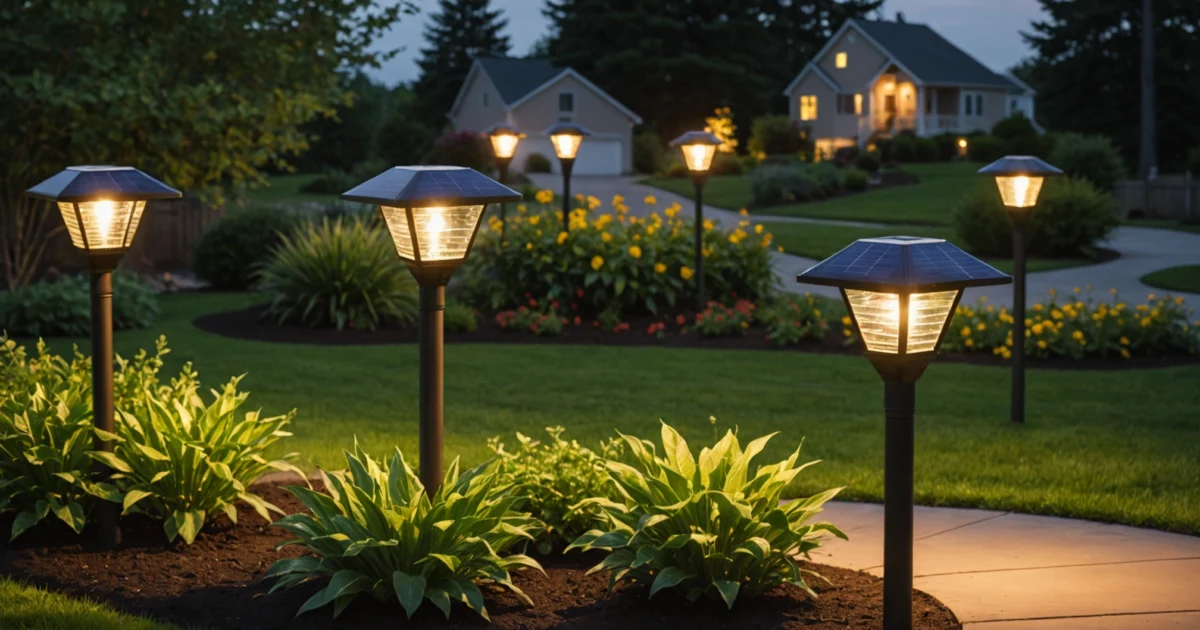
How long do solar lights last depends on their quality and components, with most lasting 2-10 years before needing replacement. However, the three main components have different lifespans: LED bulbs can last 25,000-100,000 hours, batteries typically need replacement every 1-3 years, and solar panels gradually decline over 10-25 years. Understanding these component lifespans helps you maximize your investment and know when repairs make sense versus buying new lights.
Most homeowners experience battery failure first, with lights running only 2-4 hours per night instead of the expected 8-12 hours. Meanwhile, quality solar panels maintain efficiency for decades with proper care, making them rarely the limiting factor. The key is choosing lights with quality components and proper IP ratings for weather resistance.
Budget solar lights may last just 1-2 years, while premium models with lithium-ion batteries and robust construction can provide reliable service for 5-10 years. Additionally, proper maintenance and strategic placement significantly extend lifespan regardless of initial quality. For broader energy efficiency insights, explore our renewable energy guide covering various sustainable solutions.
TL;DR
- Overall lifespan: 2-10 years depending on quality, with batteries (1-3 years) typically failing first
- Component longevity: LED bulbs last 25,000-100,000 hours, solar panels 10-25 years with gradual efficiency decline
- Performance signs: Runtime dropping to 2-4 hours indicates battery replacement needed; premium lights with lithium-ion batteries last longest
Solar Light Lifespan Overview: What to Expect
Solar lights typically last between 2-10 years, with significant variation based on component quality and construction standards. Budget models often fail within 1-2 years, while premium solar lights with quality components can provide reliable illumination for up to a decade. Understanding these lifespan ranges helps homeowners make informed purchasing decisions and set realistic expectations for their outdoor lighting investment.
The overall durability depends on three critical components that work together to power your solar lighting system. Each component ages differently, creating a complex relationship between performance and longevity that affects when replacement becomes necessary.
Three Main Components That Determine Longevity
LED bulbs represent the most durable component in solar lights, lasting between 25,000-100,000 hours of operation. These solid-state lighting elements rarely fail completely but gradually dim over time, maintaining approximately 70% of their original brightness after their rated lifespan. Quality LED chips from reputable manufacturers consistently outperform cheaper alternatives in both longevity and light output.
Batteries function as the weakest link in most solar lighting systems, typically requiring replacement every 1-3 years. Nickel-metal hydride (NiMH) batteries commonly found in budget lights degrade faster than lithium-ion alternatives used in premium models. Environmental factors like extreme temperatures accelerate battery deterioration, while proper charging cycles can extend their useful life.
Solar panels demonstrate exceptional longevity, maintaining efficiency for 10-25 years with gradual performance decline. These photovoltaic cells lose approximately 0.5-0.8% efficiency annually, meaning a quality panel retains 80% of its original capacity after two decades. However, physical damage from hail, debris, or UV degradation can shorten panel lifespan significantly.
Runtime Per Night vs. Total Product Lifespan
Many consumers confuse nightly runtime with overall product lifespan, creating unrealistic expectations about solar light performance. New solar lights typically provide 8-12 hours of illumination per night when fully charged, but this duration decreases as batteries age and lose capacity. A light that originally ran all night may only operate for 2-4 hours after two years of use.
Total product lifespan refers to how long the solar light continues functioning before requiring complete replacement or major component repairs. Even when nightly runtime drops significantly, the light may still provide adequate illumination for pathways or accent lighting. Therefore, determining replacement timing depends on your specific lighting needs rather than arbitrary time limits.
Performance Indicator
Quality Tiers and Expected Lifespans
Budget solar lights priced under $20 typically last 1-2 years before experiencing significant performance degradation or complete failure. These models use basic NiMH batteries, lower-grade LED chips, and minimal weather sealing that allows moisture infiltration. While initially attractive for their low cost, budget lights often require frequent replacement, increasing long-term expenses.
Premium solar lights costing $50-200 or more can provide reliable service for 5-10 years with proper maintenance. These models feature lithium-ion batteries, high-efficiency LED arrays, and robust IP65 or IP67 weather ratings that resist moisture and dust. Additionally, premium lights often include replaceable components, allowing targeted repairs instead of complete replacement.
| Quality Tier | Price Range | Expected Lifespan | Key Features |
|---|---|---|---|
| Budget | $5-20 | 1-2 years | NiMH batteries, basic LEDs |
| Mid-Range | $20-50 | 2-4 years | Better weather sealing, improved batteries |
| Premium | $50-200+ | 5-10 years | Lithium-ion batteries, replaceable parts |
Investment in quality solar lights pays dividends through extended lifespan and consistent performance. Furthermore, premium models often include warranties covering 2-5 years, providing protection against premature failure and manufacturing defects.
LED Bulb Longevity in Solar Lights
LED bulbs represent the most durable component in solar lighting systems, typically lasting 25,000 to 100,000 hours of operation. This exceptional longevity means LEDs rarely fail first in solar light systems. Instead, batteries and electronic controllers usually require replacement years before LED degradation becomes noticeable.
Understanding LED lifespan helps explain why solar lights often dim gradually rather than failing suddenly. High-quality LED chips maintain 80% of their original brightness after 50,000 hours, while budget LEDs may show significant dimming after 25,000 hours. Consequently, LED replacement becomes necessary only when other components have already been serviced multiple times.
Why LEDs Outlast Other Components
LED technology inherently resists the environmental stresses that damage batteries and circuits. Unlike batteries that undergo chemical degradation with each charge cycle, LEDs experience minimal wear during normal operation. Furthermore, LEDs generate less heat than traditional bulbs, reducing thermal stress on surrounding components.
Solar light manufacturers design LED arrays to operate well below maximum capacity, extending operational life significantly. This conservative approach ensures LEDs continue functioning long after batteries lose capacity or charging circuits fail. Therefore, LED longevity rarely determines overall solar light replacement timing.
Factors Affecting LED Degradation
Heat exposure accelerates LED degradation more than any other environmental factor. Solar lights in hot climates or direct sunlight experience faster LED aging due to elevated operating temperatures. Additionally, poor thermal management in budget lights allows heat buildup that shortens LED lifespan considerably.
Moisture infiltration causes LED failure through corrosion of electrical connections and semiconductor damage. Quality solar lights feature proper sealing that prevents moisture from reaching LED components. However, damaged gaskets or poor manufacturing quality allows water penetration that can destroy LEDs within months rather than years.
- Manufacturing quality: Premium LED chips last 2-4 times longer than budget alternatives
- Thermal management: Proper heat dissipation extends LED life by 30-50%
- Electrical stress: Voltage fluctuations from failing controllers damage LEDs
- UV exposure: Plastic lenses degrade, reducing light output and increasing heat
Recognizing LED Failure Signs
LED failure typically manifests as gradual dimming rather than complete darkness. Significant brightness reduction indicates LED degradation, especially when batteries and charging systems function properly. Additionally, color shifting toward blue or yellow tints suggests LED phosphor deterioration that requires replacement.
Flickering or intermittent operation points to LED driver circuit problems rather than LED chip failure. However, complete LED darkness while other components work indicates actual LED failure. Testing with a multimeter confirms whether LEDs receive proper voltage, helping distinguish between LED and controller problems.
Replacement becomes necessary when LED output drops below 50% of original brightness, even with fully charged batteries. Most solar light owners replace entire units before reaching this point, since LED degradation typically occurs after 8-15 years of service. Renewable energy systems benefit from understanding component lifespans to optimize replacement timing and reduce waste.
LED Longevity Tip
Solar Light Battery Life and Replacement Cycles
Solar light batteries represent the most vulnerable component in outdoor lighting systems, typically requiring replacement every 1-3 years depending on battery type and usage conditions. Understanding battery degradation patterns helps homeowners optimize their solar lighting investments and recognize when replacement becomes necessary.
Battery Types and Expected Lifespans
Nickel-Metal Hydride (NiMH) batteries dominate budget solar lights, offering reliable performance for approximately 1-2 years under normal conditions. These batteries handle temperature fluctuations better than older technologies but gradually lose capacity through repeated charging cycles. Most manufacturers specify 500-800 charge cycles before significant capacity reduction occurs.
Lithium-ion (Li-ion) batteries power premium solar lights, delivering extended lifespans of 2-3 years or more. Furthermore, Li-ion technology maintains consistent voltage output throughout discharge cycles, ensuring steady light brightness until battery depletion. These batteries typically endure 1,000-1,500 charge cycles before requiring replacement.
Battery Lifespan Factors
Charging Cycles and Capacity Degradation
Each charging cycle gradually reduces battery capacity through chemical changes within battery cells. Capacity degradation occurs predictably, with batteries losing approximately 5-10% capacity annually under normal operating conditions. Solar lights experience daily charging cycles, accelerating this natural degradation process compared to occasional-use devices.
Deep discharge cycles cause more damage than partial discharge cycles, explaining why solar lights with inadequate solar panel sizing experience faster battery deterioration. Additionally, incomplete charging during cloudy periods creates sulfation in lead-acid batteries or lithium plating in Li-ion cells, further reducing capacity and lifespan.
Why Batteries Fail First
Batteries fail before other solar light components due to their electrochemical nature and constant cycling demands. Unlike static components such as solar panels or LED chips, batteries undergo continuous chemical reactions that gradually degrade active materials. Temperature stress compounds this degradation, particularly in climates with significant seasonal variations.
Manufacturing quality also influences battery reliability, with budget batteries using lower-grade materials that deteriorate faster. Moreover, inadequate charge controllers allow overcharging or deep discharge conditions that permanently damage battery chemistry. These factors combine to make batteries the primary failure point in solar lighting systems.
Runtime Reduction Warning Signs
Declining runtime serves as the clearest indicator of battery degradation in solar lighting systems. Lights that previously operated for 8-12 hours but now shut off after 2-4 hours demonstrate significant capacity loss requiring attention. This reduction typically occurs gradually over months rather than suddenly.
- Dimming brightness throughout the night indicates voltage drop from aging batteries
- Inconsistent operation during cloudy periods suggests reduced capacity reserves
- Failure to illuminate after partial charging cycles shows advanced degradation
- Complete shutdown during winter months indicates temperature-related capacity loss
Testing battery voltage with a multimeter confirms degradation when readings fall below manufacturer specifications. However, most homeowners rely on observable performance changes rather than technical measurements to assess battery condition.
Replacement Economics: Batteries vs. New Units
Battery replacement costs typically range from $5-15 per light, while complete solar light units cost $15-50 depending on quality and features. This price differential makes battery replacement economically attractive for premium lights but questionable for budget models. Additionally, newer solar lights often incorporate improved LED efficiency and charging technology.
Replacement batteries may not perfectly match original specifications, potentially affecting performance and warranty coverage. Furthermore, battery replacement requires technical knowledge and proper disposal of old batteries, adding complexity to the maintenance process. Many homeowners choose complete unit replacement for convenience despite higher costs.
Premium solar lights with replaceable batteries justify repair costs, while budget units often cost less to replace entirely than to repair.
Environmental considerations favor battery replacement over disposal of entire units when feasible. Renewable energy systems benefit from component-level maintenance that extends product lifecycles and reduces electronic waste. However, practical considerations often outweigh environmental benefits in residential applications.
Solar Panel Durability and Performance Decline
Solar panels in outdoor lighting systems experience gradual efficiency decline through continuous exposure to environmental stressors. Photovoltaic cells degrade at rates of 0.5-0.8% annually, reducing their ability to convert sunlight into electrical energy over time. This degradation directly impacts how long solar lights operate each night and affects overall system performance.
Most solar light panels maintain functional performance for 10-25 years, though efficiency losses become noticeable within the first decade. Premium panels with anti-reflective coatings and robust encapsulation materials resist degradation better than budget alternatives. However, even high-quality panels cannot completely avoid the natural aging process that affects semiconductor materials.
Environmental Factors Accelerating Panel Degradation
UV radiation exposure breaks down protective polymer layers and gradually damages photovoltaic cell structures. Prolonged sunlight exposure creates microscopic cracks in silicon wafers, reducing electrical conductivity and power output. Additionally, temperature fluctuations cause thermal expansion and contraction that stresses panel components over thousands of heating and cooling cycles.
Moisture infiltration represents another significant degradation factor, particularly in humid climates or areas with frequent precipitation. Water vapor penetrates panel seals and corrodes electrical connections, while freeze-thaw cycles in cold regions create additional mechanical stress. Furthermore, dust accumulation and debris reduce light transmission, compounding efficiency losses from natural aging processes.
Weather Impact on Panel Performance
Performance Impact on Charging and Runtime
Panel degradation directly affects battery charging capacity and nightly operation duration. A 20% efficiency loss typically reduces charging time by 25-30%, requiring longer daylight exposure to achieve full battery capacity. Consequently, solar lights may operate for shorter periods or provide dimmer illumination as panels age.
Degraded panels struggle to maintain adequate charging during overcast conditions or shorter winter days when sunlight intensity decreases. This creates a cascading effect where insufficient charging leads to incomplete battery cycles, potentially accelerating battery degradation as well. Modern solar lights incorporate charge controllers to optimize power transfer, but these systems cannot compensate for significant panel efficiency losses.
| Panel Age | Efficiency Loss | Charging Impact | Runtime Reduction |
|---|---|---|---|
| 1-3 years | 2-5% | Minimal | 0-1 hour |
| 5-7 years | 8-15% | Moderate | 1-2 hours |
| 10+ years | 20-30% | Significant | 2-4 hours |
Understanding panel degradation helps homeowners set realistic expectations for solar light performance over time. While initial efficiency losses may seem negligible, cumulative effects become apparent after several years of operation. Regular cleaning and maintenance can slow degradation rates, but replacement becomes necessary when efficiency drops below acceptable thresholds for intended applications.
For those interested in broader renewable energy applications, exploring renewable energy sources and technologies provides valuable context for understanding solar panel performance in various applications beyond outdoor lighting systems.
Factors That Reduce Solar Light Lifespan
Several environmental and quality factors significantly impact how long solar lights last, with weather exposure representing the most critical threat to longevity. Understanding these degradation factors helps homeowners make informed purchasing decisions and implement protective measures to extend operational life.
Weather Exposure and Environmental Damage
Extreme temperatures cause thermal cycling stress that degrades solar panels, batteries, and electronic components over time. Furthermore, temperature fluctuations between -20°F and 140°F create expansion and contraction cycles that weaken solder joints and crack protective coatings. Moisture infiltration through compromised seals leads to corrosion of internal circuitry and premature component failure.
UV radiation exposure gradually breaks down plastic housings and lens materials, causing yellowing, brittleness, and reduced light transmission. Additionally, prolonged UV exposure degrades the protective backing on solar panels, allowing moisture to penetrate and create hot spots that reduce charging efficiency. These cumulative effects typically become noticeable after 3-5 years of continuous outdoor exposure.
Temperature Impact
Manufacturing Quality and Component Standards
Poor manufacturing quality manifests through inadequate solder joints, substandard materials, and insufficient quality control testing. Meanwhile, cheap components such as low-grade LEDs, basic charge controllers, and inferior batteries fail significantly faster than premium alternatives. Budget solar lights often use nickel-cadmium batteries instead of lithium-ion cells, resulting in shorter runtime and faster capacity loss.
Component sourcing directly affects longevity, as manufacturers using certified suppliers typically achieve 2-3 times longer operational life. Moreover, proper thermal management through adequate heat sinks and ventilation prevents premature LED failure and maintains consistent light output. Quality manufacturers implement rigorous testing protocols that simulate years of environmental exposure before product release.
Waterproofing and Protection Standards
Inadequate waterproofing represents a primary cause of early solar light failure, particularly in units lacking proper IP ratings. Solar lights require minimum IP65 protection for reliable outdoor operation, ensuring dust-tight sealing and protection against water jets from any direction. However, many budget models provide only IP44 protection, leaving them vulnerable to moisture infiltration during heavy rain or snow.
| IP Rating | Protection Level | Expected Lifespan | Suitable Conditions |
|---|---|---|---|
| IP44 | Splash resistant | 1-2 years | Covered areas only |
| IP65 | Dust-tight, water jets | 3-5 years | Most outdoor conditions |
| IP67 | Submersion resistant | 5-8 years | Harsh weather climates |
Gasket degradation over time compromises even well-sealed units, as rubber seals become brittle and lose elasticity after repeated freeze-thaw cycles. Consequently, annual inspection of sealing integrity becomes essential for maintaining protection standards and preventing costly water damage to internal electronics.
Installation and Maintenance Factors
Improper installation accelerates wear through inadequate mounting, poor positioning, and insufficient drainage considerations. Solar lights installed in low-lying areas accumulate standing water that compromises seals and creates corrosion pathways. Similarly, mounting hardware that allows excessive movement during wind events creates stress points that eventually lead to structural failure.
Maintenance neglect compounds environmental damage through accumulated debris, corroded connections, and degraded protective coatings. Regular cleaning removes dirt and organic matter that blocks solar panels and retains moisture against housing surfaces. Furthermore, periodic battery replacement and seal inspection prevent minor issues from escalating into complete system failures.
- Clean solar panels monthly to maintain charging efficiency
- Inspect seals and gaskets every six months
- Replace batteries every 2-3 years regardless of apparent function
- Check mounting hardware for looseness or corrosion
- Trim vegetation that creates shade or physical contact
Geographic and Climate Considerations
Climate zones dramatically influence solar light longevity through varying temperature ranges, humidity levels, and precipitation patterns. Units in coastal environments face accelerated corrosion from salt exposure, while desert installations contend with extreme temperature swings and abrasive dust storms. Arctic conditions present unique challenges through extended periods of limited sunlight and extreme cold that affects battery chemistry.
Seasonal sunlight variations create charging deficits that stress battery systems and reduce overall lifespan. Solar lights in northern latitudes receive 60-70% less solar energy during winter months, forcing batteries to operate in partial charge states that accelerate capacity loss. This seasonal stress becomes particularly problematic for units with marginal charging capacity or aging solar panels.
Understanding local climate patterns helps homeowners select appropriate solar light models and implement protective measures. For instance, units in high-humidity environments benefit from enhanced ventilation and corrosion-resistant materials, while installations in areas with frequent hail storms require impact-resistant housings and protective covers during severe weather events.
Maximizing Solar Light Longevity
Proper installation, maintenance, and care practices significantly extend solar light lifespan beyond manufacturer estimates. Strategic placement and proactive upkeep transform average 2-3 year lifespans into 5-8 year performance periods. Furthermore, understanding quality indicators helps consumers make investments that deliver long-term value.
Proper Installation for Maximum Sun Exposure
Optimal solar panel positioning captures maximum daily sunlight and prevents premature battery degradation. Solar lights require 6-8 hours of direct sunlight for complete charging cycles that maintain battery health. Additionally, panels should face true south in northern hemispheres with minimal shading throughout the day.
Secure mounting prevents physical damage from wind, vibration, and thermal expansion. Loose fixtures create stress points that crack housings and disconnect internal wiring. Moreover, proper drainage prevents water accumulation that corrodes electrical components and reduces operational lifespan.
Installation height affects both light distribution and maintenance accessibility. Ground-level fixtures face greater moisture exposure and physical damage risks, while elevated installations require stable mounting systems that withstand weather loads. Consequently, balanced positioning optimizes both performance and longevity.
Regular Maintenance Protocols
Clean solar panels maintain charging efficiency and prevent performance degradation over time. Dust, pollen, and debris reduce light absorption by 20-40%, forcing batteries to operate in partial charge states that accelerate capacity loss. Therefore, monthly cleaning with mild soap and water preserves optimal energy collection.
Connection inspections identify corrosion, loose wires, and damaged components before they cause complete failure. Moisture infiltration creates oxidation that increases electrical resistance and generates heat damage. Furthermore, thermal cycling expands and contracts connections, requiring periodic tightening to maintain reliable operation.
- Clean panels monthly with soft cloth and mild detergent
- Inspect wire connections every three months
- Check housing seals for cracks or gaps
- Test light operation during peak charging periods
- Remove vegetation that creates shading
Seasonal Care and Winter Storage
Non-weatherproof solar lights require winter storage to prevent freeze damage and extend operational life. Freezing temperatures crack plastic housings, damage LCD displays, and reduce battery capacity through chemical changes. However, IP65-rated units withstand outdoor winter conditions with proper preparation.
Pre-winter preparation involves full battery charging, thorough cleaning, and protective covering application. Charged batteries resist freeze damage better than depleted cells, while clean panels maximize available winter sunlight. Similarly, protective covers shield units from ice accumulation and wind-driven debris.
Spring reactivation requires inspection, cleaning, and battery condition assessment. Winter storage sometimes causes battery self-discharge that requires reconditioning cycles. Additionally, housing expansion and contraction may create new leak points that need sealing before regular operation resumes.
Battery Maintenance and Replacement
Proper charging cycles maintain battery chemistry and prevent capacity degradation over time. Nickel-metal hydride batteries benefit from complete discharge cycles every few months, while lithium-ion cells prefer partial discharge patterns. Consequently, understanding battery type guides appropriate maintenance practices.
Battery replacement becomes necessary when runtime drops below 50% of original capacity, typically after 500-1000 charge cycles. Quality replacement batteries cost $10-30 per unit but restore full performance to otherwise functional solar lights. Therefore, timely replacement proves more economical than complete unit replacement.
Battery Replacement Tip
Temperature extremes accelerate battery aging and reduce charging efficiency significantly. Batteries lose 20% capacity at 32°F and experience permanent damage below 0°F. Meanwhile, excessive heat above 100°F increases self-discharge rates and shortens overall lifespan.
Quality Investment Strategies
IP ratings indicate weatherproofing levels that directly correlate with outdoor longevity expectations. IP44-rated units survive light rain but require covered installation, while IP67-rated models withstand complete submersion and harsh weather exposure. Furthermore, higher ratings justify premium pricing through extended operational life.
Warranty coverage reflects manufacturer confidence in product durability and component quality. Premium solar lights offer 3-5 year warranties compared to 1-2 year coverage on budget models. Additionally, warranty terms specify coverage for batteries, LED arrays, and housing components separately.
| Quality Indicator | Budget Models | Premium Models | Longevity Impact |
|---|---|---|---|
| IP Rating | IP44 | IP65-IP67 | 2-3x lifespan |
| Battery Type | NiMH | Lithium-ion | 40% longer runtime |
| LED Quality | Standard | High-efficiency | 50% longer LED life |
| Housing Material | Basic plastic | UV-resistant polymer | Reduced degradation |
Component quality affects replacement frequency and maintenance requirements throughout the product lifecycle. High-efficiency solar panels maintain charging capacity longer, while premium LED arrays resist color shift and brightness degradation. Therefore, initial quality investment reduces long-term ownership costs through extended replacement intervals.
Brand reputation and customer support availability influence long-term ownership satisfaction and problem resolution. Established manufacturers provide replacement parts, technical support, and warranty service that extends practical product life beyond component failure. Consequently, brand selection impacts both initial performance and long-term serviceability.
When to Replace vs. Repair Solar Lights
Smart replacement decisions maximize your solar lighting investment while avoiding unnecessary expenses. Battery replacement costs typically range from $5-15 per unit, while complete light replacement starts at $20-50 for basic models. However, simple cost comparison doesn’t tell the complete story.
Calculate the repair-to-replacement ratio before making decisions. When battery replacement exceeds 40% of a new light’s cost, replacement becomes more economical. Additionally, consider the age of existing components—older LED arrays and solar panels may fail shortly after battery replacement.
Cost Analysis: Repair vs. Replace
Multiple component failures signal complete replacement necessity rather than individual repairs. Solar panels develop micro-cracks after 3-5 years of weather exposure, reducing charging efficiency by 20-30%. Similarly, LED arrays experience color shift and brightness degradation that battery replacement cannot resolve.
Housing deterioration creates additional replacement indicators beyond electrical component failure. UV damage causes plastic housings to become brittle and crack, compromising weather resistance. Furthermore, corroded wiring connections and damaged switches indicate systemic failure requiring complete unit replacement.
| Failure Type | Repair Cost | Replace Decision |
|---|---|---|
| Battery only | $5-15 | Repair if housing intact |
| Battery + LED | $15-25 | Replace if over 3 years old |
| Multiple components | $20-35 | Always replace |
| Housing damage | Not repairable | Immediate replacement |
Technology Upgrade Opportunities
Replacement timing offers opportunities to upgrade to newer solar technology with improved efficiency and features. Modern LED arrays provide 50% better lumens-per-watt ratios compared to lights manufactured 5+ years ago. Meanwhile, lithium-ion batteries deliver longer runtime and faster charging than older NiMH technology.
Smart solar lights with motion sensors and programmable timers weren’t available in earlier generations. These features extend battery life through intelligent power management while providing enhanced security functionality. Consequently, replacement becomes an upgrade opportunity rather than simple maintenance.
Improved weather resistance in newer models justifies replacement even when older lights remain functional. IP67-rated housings provide submersion protection that older IP44 models lack. Therefore, upgrading prevents future weather-related failures in harsh climates.
Environmental Disposal Considerations
Proper disposal of old solar light components requires understanding local recycling regulations and environmental impact. Lithium-ion and NiMH batteries contain heavy metals that require specialized recycling facilities rather than standard trash disposal. Most electronics retailers and municipal facilities accept these batteries for safe processing.
LED arrays and solar panels contain recyclable materials including silicon, aluminum, and rare earth elements. However, separation requires professional recycling services that many communities don’t provide. Check with local waste management authorities for electronics recycling programs before disposal.
Plastic housings present the greatest disposal challenge since most solar light plastics aren’t accepted in standard recycling programs. UV-degraded plastics lose structural integrity and contaminate recycling streams. Consider donating functional lights with cosmetic damage to extend their useful life before disposal.
Disposal Best Practices
Choosing Long-Lasting Solar Lights in 2026
Selecting durable solar lights requires evaluating specific technical specifications that directly impact longevity. Modern solar lighting systems incorporate advanced components that significantly extend operational lifespans compared to earlier generations. Understanding these key factors helps consumers make informed purchasing decisions that maximize their investment.
Essential Specifications for Maximum Durability
Battery technology serves as the primary determinant of solar light longevity. Lithium-ion batteries typically provide 5-7 years of reliable service, while traditional NiMH batteries last only 2-3 years. Additionally, lithium phosphate (LiFePO4) batteries offer superior temperature tolerance and maintain capacity through more charge cycles than standard lithium-ion alternatives.
IP ratings indicate weather resistance levels that protect internal components from moisture damage. Furthermore, lights with IP67 ratings withstand submersion up to one meter, while IP65-rated models resist heavy rain and dust infiltration. Consequently, higher IP ratings correlate directly with extended outdoor lifespans in harsh weather conditions.
Warranty coverage reflects manufacturer confidence in product durability and provides consumer protection against premature failures. Premium brands typically offer 3-5 year warranties on complete systems, while budget options provide only 1-2 years of coverage. Moreover, comprehensive warranties covering batteries, LEDs, and housing components indicate superior build quality.
| Specification | Budget Models | Premium Models | Expected Lifespan |
|---|---|---|---|
| Battery Type | NiMH | Lithium-ion/LiFePO4 | 2-3 vs 5-7 years |
| IP Rating | IP44-IP54 | IP65-IP67 | 3-5 vs 7-10 years |
| LED Quality | Standard SMD | High-efficiency COB | 25,000 vs 50,000 hours |
| Warranty | 1-2 years | 3-5 years | Reflects durability |
Brand Reputation and Customer Feedback Analysis
Established manufacturers with proven track records consistently deliver solar lights that exceed expected lifespans through rigorous quality control processes. Research shows that brand reputation correlates strongly with long-term product performance and customer satisfaction rates. Therefore, investing in recognized brands typically results in lower total ownership costs despite higher initial prices.
Customer reviews provide valuable insights into real-world durability performance across different environmental conditions and usage patterns. Long-term users frequently report specific failure modes, seasonal performance variations, and maintenance requirements that manufacturer specifications don’t reveal. Analyzing review patterns helps identify models that consistently perform well over multiple years of operation.
Professional testing organizations and consumer advocacy groups publish independent durability assessments that eliminate manufacturer bias from performance claims. These third-party evaluations often include accelerated aging tests, weather resistance trials, and component failure analysis. Consequently, consulting independent reviews provides objective data for comparing competing products.
Latest Technology Improvements in 2026
Advanced monocrystalline solar panels now achieve conversion efficiencies exceeding 22%, compared to 15-18% in older polycrystalline designs. This efficiency improvement enables smaller panels to generate equivalent power, reducing physical stress on mounting systems while maintaining performance. Additionally, improved anti-reflective coatings maximize light absorption across broader spectral ranges.
Smart charging controllers prevent battery overcharging and deep discharge cycles that historically shortened battery lifespans. These microprocessor-controlled systems monitor battery voltage, temperature, and charge state to optimize charging patterns. Furthermore, adaptive algorithms learn seasonal lighting patterns and adjust power management accordingly.
Enhanced LED technology delivers higher luminous efficacy while generating less heat that degrades electronic components. Modern COB (Chip-on-Board) LEDs produce more uniform light distribution and maintain color consistency throughout their operational lifespan. Moreover, thermal management improvements prevent LED junction temperature spikes that cause premature failures.
Technology Upgrade Benefits
Price Versus Longevity Value Analysis
Total cost of ownership calculations reveal that premium solar lights often provide better value than budget alternatives when evaluated over their complete lifespans. A $50 solar light lasting seven years costs approximately $7.14 annually, while a $15 light lasting two years costs $7.50 annually plus replacement effort and disposal costs.
Mid-range products frequently offer the optimal balance between initial investment and longevity performance for most residential applications. These lights typically incorporate quality components without premium features that many users don’t require. Additionally, mid-tier manufacturers often provide adequate warranty coverage and customer support services.
Bulk purchasing considerations become important for large installations where individual light failures create maintenance burdens. Commercial-grade solar lights designed for municipal and industrial applications justify higher per-unit costs through extended warranties, standardized components, and professional installation support. However, residential users rarely need commercial-grade durability levels.
Premium solar lights with 5-year warranties cost 40% more initially but deliver 250% longer service life than budget alternatives
Energy efficiency improvements in modern solar lights reduce the required panel size and battery capacity for equivalent performance levels. This technological advancement allows manufacturers to offer longer-lasting lights at price points previously reserved for shorter-lived models. Consequently, 2026 represents an optimal time for solar light purchases due to favorable price-to-performance ratios.
Frequently Asked Questions
How long do solar lights last at night?
New solar lights typically provide 8-12 hours of illumination per night when fully charged. However, this duration decreases as batteries age and lose capacity. When lights only last 2-4 hours per night instead of the expected 8-12 hours, it’s usually a sign that the battery needs replacement.
Why do solar lights stop working so quickly?
Solar lights typically stop working quickly due to battery failure, which is the weakest component in most systems. Budget models with low-quality batteries may fail within 1-2 years, while poor placement in shaded areas or extreme weather conditions can accelerate deterioration. Cheap construction and inadequate weather sealing also contribute to premature failure.
How long do solar light batteries last?
Solar light batteries typically last 1-3 years before needing replacement. Nickel-metal hydride (NiMH) batteries found in budget lights degrade faster than lithium-ion alternatives used in premium models. Environmental factors like extreme temperatures can accelerate battery deterioration, while proper charging cycles help extend their useful life.
Is it worth replacing batteries in solar lights?
Yes, replacing batteries in solar lights is often worthwhile, especially for premium models with quality solar panels and LED components. Since batteries cost $5-15 while new lights range from $20-100+, replacement makes financial sense when the solar panel and housing remain in good condition. However, budget lights with failing multiple components may be better replaced entirely.
Can you replace the battery in solar lights?
Most solar lights allow battery replacement, though the process varies by model. Look for a battery compartment with screws or clips on the light housing. Common replacement batteries include AA or AAA NiMH rechargeable batteries. Always match the voltage and capacity specifications, and choose quality rechargeable batteries designed for solar applications.
How long do solar lights take to charge?
Solar lights typically require 6-8 hours of direct sunlight for a full charge. First-time charging may take up to 12 hours to reach full capacity. Charging time depends on solar panel size, battery capacity, and sunlight intensity. Cloudy weather or partial shade significantly extends charging time and reduces overall performance.
Do outdoor solar lights wear out?
Yes, outdoor solar lights do wear out over time due to component aging and weather exposure. While LED bulbs can last 25,000-100,000 hours and solar panels maintain efficiency for 10-25 years, batteries typically fail first after 1-3 years. Weather sealing deterioration, UV damage, and temperature cycling also contribute to overall wear.
What are the longest lasting solar lights?
The longest lasting solar lights feature lithium-ion batteries, quality LED chips, and robust weather-resistant construction with high IP ratings. Premium models from reputable manufacturers can provide 5-10 years of reliable service. Look for lights with replaceable batteries, aluminum or stainless steel housing, and tempered glass solar panels for maximum longevity.
Do all solar lights have batteries?
Yes, all solar lights require batteries to store energy collected during the day for nighttime illumination. The battery acts as an energy storage system that powers the LED when the solar panel isn’t generating electricity. Without batteries, solar lights would only work during daylight hours when they’re not needed.
How long do solar panels on lights last?
Solar panels on lights typically last 10-25 years with gradual efficiency decline. These photovoltaic cells lose approximately 0.5-0.8% efficiency annually, meaning a quality panel retains 80% of its original capacity after two decades. Physical damage from hail, debris, or UV degradation can shorten panel lifespan, but they rarely fail completely.
Why do my solar lights only last 2 hours?
Solar lights that only last 2 hours typically have degraded batteries that can’t hold a full charge. This is the most common sign that battery replacement is needed. Other causes include insufficient charging due to shaded placement, dirty solar panels, or extremely cold weather that reduces battery performance.
What affects solar light lifespan the most?
Battery quality affects solar light lifespan the most, as it’s typically the first component to fail. Other critical factors include:
- Weather resistance and IP rating quality
- Placement in areas with adequate sunlight
- Component quality of LEDs and solar panels
- Maintenance including cleaning and proper storage
- Temperature extremes that accelerate battery degradation
How can I extend my solar lights’ lifespan?
To extend solar light lifespan, focus on proper placement, regular maintenance, and quality battery replacement. Clean solar panels monthly, ensure adequate sunlight exposure, and store lights indoors during extreme weather. Replace batteries with quality rechargeable cells when runtime decreases, and choose models with replaceable components for long-term value.
You May Also Like
How Long Solar Panels Last Without Sun: Performance Guide 2026
How to Reset Solar Lights: Complete Step-by-Step Guide 2026