Solar Panel Dimensions: Complete Size Guide for 2026

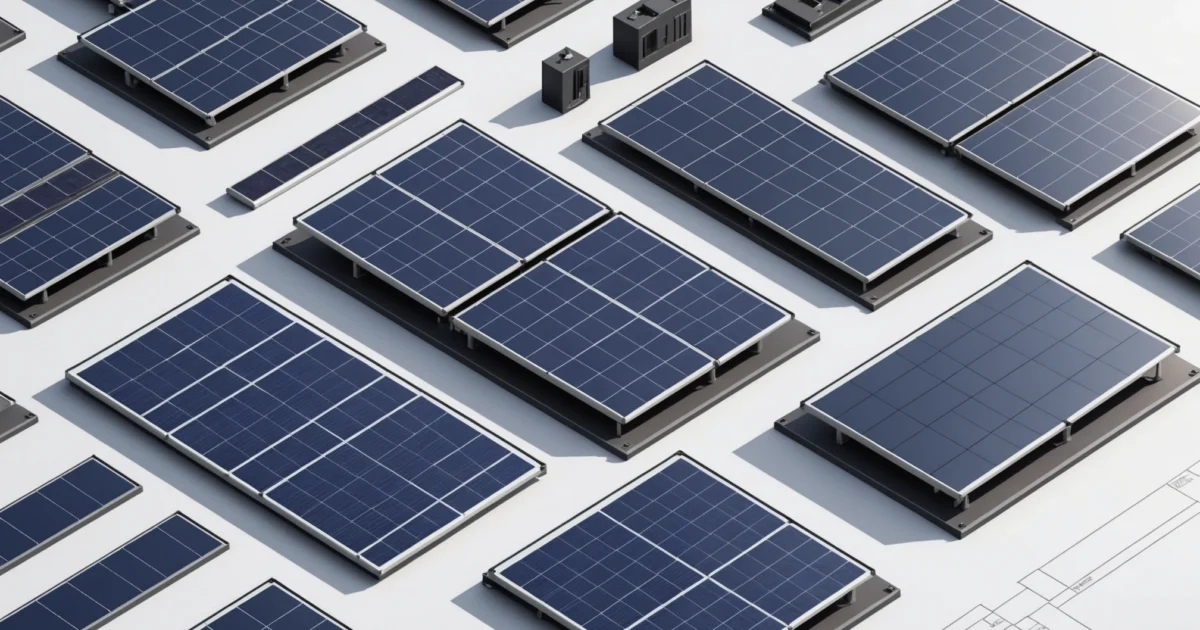
How big are solar panels? Most residential solar panels measure approximately 65 x 39 inches (165 x 99 cm) with a thickness of 1.5-2 inches and weigh between 40-50 pounds. However, solar panel dimensions vary significantly based on cell configuration, manufacturer specifications, and intended application.
Understanding solar panel sizes is crucial for planning your renewable energy installation. Standard panels come in different configurations, with 60-cell panels typically used for residential applications and 72-cell panels designed for commercial installations.
Panel dimensions directly impact power output, installation requirements, and roof space utilization. Moreover, different solar technologies like monocrystalline, polycrystalline, and thin-film panels offer varying size specifications and efficiency ratings.
TL;DR
- Standard residential panels: 65 x 39 inches, 40-50 pounds, 1.5-2 inches thick
- Panel types vary: 60-cell vs 72-cell configurations affect dimensions and wattage output
- Size impacts installation: Roof space, weight limits, and mounting requirements determine panel selection
Standard Solar Panel Dimensions and Specifications
Residential solar panels typically measure 65 x 39 inches (165 x 99 cm), creating a rectangular surface area of approximately 17.6 square feet. These standard dimensions accommodate the most common 60-cell configuration used in home installations. Furthermore, panel thickness ranges from 1.5 to 2 inches (35-50mm), providing structural integrity while maintaining manageable installation profiles.
Weight specifications for standard residential panels fall between 40-50 pounds (18-23 kg), depending on frame materials and glass thickness. Additionally, these weight parameters ensure compatibility with most residential roofing structures while maintaining durability standards. Commercial installations often require heavier panels due to larger cell configurations and reinforced construction.
60-Cell vs 72-Cell Panel Configurations
Panel cell count directly influences overall dimensions and power output capabilities. 60-cell panels measure approximately 65 x 39 inches and generate 250-400 watts, making them ideal for residential rooftops with space constraints. Conversely, 72-cell panels extend to roughly 77 x 39 inches and produce 300-450 watts, serving commercial applications where maximum power density matters most.
| Panel Type | Dimensions (inches) | Dimensions (cm) | Weight (lbs) | Typical Wattage |
|---|---|---|---|---|
| 60-Cell Residential | 65 x 39 x 1.5-2 | 165 x 99 x 3.5-5 | 40-50 | 250-400W |
| 72-Cell Commercial | 77 x 39 x 1.5-2 | 196 x 99 x 3.5-5 | 50-60 | 300-450W |
| Half-Cut Cell | 65 x 39 x 1.5-2 | 165 x 99 x 3.5-5 | 40-50 | 300-450W |
Commercial vs Residential Size Differences
Commercial solar installations utilize larger panels to maximize energy production per installation unit. These panels often measure 77-78 inches in length compared to residential panels’ 65-inch standard. Moreover, commercial panels incorporate additional reinforcement, increasing weight to 50-60 pounds while maintaining similar width specifications of 39 inches.
Residential panels prioritize compatibility with standard roof dimensions and weight limitations. Homeowners benefit from standardized 65-inch lengths that align with common rafter spacing and installation practices. Meanwhile, commercial installations can accommodate larger panels due to reinforced structural support and professional installation requirements.
Thickness and Weight Considerations
Standard panel thickness ranges from 35-50 millimeters (1.5-2 inches), with most manufacturers targeting 40mm for optimal balance. This thickness accommodates tempered glass front surfaces, silicon cell layers, and aluminum backing materials. Additionally, frame construction adds minimal thickness while providing essential structural support and mounting points.
Panel weight distribution affects installation planning and structural requirements. Monocrystalline panels typically weigh 40-45 pounds due to efficient cell construction, while polycrystalline variants may reach 50 pounds. Consequently, roof load calculations must account for total system weight, including mounting hardware and potential snow loads.
Installation Planning Tip
Understanding these standard specifications helps homeowners and installers plan effective solar systems. Panel dimensions determine roof coverage requirements, while weight specifications influence structural assessments and installation methods. Therefore, selecting appropriate panel sizes ensures optimal energy production within existing architectural constraints.
Solar Panel Size Variations by Type and Manufacturer
Solar panel dimensions vary significantly across different technologies and manufacturers, affecting installation planning and energy output calculations. Understanding these variations helps homeowners select optimal panels for their specific roof configurations and energy requirements. Furthermore, technological advances continue to influence panel sizing trends and manufacturing standards.
Monocrystalline Panel Dimensions and Characteristics
Monocrystalline panels typically measure 65 x 39 inches (1,650 x 990mm) for residential applications, maintaining consistent dimensions across most manufacturers. These panels feature uniform black cells arranged in precise grids, creating distinctive visual patterns. Additionally, premium monocrystalline models may extend to 77 inches in length for enhanced power output.
Cell arrangement in monocrystalline panels follows standardized configurations of 60 or 72 cells for residential and commercial applications respectively. Each individual cell measures approximately 6 inches square, contributing to overall panel dimensions. Moreover, manufacturers optimize cell spacing to maximize surface area utilization while maintaining structural integrity.
Polycrystalline Solar Panel Size Specifications
Polycrystalline panels share similar dimensional standards with monocrystalline variants, measuring 65 x 39 inches for most residential installations. However, their distinctive blue coloration and crystalline patterns differentiate them visually from monocrystalline alternatives. Consequently, homeowners can achieve consistent roof aesthetics regardless of chosen technology.
Manufacturing processes for polycrystalline panels create slightly thicker profiles, typically ranging from 40-45mm compared to monocrystalline variants. This thickness difference affects weight distribution and mounting requirements. Nevertheless, standard mounting systems accommodate both technologies without modification.
Thin-Film Solar Panel Measurements and Flexibility
Thin-film panels offer greater dimensional flexibility, ranging from compact 48 x 24 inches to expansive 72 x 40 inches depending on application requirements. Their lightweight construction enables larger panel sizes without exceeding structural load limits. Additionally, flexible thin-film variants can conform to curved surfaces and unconventional installations.
Thickness variations in thin-film technology span from 2-10mm for flexible applications to 25-35mm for rigid glass-backed panels. This versatility allows installation on weight-sensitive structures and portable applications. Furthermore, manufacturers customize thin-film dimensions for specific architectural requirements and aesthetic preferences.
| Panel Type | Standard Dimensions | Thickness Range | Weight Range |
|---|---|---|---|
| Monocrystalline | 65″ x 39″ (1,650 x 990mm) | 35-40mm | 40-45 lbs |
| Polycrystalline | 65″ x 39″ (1,650 x 990mm) | 40-45mm | 45-50 lbs |
| Thin-Film Rigid | 48-72″ x 24-40″ | 25-35mm | 25-35 lbs |
| Thin-Film Flexible | Custom sizes available | 2-10mm | 5-15 lbs |
Manufacturer-Specific Size Variations
SunPower panels maintain premium dimensions of 61.3 x 41.2 inches for their Maxeon series, optimizing power density through advanced cell technology. Their unique back-contact design eliminates front-surface grid lines, creating uniform panel appearance. Similarly, LG panels measure 65.7 x 39.4 inches with enhanced durability features.
Canadian Solar produces panels ranging from 65.0 x 39.1 inches to 78.7 x 39.4 inches across their residential and commercial product lines. Their HiKu series features larger dimensions for increased power output per panel. Meanwhile, Jinko Solar offers consistent 65.7 x 39.4 inch dimensions across most residential models.
Premium manufacturers like Panasonic and REC Solar maintain standardized dimensions while incorporating proprietary technologies. Panasonic’s HIT panels measure 62.6 x 41.5 inches with heterojunction cell technology. Conversely, REC’s Alpha series utilizes 67.6 x 39.8 inch dimensions with half-cut cell configurations.
Half-Cut Cell Panels and Dimensional Impact
Half-cut cell technology maintains standard panel dimensions while doubling cell count from 60 to 120 cells in residential panels. This innovation reduces resistive losses and improves shade tolerance without altering installation requirements. Therefore, half-cut panels fit existing mounting systems and roof layouts seamlessly.
Manufacturing processes for half-cut cells create identical external dimensions to traditional panels while modifying internal cell arrangement. Each half-cell measures approximately 3 x 6 inches compared to standard 6 x 6 inch cells. Consequently, installers can substitute half-cut panels without modifying system designs or structural calculations.
Performance benefits of half-cut technology include reduced hot-spot formation and enhanced energy production in partially shaded conditions. These advantages occur without dimensional penalties or installation complications. Additionally, renewable energy systems incorporating half-cut panels achieve improved reliability and longevity through reduced thermal stress.
Installation Planning Tip
Relationship Between Solar Panel Size and Power Output
Solar panel dimensions directly correlate with power output through wattage density and cell configuration. Standard residential panels measuring 65.7 x 39.4 inches typically produce between 300-450 watts, while commercial panels with 78.7 x 39.4 inch dimensions generate 400-550 watts. Therefore, larger panels accommodate more photovoltaic cells and deliver higher energy production.
Power density represents the relationship between panel size and electrical output per square foot. Modern panels achieve approximately 15-20 watts per square foot of surface area. However, efficiency improvements allow manufacturers to increase wattage without expanding physical dimensions through advanced cell technologies and optimized layouts.
Cell Configuration Impact on Panel Dimensions
Cell count determines panel size and power output relationships across different configurations. 60-cell panels measure 65.7 x 39.4 inches and produce 300-350 watts for residential applications. Meanwhile, 72-cell panels extend to 78.7 x 39.4 inches and generate 350-450 watts for commercial installations.
Advanced 144-cell panels maintain 78.7 x 39.4 inch dimensions while doubling cell density through half-cut technology. These panels achieve 450-550 watts by reducing cell size from 6 x 6 inches to 3 x 6 inches. Consequently, higher cell counts increase power output without proportional size increases.
| Cell Configuration | Dimensions (inches) | Power Range (watts) | Application |
|---|---|---|---|
| 60-cell | 65.7 x 39.4 | 300-350 | Residential |
| 72-cell | 78.7 x 39.4 | 350-450 | Commercial |
| 144-cell (half-cut) | 78.7 x 39.4 | 450-550 | High-efficiency |
Efficiency and Space Optimization
High-efficiency panels maximize power output within standard dimensions through improved cell technologies. Monocrystalline panels achieve 20-22% efficiency compared to 15-17% for polycrystalline alternatives. Therefore, efficient panels generate more electricity per square foot of roof space.
Premium manufacturers like SunPower and LG produce panels exceeding 400 watts within 65.7 x 39.4 inch residential dimensions. These panels utilize interdigitated back contact (IBC) technology and heterojunction cells to maximize space utilization. Additionally, renewable energy systems benefit from reduced installation footprints when using high-efficiency panels.
High-efficiency panels can produce 25% more power than standard panels within identical dimensions
Space-constrained installations particularly benefit from efficiency optimization strategies. Rooftops with limited area achieve higher energy production by selecting panels with superior watts-per-square-foot ratios. Furthermore, efficient panels reduce balance-of-system costs through fewer mounting components and simplified wiring configurations.
Bifacial Panel Sizing Considerations
Bifacial solar panels maintain standard dimensions while capturing sunlight from both front and rear surfaces. These panels typically measure 78.7 x 39.4 inches for commercial applications and 65.7 x 39.4 inches for residential use. However, bifacial technology increases effective power output by 10-25% through ground reflection and diffuse light capture.
Installation height affects bifacial panel performance more than traditional panels due to rear-side light exposure. Panels mounted 3-6 feet above ground achieve optimal rear irradiance compared to roof-mounted installations. Consequently, ground-mount systems maximize bifacial advantages while maintaining standard panel dimensions.
Bifacial panels require transparent or reflective backsheets instead of opaque materials used in monofacial designs. This modification maintains identical external dimensions while enabling rear light transmission. Additionally, frameless bifacial panels reduce shading on rear cells and improve aesthetic appeal without dimensional changes.
Space Requirements and Installation Considerations
Understanding roof space calculations for solar panel arrays requires precise measurement and strategic planning. Most residential installations need 100-400 square feet of unobstructed roof area to accommodate a typical 4-8 panel system. Additionally, installers must account for roof obstacles, structural limitations, and local building code requirements when determining feasible installation areas.
The 20% rule serves as a fundamental guideline for solar panel spacing on residential roofs. This regulation requires maintaining clearances of at least 3 feet from roof edges and 18 inches between panel rows to ensure firefighter access. Furthermore, these spacing requirements often reduce usable roof area by 15-25% compared to theoretical maximum coverage calculations.
Panel Spacing and Maintenance Access
Proper spacing requirements between panels facilitate essential maintenance activities and system performance optimization. Standard installations maintain 0.5-1 inch gaps between individual panels to accommodate thermal expansion and prevent mechanical stress. Moreover, these gaps enable air circulation that reduces operating temperatures and improves energy production efficiency.
Maintenance pathways require minimum 3-foot walkways along roof perimeters and between panel arrays exceeding 150 feet in length. Consequently, large commercial installations incorporate wider access corridors to support cleaning equipment and repair activities. These pathways consume approximately 8-12% of total roof area but ensure long-term system accessibility and safety compliance.
| Installation Type | Panel Spacing | Edge Clearance | Access Requirements |
|---|---|---|---|
| Residential Roof | 0.5-1 inch | 3 feet | 18-inch walkways |
| Commercial Roof | 1-2 inches | 3 feet | 3-foot corridors |
| Ground Mount | 2-6 inches | 10 feet | Vehicle access lanes |
Mounting System Footprint Impact
Mounting system components significantly affect overall installation footprint beyond panel dimensions alone. Rail-based mounting systems require additional 2-4 inches around panel perimeters for clamp placement and structural support. Similarly, ballasted ground-mount systems need 6-12 inch borders for concrete footings and stabilization equipment.
Microinverter installations demand extra spacing considerations compared to string inverter configurations. Each panel requires dedicated mounting hardware that increases individual panel footprint by approximately 5-8 square inches. However, microinverter systems eliminate the need for separate inverter mounting areas, potentially reducing overall system footprint in space-constrained installations.
Orientation and Tilt Angle Considerations
Optimal tilt angles create shadow patterns that influence panel spacing requirements in ground-mount installations. Panels tilted at 30-45 degrees cast shadows approximately 2.5-3 times their height during winter months when sun angles are lowest. Therefore, row spacing must accommodate these extended shadows to prevent inter-row shading losses.
South-facing orientations maximize energy production but may require modified spacing in certain geographical locations. Installations in northern latitudes benefit from steeper tilt angles (45-60 degrees) that necessitate increased row spacing of 12-18 feet between panel arrays. Conversely, installations near the equator utilize lower tilt angles (10-20 degrees) that reduce spacing requirements and increase land utilization efficiency.
Spacing Calculation Tip
Shading and Clearance Requirements
Shading analysis determines critical clearance distances from trees, buildings, and other obstructions that could impact panel performance. Objects casting shadows require setback distances calculated using the 4:1 rule – maintain horizontal distance four times the height difference between the obstruction and panel array. This calculation ensures minimal shading during peak production hours throughout the year.
Chimney and vent clearances follow specific safety protocols that vary by local building codes. Most jurisdictions require minimum 3-foot clearances from chimneys and 18-inch clearances from plumbing vents to prevent fire hazards and maintain proper ventilation. Additionally, HVAC equipment requires accessible clearances that may limit panel placement in surrounding roof areas.
Electrical clearance requirements mandate specific distances from power lines and electrical equipment for safety compliance. Panels must maintain minimum 10-foot clearances from overhead power lines and 3-foot clearances from electrical service equipment. These requirements often influence system design and may necessitate alternative mounting locations or reduced array sizes on constrained sites.
Understanding these comprehensive space requirements enables accurate system sizing and realistic energy production estimates. Professional installers conduct detailed site assessments to optimize panel placement within available space while maintaining safety compliance and maximizing energy output potential. For more information about renewable energy planning considerations, explore our comprehensive renewable energy guide.
Choosing the Right Solar Panel Size for Your Needs
Selecting appropriate solar panel dimensions involves balancing multiple factors beyond simple space availability. Furthermore, homeowners must consider energy requirements, structural limitations, and aesthetic preferences to create an optimal solar installation. The decision-making process requires careful evaluation of current and future energy needs alongside practical installation constraints.
Assessing Available Roof Space and Layout
Roof space assessment begins with accurate measurements of usable installation areas after accounting for required clearances. Moreover, roof orientation and tilt significantly impact panel placement options and energy production potential. South-facing surfaces with minimal shading provide optimal conditions for maximum energy generation throughout the day.
Complex roof layouts with multiple angles, dormers, or architectural features may require smaller panels for better fit optimization. Additionally, irregular roof shapes often benefit from modular panel arrangements that accommodate varying space constraints. Professional installers use specialized software to model different panel configurations and determine the most efficient layout for available space.
Space Optimization Tip
Balancing Panel Size with Energy Requirements
Energy consumption analysis determines the total wattage capacity needed to meet household electricity demands. Subsequently, this requirement influences whether larger high-wattage panels or smaller standard panels provide the most practical solution. Residential energy needs typically range from 6,000 to 12,000 kWh annually, requiring system capacities between 4kW and 8kW.
Larger panels with higher wattage ratings reduce the total number of units required for target capacity. Conversely, smaller panels offer greater flexibility in challenging installation spaces but may require more complex wiring configurations. The 20 rule for solar panels suggests sizing systems to produce approximately 20% more energy than current consumption to account for efficiency losses and future needs.
| Panel Size | Typical Wattage | Panels Needed (6kW System) | Best Application |
|---|---|---|---|
| Standard (65″ x 39″) | 300-400W | 15-20 panels | Most residential roofs |
| Large (77″ x 39″) | 400-500W | 12-15 panels | Spacious, unobstructed roofs |
| Compact (60″ x 35″) | 250-350W | 17-24 panels | Limited space, complex layouts |
Weight Limitations and Structural Considerations
Roof structural capacity determines the maximum panel weight that can be safely installed without compromising building integrity. Therefore, older homes or those with lightweight construction materials may require structural reinforcement before installation. Standard solar panels weigh between 35-50 pounds each, adding approximately 2-4 pounds per square foot to roof loading.
Structural engineers evaluate roof framing, age, and condition to establish safe weight limits for solar installations. Meanwhile, heavier panels with robust frames may require additional mounting points or reinforced attachment systems. Building codes typically require professional structural analysis for installations exceeding specific weight thresholds or on roofs older than 20 years.
Most residential roofs can support 2-4 pounds per square foot of additional solar panel weight without structural modifications
Aesthetic Preferences and Architectural Integration
Visual impact considerations influence panel size selection to maintain architectural harmony and neighborhood aesthetics. Furthermore, some homeowners prefer fewer large panels for a cleaner appearance, while others choose smaller panels for better proportional integration. Architectural integration involves matching panel frames, colors, and mounting systems to complement existing roof materials and home design.
Homeowner association guidelines and local zoning regulations may restrict panel visibility or require specific aesthetic standards. Consequently, these requirements often favor certain panel sizes or mounting configurations that minimize visual prominence. Low-profile mounting systems and panels with black frames typically provide more aesthetically pleasing installations that blend with darker roof materials.
Future Expansion Planning and Modular Sizing
Modular system design allows for future capacity expansion as energy needs grow or budget permits additional investment. Additionally, selecting standardized panel sizes facilitates easier system expansion using matching components and compatible mounting hardware. Future expansion planning requires reserving adequate roof space and ensuring electrical infrastructure can accommodate additional panels.
Electric vehicle adoption and home electrification trends increase household energy consumption, making expansion capability valuable for long-term planning. Similarly, battery storage integration may require additional panel capacity to charge storage systems while meeting daily consumption needs. Smart sizing strategies consider these evolving energy demands when determining initial system specifications and panel selection criteria.
- Reserve 20-30% additional roof space for future expansion
- Choose standardized panel sizes for component compatibility
- Plan electrical infrastructure to accommodate system growth
- Consider future energy needs from EVs and home electrification
- Evaluate battery storage requirements for expanded capacity
Frequently Asked Questions
What is the typical size of a solar panel?
The typical residential solar panel measures 65 x 39 inches (165 x 99 cm) with a thickness of 1.5-2 inches. These standard dimensions create approximately 17.6 square feet of surface area and weigh between 40-50 pounds. Commercial panels are larger, typically measuring 77 x 39 inches to accommodate more solar cells.
How big are solar panels in feet?
Standard residential solar panels measure approximately 5.4 x 3.25 feet (65 x 39 inches), covering about 17.6 square feet of surface area. Commercial panels are larger at roughly 6.4 x 3.25 feet. The thickness is typically 0.125 to 0.17 feet (1.5-2 inches).
What are solar panel dimensions in centimeters and millimeters?
In metric measurements, standard residential solar panels are 165 x 99 cm with a thickness of 35-50 mm. Commercial panels measure approximately 196 x 99 cm. These standardized dimensions ensure compatibility with mounting systems and installation practices worldwide.
How much do solar panels weigh in kilograms?
Residential solar panels typically weigh 18-23 kg (40-50 pounds), while commercial panels weigh 23-27 kg (50-60 pounds). The weight includes the aluminum frame, tempered glass, silicon cells, and backing materials. This weight distribution is important for roof load calculations during installation.
What's the difference between 60-cell and 72-cell solar panels?
60-cell panels measure 65 x 39 inches and are designed for residential use, producing 250-400 watts. 72-cell panels are larger at 77 x 39 inches, designed for commercial installations, and produce 300-450 watts. The additional cells in 72-cell panels increase both size and power output.
How many solar panels do I need for a 2000 square foot house?
A 2000 square foot house typically needs 15-25 solar panels, depending on energy consumption, roof orientation, and local sunlight conditions. With standard 400-watt panels measuring 65 x 39 inches each, you’d need approximately 300-450 square feet of roof space for the installation.
What is the 20 rule for solar panels?
The 20% rule refers to the maximum percentage of your roof area that should be covered by solar panels for optimal performance and safety. This ensures adequate spacing for maintenance access, prevents overloading roof structures, and allows for proper ventilation around panels.
Do different solar panel technologies have different sizes?
Yes, panel sizes vary by technology. Monocrystalline and polycrystalline panels typically follow standard dimensions (65 x 39 inches for residential). Thin-film panels can be manufactured in various custom sizes and are often larger but thinner. Half-cut cell panels maintain standard dimensions while offering improved efficiency.
How much roof space do I need for solar panels?
Each standard solar panel requires approximately 18-20 square feet of roof space, including necessary spacing for installation and maintenance. For a typical residential system of 20 panels, you’d need 360-400 square feet of suitable roof area with proper sun exposure and structural integrity.
What happens after 25 years of solar panel use?
After 25 years, solar panels typically retain 80-85% of their original efficiency and continue producing electricity for many more years. Most manufacturers provide 25-year performance warranties, but panels often last 30+ years. You can continue using them at reduced efficiency or consider replacement with newer, more efficient technology.
Are there size limitations for residential solar installations?
Yes, residential installations face several size constraints:
- Roof space: Available area after accounting for chimneys, vents, and shading
- Weight limits: Most residential roofs can support 2-4 pounds per square foot
- Local regulations: Building codes and HOA restrictions may limit system size
- Electrical capacity: Panel array size must match inverter and electrical system capacity
How do I calculate how many panels will fit on my roof?
To calculate panel capacity: Measure usable roof area → Divide by 18-20 sq ft per panel → Account for spacing and obstructions. For example, a 400 sq ft roof section could accommodate approximately 20-22 standard residential panels, considering proper spacing for installation and maintenance access.
You May Also Like
Do Smart Thermostats Really Save Money? (Honest Answer)

Spray Foam Insulation: Cost, Pros, Cons & Alternatives (2026)
Lithium vs Lead-Acid Solar Batteries: Which Is Best? (2026)