
Red Ryder BB Gun Christmas Story: History & Collectibles

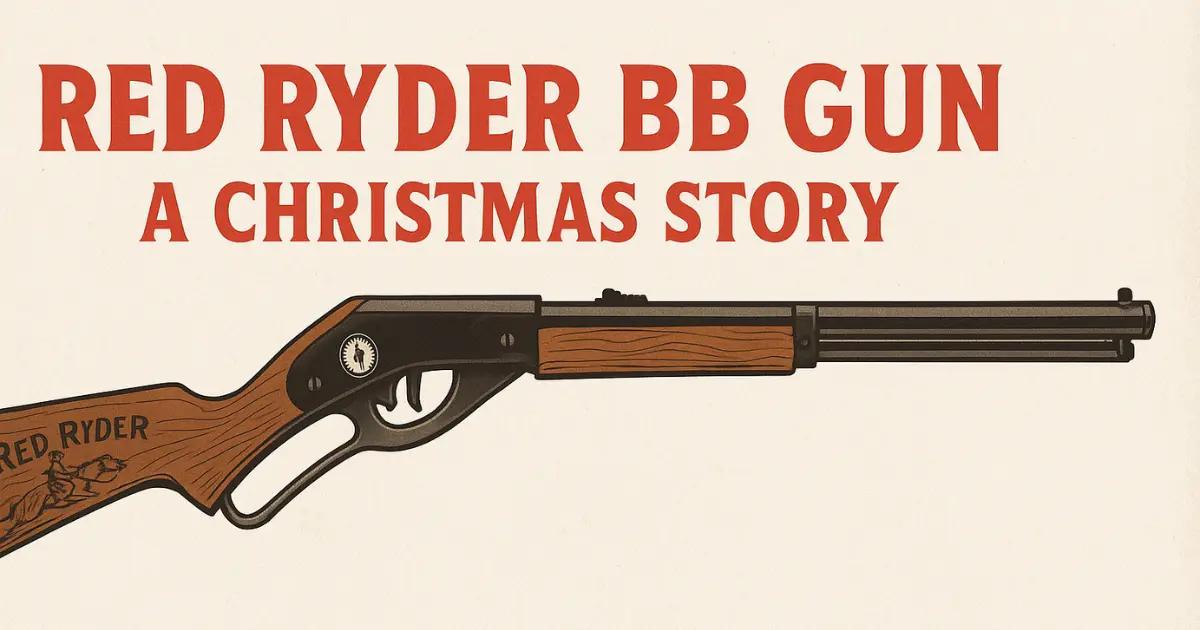
The Red Ryder BB gun holds a unique place in American Christmas tradition, forever immortalized by the 1983 film “A Christmas Story” where young Ralphie Parker desperately wants nothing more than the “Red Ryder Carbine Action 200-shot Range Model air rifle with a compass in the stock and this thing which tells time.” This iconic air rifle, manufactured by Daisy Manufacturing Company, has transcended its origins as a simple toy to become a cultural phenomenon that bridges generations. Whether you’re a collector seeking vintage models, a parent considering this classic gift, or simply a fan of the beloved holiday film, understanding the complete history of the Red Ryder BB gun reveals a fascinating intersection of American pop culture, nostalgia, and enduring Christmas traditions. The Red Ryder BB gun represents more than just a toy—it embodies a piece of Americana that continues to captivate families decades after its introduction.
The Red Ryder BB Gun in 'A Christmas Story': The Movie That Made It Famous
When director Bob Clark brought Jean Shepherd’s semi-autobiographical stories to life in “A Christmas Story,” he could hardly have predicted that the film would become a holiday staple, broadcast for 24 consecutive hours every Christmas on cable television. At the heart of young Ralphie’s Christmas obsession was the Red Ryder BB gun, specifically described as the “Red Ryder Carbine Action 200-shot Range Model air rifle.” The film’s portrayal of childhood longing transformed this particular air rifle from a popular toy into an enduring symbol of Christmas wishes.
The movie’s most memorable quote—”You’ll shoot your eye out!”—became permanently associated with the Red Ryder BB gun, repeated by Ralphie’s mother, his teacher Miss Shields, and even a department store Santa Claus. This catchphrase has entered the American lexicon, instantly recognizable even to those who haven’t seen the film. The Christmas Story BB gun scenes capture the universal experience of childhood desire, the anticipation of Christmas morning, and the generational divide between what children want and what adults deem appropriate.
What makes the film’s depiction so powerful is its authenticity. Set in the 1940s, the movie accurately reflects an era when BB guns were considered a rite of passage for American boys. Ralphie’s elaborate fantasies of defending his family from bandits with his Red Ryder rifle, his strategic campaign to convince every adult in his life of his need for this specific gift, and his ultimate Christmas morning triumph resonate with viewers because they tap into genuine childhood emotions and experiences.
The BB gun used in the actual filming was a Daisy Red Ryder model, though the movie’s specific description—with its compass in the stock and sundial—was a creative embellishment. Real Red Ryder models never came with these features, which has become a point of trivia among fans and collectors. This fictional enhancement actually added to the mystique, making Ralphie’s desired gift seem even more special and unattainable.
Real History of the Red Ryder BB Gun: Daisy Manufacturing Origins
The Daisy Red Ryder story begins not in the 1940s when “A Christmas Story” is set, but in 1940 when Daisy Manufacturing Company first introduced this iconic model. However, to understand the Red Ryder BB gun, we must first explore Daisy’s earlier history. The company began in 1882 in Plymouth, Michigan, initially as the Plymouth Iron Windmill Company. When a company employee invented an all-metal air rifle as a promotional giveaway, it proved so popular that Daisy shifted its entire focus to air rifle manufacturing.
By the 1930s, Daisy had established itself as America’s premier BB gun manufacturer. The company recognized the marketing potential of partnering with popular cultural characters, and in 1940, they struck a licensing deal with Stephen Slesinger, who held the rights to the Red Ryder character created by Fred Harman. This partnership would prove to be one of the most successful product tie-ins in American toy history.
The original Red Ryder BB gun featured a distinctive design that set it apart from other Daisy models. It incorporated a carved wooden stock with a branded image of Red Ryder and his horse Thunder, a lever-action mechanism that mimicked Winchester rifles, and a classic saddle ring. The rifle was designed to hold up to 650 BBs in its tube magazine, though the “200-shot” designation in the movie refers to an earlier marketing claim about effective shooting capacity.
Daisy’s manufacturing process evolved over the decades, but the Red Ryder model remained remarkably consistent in its core design. Early models from the 1940s featured all-metal construction with genuine wood stocks, while later versions incorporated more cost-effective materials. The company produced the Red Ryder continuously, with only minor modifications, making it one of the longest-running product lines in American manufacturing history.
The Red Ryder BB gun was priced affordably—originally retailing for around $2.95 in 1940, equivalent to roughly $60 today when adjusted for inflation. This accessible price point made it attainable for middle-class families, contributing to its widespread popularity. Daisy marketed the rifle heavily in comic books, magazines, and through mail-order catalogs, ensuring that boys across America knew exactly what they wanted for Christmas.
Why Ralphie Wanted a Red Ryder BB Gun: Cultural Significance of the 1940s
To understand why the Red Ryder BB gun held such appeal in the 1940s—and why “A Christmas Story” resonates so deeply—we must examine the cultural landscape of mid-20th century America. This was an era when outdoor play, self-reliance, and a connection to America’s frontier heritage were deeply valued. The BB gun represented a child’s first step toward independence and responsibility, a tangible symbol of growing up.
The 1940s were dominated by World War II and its aftermath, a time when American masculinity was closely tied to concepts of protection, marksmanship, and duty. Boys were encouraged to develop skills that would serve them as future soldiers and providers. A BB gun wasn’t merely a toy—it was an educational tool that taught firearm safety, patience, aim, and respect for weapons. Fathers saw giving their sons a BB gun as an important milestone in their development.
The Red Ryder character himself embodied idealized American values. Created by Fred Harman in 1938, Red Ryder was a cowboy hero who appeared in comic strips, comic books, movies, and radio shows. He represented justice, courage, and the romantic vision of the American West. For boys of the 1940s, owning a Red Ryder BB gun meant possessing a tangible connection to their hero, transforming backyard play into adventures on the frontier.
The specific appeal of the Daisy Red Ryder over other BB gun models lay in its authentic appearance. Unlike cheaper, simpler air rifles, the Red Ryder featured a lever-action mechanism that mimicked the Winchester rifles used in Western films and by real cowboys. This mechanical authenticity made children feel they were handling a “real” rifle, not just a toy. The weight, the action of cocking the lever, and the satisfying click of the mechanism all contributed to its desirability.
Christmas gift-giving in the 1940s carried different expectations than today. Families typically gave fewer, more meaningful presents, and a Red Ryder BB gun represented a significant investment. The anticipation Ralphie experiences in the film—checking department store windows, dropping hints in school essays, and lying awake Christmas Eve—accurately reflects how children approached their single most-wanted gift. The BB gun wasn’t one item on a long list; it was often the gift a boy hoped for above all others.
Red Ryder BB Gun Models: Original vs. Movie Replica Versions
Understanding the different Red Ryder BB gun models requires distinguishing between vintage originals, standard production models, and special edition replicas created after “A Christmas Story” became a cultural phenomenon. Each category serves different purposes for collectors, shooters, and fans of the film.
The earliest Red Ryder models from 1940-1952 are considered the most valuable by collectors. These featured all-steel construction, genuine walnut stocks, and the original Red Ryder and Thunder branding burned into the wood. The metal components were blued steel, and the overall build quality exceeded later production runs. These vintage models typically command prices ranging from $150 to $400 depending on condition, with mint-condition examples in original boxes fetching even higher prices.
From the 1950s through the 1970s, Daisy made gradual changes to reduce manufacturing costs while maintaining the Red Ryder’s essential character. Stocks transitioned from walnut to stained hardwood and eventually to wood composites. Metal components shifted from blued steel to painted finishes. Despite these changes, the fundamental design—lever action, saddle ring, and Red Ryder branding—remained consistent. These mid-century models are more affordable for collectors, typically ranging from $75 to $200.
The modern production Red Ryder BB gun that Daisy manufactures today retains the classic appearance while incorporating contemporary materials and safety features. Current models feature wood-grained plastic stocks, though Daisy still offers limited runs with genuine wood. The rifle maintains its 650-BB capacity, lever-action mechanism, and iconic styling. These new models retail for approximately $40-$60, making them accessible for families wanting to continue the tradition.
Following the success of “A Christmas Story,” Daisy recognized the marketing opportunity and created special Red Ryder BB gun Christmas Story replica editions. These commemorative models feature special packaging with movie imagery, certificates of authenticity, and sometimes include reproductions of vintage advertising. While these replicas don’t possess the historical value of true vintage models, they appeal to movie fans and make excellent display pieces. Special edition models typically retail between $100-$150.
One crucial distinction for collectors: despite Ralphie’s detailed description in the film, no Red Ryder model ever came with “a compass in the stock and this thing which tells time.” This was a fictional embellishment by screenwriter Jean Shepherd. Some unscrupulous sellers have modified Red Ryders by adding compasses, but these are not authentic features and actually decrease collector value. Authentic Red Ryder models are valued for their original, unmodified condition.
Collecting Red Ryder BB Guns: Values, Authenticity & What to Look For
For collectors interested in acquiring Red Ryder BB guns, understanding authenticity markers and value factors is essential. The market includes everything from pristine museum-quality pieces to well-used examples that show decades of backyard adventures. Knowing what to look for can mean the difference between a worthwhile investment and an overpriced reproduction.
The most valuable Red Ryder models are those from the first decade of production (1940-1950). Key authenticity markers for these early guns include: all-metal construction with blued finish, genuine walnut stocks with the Red Ryder and Thunder brand burned (not stamped) into the wood, and the original Daisy markings on the barrel. The lever should operate smoothly, and the saddle ring should be present and original. Complete examples in their original boxes with paperwork can command premium prices, sometimes exceeding $500 for exceptional specimens.
Condition dramatically affects Red Ryder BB gun value. Collectors use standard grading scales: Mint (appears unfired, 98-100% original finish), Excellent (minimal wear, 90-98% finish), Very Good (normal wear, 75-90% finish), Good (well-used, 50-75% finish), and Fair (heavy wear, functional). A mint-condition 1940s Red Ryder might sell for $400, while the same model in good condition might bring only $150. Functionality matters less than cosmetic condition for display collectors, though shooters prefer working examples.
Authentication challenges arise because Daisy produced millions of Red Ryders over eight decades. Reproduction parts, refinished stocks, and “Franken-guns” assembled from multiple donors exist in the marketplace. Red flags include: stocks that appear too new or have modern staining, metal components with inconsistent aging, missing or replaced saddle rings, and barrels with re-stamped markings. Serious collectors should request detailed photographs and, when possible, examine guns in person before purchasing.
Serial numbers and date codes help establish authenticity and age. Early Daisy Red Ryders used date codes stamped into the barrel, typically consisting of a letter-number combination. Reference guides and collector forums can help decode these markings. However, not all Red Ryders were consistently marked, particularly during wartime production when manufacturing priorities shifted. The absence of clear dating doesn’t necessarily indicate a reproduction, but it does complicate valuation.
Beyond individual guns, Red Ryder collectibles encompass original packaging, advertising materials, instruction manuals, and promotional items. A complete original box can add 30-50% to a gun’s value. Vintage Red Ryder advertisements, store displays, and promotional materials from the 1940s-1950s are collectible in their own right. Comic books featuring Red Ryder, especially those with Daisy advertisements, appeal to crossover collectors interested in both firearms and comic memorabilia.
The “A Christmas Story” connection has created a parallel collecting market. Props from the film, promotional materials from the movie’s release, and officially licensed merchandise all have value to fans. However, these items should be distinguished from vintage Red Ryder collecting—they represent movie memorabilia rather than historical firearms. That said, the film has undeniably increased general interest in Red Ryder BB guns, supporting values across all categories.
Where to Buy an Official Red Ryder BB Gun Today
Purchasing a new official Red Ryder BB gun today is straightforward, with multiple retail channels offering current production models. Daisy continues manufacturing the Red Ryder, ensuring that new generations can experience this American classic. Understanding where to buy and what to expect helps ensure you receive an authentic Daisy product rather than an imitation.
Major sporting goods retailers stock the Red Ryder BB gun year-round, with increased inventory during the Christmas season. Stores like Dick’s Sporting Goods, Bass Pro Shops, Cabela’s, and Academy Sports + Outdoors typically carry the standard model. These retailers offer the advantage of in-person examination before purchase, knowledgeable staff who can answer questions, and immediate availability. Prices at major retailers generally range from $40-$60 for the standard wood stock model.
Online marketplaces provide convenient purchasing options with competitive pricing. Amazon, Walmart.com, and the official Daisy website all sell new Red Ryder BB guns with home delivery. Online shopping offers the advantage of customer reviews, easy price comparison, and often lower prices than brick-and-mortar stores. However, shipping restrictions apply in some jurisdictions—certain states and cities regulate BB gun sales, requiring age verification or prohibiting shipment altogether. Always verify local laws before ordering.
For collectors seeking vintage models or special editions, specialized channels are necessary. Gun shows, antique stores, and estate sales occasionally feature vintage Red Ryders, though prices vary widely based on seller knowledge. Online auction sites like eBay host active markets for both vintage and collectible Red Ryders, but buyers should exercise caution, carefully examining photos and seller ratings. Dedicated airgun collector forums and websites like Airgun Depot or Pyramyd Air sometimes list vintage models from reputable sellers.
The official Daisy website offers the complete current lineup, including special editions and commemorative models. Buying directly from Daisy ensures authenticity and supports the original manufacturer. The company occasionally releases limited edition models with enhanced features or special packaging, available exclusively through their website. Signing up for Daisy’s mailing list provides notification of special releases and promotional pricing.
When purchasing for a child, consider package deals that include safety glasses, BBs, and targets. Many retailers offer “starter kits” that provide everything needed for safe shooting. These packages typically cost $60-$80 and represent good value compared to purchasing components separately. Daisy also sells official accessories including leather slings, replacement parts, and maintenance kits.
Timing your purchase can affect pricing. The Red Ryder BB gun sees predictable price fluctuations, with lowest prices typically occurring in late winter and early spring (January-March) when demand drops after Christmas. Prices increase as the holiday season approaches, with November and December commanding premium pricing. Patient shoppers can save 20-30% by purchasing off-season.
Red Ryder BB Gun Safety: The 'You'll Shoot Your Eye Out' Legacy
The famous warning “You’ll shoot your eye out!” from “A Christmas Story” humorously captures legitimate safety concerns surrounding Red Ryder BB guns. While the movie played this caution for comedy, responsible BB gun ownership requires serious attention to safety practices. Understanding proper handling, age-appropriate use, and safety equipment ensures that the Red Ryder remains a positive introduction to shooting sports.
The question “What age for Red Ryder BB gun?” doesn’t have a universal answer, as maturity varies among children. Daisy officially recommends their Red Ryder for ages 10 and up, but parental judgment should prevail. The key factors are whether a child can follow instructions consistently, understands consequences, demonstrates impulse control, and shows respect for the weapon. Some responsible 8-year-olds may be ready with close supervision, while some 12-year-olds may not. Adult supervision is non-negotiable regardless of age.
Proper eye protection is absolutely essential—the movie’s repeated warning has basis in reality. BBs can ricochet unpredictably off hard surfaces, and eye injuries from BB guns do occur. ANSI-rated shooting glasses should be worn by both the shooter and anyone nearby. Regular eyeglasses or sunglasses provide insufficient protection. Quality shooting glasses cost $10-$20 and should be considered mandatory equipment, not optional.
The fundamental safety rules for firearms apply equally to BB guns: treat every gun as if it’s loaded, never point at anything you don’t intend to shoot, keep your finger off the trigger until ready to fire, and be certain of your target and what’s beyond it. These principles should be taught and reinforced before a child ever handles a Red Ryder. Many families establish a safety test that children must pass before being allowed to shoot unsupervised.
Regarding “Is it bad to dry fire a Red Ryder BB gun?”—the answer is no, dry firing (firing without a BB) will not damage a Red Ryder. Unlike some firearms where dry firing can damage firing pins, the Red Ryder’s spring-piston mechanism is designed to withstand dry firing. However, it’s still good practice to avoid unnecessary dry firing, as it provides no benefit and wastes the spring’s compression cycles. Always assume the gun is loaded and follow proper safety protocols regardless.
Safe shooting environments are crucial. Appropriate backstops prevent BBs from traveling beyond the intended target area. Commercial BB gun traps work well, or you can create backstops using thick cardboard, old blankets, or specially designed pellet traps. Shooting should occur only in controlled environments—never in areas where people, pets, or property could be accidentally struck. Basements, garages, and outdoor ranges with proper backstops are suitable; shooting in neighborhoods, near roads, or toward buildings is dangerous and often illegal.
Storage safety prevents unauthorized access. BB guns should be stored unloaded, with BBs stored separately, in a locked cabinet or safe. Trigger locks provide additional security. Even though BB guns aren’t regulated like firearms in most jurisdictions, treating them with the same security measures instills good habits and prevents accidents. Children should never have unsupervised access to BB guns or ammunition.
The Christmas Tradition: Why Families Still Give Red Ryder BB Guns
Despite decades of cultural changes, the Red Ryder BB gun remains a meaningful Christmas gift for many American families. This enduring tradition connects generations, serving as a tangible link between grandparents who received Red Ryders in the 1950s and grandchildren receiving them today. Understanding why this tradition persists reveals deeper values about family, heritage, and coming-of-age rituals.
For many families, giving a Red Ryder represents a rite of passage, marking a child’s transition toward greater responsibility and independence. The gift carries implicit trust—parents are entrusting their child with something that requires maturity, judgment, and self-control. This symbolic weight makes the Red Ryder more meaningful than typical toys. The ceremony of presenting the BB gun, often accompanied by safety instruction and serious conversation, creates a memorable moment that children carry into adulthood.
The “A Christmas Story” connection has undeniably reinforced the tradition. Families who watch the film annually as part of their holiday celebrations see the Red Ryder as part of their Christmas narrative. Parents who grew up watching Ralphie’s quest identify with his longing and want to recreate that magic for their own children. The movie has transformed the Red Ryder from simply a product into a cultural touchstone, a shared reference point that spans generations.
Nostalgia plays a powerful role. Adults who received Red Ryders as children remember the excitement, the backyard adventures, and the sense of growing up. Giving their children or grandchildren the same gift creates continuity, a sense that despite rapid technological and social change, some traditions endure. In an era of digital entertainment and virtual experiences, the Red Ryder offers tangible, outdoor activity—a connection to simpler times that many parents consciously seek for their children.
The affordability and accessibility of the Red Ryder support its continued popularity. Unlike many nostalgic items that have become expensive collectibles, new Red Ryders remain reasonably priced at $40-$60. This accessibility means families across economic circumstances can participate in the tradition. The gun’s durability—many Red Ryders function perfectly after decades of use—means they can be passed down, becoming genuine family heirlooms.
Educational value contributes to parental willingness to give BB guns. Responsible Red Ryder ownership teaches firearm safety, marksmanship fundamentals, patience, and respect for weapons—skills that translate to safe handling of actual firearms later in life. Many shooting sports enthusiasts trace their interest to childhood BB gun experiences. Organizations like 4-H and Boy Scouts incorporate BB gun shooting into their programs, recognizing its educational merit.
The tradition also reflects broader values about outdoor activity, self-reliance, and traditional skills. Families who prioritize hunting, target shooting, or outdoor recreation see the Red Ryder as an introduction to these pursuits. The gift represents not just a toy, but an invitation into family traditions and activities that parents value and want to share with their children.
Red Ryder Character History: From Comic Strip to Christmas Icon
The Red Ryder character whose name graces the iconic BB gun has a rich history that predates the Daisy partnership and extends far beyond it. Understanding Red Ryder’s origins provides context for why Daisy chose this particular character and how a comic strip cowboy became permanently associated with Christmas and childhood memories.
Fred Harman created Red Ryder in 1938 as a newspaper comic strip distributed by NEA Service. The character was a cowboy hero operating in the contemporary American West (1930s-1940s), accompanied by his Navajo companion Little Beaver and his horse Thunder. Red Ryder embodied the idealized Western hero—honest, brave, skilled with weapons, and dedicated to justice. The strip quickly gained popularity, eventually appearing in over 750 newspapers with an estimated readership of 14 million.
Harman’s artistic style and storytelling resonated with Depression-era America. Red Ryder offered escapism and clear moral narratives during uncertain times. Unlike some comic cowboys who were purely fictional, Harman drew inspiration from real Western history and his own Colorado ranching background, giving the strip authenticity that readers appreciated. The character’s popularity spawned an extensive merchandising empire—unusual for comic strips of that era.
The Daisy partnership in 1940 represented one of the earliest and most successful comic character licensing deals. Daisy recognized that attaching a popular hero’s name to their air rifle would dramatically increase appeal to young boys. The arrangement benefited both parties: Daisy gained a powerful marketing hook, while Harman and his licensors received royalties and increased character visibility. The Red Ryder BB gun became the most visible and enduring piece of Red Ryder merchandise.
Beyond the BB gun, Red Ryder appeared in numerous media formats. Republic Pictures produced 23 Red Ryder films between 1940-1950, starring various actors including Wild Bill Elliott and Allan “Rocky” Lane. A Red Ryder radio show aired from 1942-1951, bringing the character’s adventures to life for millions of listeners. Dell Comics published Red Ryder comic books from 1940-1957, with some issues selling over one million copies. This multimedia presence ensured that boys of the 1940s-1950s encountered Red Ryder across multiple platforms, reinforcing the character’s cultural prominence.
The character’s values aligned perfectly with mid-century American ideals. Red Ryder never killed his adversaries, instead using his shooting skills to disarm them. He showed respect for Native American culture through his friendship with Little Beaver, progressive for its time. He represented law and order without being a formal lawman, embodying frontier self-reliance. These qualities made Red Ryder an acceptable hero for parents to endorse, unlike some more violent Western characters.
As Western entertainment declined in the 1960s-1970s, Red Ryder faded from popular culture. The comic strip ended in 1964, the films and radio show had long since concluded, and comic book publication ceased. However, the Daisy Red Ryder BB gun continued production, gradually becoming more famous than the character it was named after. Today, many people recognize the Red Ryder BB gun without knowing anything about the original comic strip cowboy—a curious inversion where the licensed product outlived the licensor’s fame.
“A Christmas Story” completed this transformation. The film never shows Red Ryder comics or explains who the character is—the BB gun exists independently of its namesake. For generations born after 1970, “Red Ryder” means the BB gun from the Christmas movie, not Fred Harman’s cowboy hero. This evolution demonstrates how cultural artifacts can take on new meanings across generations, their origins fading while their symbolic significance grows.
Red Ryder BB Gun in Pop Culture: Beyond A Christmas Story
While “A Christmas Story” represents the most famous Red Ryder BB gun appearance in popular culture, the iconic air rifle has appeared in numerous other contexts, each contributing to its status as an American cultural symbol. These references span literature, music, television, and film, demonstrating the Red Ryder’s deep penetration into the American consciousness.
Jean Shepherd, the writer and narrator of “A Christmas Story,” first told the Red Ryder story in his 1966 book “In God We Trust: All Others Pay Cash.” The chapter “Duel in the Snow, or Red Ryder Nails the Cleveland Street Kid” recounted young Shepherd’s obsession with obtaining the BB gun and his Christmas morning triumph. This literary version preceded the film by 17 years and appeared in Playboy magazine before book publication, introducing the Red Ryder Christmas quest to adult audiences who remembered similar childhood longings.
The Red Ryder has appeared in numerous coming-of-age narratives beyond Shepherd’s work. Authors writing about mid-20th century American childhoods frequently reference Red Ryder BB guns as shorthand for a particular era and set of values. The gun serves as a cultural marker, instantly placing narratives in a specific time and social context. Its appearance in memoirs, novels, and essays about American boyhood has become almost clichéd—a testament to how thoroughly the Red Ryder represents a particular slice of American experience.
Music references include country songs celebrating rural childhoods and rock songs invoking nostalgia. The Red Ryder appears in lyrics as a symbol of simpler times, lost innocence, or traditional American values. These musical references typically don’t focus on the gun itself but use it as a cultural touchstone that audiences immediately recognize and understand emotionally.
Television shows have featured Red Ryder BB guns in episodes dealing with childhood memories, Christmas traditions, or generational conflicts. Sitcoms have used the “You’ll shoot your eye out” quote for comedic effect, relying on audience familiarity with “A Christmas Story.” Period dramas set in the 1940s-1960s sometimes include Red Ryders as authentic props, adding historical accuracy to their depictions of American childhood.
The gun has appeared in discussions about American gun culture, serving as a relatively non-controversial entry point for debates about firearms, safety, and childhood. Unlike discussions of actual firearms, conversations about BB guns generally avoid partisan division, allowing broader cultural commentary. Sociologists and cultural critics have analyzed the Red Ryder as representing American attitudes toward weapons, masculinity, and childhood independence.
Advertising and marketing frequently reference the Red Ryder, either directly or through “A Christmas Story” imagery. The gun’s instant recognizability makes it useful for evoking nostalgia in campaigns targeting adults who grew up in the 1950s-1980s. Companies selling products unrelated to firearms or toys use Red Ryder imagery to communicate “authentic American tradition” or “classic Christmas memories.”
The internet age has spawned countless memes, GIFs, and social media references to the Red Ryder BB gun. The “You’ll shoot your eye out” quote appears in comment threads, reaction images, and humorous warnings. Online communities dedicated to “A Christmas Story” share Red Ryder collectibles, restoration projects, and memories. YouTube features numerous videos of Red Ryder reviews, historical documentaries, and shooting demonstrations, introducing the classic air rifle to digital-native generations.
Museums have recognized the Red Ryder’s cultural significance. The Daisy Airgun Museum in Rogers, Arkansas, displays the complete history of Red Ryder production, including vintage models, advertising materials, and memorabilia. The museum dedicated to “A Christmas Story” in Cleveland, Ohio (where the film was shot), features Red Ryder exhibits and sells replicas. These institutional recognitions elevate the BB gun from mere toy to genuine Americana worthy of preservation and study.
The Red Ryder’s appearance in these diverse contexts demonstrates its evolution from product to cultural symbol. It represents not just itself—a specific air rifle model—but broader concepts: American childhood, Christmas traditions, generational continuity, and the bittersweet passage from innocence to experience. Few consumer products achieve this level of symbolic weight, making the Red Ryder BB gun a genuinely unique artifact of American culture.
As we continue into the 21st century, the Red Ryder BB gun shows no signs of fading from American consciousness. New generations discover “A Christmas Story” each holiday season, ensuring continued interest. Daisy’s ongoing production means the tradition can continue for families who value it. Whether as a collectible, a functional air rifle, a movie prop replica, or a symbolic gift marking a child’s growing maturity, the Red Ryder maintains its place in American culture—a remarkable achievement for a product first introduced over 80 years ago. The complete story of the Red Ryder BB gun encompasses manufacturing history, pop culture phenomenon, collecting hobby, and living tradition, making it far more than just a toy, but rather a genuine piece of American heritage that continues to connect generations through shared experiences and cherished memories.
Frequently Asked Questions
What BB gun is in A Christmas Story?
The BB gun featured in “A Christmas Story” is the Red Ryder Carbine Action 200-shot Range Model air rifle, manufactured by Daisy Manufacturing Company. In the movie, Ralphie specifically wants the version “with a compass in the stock and this thing which tells time,” though this exact model was created for the film and never actually existed as a production model. The real Red Ryder BB gun has been in continuous production since 1940 and remains one of America’s most iconic air rifles.
What caliber is a Red Ryder BB gun?
The Red Ryder BB gun fires .177 caliber steel BBs, which is the standard size for most BB guns. These BBs measure approximately 4.5mm in diameter and are the most common ammunition type for air rifles designed for youth and beginners. The gun holds up to 650 BBs in its gravity-fed magazine and shoots at a velocity of approximately 350 feet per second.
What age is appropriate for a Red Ryder BB gun?
Daisy recommends the Red Ryder BB gun for shooters aged 10 years and older, always under adult supervision. However, the appropriate age depends on the individual child’s maturity level, ability to follow safety rules, and physical capability to handle the air rifle responsibly. Many families introduce the Red Ryder as a first firearm to teach gun safety fundamentals and marksmanship basics in a controlled environment.
How much is an old Red Ryder BB gun worth today?
Vintage Red Ryder BB gun values range from $50 to over $500 depending on age, condition, and rarity. Early models from the 1940s in excellent condition with original boxes can command $300-$500 or more among collectors. Standard vintage models from the 1950s-1970s in good working condition typically sell for $75-$200, while common models in average condition may only be worth $50-$100.
Is the Red Ryder BB gun real or just from the movie?
Yes, the Red Ryder BB gun is absolutely real and has been manufactured by Daisy since 1940, over 40 years before “A Christmas Story” was released. The movie made the already-popular air rifle into a cultural icon, but Daisy had already sold millions of units before the film. The only fictional element is the specific “compass in the stock” model that Ralphie wanted, which was a prop created for the movie.
What is the Red Ryder BB gun good for?
The Red Ryder BB gun is excellent for teaching firearm safety, developing marksmanship skills, and casual backyard target shooting. It’s ideal for plinking at tin cans, paper targets, and approved BB gun targets at close range. While not powerful enough for hunting or pest control, it serves as a perfect introductory firearm for young shooters to learn proper handling, aiming, and trigger control in a safe, low-power platform.
Is it bad to dry fire a Red Ryder BB gun?
No, dry firing a Red Ryder BB gun will not damage it, as the spring-piston mechanism is designed to handle firing without a BB loaded. Unlike some precision air rifles, the Red Ryder’s simple and robust design can withstand dry firing without harm to internal components. However, it’s still good practice to avoid excessive dry firing and to always load a BB when shooting for the best longevity of the rifle.
How can I tell how old my Red Ryder BB gun is?
You can date a Red Ryder BB gun by examining the model number, stampings, and design features. Models marked “1938B” reference the patent date, not the manufacturing year, so look for other indicators like the Daisy logo style, stock design, and any date codes stamped on the metal. Pre-1952 models have a distinctive cocking lever design, while post-1972 models feature different stock materials and safety mechanisms that help narrow down the production era.
Are vintage Red Ryder BB guns worth collecting?
Yes, vintage Red Ryder BB guns have become increasingly collectible, especially early models from the 1940s-1960s in original condition. Collectors seek out rare variations, limited editions, special commemorative models, and guns with original packaging. The connection to “A Christmas Story” has further boosted collector interest, with special movie-edition models and vintage guns from the film’s era commanding premium prices at auctions and collector shows.
Can you still buy a Red Ryder BB gun with a compass in the stock?
Yes, Daisy now produces special edition Red Ryder BB guns that include a compass in the stock, directly inspired by “A Christmas Story.” These commemorative models were created specifically to match Ralphie’s dream gun from the movie and are marketed as collector’s items. While the original 1940s Red Ryder never came with a compass, these modern tribute editions allow fans to own the iconic rifle exactly as described in the film.
You May Also Like

333 Angel Number Meaning: Love, Twin Flame, Creativity & Why You Keep Seeing It

222 Angel Number Meaning: Love, Twin Flame, Money & Why You Keep Seeing It

Angel Numbers and Their Meanings: The Complete Guide (2026)