Kumar Sangakkara: Cricket Career, Stats & Legacy Explained

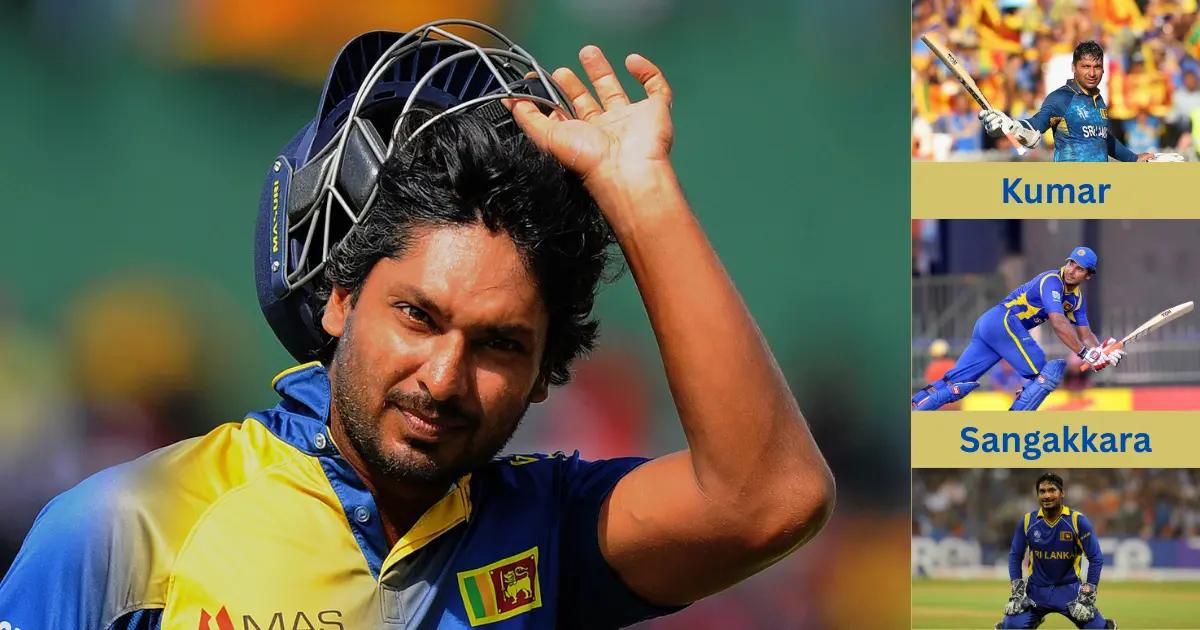
Kumar Sangakkara stands as one of cricket’s most elegant and accomplished players, a Sri Lankan cricket legend who revolutionized the wicketkeeper-batsman role while amassing statistics that place him among the all-time greats. With over 28,000 international runs, 63 centuries, and a batting average that rivals the sport’s finest, Sangakkara’s career statistics tell only part of the story. His technical mastery, intellectual approach to the game, and graceful stroke play made him a nightmare for bowlers across all formats. Whether keeping wickets or batting without the gloves, this left-handed maestro redefined what excellence looks like in modern cricket, earning recognition from the ICC Hall of Fame and respect from every corner of the cricketing world.
Who Is Kumar Sangakkara? Cricket Legend Profile
Kumar Chokshanada Sangakkara, born on October 27, 1977, in Matale, Sri Lanka, is widely regarded as one of the greatest batsmen in cricket history and arguably the finest wicketkeeper-batsman the sport has ever seen. Standing at 5’11” and batting left-handed, Sangakkara combined technical perfection with an almost scholarly understanding of the game that set him apart from his contemporaries.
What made Kumar Sangakkara famous extends beyond mere numbers. His ability to construct innings with surgical precision, adapt to any match situation, and deliver under pressure became his trademark. Unlike many wicketkeeper-batsmen who were selected primarily for their glovework with batting as a secondary skill, Sangakkara was a world-class batsman who also happened to keep wickets brilliantly—a distinction that fundamentally changed how teams approached the wicketkeeper-batsman position.
Throughout his international career spanning from 2000 to 2015, Sangakkara represented Sri Lanka in 134 Test matches, 404 One Day Internationals (ODIs), and 56 Twenty20 Internationals (T20Is). His contributions extended beyond personal achievements; he was instrumental in Sri Lanka’s golden era of cricket, forming legendary partnerships with players like Mahela Jayawardene and helping elevate Sri Lankan cricket to unprecedented heights on the world stage.
Early Life and Cricket Journey: From Colombo to International Stardom
Kumar Sangakkara’s journey to cricket greatness began in the cultural heart of Sri Lanka. Born into a family with legal and academic traditions, his father, K. Sangakkara, was a prominent lawyer, which instilled in young Kumar a disciplined, analytical mindset that would later define his approach to cricket. The Kumar Sangakkara family valued education highly, and he attended Trinity College, Kandy, one of Sri Lanka’s most prestigious schools with a rich cricket heritage.
At Trinity College, Sangakkara’s talent blossomed rapidly. He captained the school cricket team and quickly established himself as a prodigious talent with both bat and gloves. His performances in school cricket caught the attention of national selectors, and he progressed through Sri Lanka’s age-group teams, representing the Under-19 side before making his first-class debut for Nondescripts Cricket Club in Colombo.
Sangakkara’s international debut came on July 5, 2000, in an ODI against Pakistan in Multan. His Test debut followed later that year against South Africa in Galle, where he scored 23 and 35—modest beginnings for what would become an extraordinary career. Initially selected primarily as a wicketkeeper, Sangakkara worked tirelessly on his batting technique, spending countless hours in the nets refining his craft and studying the game’s nuances.
The turning point came in 2003 when Sangakkara scored his maiden Test century against Pakistan in Lahore, a magnificent 230 that announced his arrival as a world-class batsman. This innings demonstrated not just his technical ability but also his mental fortitude and capacity for long, match-defining innings—qualities that would become his hallmark.
Career Statistics and Records That Define Greatness
The Kumar Sangakkara career statistics are nothing short of extraordinary, placing him in elite company among cricket’s all-time greats. In Test cricket, Sangakkara amassed 12,400 runs at an average of 57.40, with 38 centuries and 52 half-centuries. These numbers become even more impressive when considering he scored 6,207 of those runs while keeping wickets, maintaining an average of 48.94 as a wicketkeeper-batsman—figures that dwarf most specialist batsmen.
In ODI cricket, Sangakkara’s dominance was equally pronounced. He accumulated 14,234 runs at an average of 41.98, with 25 centuries and 93 half-centuries across 404 matches. His strike rate of 78.86 demonstrated his ability to balance accumulation with acceleration, adapting seamlessly to different match situations and formats. The Kumar Sangakkara total runs across all international formats stands at 28,016, placing him fourth on the all-time list behind only Sachin Tendulkar, Ricky Ponting, and Jacques Kallis.
Among the most remarkable Kumar Sangakkara records are his four consecutive centuries in ODI World Cups during the 2015 tournament—a feat unprecedented in cricket history. He scored 105* against Bangladesh, 117* against England, 104 against Australia, and 124 against Scotland in consecutive matches, demonstrating consistency that defied belief. This achievement alone cements his legacy as one of the greatest World Cup performers ever.
Sangakkara’s wicketkeeping records are equally impressive. He holds 182 Test dismissals (151 catches and 31 stumpings) and 402 ODI dismissals (383 catches and 99 stumpings), making him one of the most successful wicketkeeper-batsmen in terms of dismissals. His ability to maintain elite batting standards while performing wicketkeeping duties set a new benchmark for the role.
Kumar Sangakkara Stats Against Each Country
Analyzing Kumar Sangakkara stats against each country reveals his consistency across all conditions and oppositions. Against Australia, one of cricket’s toughest opponents, he averaged 51.66 in Tests with 1,241 runs. Against India, he accumulated 1,346 Test runs at 67.30, including five centuries. His performances against Pakistan were equally dominant, with 1,516 runs at 60.64, while against England he scored 1,256 runs at 40.51.
In ODI cricket, Sangakkara’s record against India stands out with 1,075 runs at 42.00, while against Australia he scored 1,016 runs at 39.07. His ability to perform consistently against all opponents, in both home and away conditions, distinguishes him from many players who excel primarily in familiar environments.
Revolutionary Wicketkeeper-Batsman Role: How Sangakkara Changed the Game
Before Kumar Sangakkara, the wicketkeeper batsman role was often viewed as a compromise—teams selected players who could keep wickets adequately and contribute useful runs down the order. Sangakkara fundamentally challenged this paradigm by proving that a wicketkeeper could be the team’s best batsman, batting in the top order and dominating world-class bowling attacks while maintaining elite standards behind the stumps.
Sangakkara’s technical batting prowess was extraordinary. His left-handed stance was textbook perfect, with a high backlift, still head, and impeccable balance. His cover drives were poetry in motion—timed rather than hit, the ball racing to the boundary with minimal apparent effort. His ability to play both pace and spin with equal comfort made him effective in all conditions, from the bouncy pitches of Australia to the turning tracks of the subcontinent.
What truly set Sangakkara apart was his cricket intelligence. He approached batting like a chess grandmaster, constantly thinking several moves ahead, identifying bowlers’ patterns, and exploiting field placements with surgical precision. His shot selection was exemplary; he rarely played rash strokes, preferring to build innings methodically while capitalizing on scoring opportunities when they arose.
Behind the stumps, Sangakkara was equally accomplished. His glovework was clean and efficient, with excellent footwork and soft hands that made difficult takes look routine. His understanding of the game helped him position himself optimally for different bowlers and batsmen, while his communication with bowlers and fielders demonstrated leadership qualities that would later serve him well as captain.
The decision to occasionally give up wicketkeeping duties to focus purely on batting—particularly in Test cricket—was strategic rather than a reflection of declining skills. This allowed Sangakkara to conserve energy for batting while Sri Lanka could field specialist wicketkeepers, ultimately benefiting the team’s overall performance. Even when not keeping, his batting average actually improved to an astonishing 66.78, proving he was a batting genius first who happened to be an excellent wicketkeeper.
Most Memorable Innings and Match-Winning Performances
Kumar Sangakkara’s career is studded with innings that will be remembered for generations. His 192 against Australia in Hobart in 2007 showcased his ability to dominate world-class bowling attacks, combining elegant stroke play with fierce concentration over nearly 11 hours at the crease. This innings helped Sri Lanka secure a famous victory and demonstrated Sangakkara’s capacity for marathon efforts.
The 287 he scored against South Africa in Colombo in 2006 remains one of Test cricket’s great innings. Batting for over 14 hours, Sangakkara constructed a masterpiece of patience and precision, wearing down one of the world’s best bowling attacks through sheer technical excellence and mental fortitude. This innings exemplified his ability to bat for extended periods without losing concentration or form.
In ODI cricket, his 169 against South Africa in the 2015 World Cup quarterfinal was a match-winning masterclass. Chasing 300-plus, Sangakkara anchored the innings with a combination of classical stroke play and calculated aggression, guiding Sri Lanka to victory in a high-pressure knockout match. This innings demonstrated his ability to perform when it mattered most.
The four consecutive centuries in the 2015 World Cup deserve special mention. Starting with 105* against Bangladesh, followed by 117* against England, 104 against Australia, and 124 against Scotland, this unprecedented sequence showcased consistency that bordered on the supernatural. Each innings was different in approach and execution, yet all demonstrated his complete mastery of ODI batting.
His 199 against Pakistan in Lahore in 2002, falling one run short of a double century, was a heartbreaking yet brilliant innings that announced his arrival as a world-class batsman. The grace with which he accepted the dismissal, despite the disappointment, reflected the sportsmanship and character that defined his career.
Sri Lankan Cricket Captaincy and Leadership Legacy
Kumar Sangakkara’s tenure as Sri Lankan cricket captain was marked by both success and controversy, ultimately revealing the complexities of leading a national team in a cricket-obsessed nation. He captained Sri Lanka in 38 Test matches (19 wins, 13 losses, 6 draws) and 56 ODIs (31 wins, 24 losses, 1 no result), leading the team from 2009 to 2011.
As captain, Sangakkara brought an intellectual approach to leadership, emphasizing strategic planning, player development, and tactical innovation. His calm demeanor and analytical mindset helped Sri Lanka compete effectively against stronger opponents, while his own batting performances continued at an elite level, proving he could handle the dual pressures of captaincy and personal performance.
The 2011 World Cup represented both the pinnacle and the end of Sangakkara’s captaincy. He led Sri Lanka to the final, where they faced India in Mumbai. Despite Sangakkara’s own excellent tournament (465 runs at 93.00), Sri Lanka lost the final, and the disappointment led to his resignation as captain shortly afterward. The decision was partly influenced by the immense pressure and criticism that comes with leading Sri Lanka’s cricket team.
Beyond the statistics, Sangakkara’s leadership legacy includes mentoring younger players, advocating for better player conditions, and speaking out on issues affecting cricket. His famous 2011 MCC Spirit of Cricket Cowdrey Lecture addressed corruption, governance issues, and the need for reform in Sri Lankan cricket—a courageous speech that demonstrated his commitment to the game’s integrity beyond personal achievements.
Test Cricket Dominance: The Numbers Behind the Legend
Sangakkara Test cricket performances represent the format’s highest standards of excellence. His 38 Test centuries place him joint-fifth on the all-time list, while his average of 57.40 ranks among the greatest batsmen in history. What makes these numbers even more remarkable is the consistency across different conditions and against varied bowling attacks.
Sangakkara scored centuries in 11 different countries, demonstrating his adaptability to different pitches, climates, and bowling styles. His record in Asia was expectedly strong, but his performances in Australia (5 centuries), England (4 centuries), and South Africa (3 centuries) proved he wasn’t just a flat-track bully or home-ground hero.
His conversion rate of Test fifties to centuries (38 hundreds from 52 fifties) shows his ability to capitalize on good starts and build substantial innings. Too many batsmen get to fifty and fail to convert; Sangakkara had the concentration and technique to push on regularly, often turning hundreds into double hundreds (11 double centuries in his career).
The partnership records Sangakkara established with Mahela Jayawardene are legendary. They shared 6,554 runs in Test cricket across 62 partnerships, including a world-record 624-run stand against South Africa in 2006. This partnership exemplified their understanding, complementary styles, and shared commitment to Sri Lankan cricket’s success.
In Test cricket’s different batting positions, Sangakkara’s versatility shone through. He batted primarily at number three and five, adapting his game to different match situations. Whether rebuilding after early wickets or accelerating with the tail, he possessed the technical and mental skills to excel in any scenario.
ODI and T20 Career Highlights
While Test cricket showcased Sangakkara’s technical mastery, his ODI career demonstrated his adaptability to cricket’s faster formats. His 25 Kumar Sangakkara ODI centuries place him among the format’s most prolific century-makers, while his 93 half-centuries show remarkable consistency across 404 matches spanning 15 years.
In ODI cricket, Sangakkara evolved his game to meet format demands. Early in his career, he was primarily an accumulator, rotating strike and building innings steadily. As limited-overs cricket became more aggressive, he added power-hitting to his repertoire without sacrificing his classical technique. His strike rate of 78.86, while not explosive by modern standards, was highly effective for his era and role.
World Cup performances defined Sangakkara’s ODI legacy. Across five World Cup tournaments (2003, 2007, 2011, 2015), he scored 1,532 runs at an average of 56.74, including five centuries. His 2015 World Cup was particularly extraordinary—scoring 541 runs at 108.20, including those four consecutive centuries, in what would be his final World Cup appearance.
In T20 cricket, Sangakkara’s impact was more limited but still significant. Playing 56 T20Is, he scored 1,382 runs at 31.40 with a strike rate of 119.55. While not his strongest format, he contributed meaningfully to Sri Lanka’s T20 campaigns, including their 2014 World T20 final appearance. His T20 franchise career was more extensive, playing in the IPL, Caribbean Premier League, and various domestic T20 leagues worldwide.
The 2011 World Cup final, though ending in defeat, featured one of Sangakkara’s finest ODI innings. His 48 off 67 balls in a difficult chase against India showcased his ability to construct innings under immense pressure, even though the team ultimately fell short. The grace and dignity he showed in defeat earned him respect far beyond Sri Lanka.
Awards, Honors, and Hall of Fame Recognition
The Kumar Sangakkara achievements extend far beyond statistics to include numerous prestigious awards and honors that recognize his contributions to cricket. In 2011, he was named Wisden’s Leading Cricketer in the World, one of cricket’s most coveted individual honors. He also won the ICC Cricketer of the Year award and was named to the ICC Test Team of the Year multiple times.
In 2012, Sangakkara became the first non-British president of the Marylebone Cricket Club (MCC), cricket’s most prestigious institution. This appointment recognized not just his cricketing excellence but his contribution to the game’s governance, integrity, and global development. His tenure as MCC president from October 2019 to October 2020 (extended due to COVID-19) saw him advocate for cricket’s expansion and modernization.
The ICC Cricket Hall of Fame inducted Sangakkara in 2021, cementing his legacy among cricket’s immortals. This honor, reserved for players who have made outstanding contributions to the game, placed him alongside legends like Sachin Tendulkar, Brian Lara, and Sir Vivian Richards. His induction speech characteristically focused on gratitude to teammates, coaches, and family rather than personal achievements.
Sri Lanka honored Sangakkara with numerous national awards, recognizing his service to the country through cricket. Beyond official honors, he earned respect from opponents, commentators, and fans worldwide for his sportsmanship, integrity, and the grace with which he played the game. Tributes from rival players consistently highlighted not just his skill but his character and the respect he showed to everyone involved in cricket.
Life After Cricket: Commentary, Coaching, and MCC Presidency
Since his Kumar Sangakkara retirement from international cricket in 2015, he has remained deeply involved in the sport through multiple roles. His transition to cricket commentary has been seamless, with his insightful analysis, articulate communication, and deep understanding of the game making him one of the most respected voices in cricket broadcasting. He regularly commentates for major networks covering international cricket, bringing the same intelligence to the commentary box that he displayed at the crease.
Sangakkara has also ventured into coaching and mentoring roles. He served as a mentor and batting consultant for various franchises in T20 leagues worldwide, sharing his technical knowledge and strategic insights with younger players. His approach to coaching emphasizes fundamentals, mental preparation, and situational awareness—the same principles that guided his own career.
His role as MCC president from 2019 to 2020 allowed him to influence cricket’s governance and development at the highest level. During his tenure, he advocated for expanding cricket’s global reach, improving playing conditions for cricketers worldwide, and addressing issues of inequality and access in the sport. His famous Cowdrey Lecture in 2011 had already established him as a thoughtful voice on cricket’s challenges; the MCC presidency gave him a platform to effect change.
Beyond cricket, Sangakkara has engaged in various business ventures and philanthropic activities. He has been involved in sports management, cricket academies, and initiatives promoting youth cricket development in Sri Lanka. His commitment to giving back to the game and his country reflects the values that defined his playing career.
Kumar Sangakkara Net Worth and Personal Life
The Kumar Sangakkara net worth is estimated to be between $25-30 million USD, accumulated through his international cricket career, franchise cricket contracts, endorsements, commentary work, and business ventures. While not reaching the financial heights of players like Virat Kohli (whose net worth exceeds $120 million) or even teammates like Lasith Malinga (estimated at $13-15 million) and Sanath Jayasuriya (estimated at $10-12 million), Sangakkara’s earnings reflect his status as one of cricket’s elite players during his era.
His IPL contracts, particularly with Kings XI Punjab, Deccan Chargers, and Sunrisers Hyderabad, contributed significantly to his wealth. Additionally, his work as a commentator and analyst for major cricket broadcasts provides substantial ongoing income. The Kumar Sangakkara house in Colombo reflects his success, though he maintains a relatively private lifestyle compared to many modern cricket celebrities.
Regarding Kumar Sangakkara religion, he was raised Buddhist, which is the predominant religion in Sri Lanka. However, Sangakkara has spoken about his secular worldview and the importance of respecting all faiths and beliefs. This question—”Is Kumar Sangakkara a Hindu or Buddhist?”—arises frequently, and the answer is that while culturally Buddhist, he has expressed humanistic values that transcend religious boundaries.
The Kumar Sangakkara wife, Yehali Sangakkara, has been his partner since their marriage in 2002. Yehali, whose maiden name was Yehali Perera, has largely stayed out of the public spotlight, supporting Kumar’s career while maintaining her own professional life. The couple has twin children, born in 2009, and the Kumar Sangakkara family maintains a relatively private existence despite his public profile.
Information about Kumar Sangakkara wife age and detailed personal information remains private, as both Kumar and Yehali have chosen to keep their family life separate from his cricket celebrity. This discretion has earned them respect for maintaining boundaries between public achievement and private life. The Kumar Sangakkara son and daughter, the twins, are occasionally mentioned in interviews but are shielded from excessive media attention.
Kumar Sangakkara Age and Current Activities
As of 2024, Kumar Sangakkara age is 46 years old (born October 27, 1977). Despite being retired from international cricket for nearly a decade, he remains actively involved in the sport through commentary, occasional franchise cricket appearances, and administrative roles. His fitness and passion for cricket suggest he will remain a prominent figure in the sport for years to come.
Legacy and Impact on Modern Cricket
Kumar Sangakkara’s legacy extends far beyond his impressive statistics and records. He fundamentally changed how cricket views the wicketkeeper-batsman role, proving that a keeper could be the team’s premier batsman rather than a batting all-rounder who happens to keep wickets. Modern wicketkeeper-batsmen like Jos Buttler, Quinton de Kock, and Rishabh Pant owe a debt to the path Sangakkara pioneered.
His influence on Sri Lankan cricket is immeasurable. Along with contemporaries like Mahela Jayawardene, he helped sustain Sri Lanka’s competitive edge during a golden era that followed the retirements of legends like Sanath Jayasuriya and Muttiah Muralitharan. His professionalism, work ethic, and commitment to excellence set standards that continue to inspire young Sri Lankan cricketers.
The question “Who is better, Kumar Sangakkara or Ricky Ponting?” frequently arises in cricket debates. While Ponting’s captaincy achievements and World Cup victories give him certain advantages, Sangakkara’s superior batting average (57.40 vs. 51.85 in Tests), his dual role as wicketkeeper-batsman, and his consistency across all conditions make a compelling case. Ultimately, both are among cricket’s greatest, and comparing them diminishes neither’s achievements.
Sangakkara’s impact transcends cricket. His articulate advocacy for players’ rights, his courageous speeches on corruption and governance, and his commitment to cricket’s integrity have made him a respected voice on sports ethics and administration. His 2011 Cowdrey Lecture remains one of cricket’s most important speeches, addressing uncomfortable truths about Sri Lankan cricket’s governance with honesty and eloquence.
For future generations, Sangakkara represents the ideal cricketer: technically brilliant, mentally strong, ethically sound, and gracious in both victory and defeat. His career demonstrates that excellence comes from dedication, intelligence, and respect for the game—lessons that transcend cricket and apply to any pursuit of mastery.
The elegance of his stroke play, the precision of his technique, and the grace of his character combined to create a cricketer who embodied the sport’s finest traditions while pushing its boundaries forward. Whether keeping wickets or batting without gloves, captaining his country or mentoring young players, Kumar Sangakkara approached every role with the same commitment to excellence that defined his legendary career. His legacy as one of cricket’s greatest players is secure, but his impact as a person of integrity and intelligence may ultimately prove even more enduring.
Frequently Asked Questions
What is Kumar Sangakkara famous for?
Kumar Sangakkara is famous for being one of cricket’s greatest wicketkeeper-batsmen and one of the most elegant left-handed batsmen in the sport’s history. He scored over 28,000 international runs across all formats with 63 centuries, revolutionizing the wicketkeeper-batsman role by proving that a keeper could maintain world-class batting standards. His technical mastery, intellectual approach to the game, and graceful stroke play made him a legend of Sri Lankan cricket and earned him recognition as one of the finest players to ever grace the sport.
What are the major accomplishments of Kumar Sangakkara?
Kumar Sangakkara’s accomplishments include scoring over 28,000 international runs, hitting 63 international centuries, and maintaining a Test batting average above 57. He holds the record for most runs in a single World Cup (2015) and became the first player to score four consecutive ODI centuries in World Cup history. Additionally, he served as Sri Lanka’s captain, was named ICC Cricketer of the Year, and was inducted into the ICC Cricket Hall of Fame in 2012.
How many World Cups has Kumar Sangakkara won?
Kumar Sangakkara never won a Cricket World Cup, though he came agonizingly close on multiple occasions. He was part of the Sri Lankan team that reached the finals in 2007, 2009 (T20 World Cup), and 2011, but lost all three finals. Despite not winning the ultimate prize, his performances in World Cup tournaments were exceptional, particularly his record-breaking 2015 World Cup where he scored 541 runs.
Who is the best wicketkeeper batsman ever?
Kumar Sangakkara is widely considered among the greatest wicketkeeper-batsmen in cricket history, alongside Adam Gilchrist and MS Dhoni. While Gilchrist revolutionized aggressive keeping, and Dhoni excelled in limited-overs cricket with his finishing abilities, Sangakkara’s batting statistics are superior with over 28,000 international runs and a Test average exceeding 57. The debate ultimately depends on whether you prioritize pure batting excellence, where Sangakkara excels, or all-round keeping and captaincy skills.
What records does Kumar Sangakkara hold?
Kumar Sangakkara holds several prestigious cricket records, including being the first batsman to score four consecutive ODI centuries (achieved during the 2015 World Cup). He holds the record for most runs in a single World Cup tournament with 541 runs in 2015. Sangakkara also holds the record for most Test dismissals by a Sri Lankan wicketkeeper and is one of only 14 batsmen to score over 12,000 Test runs, placing him among cricket’s elite run-scorers across all formats.
Is Kumar Sangakkara a Hindu or Buddhist?
Kumar Sangakkara follows Buddhism, which is the predominant religion in Sri Lanka. He has spoken publicly about how Buddhist philosophy has influenced his approach to cricket and life, emphasizing mindfulness, discipline, and mental clarity. His thoughtful and intellectual approach to the game reflects these philosophical influences that shaped both his playing career and his eloquent post-retirement commentary work.
What is the specialty of Kumar Sangakkara?
The specialty of Kumar Sangakkara lies in his elegant left-handed batting technique combined with exceptional wicketkeeping skills. His textbook stroke play, particularly his cover drives and flicks through the leg side, made him one of cricket’s most aesthetically pleasing batsmen to watch. Beyond his technical brilliance, Sangakkara’s intellectual approach to the game, his ability to construct innings across all conditions, and his consistency in maintaining world-class batting averages while keeping wickets set him apart from his contemporaries.
How rich is Kumar Sangakkara?
Kumar Sangakkara’s net worth is estimated to be between $25-30 million USD, accumulated through his illustrious international cricket career, franchise cricket leagues, and post-retirement work as a commentator and cricket administrator. His earnings came from Sri Lanka Cricket contracts, IPL stints with teams like Sunrisers Hyderabad and Kings XI Punjab, county cricket with Surrey, and various brand endorsements. Since retirement, he has remained financially successful through commentary roles, his position as MCC president, and involvement in cricket administration.
Who is better, Kumar Sangakkara or MS Dhoni?
Kumar Sangakkara and MS Dhoni excel in different aspects of wicketkeeper-batsman cricket, making direct comparison challenging. Sangakkara has superior batting statistics with over 28,000 international runs and a Test average above 57, while Dhoni’s strengths lie in his captaincy record, finishing abilities in limited-overs cricket, and lightning-fast stumping skills. Sangakkara is generally considered the better pure batsman, while Dhoni’s legacy includes winning multiple ICC trophies as captain and revolutionizing the finisher role in ODI cricket.
Who is the best wicket-keeper in Sri Lanka?
Kumar Sangakkara is widely regarded as the best wicketkeeper-batsman in Sri Lankan cricket history, though the debate includes other talented keepers like Romesh Kaluwitharana and current players. Sangakkara’s combination of world-class batting (over 28,000 international runs) with competent wicketkeeping skills makes him unmatched in Sri Lankan cricket. While he eventually gave up keeping in Test cricket to focus on batting, his overall contribution to Sri Lankan cricket as both keeper and batsman remains unparalleled in the nation’s cricket history.
You May Also Like

Tom Walter Team Building Through Charity: Leadership Insights

Sonya C Miller Net Worth, Biography & No Limit Records

Matthew Lillard Net Worth, Career & Shaggy Voice Actor Facts