Drew Brees NBC Debut: Internet Reacts to His New Hair

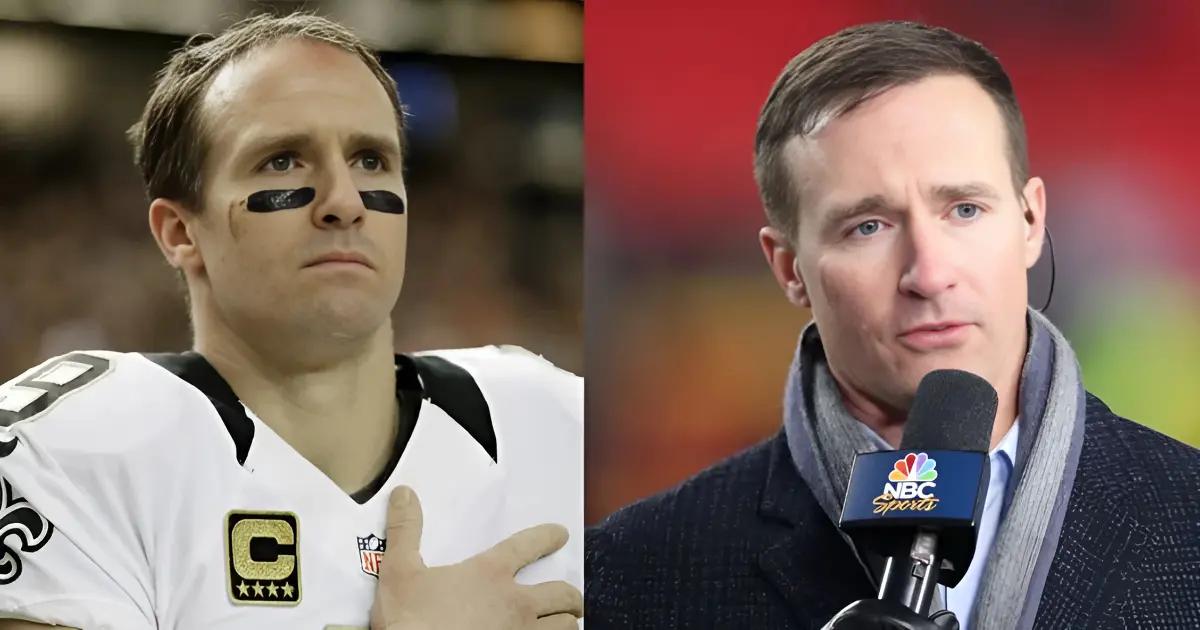
When Drew Brees made his NBC debut as a sports analyst in September 2021, football fans tuned in expecting expert commentary from the legendary quarterback. What they didn’t expect was to be completely distracted by his dramatically different appearance. The internet immediately erupted with comments, memes, and speculation about Drew Brees’ new hair, which looked noticeably fuller and thicker than it had during his final playing seasons. The viral moment overshadowed much of the actual football analysis, turning what should have been a routine broadcasting debut into one of the most talked-about moments in sports media that year.
The former New Orleans Saints quarterback’s transition from the gridiron to the broadcast booth was highly anticipated, but his transformed hairline became the unexpected headline. Social media platforms exploded with side-by-side comparisons, witty observations, and genuine curiosity about what procedure or treatment could have produced such remarkable results. This moment highlighted how even the most accomplished athletes aren’t immune to public scrutiny about their appearance, while also sparking broader conversations about hair restoration treatments and the pressures of appearing on national television.
Drew Brees' NBC Debut: What Happened
Drew Brees officially joined NBC Sports as a football analyst in May 2021, shortly after announcing his retirement from professional football. His first appearance came during NBC’s coverage of the 2021 NFL season, where he was positioned as a key member of the network’s studio team. The network had high expectations for Brees, banking on his 20-year NFL career, Super Bowl championship, and reputation as one of the most intelligent quarterbacks to ever play the game.
The debut itself featured Brees providing analysis alongside other NBC Sports personalities, breaking down plays and offering insights that only someone with his experience could provide. His commentary was knowledgeable and well-prepared, reflecting the same meticulous attention to detail that made him successful during his playing days. However, within minutes of his first appearance, Twitter and other social media platforms began buzzing—not about his analytical skills, but about his dramatically different appearance.
Viewers immediately noticed that Brees appeared with a significantly fuller head of hair compared to his final seasons with the New Orleans Saints. During his later playing years, Brees had sported a noticeably receding hairline, which had become part of his recognizable appearance. The stark contrast between his on-field look and his broadcasting debut look was impossible to ignore, leading to an avalanche of commentary that quickly overshadowed the actual football content.
The Hair Transformation That Broke the Internet
The transformation of Drew Brees’ new hair became an instant viral sensation, generating more online discussion than many of the actual games being broadcast. What made the moment particularly noteworthy was the dramatic nature of the change—this wasn’t a subtle improvement but a complete reversal of years of visible hair loss. The internet’s fascination with celebrity transformations found a perfect target in Brees’ new appearance.
Social media users began creating comparison images, placing screenshots from his recent Saints games next to his NBC debut footage. The difference was striking: where there had been a receding hairline and thinning crown, there now appeared to be a full, thick head of hair with a restored hairline. The transformation was so complete that many viewers initially wondered if they were looking at the same person.
The timing of the revelation added to the intrigue. Brees had retired in January 2021 and made his NBC debut in September of the same year, giving him approximately eight months between his final game and his first broadcast appearance. This timeline became a subject of speculation, as experts and amateur observers alike debated what procedures could produce such results in that timeframe.
What elevated this from a simple observation to a cultural moment was the sheer volume and creativity of the internet’s response. Memes flooded social media, with users joking about everything from the quality of NBC’s makeup department to theories about what Brees had done during his retirement months. The moment transcended sports coverage and entered the realm of pop culture phenomenon, discussed not just by football fans but by anyone who appreciated the absurdity of a hair transformation overshadowing a Hall of Fame quarterback’s career transition.
Before and After: Drew Brees' Hair Change
To fully appreciate the magnitude of the transformation, it’s essential to examine Drew Brees’ hair journey throughout his playing career. During his early years with the San Diego Chargers and the beginning of his tenure with the New Orleans Saints, Brees had a relatively full head of hair. However, as his career progressed through the 2010s, his hairline began to recede noticeably, particularly at the temples and crown.
By the time of his final seasons from 2018 to 2020, Brees’ hair loss had become quite pronounced. Game footage and press conference appearances showed significant thinning across the top of his head, with his hairline having receded several inches from where it had been in his younger years. This was a completely normal progression for many men in their late thirties and early forties, and Brees never appeared particularly concerned about it during his playing days.
The “after” images from his NBC debut told a completely different story. Brees appeared with what looked like a fully restored hairline, pushed forward to where it might have been in his twenties or early thirties. The density of hair across his entire scalp appeared dramatically increased, with no visible thinning or bald spots. The hair also appeared darker and more uniform in color, contributing to an overall more youthful appearance.
Hair restoration experts who commented on the transformation noted several possibilities. The completeness of the change suggested either an extensive hair transplant procedure, possibly using advanced techniques like Follicular Unit Extraction (FUE), or the use of a high-quality hair system (commonly known as a toupee or hairpiece). Some speculated about the possibility of multiple procedures or a combination of treatments including hair transplants, scalp micropigmentation, and pharmaceutical interventions like finasteride or minoxidil.
Internet Reactions and Social Media Buzz
The social media response to Drew Brees’ NBC debut was immediate, overwhelming, and often hilarious. Twitter became ground zero for the conversation, with “Drew Brees” and “Drew Brees hair” trending nationally within hours of his first appearance. Users from all backgrounds—sports fans, casual observers, and even celebrities—weighed in with their takes on the transformation.
Many of the initial reactions expressed genuine shock and disbelief. Comments like “Wait, is that really Drew Brees?” and “I literally didn’t recognize him” flooded timelines. Some users created elaborate before-and-after comparison images, placing screenshots side by side with arrows pointing out the specific areas of change. The visual evidence was so compelling that it became difficult to focus on anything else he was saying during the broadcast.
The meme community quickly mobilized, producing content that ranged from gentle ribbing to outright comedy. Some compared Brees’ transformation to other famous hair-related moments in pop culture, while others joked about the apparent requirement for broadcasters to have perfect hair. One popular meme format showed Brees’ progression from college to retirement to NBC, with the final image showing more hair than the first, captioned with variations of “the Benjamin Button of hairlines.”
Not all reactions were purely comedic. Many users expressed admiration for Brees taking steps to address something that clearly bothered him, with comments praising him for doing what made him feel confident. Others used the moment to discuss their own experiences with hair loss and restoration, creating surprisingly thoughtful conversations about male grooming, aging, and self-image in the public eye.
Sports media personalities and fellow broadcasters also chimed in, some defending Brees’ right to privacy regarding his appearance, while others couldn’t resist making lighthearted jokes. The conversation extended beyond Twitter to Instagram, Facebook, Reddit, and even TikTok, where users created video compilations set to music, documenting the transformation. The viral nature of the moment demonstrated how quickly and completely the internet can seize upon an unexpected detail and turn it into a cultural touchstone.
Did Drew Brees Get a Hair Transplant?
The question of whether Drew Brees got a hair transplant became one of the most searched queries following his NBC appearance, though Brees himself never publicly confirmed or denied any specific procedure. The speculation was fueled by the dramatic and seemingly permanent nature of the change, which suggested a surgical intervention rather than temporary solutions like hair fibers or styling products.
Hair transplant specialists who analyzed the transformation pointed to several indicators that suggested a surgical procedure. The restored hairline appeared natural in its placement and design, following typical patterns used in modern hair transplant surgery. The density of the transplanted area seemed consistent with what advanced FUE (Follicular Unit Extraction) techniques can achieve, particularly when multiple sessions are performed.
The timeline between Brees’ retirement and his NBC debut—approximately eight months—would have been sufficient for a hair transplant to heal and grow in. Most hair transplant procedures require 6-12 months for full results to become visible, as the transplanted follicles go through a shedding phase before regrowing permanently. This timeframe aligned perfectly with Brees’ career transition, leading many to speculate that he had undergone the procedure shortly after retiring.
Alternative explanations included the possibility of a high-quality hair system or hairpiece. Modern hair systems have become increasingly sophisticated, using real human hair and advanced attachment methods that can look remarkably natural on camera. Some observers noted that the uniformity and perfection of Brees’ new hair might suggest a hairpiece rather than a transplant, as even the best surgical results typically show some variation in density and texture.
Another theory involved a combination approach: perhaps Brees had undergone a hair transplant to restore his hairline and add density to thinning areas, while also using supplementary treatments like scalp micropigmentation (a tattooing technique that creates the appearance of hair follicles) or pharmaceutical treatments to maximize results. This multi-modal approach is increasingly common among men seeking comprehensive hair restoration.
Regardless of the specific method, the transformation represented a significant investment of time, money, and effort. Quality hair transplants can cost anywhere from $10,000 to $30,000 or more, depending on the extent of the procedure and the surgeon’s expertise. Premium hair systems require ongoing maintenance and replacement, with annual costs potentially reaching similar figures. For someone entering a high-profile broadcasting career where appearance matters, such an investment would be entirely understandable.
Drew Brees' New Role as NBC Sports Analyst
Beyond the hair discussion, Drew Brees’ NBC Sports role represented a significant career transition for one of football’s all-time greats. NBC had signed Brees to a multi-year contract reportedly worth millions annually, positioning him as a cornerstone of their NFL coverage. The network hoped to leverage his 20 years of NFL experience, his Super Bowl championship with the New Orleans Saints, and his reputation as one of the game’s most cerebral quarterbacks.
Brees’ responsibilities at NBC included serving as a studio analyst for “Football Night in America,” the network’s flagship NFL pregame show. In this role, he was expected to break down upcoming games, analyze team strategies, and provide insights that only someone with his playing experience could offer. NBC also planned to use him for special features and potentially game commentary, though his primary assignment was studio work.
The transition to broadcasting was a natural progression for Brees, who had always been articulate and thoughtful in his player interviews and press conferences. During his playing career, he was known for his ability to explain complex football concepts in accessible terms, a skill that translates well to television analysis. His preparation habits as a player—legendary for their thoroughness—suggested he would approach broadcasting with the same meticulous attention to detail.
However, Brees’ tenure at NBC would prove shorter than initially anticipated. After just one season, reports emerged that NBC was making changes to its NFL coverage team. By early 2022, Brees had stepped away from his prominent role, with the network citing various factors including the demands of the position and Brees’ desire to spend more time with his family. This departure answered the common question “Why isn’t Drew Brees on TV anymore?” that many fans had been asking.
The brief nature of his broadcasting stint led to speculation about whether he had truly enjoyed the role or if other factors were at play. Some reports suggested that the weekly grind of studio work, which required significant travel and time away from his family in New Orleans, wasn’t the right fit for Brees at this stage of his life. Others wondered if the intense scrutiny—including the viral hair moment—had made the transition more challenging than anticipated.
How Fans and Celebrities Responded
The response to Drew Brees’ transformation extended far beyond anonymous social media users, with celebrities, fellow athletes, and sports personalities all weighing in on the moment. The breadth of the reaction demonstrated how the story had transcended sports coverage to become a broader cultural conversation about appearance, aging, and public image.
Fellow NFL players, both active and retired, had mixed reactions. Some current and former teammates posted supportive messages, praising Brees for looking great and wishing him well in his new career. Others couldn’t resist gentle teasing, with a few posting their own throwback photos with jokes about their own hair journeys. The camaraderie was evident, with most comments coming from a place of friendship rather than mockery.
Sports media personalities found themselves in an interesting position, needing to acknowledge the elephant in the room while also respecting a colleague’s privacy. Some hosts and analysts addressed it directly with humor, making lighthearted comments before moving on to discuss Brees’ actual analysis. Others chose to ignore the topic entirely, focusing exclusively on his football insights and new role.
Fans of the New Orleans Saints, where Brees had spent the majority of his career and achieved legendary status, were generally supportive. Many expressed happiness that their former quarterback looked confident and happy in his new role, regardless of what he had done to his appearance. The Saints fanbase, which had watched Brees lead the team to its only Super Bowl championship and break numerous NFL records, remained loyal and protective of their hero.
The broader public reaction revealed interesting attitudes about male grooming and cosmetic procedures. While some comments were purely humorous, others sparked discussions about the double standards men face regarding appearance enhancement. Many noted that while women are routinely scrutinized for any cosmetic work, men often face mockery when they take similar steps to address aging or appearance concerns.
Celebrity hair restoration specialists and cosmetic surgeons also joined the conversation, some offering professional opinions about what procedures might have been involved, while others used the moment as an opportunity to discuss the growing acceptance of hair restoration treatments among men. The visibility of Brees’ transformation helped normalize conversations about male hair loss and treatment options.
Drew Brees' Broadcasting Career: What's Next
Following his departure from NBC’s regular programming, questions about Drew Brees’ broadcasting career and future plans have remained a topic of interest for fans and media observers. While his initial foray into full-time broadcasting was brief, it doesn’t necessarily represent the end of his media presence or professional opportunities.
Brees has remained connected to football and media in various capacities since stepping back from NBC. He has made occasional appearances as a guest analyst for special events and has participated in NFL-related programming during significant moments like the playoffs or Super Bowl. These selective appearances suggest that while he may not want the commitment of a weekly studio show, he remains interested in contributing to football coverage on his own terms.
Beyond broadcasting, Brees has focused on business ventures and philanthropic work. His investments span various industries, including restaurants, fitness facilities, and technology companies. The financial success he achieved during his playing career—with career earnings exceeding $250 million—has allowed him to pursue opportunities that align with his interests rather than financial necessity.
His charitable foundation, the Brees Dream Foundation, continues to be a major focus, particularly in New Orleans where he remains deeply connected to the community. The foundation has contributed millions to cancer research, educational initiatives, and rebuilding efforts following Hurricane Katrina and other disasters. This work keeps him in the public eye while allowing him to make meaningful contributions to causes he cares about.
There’s also speculation about potential future roles in football operations. Some have suggested that Brees could eventually transition into a front office position with an NFL team, perhaps as a general manager or in a player personnel role. His intelligence, work ethic, and deep understanding of the game would make him a valuable asset in such positions, though he has not publicly expressed interest in this path.
The question “What is Drew Brees doing now?” reflects ongoing public interest in his post-playing career. Currently, he appears to be in a phase of selective involvement, choosing projects and appearances that interest him while prioritizing family time. His four children are still young, and he has spoken publicly about wanting to be present for their activities and development.
As for whether he might return to regular broadcasting, the door appears to remain open. Networks continue to seek former star players who can provide authentic insights and connect with audiences. Brees’ brief NBC tenure, despite ending earlier than expected, demonstrated that he has the skills and presence for television work. If the right opportunity emerges—perhaps one with less demanding travel requirements or a different format—he could certainly return to the broadcast booth.
The legacy of his NBC debut will likely be remembered as much for the viral hair moment as for his actual analysis, a reality that Brees has handled with characteristic grace. While he never directly addressed the speculation about his appearance, his decision to step back from the spotlight suggests a preference for privacy and control over his public image. Whether this means avoiding situations that invite intense scrutiny or simply choosing when and how to engage with media remains to be seen.
Looking at the broader picture of Drew Brees’ career trajectory, from his college days at Purdue through his record-breaking NFL career to his brief broadcasting stint, the hair transformation represents just one small chapter in a remarkable story. His accomplishments on the field—including holding records for career passing yards and completions at the time of his retirement, winning Super Bowl XLIV MVP, and being selected to 13 Pro Bowls—far outweigh any discussion about his appearance.
The viral moment of his NBC debut ultimately serves as a reminder of how unpredictable public attention can be in the social media age. What NBC and Brees likely envisioned as a straightforward career transition became a cultural moment that transcended sports, generating discussions about everything from hair restoration technology to the pressures of appearing on high-definition television. While the internet’s fascination with his new hair may have been unexpected, it also demonstrated the enduring public interest in Brees as a personality, ensuring that whatever he chooses to do next will be watched with interest by millions of fans who followed his legendary career.
Frequently Asked Questions
When did Drew Brees make his NBC debut?
Drew Brees made his NBC debut as a football analyst in September 2021, shortly after retiring from the NFL. His first appearance on NBC’s Football Night in America immediately went viral, not just for his football insights but for his noticeably different appearance. The drew brees nbc debut became one of the most talked-about moments in sports broadcasting that year.
What happened to Drew Brees' hair during his NBC debut?
During his NBC debut, Drew Brees appeared with significantly fuller and thicker hair than he had during his final playing seasons, sparking widespread internet speculation about a possible hair transplant. The dramatic transformation was so noticeable that it overshadowed much of the actual football commentary. Many observers believe Brees underwent a hair restoration procedure between his retirement and his broadcasting career.
Why isn't Drew Brees on NBC anymore?
Drew Brees left NBC after just one season in 2022, with reports suggesting mutual agreement that the role wasn’t the right fit. Despite his legendary playing career, Brees struggled to find his rhythm as a broadcaster and faced criticism for his on-air performance. NBC and Brees parted ways, allowing him to pursue other opportunities outside of weekly broadcasting commitments.
How did Drew Brees grow his hair back?
While Drew Brees has never publicly confirmed the procedure, hair restoration experts widely believe he underwent a hair transplant, likely using the FUE (Follicular Unit Extraction) method. This procedure involves transplanting individual hair follicles from donor areas to thinning or balding areas. Based on his transformation, experts estimate he may have received between 2,000-3,000 hair grafts to achieve his fuller appearance.
How much does a hair transplant like Drew Brees' cost?
A hair transplant procedure similar to what Drew Brees likely received typically costs between $10,000 and $20,000 in the United States. The exact price depends on the number of grafts needed, the clinic’s location, and the surgeon’s expertise. For a procedure involving 2,000-3,000 grafts like Brees appeared to have, the cost would likely fall in the $12,000-$18,000 range at a reputable clinic.
What is the mark on Drew Brees' face?
The mark on Drew Brees’ face is a birthmark that he’s had since birth, located on his right cheek. Brees has embraced this distinctive feature throughout his career, and it became one of his recognizable characteristics. There were reports that he had the birthmark removed or lightened around the time of his NBC debut, though this was less discussed than his hair transformation.
When did Drew Brees retire from the NFL?
Drew Brees retired from the NFL in March 2021 after 20 seasons, with 15 of those years spent with the New Orleans Saints. He announced his retirement at age 42, ending one of the most decorated careers in NFL history. Just months after retiring, Brees joined NBC Sports as an analyst, making his drew brees nbc debut that fall.
Is Drew Brees still involved in broadcasting?
After leaving NBC in 2022, Drew Brees has stepped back from regular broadcasting commitments but occasionally appears as a guest analyst for special events. He has focused more on business ventures, philanthropy, and spending time with his family. While he hasn’t ruled out a return to broadcasting, he’s no longer pursuing it as a full-time career.
Who is older, Tom Brady or Drew Brees?
Drew Brees is older than Tom Brady by about two years. Brees was born on January 15, 1979, while Brady was born on August 3, 1977, making Brady actually the older of the two legendary quarterbacks. Both players had remarkably long careers, though Brady continued playing several years after Brees retired in 2021.
You May Also Like

Year of the Snake Google Game – Play the Lunar New Year Doodle

Basketball Team Names: 500+ Funny, Cool & Unique Ideas