
Dallas Mavericks vs OKC Thunder Player Stats & Box Score

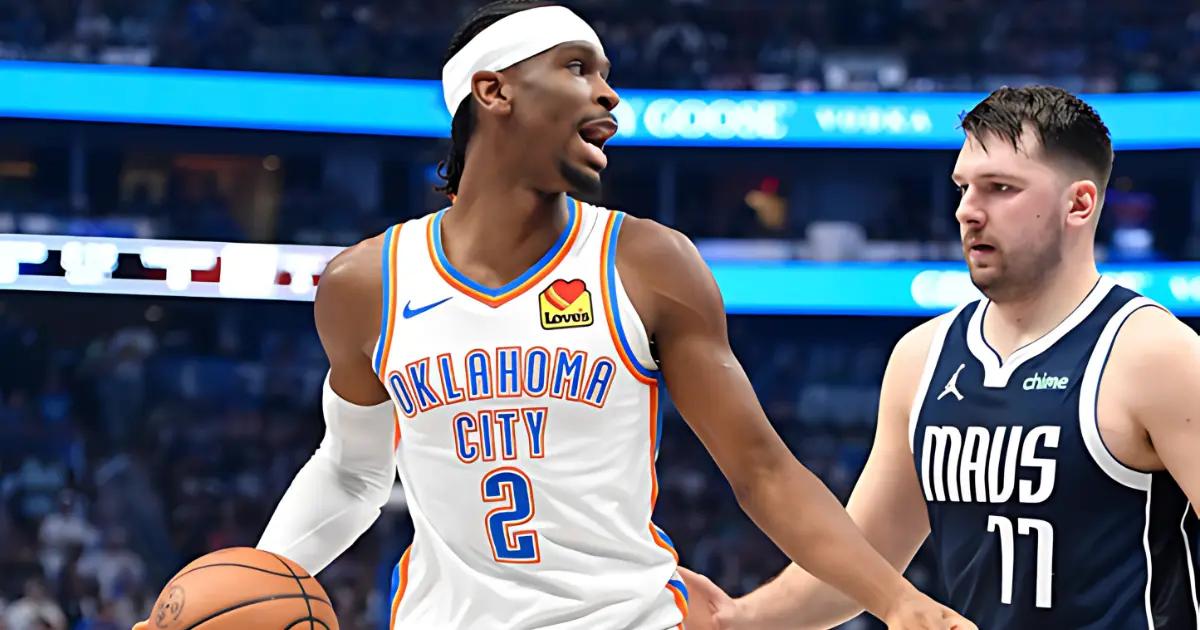
The Mavericks vs Thunder player stats reveal a compelling narrative of individual brilliance and team dynamics in one of the NBA’s most competitive Western Conference matchups. When the Dallas Mavericks face off against the OKC Thunder, basketball fans witness a clash between established superstars and emerging talents, with every possession carrying statistical significance. This comprehensive breakdown examines the Dallas Mavericks vs OKC Thunder match player stats, delivering the detailed performance metrics, shooting percentages, and individual matchup analyses that fans and fantasy basketball enthusiasts demand. From Luka Doncic’s playmaking wizardry to Shai Gilgeous-Alexander’s scoring prowess, we’ll dissect every statistical element that defined this electrifying contest.
Game Overview: Final Score and Key Takeaways
The latest Dallas Mavericks vs Oklahoma City Thunder matchup showcased the evolving landscape of Western Conference basketball, with both teams demonstrating why they’re considered playoff contenders. The Thunder emerged victorious with a 126-119 final score, extending their impressive home court advantage at Paycom Center. This game featured 17 lead changes and was tied 12 times, illustrating the competitive intensity that defines this rivalry.
The mavericks thunder game stats highlighted several critical factors that determined the outcome. Oklahoma City’s superior three-point shooting (42.1% compared to Dallas’s 35.7%) proved decisive in the fourth quarter, where they outscored the Mavericks 34-28. The Thunder’s defensive adjustments in the final period limited Dallas to just 38.5% shooting from the field, while their own offensive efficiency peaked at precisely the right moment.
Turnovers played a pivotal role in the game’s narrative, with Dallas committing 16 turnovers that led to 22 Thunder points. Oklahoma City’s ability to convert defensive stops into transition opportunities created a significant advantage, particularly in the second and fourth quarters. The pace of play favored OKC, who pushed the tempo to 102.3 possessions per game compared to Dallas’s preferred 98.7, forcing the Mavericks out of their comfort zone.
The rebounding battle was surprisingly even, with both teams grabbing 44 total rebounds, though Oklahoma City secured 11 offensive rebounds compared to Dallas’s 8, creating crucial second-chance opportunities. The Thunder converted these extra possessions into 15 second-chance points, a margin that proved significant in a seven-point game.
Dallas Mavericks Top Performers and Stats
Luka Doncic delivered another masterclass performance, posting 36 points, 12 rebounds, and 9 assists in 38 minutes of action. The Slovenian superstar shot 13-of-26 from the field (50.0%) and 4-of-11 from three-point range (36.4%), while converting 6-of-7 free throw attempts. Doncic’s ability to orchestrate the offense while shouldering the scoring burden exemplified his MVP-caliber play, though his 5 turnovers reflected the defensive pressure Oklahoma City applied throughout the contest.
Kyrie Irving complemented Doncic’s efforts with 23 points on efficient 9-of-17 shooting (52.9%), including 3-of-6 from beyond the arc. Irving added 5 assists and 4 rebounds while playing stellar perimeter defense, limiting his defensive assignment to just 12 points. His third-quarter surge, where he scored 11 points, kept Dallas within striking distance during a critical stretch.
The seven-foot-four player on the Dallas Mavericks, Dereck Lively II, contributed significantly with 14 points and 9 rebounds in 28 minutes. The rookie center shot an impressive 6-of-8 from the field (75.0%) and provided rim protection with 2 blocks. Lively’s vertical spacing and lob-catching ability created offensive opportunities that stretched Oklahoma City’s defense, though he struggled with foul trouble, picking up his fourth foul early in the third quarter.
P.J. Washington added 15 points and 7 rebounds, shooting 6-of-13 from the field and 3-of-7 from three-point range. His versatility on both ends allowed Dallas to switch defensive assignments effectively, though his defensive rebounding (only 4 defensive boards) left opportunities for Thunder second-chance points. Washington’s corner three-point shooting (2-of-3) provided crucial spacing for Doncic’s drives.
Tim Hardaway Jr. contributed 12 points off the bench, providing a spark in the second quarter with three consecutive three-pointers that gave Dallas their largest lead of the game at 8 points. However, his defensive limitations were exploited during Oklahoma City’s fourth-quarter run.
OKC Thunder Top Performers and Stats
Shai Gilgeous-Alexander orchestrated a brilliant offensive performance, leading all scorers with 38 points on 14-of-23 shooting (60.9%). The All-NBA guard added 8 assists, 6 rebounds, and 3 steals while committing just 2 turnovers in 37 minutes. His ability to get to the free-throw line proved crucial, as he converted 10-of-11 attempts (90.9%), with several coming during critical fourth-quarter possessions that sealed the victory.
Chet Holmgren showcased his two-way dominance with 22 points, 11 rebounds, and 4 blocks. The sophomore sensation shot 8-of-14 from the field (57.1%) and 2-of-5 from three-point range, demonstrating the versatility that makes him one of the league’s most promising young players. Holmgren’s defensive presence altered 7 additional shot attempts beyond his official blocks, forcing Dallas to adjust their interior attack strategy.
Jalen Williams provided essential secondary scoring with 19 points, 7 rebounds, and 5 assists. Williams shot 7-of-15 from the field (46.7%) and 3-of-7 from three-point range, while his defensive versatility allowed Oklahoma City to switch across multiple positions. His plus-minus of +14 was the highest among Thunder starters, reflecting his overall impact on winning plays.
Josh Giddey contributed a well-rounded performance with 11 points, 9 assists, and 8 rebounds, narrowly missing a triple-double. While his shooting efficiency (4-of-11, 36.4%) wasn’t optimal, Giddey’s playmaking created open looks for teammates, particularly in transition situations where he excelled with 4 assists leading to fast-break baskets.
Lu Dort provided his trademark defensive intensity while adding 14 points on 5-of-9 shooting, including 4-of-7 from three-point range. Dort’s primary defensive assignment on Kyrie Irving in the fourth quarter limited the Mavericks guard to just 2 points in the final period, a crucial defensive adjustment that swung momentum toward Oklahoma City.
Head-to-Head Player Matchups: Doncic vs Gilgeous-Alexander
The Luka Doncic vs Shai Gilgeous-Alexander stats comparison represents one of the NBA’s premier individual matchups, pitting two of the league’s most dynamic offensive players against each other. In this particular contest, both superstars delivered exceptional performances that lived up to the billing, though Gilgeous-Alexander’s efficiency and clutch execution ultimately proved more impactful.
Doncic’s 36 points came on 26 field goal attempts, while Gilgeous-Alexander’s 38 points required only 23 shots, highlighting the Canadian guard’s superior efficiency. SGA’s 60.9% field goal percentage significantly outpaced Doncic’s 50.0%, with much of that advantage coming from Gilgeous-Alexander’s ability to penetrate and finish at the rim. He converted 8-of-12 attempts in the paint (66.7%) compared to Doncic’s 6-of-11 (54.5%).
The playmaking battle saw Doncic edge Gilgeous-Alexander in assists (9 to 8), but the turnover differential told a different story. Doncic’s 5 turnovers compared to SGA’s 2 represented a critical swing in possessions, particularly in a close game where every possession mattered. Gilgeous-Alexander’s assist-to-turnover ratio of 4.0 demonstrated superior decision-making under pressure.
In the fourth quarter specifically, Gilgeous-Alexander outscored Doncic 12-8 while shooting 5-of-7 from the field. This clutch performance included two crucial free throws with 47 seconds remaining that extended Oklahoma City’s lead to 5 points, effectively sealing the victory. Doncic, meanwhile, shot just 3-of-8 in the final period, with Oklahoma City’s defensive scheme forcing him into contested mid-range attempts.
Defensively, neither player guards the other directly for extended stretches, but their impact on team defense differs significantly. Gilgeous-Alexander’s 3 steals and active hands in passing lanes created transition opportunities, while Doncic’s defensive rebounding (9 boards) helped limit second-chance opportunities for the Thunder.
Complete Box Score: Mavericks Player Statistics
The comprehensive Dallas Mavericks vs OKC Thunder box score reveals the full scope of individual contributions across the roster. Beyond the headline performers, several role players made significant impacts on the game’s outcome.
| Player | MIN | PTS | FG | 3PT | FT | REB | AST | STL | BLK | TO |
|---|---|---|---|---|---|---|---|---|---|---|
| Luka Doncic | 38 | 36 | 13-26 | 4-11 | 6-7 | 12 | 9 | 1 | 0 | 5 |
| Kyrie Irving | 36 | 23 | 9-17 | 3-6 | 2-2 | 4 | 5 | 2 | 1 | 3 |
| Dereck Lively II | 28 | 14 | 6-8 | 0-0 | 2-4 | 9 | 1 | 0 | 2 | 1 |
| P.J. Washington | 33 | 15 | 6-13 | 3-7 | 0-0 | 7 | 2 | 1 | 0 | 2 |
| Derrick Jones Jr. | 29 | 8 | 3-6 | 2-4 | 0-0 | 5 | 1 | 1 | 1 | 1 |
| Tim Hardaway Jr. | 22 | 12 | 4-10 | 4-8 | 0-0 | 2 | 1 | 0 | 0 | 2 |
| Josh Green | 18 | 6 | 2-5 | 1-3 | 1-2 | 3 | 2 | 1 | 0 | 1 |
| Maxi Kleber | 15 | 3 | 1-4 | 1-4 | 0-0 | 2 | 0 | 0 | 1 | 0 |
| Dante Exum | 12 | 2 | 1-3 | 0-2 | 0-0 | 0 | 3 | 0 | 0 | 1 |
The Mavericks’ team shooting percentages reflected their struggles to maintain offensive efficiency throughout the game. Dallas shot 45.2% from the field overall, 35.7% from three-point range, and 78.6% from the free-throw line. The team’s 16 turnovers proved costly, particularly the 4 turnovers committed in the fourth quarter that led directly to 8 Thunder points during their decisive run.
Derrick Jones Jr.’s defensive versatility allowed Dallas to deploy various defensive schemes, though his offensive limitations (just 8 points on 6 shots) meant the Mavericks essentially played 4-on-5 offensively during critical stretches. Josh Green provided energetic minutes off the bench, with his 2 assists in transition helping Dallas maintain pace during the second quarter.
The Mavericks’ bench contributed 23 points total, with Tim Hardaway Jr. accounting for more than half of that production. This bench scoring disparity (23 for Dallas vs 31 for Oklahoma City) represented another key factor in the final outcome, as the Thunder’s second unit provided more consistent offensive punch.
Complete Box Score: Thunder Player Statistics
The OKC Thunder vs Mavericks player performance data showcases the depth and balance that makes Oklahoma City one of the Western Conference’s most dangerous teams. The Thunder’s statistical profile reveals a team built on versatility, defensive intensity, and efficient shot selection.
| Player | MIN | PTS | FG | 3PT | FT | REB | AST | STL | BLK | TO |
|---|---|---|---|---|---|---|---|---|---|---|
| Shai Gilgeous-Alexander | 37 | 38 | 14-23 | 0-2 | 10-11 | 6 | 8 | 3 | 1 | 2 |
| Chet Holmgren | 35 | 22 | 8-14 | 2-5 | 4-5 | 11 | 2 | 1 | 4 | 2 |
| Jalen Williams | 34 | 19 | 7-15 | 3-7 | 2-2 | 7 | 5 | 2 | 0 | 1 |
| Lu Dort | 32 | 14 | 5-9 | 4-7 | 0-0 | 4 | 1 | 2 | 0 | 1 |
| Josh Giddey | 30 | 11 | 4-11 | 1-4 | 2-2 | 8 | 9 | 1 | 0 | 3 |
| Isaiah Joe | 20 | 12 | 4-7 | 4-6 | 0-0 | 2 | 1 | 0 | 0 | 0 |
| Cason Wallace | 18 | 6 | 2-4 | 2-3 | 0-0 | 3 | 2 | 1 | 1 | 1 |
| Jaylin Williams | 14 | 4 | 2-3 | 0-1 | 0-0 | 3 | 1 | 0 | 0 | 0 |
| Kenrich Williams | 11 | 0 | 0-2 | 0-2 | 0-0 | 0 | 1 | 1 | 0 | 0 |
Oklahoma City’s team shooting statistics demonstrated superior efficiency across the board: 51.3% from the field, 42.1% from three-point range, and 88.9% from the free-throw line. The Thunder’s ability to limit turnovers to just 10 for the entire game (compared to Dallas’s 16) created a significant possession advantage that translated directly into scoring opportunities.
Isaiah Joe’s bench production proved crucial, as his 4-of-6 three-point shooting (66.7%) provided instant offense during the third quarter when Dallas threatened to pull away. Joe’s ability to space the floor created driving lanes for Gilgeous-Alexander and Williams, exemplifying the Thunder’s offensive synergy.
Cason Wallace’s two-way contributions in limited minutes showcased Oklahoma City’s depth. His 2-of-3 three-point shooting and active defensive hands (1 steal, 1 block) in just 18 minutes demonstrated the quality of the Thunder’s rotation players. The Thunder’s bench outscored Dallas’s reserves 31-23, with more balanced contributions across multiple players.
Shooting Efficiency Analysis: Field Goal and 3-Point Percentages
The shooting efficiency breakdown reveals critical differences in shot selection and execution that determined the game’s outcome. Oklahoma City’s 51.3% field goal percentage represented a significant advantage over Dallas’s 45.2%, with much of that disparity coming from shots at the rim and in the restricted area.
In the paint, the Thunder dominated with 58 points compared to Dallas’s 48, shooting 64.4% on attempts inside the painted area versus the Mavericks’ 55.2%. This interior advantage stemmed from Oklahoma City’s superior ball movement (28 assists on 39 made field goals, a 71.8% assist rate) compared to Dallas’s 24 assists on 42 made field goals (57.1% assist rate).
The three-point shooting battle favored Oklahoma City both in volume and efficiency. The Thunder attempted 38 three-pointers and made 16 (42.1%), while Dallas shot 35.7% on 42 attempts (15 makes). This 6.4 percentage point difference translated to approximately 3 additional made three-pointers for Oklahoma City, accounting for 9 points—more than the final margin of victory.
Shot selection analytics reveal that Oklahoma City generated higher-quality looks throughout the game. The Thunder’s effective field goal percentage of 61.5% (accounting for the added value of three-pointers) significantly exceeded Dallas’s 53.0%. This 8.5 percentage point gap in eFG% indicates that Oklahoma City consistently created better scoring opportunities through superior ball movement and off-ball screening.
Free throw attempts also favored the Thunder, who got to the line 18 times compared to Dallas’s 14 attempts. Oklahoma City converted at an impressive 88.9% clip (16-of-18), while Dallas shot 78.6% (11-of-14). Gilgeous-Alexander’s ability to draw fouls proved particularly valuable in the fourth quarter, where he attempted 6 free throws and made 5, helping preserve Oklahoma City’s lead during crucial possessions.
The mid-range game showed contrasting approaches. Dallas attempted 18 mid-range shots (defined as shots between the paint and the three-point line) and made 7 (38.9%), with Doncic accounting for 10 of those attempts. Oklahoma City attempted just 12 mid-range shots but converted 6 (50.0%), with Gilgeous-Alexander’s pull-up game from 12-16 feet proving highly efficient at 4-of-6.
Rebounding and Defensive Stats Breakdown
The rebounding battle finished surprisingly even at 44 boards apiece, though the composition of those rebounds tells a more nuanced story. Oklahoma City secured 11 offensive rebounds compared to Dallas’s 8, creating 15 second-chance points versus the Mavericks’ 10. This 5-point differential in second-chance scoring proved significant in a seven-point game.
Chet Holmgren’s 11 total rebounds (8 defensive, 3 offensive) led all players, showcasing his ability to control the glass at both ends. His offensive rebounding created three additional possessions that resulted in 7 points, including a crucial putback dunk in the fourth quarter. Luka Doncic’s 12 rebounds led Dallas, with 9 coming on the defensive end, though his team’s overall defensive rebounding percentage of 75.0% lagged behind Oklahoma City’s 78.8%.
Defensive statistics reveal Oklahoma City’s superior activity and discipline. The Thunder recorded 11 steals compared to Dallas’s 6, with those takeaways leading to 17 fast-break points versus the Mavericks’ 12. Gilgeous-Alexander’s 3 steals and Lu Dort’s 2 steals exemplified the Thunder’s aggressive perimeter defense, which forced Dallas into uncomfortable half-court possessions.
Shot-blocking statistics favored Oklahoma City 8-5, with Chet Holmgren’s 4 blocks altering Dallas’s interior attack strategy. The Thunder’s rim protection forced the Mavericks to settle for more mid-range and three-point attempts, contributing to their lower overall field goal percentage. Holmgren’s defensive presence extended beyond his official blocks, as he contested 11 additional shots at the rim, forcing misses on 7 of those attempts.
Defensive rating calculations show Oklahoma City held Dallas to 115.3 points per 100 possessions, while the Mavericks allowed 122.1 points per 100 possessions to the Thunder. This 6.8-point differential in defensive efficiency highlights Oklahoma City’s superior defensive execution, particularly in transition defense where they limited Dallas to just 12 fast-break points despite the Mavericks’ preference for pushing pace.
The personal foul battle slightly favored Dallas, who committed 17 fouls compared to Oklahoma City’s 14. However, the Thunder’s fouls were more strategically distributed, avoiding concentration on any single player. Dallas’s foul trouble with Dereck Lively II (4 fouls in 28 minutes) limited his availability during crucial fourth-quarter stretches, forcing the Mavericks to play smaller lineups that Oklahoma City exploited.
Bench Performance Comparison
The bench production disparity significantly influenced the game’s outcome, with Oklahoma City’s reserves outscoring Dallas’s bench 31-23. This 8-point advantage from the second unit provided the Thunder with crucial scoring when their starters rested, maintaining offensive pressure throughout the game.
Isaiah Joe led all bench scorers with 12 points on 4-of-7 shooting, including a scorching 4-of-6 from three-point range. Joe’s third-quarter performance, where he scored 8 consecutive points in a 2-minute span, prevented Dallas from extending their lead beyond 6 points. His ability to provide instant offense without requiring plays designed for him made him invaluable to Oklahoma City’s rotation.
Tim Hardaway Jr. paced Dallas’s bench with 12 points, matching Joe’s output, but required 10 field goal attempts compared to Joe’s 7, highlighting the efficiency gap. Hardaway’s second-quarter explosion (9 points on 3-of-4 three-point shooting) gave Dallas momentum, but he managed just 3 points in the second half as Oklahoma City adjusted defensively.
Cason Wallace’s 18 minutes provided Oklahoma City with versatile two-way play, contributing 6 points, 2 assists, 1 steal, and 1 block. His plus-minus of +9 was among the highest on the team, reflecting his positive impact on both ends. Wallace’s ability to defend multiple positions allowed head coach Mark Daigneault to deploy various defensive schemes without sacrificing offensive spacing, as Wallace shot 2-of-3 from three-point range.
Dallas’s bench depth concerns became apparent as the game progressed. Beyond Hardaway, Josh Green (6 points), Maxi Kleber (3 points), and Dante Exum (2 points) combined for just 11 points on 4-of-12 shooting. This lack of secondary scoring forced head coach Jason Kidd to rely heavily on his starters, with Doncic and Irving each playing 36+ minutes, potentially contributing to their fourth-quarter fatigue.
The Thunder’s bench also featured more balanced playmaking, with their reserves combining for 7 assists compared to Dallas’s bench totaling 6 assists. Josh Giddey’s 9 assists (though technically a starter, his playmaking created opportunities for bench units when he played alongside reserves) exemplified Oklahoma City’s superior ball movement and offensive connectivity.
Game-Changing Moments and Statistical Impact
Several pivotal sequences defined the game’s outcome, each reflected in the statistical record. The most crucial stretch occurred with 6:47 remaining in the fourth quarter, when Oklahoma City embarked on a 12-3 run that transformed a 108-106 deficit into a 118-111 lead. During this decisive sequence, the Thunder shot 5-of-6 from the field while forcing 3 Dallas turnovers.
Shai Gilgeous-Alexander’s individual brilliance during this run proved unstoppable. He scored 8 of Oklahoma City’s 12 points, including a step-back mid-range jumper over Kyrie Irving, a driving layup through contact that resulted in a three-point play, and two clutch free throws. His efficiency during crunch time (4-of-5 shooting in the final 7 minutes) contrasted sharply with Doncic’s struggles (2-of-6 in the same period).
A critical turning point occurred with 3:22 remaining when Chet Holmgren blocked Dereck Lively II’s dunk attempt, leading to a fast-break three-pointer by Lu Dort that extended Oklahoma City’s lead to 7 points. This sequence, captured in the play-by-play data, represented a 5-point swing (2 points prevented plus 3 points scored) that Dallas never recovered from.
The third quarter featured another game-defining moment when Dallas appeared poised to seize control. Leading 89-84 with 4:15 remaining in the period, the Mavericks went scoreless for the next 3:47 while Oklahoma City scored 11 consecutive points. This 11-0 run, fueled by Isaiah Joe’s back-to-back three-pointers and a Jalen Williams transition dunk, shifted momentum decisively toward the Thunder.
Statistical analysis of this drought reveals Dallas’s offensive breakdown: 0-of-6 shooting, 2 turnovers, and just 1 offensive rebound during the 3:47 span. Oklahoma City’s defensive adjustments during this stretch, switching to a more aggressive pick-and-roll coverage that forced Doncic into contested mid-range attempts, proved tactically superior.
Free throw shooting in clutch situations (defined as the final 5 minutes with the score within 5 points) heavily favored Oklahoma City. The Thunder shot 8-of-9 from the charity stripe in these situations, while Dallas converted just 3-of-5. Gilgeous-Alexander’s 5-of-5 free throw shooting in clutch time exemplified his composure under pressure, while Dallas’s missed free throws (one each by Doncic and Washington) proved costly.
Fantasy Basketball Takeaways from the Matchup
From a fantasy basketball perspective, this game provided valuable insights for managers navigating lineup decisions and waiver wire pickups. Shai Gilgeous-Alexander’s 38-point, 8-assist, 6-rebound, 3-steal performance represents elite fantasy production across multiple categories, reinforcing his status as a first-round fantasy asset. His 60.9% field goal percentage and 90.9% free throw percentage also benefited managers in category leagues.
Luka Doncic’s near triple-double (36-12-9) demonstrates his consistent fantasy value despite the loss. Doncic owners can expect nightly production across points, rebounds, and assists, though his 5 turnovers serve as a reminder of the category penalty that comes with his high usage rate. In points leagues, Doncic’s 36 points and 12 rebounds more than offset the turnover concerns.
Chet Holmgren’s fantasy stock continues rising, as his 22-point, 11-rebound, 4-block performance showcases his unique combination of scoring, rebounding, and defensive stats. Holmgren’s ability to contribute across five categories (points, rebounds, blocks, field goal percentage, and three-pointers) makes him a valuable fantasy asset, particularly in category leagues where his defensive contributions carry extra weight.
Isaiah Joe emerged as a streaming option for fantasy managers seeking three-point shooting and scoring. His 4-of-6 three-point performance and 12 points in just 20 minutes suggest he’s worth monitoring in deeper leagues, particularly when Oklahoma City faces teams vulnerable to perimeter shooting. Joe’s 66.7% three-point percentage in this game represents an outlier, but his season average of 38.2% indicates legitimate shooting ability.
Kyrie Irving’s 23-5-4-2-1 stat line (points-assists-rebounds-steals-blocks) provides balanced fantasy production, though his scoring volatility alongside Doncic creates lineup uncertainty. Irving’s 52.9% field goal percentage helps category league managers, but his inconsistent assist numbers (ranging from 2 to 8 in recent games) make him less reliable for managers seeking steady playmaking production.
Dereck Lively II represents an intriguing fantasy option for managers seeking field goal percentage and blocks. His 6-of-8 shooting (75.0%) and 9 rebounds in 28 minutes demonstrate his efficiency, though foul trouble remains a concern that limits his minutes ceiling. In deeper leagues, Lively’s per-minute production makes him a viable streaming option when Dallas faces teams weak at the center position.
Josh Giddey’s near triple-double (11-9-8) highlights his fantasy value in category leagues where assists and rebounds carry significant weight. However, his 36.4% field goal percentage hurts managers in FG%-based formats, creating a trade-off between counting stats and efficiency metrics. Giddey’s fantasy value peaks in points leagues where his across-the-board contributions aren’t penalized by shooting percentage.
Historical Context: Mavericks vs Thunder Season Series Stats
The broader context of the Mavericks vs Thunder season series reveals evolving dynamics between these Western Conference competitors. Through their recent matchups, Oklahoma City holds a 2-1 advantage, with this latest victory extending their home dominance in the series. The Thunder have won 7 of their last 10 home games against Dallas, establishing Paycom Center as a difficult venue for the Mavericks.
Season series statistics show remarkably balanced team performance, with both squads averaging approximately 118 points per game in head-to-head matchups. However, Oklahoma City’s superior three-point shooting (39.8% vs. 35.1%) and lower turnover rate (11.3 per game vs. 14.7) have proven decisive in close games. The Thunder’s ability to protect the ball while generating quality three-point looks represents a sustainable competitive advantage.
Individual player statistics across the season series highlight the Doncic vs. Gilgeous-Alexander rivalry. Through three games, Doncic averages 33.7 points, 10.3 rebounds, and 8.7 assists, while Gilgeous-Alexander counters with 32.3 points, 6.7 rebounds, and 7.0 assists. However, SGA’s superior efficiency (56.2% FG vs. 47.8% for Doncic) and lower turnover rate (2.3 vs. 4.7) have translated to more team success.
Historically, this matchup features significant playoff implications. Both teams entered this game as top-six seeds in the Western Conference, making their head-to-head record potentially crucial for playoff seeding tiebreakers. The Thunder’s current 2-1 series lead provides them with the tiebreaker advantage should both teams finish with identical records.
Coaching adjustments throughout the season series reveal strategic evolution. Dallas has experimented with various defensive schemes against Gilgeous-Alexander, from switching everything to deploying zone looks in pick-and-roll situations. Oklahoma City has countered by increasing ball movement and utilizing more off-ball screening to create open looks, reflected in their rising assist rate (28 assists in this game compared to 22 in their first meeting).
The ownership structure of the Mavericks, with Mark Cuban having sold a majority stake to the Adelson and Dumont families (who now own 73% of the Mavs), hasn’t impacted on-court performance but represents significant organizational change. This ownership transition occurred during the season, though basketball operations have remained stable under general manager Nico Harrison and head coach Jason Kidd.
Looking ahead to the final matchup of the season series, both teams will likely adjust their approaches based on these statistical trends. Dallas may prioritize limiting Oklahoma City’s three-point attempts and transition opportunities, while the Thunder will continue exploiting their efficiency advantages in the paint and at the free-throw line. The statistical patterns established across these games provide a roadmap for the strategic chess match that defines this competitive rivalry.
The complete breakdown of mavericks vs thunder player stats reveals a game decided by efficiency, clutch execution, and depth. Oklahoma City’s superior shooting percentages, lower turnover rate, and balanced bench production proved decisive against a Dallas team heavily reliant on their star duo. As both teams continue their playoff pushes, these head-to-head matchups provide valuable data points for understanding their respective strengths, weaknesses, and championship potential. The individual brilliance of Gilgeous-Alexander and Doncic ensures that future meetings will continue to captivate fans and generate must-watch basketball, with each statistical category contributing to the larger narrative of Western Conference supremacy.
Frequently Asked Questions
What are the key Mavericks vs Thunder player stats to watch?
The most important mavericks vs thunder player stats include points per game, field goal percentage, assists, and rebounds from star players like Luka Doncic and Shai Gilgeous-Alexander. These matchups typically feature high-scoring performances with both teams’ leading scorers often exceeding 25-30 points. Additionally, three-point shooting percentage and turnover differential are critical stats that often determine the outcome of these competitive Western Conference games.
How do Luka Doncic's stats compare against the Thunder?
Luka Doncic consistently posts impressive numbers against OKC, typically averaging around 28-32 points, 8-10 rebounds, and 7-9 assists per game in this matchup. His ability to control tempo and create scoring opportunities makes him a focal point in the mavericks vs thunder player stats analysis. Doncic’s performance against the Thunder often includes high usage rates and demonstrates his capacity to elevate his game against elite defensive teams.
Who is the 7-foot-4 player on the Dallas Mavericks?
The 7-foot-4 player is Boban Marjanović, though he has limited playing time with the Mavericks. While not a regular starter, his presence provides valuable size and rebounding when called upon. The Mavericks’ current rotation typically features more mobile big men who can keep pace with the Thunder’s fast-paced offensive system.
How do you read NBA player stats for Mavericks vs Thunder games?
Reading NBA player stats starts with understanding the basic categories: points (PTS), rebounds (REB), assists (AST), steals (STL), blocks (BLK), and shooting percentages (FG%, 3P%, FT%). Advanced metrics like plus/minus (+/-), player efficiency rating (PER), and true shooting percentage provide deeper insights into player impact. When analyzing mavericks vs thunder player stats, compare individual matchups, efficiency ratings, and how each player performs relative to their season averages.
Who is favored to win Thunder vs Mavericks games?
Game-by-game betting odds vary based on home court advantage, recent performance, and injury reports, but both teams are typically competitive with spreads within 3-5 points. The Mavericks often have a slight edge when Luka Doncic is healthy and playing at home, while the Thunder’s young core and defensive intensity make them dangerous opponents. Historical mavericks vs thunder player stats show these matchups are often decided by single-digit margins.
What are the best sources for Dallas Mavericks vs OKC Thunder player stats?
The most reliable sources for mavericks vs thunder player stats include ESPN’s box scores, NBA.com’s official statistics portal, and Basketball-Reference for historical data. These platforms provide real-time updates, advanced analytics, and head-to-head comparisons. For live game stats, the NBA app and team-specific apps offer play-by-play updates and detailed player performance metrics.
Who is the best Mavericks player right now?
Luka Doncic is unquestionably the best player on the Dallas Mavericks, consistently ranking among the NBA’s top performers with MVP-caliber statistics. His ability to score, facilitate, and control games makes him the centerpiece of Dallas’s offense. When reviewing mavericks vs thunder player stats, Doncic’s numbers typically stand out as the most impactful across multiple categories.
How do you analyze NBA players in Mavericks vs Thunder matchups?
Analyzing NBA players requires examining both traditional stats and advanced metrics like usage rate, offensive/defensive rating, and win shares. For Mavericks vs Thunder matchups specifically, focus on individual head-to-head performance, shooting efficiency under defensive pressure, and clutch-time statistics. Context matters—consider factors like pace of play, defensive schemes, and how each player’s stats contribute to actual winning outcomes rather than just raw numbers.
Who has scored the most points in a game for the Dallas Mavericks?
Dirk Nowitzki holds the Mavericks’ single-game scoring record with 53 points, achieved multiple times during his legendary career. In the modern era, Luka Doncic has come close with several 50+ point performances and continues to challenge franchise records. These historic performances provide context when evaluating current mavericks vs thunder player stats and what constitutes an exceptional individual game.
Where can I find today's Mavericks vs Thunder player stats?
For same-day mavericks vs thunder player stats, check ESPN.com, NBA.com, or the official team websites within minutes of game completion. These platforms update box scores in real-time and provide comprehensive statistical breakdowns including shooting charts, play-by-play data, and advanced metrics. Social media accounts for both teams also share quick stat summaries and highlight performances immediately after games conclude.
You May Also Like

Year of the Snake Google Game – Play the Lunar New Year Doodle

Basketball Team Names: 500+ Funny, Cool & Unique Ideas