Best Places to Visit in Costa Rica: Top 5 Destinations 2024

Costa Rica has earned its reputation as one of Central America’s most captivating destinations, and for good reason. This small country packs an extraordinary diversity of ecosystems, wildlife, and experiences into an area roughly the size of West Virginia. When travelers search for the best places to visit in Costa Rica, they’re seeking more than just beautiful scenery—they want transformative experiences that combine adventure, relaxation, and authentic connection with nature. Whether you’re a first-time visitor wondering where to prioritize your limited vacation days or a returning traveler seeking new Costa Rica destinations to explore, understanding what makes each region unique is essential for crafting your perfect itinerary.
The challenge isn’t finding amazing places in Costa Rica—it’s choosing among them. From misty cloud forests where resplendent quetzals glide through the canopy to pristine beaches where sea turtles nest under starlit skies, from active volcanoes surrounded by therapeutic hot springs to remote waterways teeming with caimans and monkeys, Costa Rica delivers experiences that satisfy every type of traveler. This comprehensive guide explores the top Costa Rica vacation spots that consistently deliver unforgettable moments, providing the practical details you need to decide where to go in Costa Rica and how to make the most of each destination.
Why Costa Rica Should Be Your Next Adventure
Costa Rica represents something increasingly rare in modern travel: a destination that has successfully balanced tourism development with environmental conservation. Nearly 30% of the country’s land is protected in national parks, biological reserves, and wildlife refuges, creating a sanctuary for approximately 5% of the world’s biodiversity. This commitment to conservation means that when you visit Costa Rica, you’re experiencing ecosystems in their natural state, not manufactured attractions.
The country’s “Pura Vida” philosophy—literally “pure life”—permeates every aspect of the travel experience. This isn’t just a marketing slogan; it’s a genuine cultural approach to life that emphasizes simplicity, gratitude, and living in the moment. You’ll encounter this attitude in the warm hospitality of locals, the unhurried pace of life outside major cities, and the national priority placed on happiness and well-being over material accumulation.
From a practical standpoint, Costa Rica offers significant advantages for travelers. It’s one of the safest countries in Latin America, with a stable democracy and no standing army since 1949. English is widely spoken in tourist areas, making communication easier for North American and European visitors. The infrastructure for tourism is well-developed, with options ranging from budget hostels to luxury best all-inclusive resorts in Costa Rica for couples, ensuring comfortable experiences at every price point.
The compact geography means you can experience remarkable diversity without spending days in transit. In a single week, you can realistically visit volcanic hot springs, hike through cloud forests, spot sloths and monkeys in rainforest canopies, and relax on both Pacific and Caribbean beaches. This efficiency makes Costa Rica particularly appealing for travelers with limited vacation time who want maximum impact from their journey.
Manuel Antonio National Park: Where Jungle Meets Paradise Beach
Manuel Antonio consistently ranks among the top 5 tourist attractions in Costa Rica, and a single visit explains why. This relatively small national park (just 1,983 acres) delivers an almost impossibly perfect combination: pristine white-sand beaches backed by primary rainforest teeming with wildlife. The park’s trails wind through jungle where white-faced capuchin monkeys swing overhead, three-toed sloths doze in cecropia trees, and iguanas bask on sun-dappled branches, before emerging onto beaches where the turquoise Pacific laps against powder-soft sand.
The wildlife viewing here is exceptional even by Costa Rica’s high standards. Manuel Antonio is one of the best places to visit in Costa Rica for wildlife enthusiasts because the animals are habituated to human presence, allowing for close (though respectful) observation. Beyond the charismatic monkeys and sloths, you’ll likely spot agoutis, coatis, numerous bird species including toucans and scarlet macaws, and if you’re fortunate, the endangered squirrel monkey found only in this region of Costa Rica.
The park features several beaches, each with distinct characteristics. Playa Manuel Antonio, the main beach, offers calm waters ideal for swimming and snorkeling, with coral formations visible near the rocky points. Playa Espadilla Sur provides more seclusion, while the trail to Playa Escondido (Hidden Beach) rewards hikers with a secluded cove accessible only at low tide. The juxtaposition of experiencing pristine nature while being steps from beach relaxation makes this one of the most beautiful places in Costa Rica.
The town of Manuel Antonio and neighboring Quepos provide excellent accommodation options, from budget-friendly hostels to upscale hotels perched on hillsides with stunning ocean views. Many visitors combine park visits with adventure activities available in the area: zip-lining through the canopy, sea kayaking to explore coastal caves and islands, sport fishing, or white-water rafting on the nearby Savegre River. For couples seeking romance, the sunset views from clifftop restaurants make this one of the best places to visit in Costa Rica for couples.
Practical tip: The park limits daily visitors to 600 people to protect the ecosystem, and it often reaches capacity by mid-morning during high season. Arrive early (the park opens at 7 AM) or book a guided tour in advance. The park is closed on Mondays. Hiring a local naturalist guide significantly enhances the experience—their trained eyes spot wildlife you’d otherwise miss, and they provide context about the ecosystem that transforms observation into understanding.
Arenal Volcano & La Fortuna: Hot Springs and Adventure Central
The perfectly conical silhouette of Arenal Volcano dominates the landscape around La Fortuna, creating one of Costa Rica’s most iconic vistas. While the volcano has been in a resting phase since 2010 (no longer producing the spectacular lava flows that once drew nighttime spectators), the region remains one of the best places to visit in Costa Rica for first timers due to its concentration of activities, natural beauty, and excellent tourism infrastructure.
The geothermal activity that built Arenal continues to heat underground water sources, creating numerous hot springs resorts scattered around the volcano’s base. These range from luxurious spa experiences like Tabacón Grand Spa Thermal Resort, where naturally heated mineral water cascades through landscaped gardens, to more affordable local options like Ecotermales Fortuna. Soaking in these therapeutic waters while gazing up at the volcano’s slopes, often wreathed in mist, ranks among Costa Rica’s most relaxing experiences. For detailed information about visiting the volcano area, Volcano.cr provides comprehensive resources.
La Fortuna serves as the adventure capital of Costa Rica, offering an extraordinary concentration of activities. The hanging bridges of Mistico Arenal Park allow you to walk through the rainforest canopy at heights up to 150 feet, providing unique perspectives on the ecosystem and excellent wildlife spotting opportunities. The La Fortuna Waterfall, a 230-foot cascade plunging into a pristine swimming hole, requires descending (and later climbing) 500 steps but rewards with one of the country’s most photogenic natural features.
Arenal Lake, Central America’s largest lake, offers windsurfing, kayaking, and stand-up paddleboarding against the backdrop of the volcano. The surrounding area features some of the best zip-lining in the country, with courses that send you flying through the canopy at exhilarating speeds. For a unique perspective, try the aerial tram that glides slowly through the forest, perfect for photography and wildlife observation. White-water rafting on the Balsa or Sarapiquí rivers provides class II-IV rapids suitable for various skill levels.
The town of La Fortuna itself has evolved from a small agricultural community into a tourism hub while maintaining its authentic character. The central park remains a gathering place for locals, and family-run sodas (small restaurants) serve traditional Costa Rican cuisine alongside tourist-oriented establishments. This blend of authenticity and tourism infrastructure makes it one of the most popular places in Costa Rica for good reason—you can have adventure-packed days while enjoying comfortable accommodations and excellent dining.
For couples, the combination of romantic hot springs, adventure activities, and upscale dining makes Arenal one of the best areas to stay in Costa Rica for couples. Many resorts offer private bungalows with volcano views, creating intimate settings for a Costa Rica couples trip. The region also works well for families, with activities suitable for various ages and energy levels.
Monteverde Cloud Forest: Walk Among the Clouds
Monteverde represents a completely different ecosystem from Costa Rica’s lowland rainforests and beaches. Perched at elevations between 4,000 and 5,000 feet, this region is perpetually shrouded in mist, creating the cloud forest environment that supports unique biodiversity. The experience of walking through these ethereal forests, where every tree is draped in mosses, ferns, and orchids, and where clouds drift through the canopy, ranks among the most beautiful places in Costa Rica and offers something found nowhere else in the country.
The Monteverde Cloud Forest Reserve, established in 1972, protects over 26,000 acres of pristine cloud forest and is internationally recognized as a biodiversity hotspot. The reserve contains over 2,500 plant species, 100 mammal species, 400 bird species, and tens of thousands of insect species. The star attraction for many visitors is the resplendent quetzal, considered one of the world’s most beautiful birds, which is relatively common here during breeding season (March-June).
The reserve’s trail system ranges from easy walks along well-maintained paths to challenging hikes into remote areas. The Continental Divide Trail takes you to the point where water flows either toward the Pacific or Caribbean, a geographic feature unique to this mountainous region. Night tours reveal a completely different world, with nocturnal creatures like kinkajous, armadillos, and various frog species becoming active. The sounds of the cloud forest at night—insects, frogs, and the occasional howler monkey—create an immersive natural symphony.
Monteverde pioneered canopy tours in Costa Rica, and the area now offers several options for experiencing the forest from above. The original zip-line canopy tour sends you flying between platforms high in the trees, while the Sky Walk features suspension bridges that allow more leisurely observation. The aerial tram provides a gentle ascent through forest layers, excellent for photography and wildlife watching. Each perspective reveals different aspects of this complex ecosystem.
The town of Santa Elena, the main hub for Monteverde, maintains a charming small-town atmosphere despite its popularity with tourists. Local cheese factories, established by Quaker settlers in the 1950s, produce excellent artisanal cheeses available for tasting and purchase. The community has strong environmental values, with many businesses operating sustainably and supporting conservation efforts. This makes Monteverde appealing for travelers seeking unique things to do in Costa Rica beyond typical beach and volcano experiences.
Practical considerations: Monteverde’s weather is cool and often wet, with temperatures ranging from 60-70°F year-round. Bring layers and rain gear regardless of season. The roads to Monteverde are famously rough—the final stretch is unpaved and can be challenging, especially during rainy season. However, this difficulty has helped preserve the area’s character by limiting mass tourism. Most visitors find the journey worthwhile for the unique ecosystem and experiences available nowhere else.
Tortuguero National Park: Costa Rica's Amazon
Tortuguero offers an experience radically different from Costa Rica’s other major destinations. Accessible only by boat or small plane (no roads reach this remote Caribbean coast location), the park protects a vast network of canals, rivers, lagoons, and beaches that create an ecosystem often called “Costa Rica’s Amazon.” This is one of the best places to visit in Costa Rica for wildlife enthusiasts willing to venture off the beaten path for an authentic wilderness experience.
The park’s waterways serve as highways through the jungle, and boat tours are the primary way to explore. Gliding silently through narrow canals flanked by dense vegetation, you’ll encounter an astonishing diversity of wildlife: three species of monkeys (howler, spider, and white-faced capuchin), three-toed and two-toed sloths, river otters, caimans, basilisk lizards (the “Jesus Christ lizard” that runs across water), and over 300 bird species including toucans, herons, kingfishers, and the endangered great green macaw.
Tortuguero is most famous for sea turtle nesting, which occurs on its beaches from March through October. Four species nest here: green turtles (the most common, peaking July-October), leatherbacks (March-May), hawksbills, and loggerheads. Witnessing a massive sea turtle laboriously dig a nest, lay eggs, and return to the ocean is a profound wildlife experience. Guided night tours during nesting season are carefully regulated to minimize disturbance to the turtles while allowing visitors to observe this ancient ritual.
The village of Tortuguero, a small Afro-Caribbean community, provides the base for visiting the park. The village has no cars—only pedestrian paths and boat docks. This car-free environment, combined with the jungle setting and laid-back Caribbean culture, creates a unique atmosphere. Accommodations range from basic cabinas to comfortable eco-lodges, most offering package deals that include meals, guided tours, and boat transportation, which simplifies logistics in this remote location.
The journey to Tortuguero is part of the adventure. Most visitors travel from San José or La Fortuna by bus and boat, a journey of several hours that passes through banana plantations, small villages, and increasingly wild landscapes. The final boat ride through the canals, with jungle pressing in from both sides and wildlife appearing around every bend, builds anticipation for the destination. Some travelers opt for small plane flights from San José, which take about 30 minutes and provide aerial views of the Caribbean coast.
Tortuguero works best as a 2-3 day visit, allowing time for multiple boat tours at different times of day (dawn and dusk are particularly productive for wildlife), a village walk, beach time (swimming is dangerous due to strong currents and sharks, but the wild beach is beautiful), and if visiting during season, a turtle tour. The remote location and package-tour structure make this less suitable for budget travelers or those wanting complete independence, but for nature enthusiasts seeking immersive wildlife experiences, it’s unparalleled.
Tamarindo & Guanacaste Beaches: Surf, Sun, and Sunsets
The Guanacaste province, occupying Costa Rica’s northwestern Pacific coast, offers a completely different experience from the country’s rainforest and mountain destinations. This region features the best places to visit in Costa Rica for beaches, with dozens of stunning coastlines ranging from developed surf towns to secluded coves. The climate here is drier than other parts of Costa Rica, with more pronounced dry season (December-April) that guarantees sunny beach days.
Tamarindo serves as the main hub for Guanacaste’s beach scene. Once a quiet fishing village, it has evolved into a vibrant beach town that successfully balances development with natural beauty. The main beach offers consistent surf suitable for beginners and intermediates, with numerous surf schools providing lessons and board rentals. The town itself features excellent restaurants, lively bars, shops, and a cosmopolitan atmosphere that attracts international visitors and expat residents.
Beyond Tamarindo, the Guanacaste coast offers remarkable diversity. Playa Conchal, named for its beach composed of crushed shells, features crystal-clear waters ideal for snorkeling. Playa Flamingo provides a more upscale, resort-oriented experience with a marina catering to sport fishing enthusiasts. Playa Grande, just north of Tamarindo, is a protected leatherback turtle nesting site and offers more solitude. The beaches of the Nicoya Peninsula—Nosara, Sámara, Santa Teresa, and Mal País—each have distinct personalities, from yoga retreat centers to surf camps to family-friendly swimming beaches.
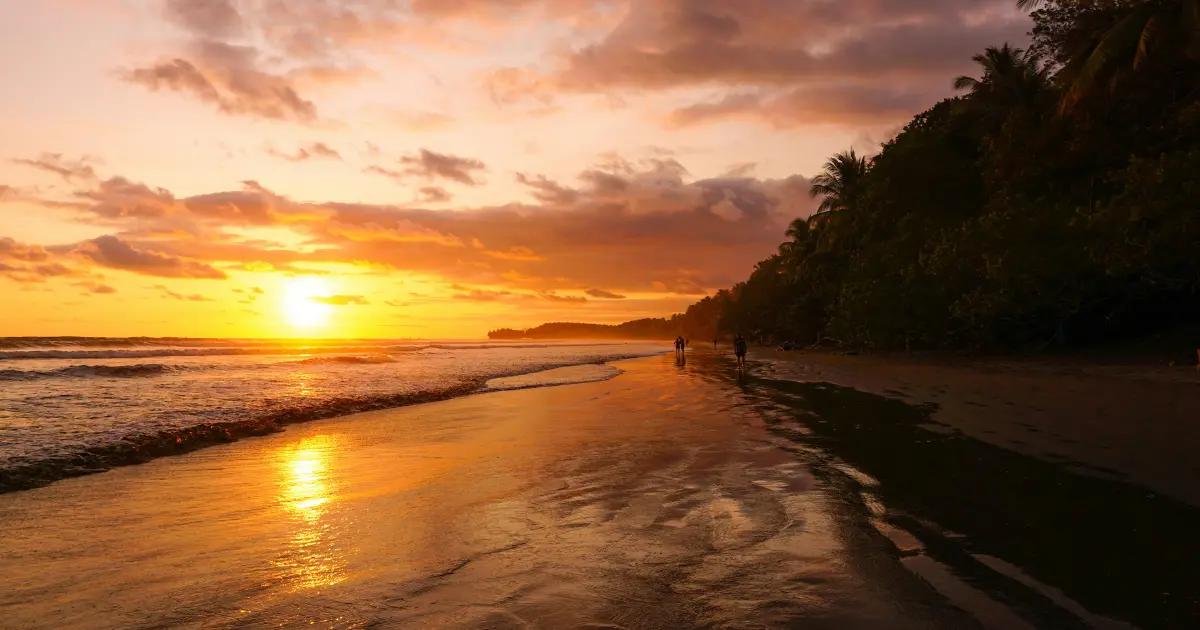
The Costa Rica Pacific coast beaches are renowned for spectacular sunsets, and Guanacaste delivers some of the best. The combination of western exposure, often dramatic cloud formations, and the silhouettes of rocky headlands creates evening sky shows that draw crowds to beachfront bars and restaurants. This makes the region particularly popular for the best place to visit in Costa Rica for couples seeking romantic settings.
Many of the best all-inclusive resorts in Costa Rica for couples are located in Guanacaste, particularly around the Papagayo Peninsula. These resorts offer the convenience of all-inclusive packages while providing access to beautiful beaches, golf courses, spas, and water sports. The proximity to Liberia International Airport (about an hour from most Guanacaste beaches) makes this region easily accessible, often requiring just one flight for North American visitors rather than the connection through San José needed for other destinations.
Activities in Guanacaste extend beyond beach lounging and surfing. The region offers excellent sport fishing, with marlin, sailfish, and dorado abundant offshore. Snorkeling and diving trips visit sites around the Catalina Islands and Bat Islands, where you might encounter manta rays, sea turtles, and various shark species. Inland, you can visit working cattle ranches that offer horseback riding and a glimpse into Costa Rican cowboy (sabanero) culture. Rincón de la Vieja National Park, about 90 minutes from the coast, features an active volcano, hot springs, waterfalls, and hiking trails.
For travelers wondering how to decide where to go in Costa Rica when focused primarily on beach experiences, Guanacaste offers the most reliable weather, the best surf, and the widest range of beach-resort options. It’s particularly suitable for families seeking safe swimming beaches, couples wanting romantic resort experiences, and surfers of all levels. The drier climate also makes it appealing during Costa Rica’s rainy season (May-November) when other regions experience heavy afternoon rains.
Planning Your Costa Rica Itinerary: How to Combine These Destinations
One of the most common questions from first-time visitors is how to decide where to go in Costa Rica when you can’t see everything in one trip. The key is understanding that Costa Rica’s compact size is deceptive—while distances are short, travel times can be long due to mountain roads and limited infrastructure. A realistic itinerary prioritizes quality over quantity, allowing sufficient time in each destination to actually experience it rather than just checking boxes.
For a one-week trip, the most practical approach is choosing 2-3 destinations that complement each other geographically. A classic first-timer itinerary might combine Arenal (3 nights) with Manuel Antonio (3 nights), providing volcano/hot springs experiences plus beach/wildlife, with one night in San José for arrival or departure. This route follows a logical path without excessive backtracking. Another excellent week-long option pairs Monteverde (2-3 nights) with Guanacaste beaches (4-5 nights), offering cloud forest and beach contrasts with relatively easy connections.
For 10-14 days, you can comfortably visit 3-4 destinations. A popular two-week itinerary might include: San José (1 night), Tortuguero (2-3 nights), Arenal (3 nights), Monteverde (2-3 nights), and Manuel Antonio or Guanacaste beaches (3-4 nights). This provides diverse ecosystems and experiences while maintaining reasonable travel days. The key is building in buffer time—Costa Rican travel rarely goes exactly as scheduled, and rushing between destinations eliminates the “Pura Vida” relaxation that makes the country special.
When considering the best place to visit in Costa Rica for first time visitors with limited time, Manuel Antonio and Arenal consistently top recommendations because they deliver diverse experiences (wildlife, beaches, volcanoes, adventure activities) with excellent infrastructure and easy logistics. These destinations provide a comprehensive introduction to what makes Costa Rica special without requiring the more adventurous spirit needed for places like Tortuguero or remote Osa Peninsula.
For couples planning a Costa Rica honeymoon all-inclusive experience, consider basing at one or two upscale resorts rather than moving frequently. Many Costa Rica all inclusive resorts in Guanacaste or around Arenal offer day trips to nearby attractions, allowing you to experience multiple aspects of Costa Rica while maintaining a romantic home base. The best resorts in Costa Rica for this approach include properties in the Papagayo Peninsula, around Arenal Volcano, and in the Manuel Antonio area.
Families asking about the best place to visit in Costa Rica for families should prioritize destinations with diverse activities suitable for various ages. Manuel Antonio works excellently for families due to easy wildlife viewing, safe beaches, and activity variety. Arenal offers adventure options that can be scaled to different skill levels. Guanacaste’s calmer beaches (like Playa Hermosa or Playa Conchal) provide safe swimming for children, while Tamarindo offers surf lessons and a lively town atmosphere that appeals to teenagers.
Transportation planning is crucial. Renting a car provides maximum flexibility and is recommended for itineraries involving Arenal, Monteverde, and Guanacaste, where having your own vehicle allows exploration of multiple beaches and attractions. However, driving to Tortuguero isn’t possible, and Manuel Antonio is accessible via good bus service or private shuttles. Many travelers combine rental cars for some portions with organized transfers or domestic flights for others. Domestic flights between San José, Tamarindo, and other destinations can save significant time, though they’re more expensive than ground transportation.
Best Time to Visit Costa Rica's Top Destinations
Understanding Costa Rica’s seasons is essential for planning, as timing significantly impacts your experience. The country has two main seasons: dry season (December-April) and rainy season (May-November), though these patterns vary by region and microclimates create exceptions to general rules.
The dry season, particularly December through March, represents peak tourism season. Weather is reliably sunny with minimal rain, making it ideal for beach activities, hiking, and wildlife viewing. However, this is also when prices peak, crowds are largest, and advance reservations are essential. The landscape becomes drier and browner, particularly in Guanacaste, though this actually improves wildlife viewing in some areas as animals congregate around water sources.
The rainy season, often called “green season” by tourism marketers, offers significant advantages despite the name. Mornings are typically sunny, with rains arriving in afternoon and evening. The landscape is lush and vibrant, waterfalls are at their most impressive, and you’ll encounter fewer crowds and lower prices. September and October are the wettest months, when some remote lodges close and road conditions can be challenging. However, May-June and November can be excellent times to visit, offering green-season advantages with less intense rainfall.
Regional variations matter when planning. The Caribbean coast (including Tortuguero) has a different pattern, with the driest months being September-October and February-March, while December-January and July can be quite wet. Monteverde’s cloud forest is misty year-round by definition, though February-April tend to be slightly drier. Guanacaste has the most pronounced dry season, with virtually no rain December-April, making it the most reliable choice for guaranteed beach weather.
Wildlife considerations influence timing for some visitors. Sea turtle nesting varies by species and location: leatherbacks nest on the Pacific coast February-July (peaking March-May) and on the Caribbean coast March-May; green turtles nest in Tortuguero July-October. Whale watching is best August-October on the Pacific coast, when humpback whales from both hemispheres converge. Bird watching peaks during North American winter (December-March) when migratory species join resident birds.
For the best places to visit in Costa Rica for first timers concerned about weather, the shoulder seasons (late November-early December and late April-early May) offer excellent compromises: better weather than deep rainy season, fewer crowds than peak dry season, and moderate prices. These periods work particularly well for the most popular destinations like Manuel Antonio, Arenal, and Monteverde, which have good infrastructure regardless of season.
Essential Travel Tips for First-Time Visitors
Successfully navigating Costa Rica requires understanding some practical realities that differ from other destinations. These tips help first-time visitors avoid common pitfalls and make the most of their trip.
Entry requirements are straightforward for most visitors. Citizens of the US, Canada, EU countries, and many others need only a valid passport (with at least six months validity) for stays up to 90 days. No visa is required. You’ll receive an entry stamp on arrival that you must keep—losing it can cause departure complications. Costa Rica requires proof of onward travel (return ticket or ticket to another destination), though this is rarely checked.
Currency and payments: The official currency is the Costa Rican colón, but US dollars are widely accepted in tourist areas. Credit cards work in most hotels, restaurants, and tour operators, though small sodas and rural areas may be cash-only. ATMs are common in towns and cities, dispensing both colones and dollars. Tipping isn’t mandatory as most restaurants include 10% service charge, but additional tips for exceptional service are appreciated. Tour guides typically receive $5-10 per person per day.
Safety is a common concern, but Costa Rica is generally very safe by Central American standards. Violent crime against tourists is rare. The main issues are petty theft and car break-ins, particularly in San José and beach parking areas. Don’t leave valuables visible in cars, use hotel safes, and maintain awareness in crowded areas. The safest part of Costa Rica for tourists is subjective, but generally, tourist-oriented areas like Manuel Antonio, Arenal, and Monteverde have strong security due to economic dependence on tourism. San José requires more caution, particularly at night and in certain neighborhoods.
Health considerations: No vaccinations are required for Costa Rica, though hepatitis A and typhoid are recommended for travelers eating outside major tourist areas. The water is safe to drink in most areas, though some travelers prefer bottled water initially. Mosquito-borne illnesses (dengue, Zika) exist in lowland areas, so bring insect repellent. The sun is intense year-round due to proximity to the equator—use high-SPF sunscreen and reapply frequently. Travel insurance is highly recommended, as medical evacuation from remote areas can be expensive.
Language: Spanish is the official language, and learning basic phrases enhances your experience and shows respect. However, English is widely spoken in tourist areas, hotels, and by tour guides. In San José, many restaurants cater to international visitors. For an authentic dining experience in the capital, Grano de Oro Restaurant offers exceptional Costa Rican cuisine in an elegant setting. When exploring things to do in Costa Rica San Jose, the capital provides museums, markets, and cultural experiences that complement the natural attractions elsewhere.
Food and water: Costa Rican cuisine emphasizes fresh ingredients and simple preparations. The typical breakfast (desayuno típico) features gallo pinto (rice and beans), eggs, plantains, and fresh fruit—a hearty start to active days. When people ask what do Costa Ricans eat for breakfast, this traditional combination is the authentic answer, though tourist areas offer international options. Casados (lunch plates with rice, beans, protein, salad, and plantains) are economical and filling. Fresh tropical fruits, seafood, and coffee are exceptional. Vegetarians and vegans find Costa Rica accommodating, with many restaurants offering plant-based options.
Packing essentials vary by destinations but generally include: lightweight, quick-dry clothing; rain jacket or poncho; sturdy walking shoes or hiking boots; sandals; swimsuit; sun protection (hat, sunglasses, reef-safe sunscreen); insect repellent; reusable water bottle; headlamp or flashlight; and binoculars for wildlife viewing. For Monteverde or high-elevation areas, bring layers as temperatures drop. A dry bag protects electronics during boat trips or rainy hikes.
Electricity uses 110V (same as North America) with Type A and B plugs. Adapters aren’t needed for US/Canadian devices, but European and other travelers need adapters. Power outages can occur, particularly in remote areas during rainy season, so keep devices charged when possible.
Environmental responsibility is crucial. Costa Rica’s tourism depends on protecting its natural resources, and visitors should minimize impact. Use reef-safe sunscreen to protect marine ecosystems, stay on marked trails, maintain distance from wildlife (selfies with sloths or other animals often involve animal abuse), avoid single-use plastics, and choose tour operators with genuine sustainability practices. Many areas have strict rules about touching or feeding wildlife—follow them.
When researching the top three things to do in Costa Rica, most travelers prioritize: (1) wildlife viewing in national parks, (2) experiencing volcanic landscapes and hot springs, and (3) enjoying beautiful beaches. These core experiences are available across the destinations covered in this guide, allowing you to customize your itinerary based on specific interests while ensuring you experience Costa Rica’s essential elements.
Making Your Costa Rica Dream a Reality
Costa Rica delivers on its promise of “Pura Vida” through extraordinary biodiversity, stunning landscapes, and a culture that genuinely values happiness and environmental stewardship. The best places to visit in Costa Rica each offer distinct experiences—from the wildlife-rich beaches of Manuel Antonio to the volcanic landscapes of Arenal, from the mystical cloud forests of Monteverde to the remote waterways of Tortuguero, and from the surf-and-sun lifestyle of Guanacaste’s beaches to countless other remarkable destinations.
The key to a successful Costa Rica trip is matching destinations to your interests and travel style while being realistic about what you can experience in your available time. First-time visitors often try to see too much, spending more time in transit than actually experiencing places. Instead, choose 2-4 destinations that complement each other, allow sufficient time in each to truly appreciate what makes it special, and build in flexibility for the spontaneous moments that often become trip highlights.
Whether you’re seeking adventure, relaxation, wildlife encounters, cultural immersion, or romantic experiences, Costa Rica’s diverse destinations deliver. The country’s commitment to conservation ensures that these experiences remain authentic and sustainable, allowing future generations to discover the same natural wonders. By choosing Costa Rica, you’re not just planning a vacation—you’re embarking on a journey that often transforms how travelers see the natural world and their place in it.
Start planning your Costa Rica adventure by identifying which experiences matter most to you, then select destinations that deliver those experiences. Consider the practical factors of season, budget, and logistics, but also leave room for the unexpected discoveries that make travel memorable. Costa Rica is calling—and it promises experiences that will stay with you long after you return home, inspiring you to protect the natural world and perhaps return to explore more of this remarkable country’s treasures.
Frequently Asked Questions
What is the best part of Costa Rica to visit?
The best part depends on your interests, but Arenal and Manuel Antonio consistently rank among the best places to visit in Costa Rica for first-timers. Arenal offers volcanic landscapes, hot springs, and adventure activities, while Manuel Antonio combines pristine beaches with accessible rainforest wildlife. The Monteverde Cloud Forest is ideal for nature lovers, and the Nicoya Peninsula beaches are perfect for surfers and beach enthusiasts.
What are the top three things to do in Costa Rica?
The top three experiences include exploring the rainforest canopy through zip-lining or hanging bridges, relaxing in natural hot springs near Arenal Volcano, and wildlife watching in national parks like Manuel Antonio or Tortuguero. Costa Rica’s biodiversity makes it one of the world’s premier eco-tourism destinations, with opportunities to see sloths, monkeys, toucans, and sea turtles in their natural habitats. Many visitors also prioritize surfing on both Pacific and Caribbean coasts.
Where should I go for the first time in Costa Rica?
First-time visitors should focus on the “Golden Triangle” of San José, Arenal, and Manuel Antonio, which represents some of the best places to visit in Costa Rica for a comprehensive introduction. This route offers volcanic landscapes, cloud forests, beaches, and abundant wildlife within manageable travel distances. Plan for 7-10 days to experience these regions without feeling rushed, and consider adding Monteverde if you have extra time.
What is the safest part of Costa Rica for tourists?
Manuel Antonio, La Fortuna (Arenal area), and the Guanacaste beach towns are among the safest regions for tourists in Costa Rica. These areas have well-established tourism infrastructure, visible security presence, and lower crime rates compared to urban centers. Costa Rica overall is considered one of Central America’s safest countries, though standard travel precautions like avoiding isolated areas at night and securing valuables are always recommended.
What is the most visited place in Costa Rica?
Manuel Antonio National Park is the most visited destination in Costa Rica, attracting over 400,000 visitors annually. This compact park offers the perfect combination of accessible wildlife viewing, beautiful beaches, and well-maintained trails within a small area. The nearby town of Quepos provides excellent accommodation and dining options, making it one of the best places to visit in Costa Rica for travelers seeking both nature and comfort.
Is 0 enough for a week in Costa Rica?
$500 for a week is tight but possible if you’re budget-conscious, staying in hostels, eating at local sodas (small restaurants), and using public transportation. A more comfortable budget would be $800-1,200 per person for mid-range accommodations, tours, and meals. Costa Rica is more expensive than other Central American countries, with prices comparable to some U.S. destinations, especially in popular tourist areas.
What is the prettiest part of Costa Rica?
The Monteverde Cloud Forest and the Osa Peninsula are often cited as the prettiest regions, offering untouched natural beauty and incredible biodiversity. The turquoise waters and white sand beaches of the Caribbean coast near Puerto Viejo provide a different but equally stunning aesthetic. Many travelers also find the Arenal Volcano area breathtaking, with its perfect cone shape rising above lush rainforest and thermal hot springs creating a dramatic landscape.
What is the best place to visit in Costa Rica for beaches?
The Guanacaste Province on the Pacific coast offers the best beach destinations, including Tamarindo, Playa Conchal, and the Papagayo Peninsula with consistently sunny weather. For a more laid-back Caribbean vibe, Puerto Viejo and Cahuita on the Caribbean coast feature beautiful beaches with coral reefs and Afro-Caribbean culture. Manuel Antonio provides the best combination of beaches and rainforest wildlife, making it one of the best places to visit in Costa Rica for diverse experiences.
What is the best place to visit in Costa Rica for wildlife?
Tortuguero National Park on the Caribbean coast is unmatched for wildlife diversity, accessible only by boat or plane, offering sightings of monkeys, sloths, caimans, and sea turtles. Corcovado National Park in the Osa Peninsula is considered the crown jewel of Costa Rica’s national park system, with the highest concentration of biodiversity. For more accessible wildlife viewing, Manuel Antonio and the Monteverde Cloud Forest Reserve provide excellent opportunities to see animals without venturing into remote areas.
What do Costa Ricans eat for breakfast?
The traditional Costa Rican breakfast is gallo pinto, a flavorful mix of rice and black beans seasoned with onions, peppers, and cilantro, typically served with eggs, tortillas, and sour cream. Many locals also enjoy fresh tropical fruits like papaya, pineapple, and mango alongside their morning meal. Coffee is an essential part of breakfast culture, and Costa Rica produces some of the world’s finest beans, making the morning brew exceptional throughout the country.
You May Also Like
Best Time to Visit Cancún: Weather, Seaweed & Crowds (2026)
Best Time to Visit Alaska: Month-by-Month Guide (2026)

Best Time to Visit Costa Rica: Month-by-Month (2026)