Block Breaker Game: Play Free Online & Master Tips 2025

The block breaker game has captivated players for decades, offering a perfect blend of simple mechanics and challenging gameplay that keeps people coming back for more. Whether you remember playing it on your old Nokia phone, discovered it as a Google Easter egg, or are just now learning about this timeless classic, the block breaker game represents one of gaming’s most enduring formulas. This arcade-style puzzle game challenges players to destroy colorful blocks using a ball and paddle, creating an addictive loop that’s easy to learn but difficult to master. In this comprehensive guide, we’ll explore everything from the game’s fascinating history to expert strategies, where to play block breaker online for free, and why this seemingly simple game continues to dominate casual gaming in 2025.
What Is Block Breaker and Why Is It So Addictive?
The block breaker game is a classic arcade-style puzzle game where players control a paddle at the bottom of the screen to bounce a ball upward, breaking blocks arranged in patterns at the top. The core objective is straightforward: eliminate all blocks on the screen without letting the ball fall past your paddle. Despite this simple premise, the game creates an incredibly addictive experience that has survived across multiple gaming generations.
What makes the block breaker game so compelling is its perfect balance of skill and chance. Players must develop quick reflexes to position their paddle correctly, while also learning to predict ball trajectories and plan strategic shots. The satisfaction of clearing a difficult level or achieving a new high score triggers dopamine releases in the brain, creating a reward cycle that keeps players engaged for hours.
The game’s addictive nature stems from several psychological factors. First, it offers immediate feedback—every action produces an instant result, whether it’s successfully hitting the ball or watching blocks shatter. Second, the difficulty curve is carefully calibrated to provide challenge without frustration. Early levels build confidence, while later stages demand mastery of advanced techniques. Third, the “just one more try” mentality emerges naturally because each game session is relatively short, making it easy to justify another attempt.
Modern versions of the brick breaker game have introduced power-ups, special blocks, and varied level designs that add layers of complexity to the original formula. These additions create moments of excitement and unpredictability—catching a multi-ball power-up or extending your paddle at just the right moment can turn a losing game into a triumphant victory. This variability ensures that no two games feel exactly the same, maintaining freshness even after hundreds of plays.
The History of Block Breaker Games: From Breakout to Mobile
The block breaker game lineage traces back to 1976 when Atari released Breakout, designed by Nolan Bushnell and Steve Bristow, with significant contributions from Apple co-founders Steve Jobs and Steve Wozniak. Breakout itself was inspired by Atari’s earlier hit Pong, but instead of competing against another player, you battled against a wall of bricks. This simple twist transformed the competitive nature of Pong into a solitary challenge that emphasized skill progression and personal achievement.
The original Breakout featured eight rows of bricks in two colors, with points awarded based on which row you destroyed. The game’s minimalist design—a white ball, orange paddle, and colored blocks—became iconic. Its success spawned numerous clones and inspired an entire genre that would evolve over the next five decades.
In 1986, Taito released Arkanoid, which revolutionized the brick breaker formula by introducing power-ups, different block types, and enemy obstacles. Arkanoid’s enhanced graphics and gameplay mechanics set new standards for the genre and demonstrated that the basic concept could support much greater complexity. The game became a massive arcade hit and was ported to virtually every home computer and console of the era.
The 1990s and early 2000s saw the brick breaker game flourish on personal computers, with titles like DX-Ball and Ricochet offering thousands of custom levels and creative block arrangements. These PC versions often included level editors, allowing communities to create and share their own challenging designs. The old brick breaker game for pc became a staple of office computers worldwide, providing quick entertainment during breaks.
The mobile revolution brought new life to the block breaker game. When smartphones emerged in the late 2000s, the brick breaker game was among the first genres to find success on touchscreen devices. The simple tap-and-swipe controls translated perfectly to mobile interfaces, and the short session length made it ideal for gaming on-the-go. Many people’s first experience with the early 2000s brick breaker game came through pre-installed titles on Nokia phones and early BlackBerry devices.
Today, the block breaker game continues to evolve with modern interpretations like Block Blast and various online versions. Google even created its own brick breaker Google Easter egg that players can access through image search, demonstrating the game’s enduring cultural relevance. The genre has proven remarkably adaptable, incorporating elements from other popular games while maintaining the core mechanics that made it successful nearly 50 years ago.
How to Play Block Breaker: Rules and Basic Mechanics
Understanding the fundamental mechanics of the block breaker game is essential for both newcomers and players looking to refine their skills. While variations exist across different versions, the core gameplay remains consistent and straightforward.
The game begins with a paddle positioned at the bottom of the screen and a ball resting on top of it. Players launch the ball upward by pressing a button or tapping the screen, sending it toward an arrangement of colored blocks at the top. The ball bounces off walls, blocks, and the paddle, following realistic physics that determine its trajectory based on angle and speed.
Your primary objective is to keep the ball in play by moving the paddle left and right to intercept it. If the ball falls past your paddle and reaches the bottom of the screen, you lose a life. Most versions of the brick breaker game provide three to five lives per game, though this varies by implementation. The game ends when you either clear all blocks (winning the level) or lose all your lives.
Blocks come in different colors and types, each with specific properties. Standard blocks break after a single hit, while harder blocks may require multiple impacts before shattering. Some blocks are indestructible and serve as obstacles that alter ball trajectories. Advanced versions include explosive blocks that destroy surrounding blocks, bonus blocks that award extra points, and mystery blocks that release power-ups.
Power-ups are a crucial element in modern block breaker games. Common power-ups include:
- Multi-ball: Splits the ball into multiple balls, allowing you to break blocks faster and create safety redundancy
- Paddle extension: Temporarily increases paddle width, making it easier to catch the ball
- Laser paddle: Allows you to shoot lasers upward to destroy blocks directly
- Slow ball: Reduces ball speed, giving you more time to react
- Sticky paddle: Catches the ball, allowing you to aim your next shot precisely
- Extra life: Grants an additional chance to continue playing
Scoring systems typically award points based on which blocks you destroy, with higher rows or special blocks offering greater rewards. Combo bonuses reward consecutive hits without missing the ball, encouraging aggressive play. Many versions include a scoring multiplier that increases as you maintain your combo streak, creating tension between playing safely and taking risks for higher scores.
The physics engine is critical to gameplay. The ball’s angle after bouncing off your paddle depends on where it makes contact—hitting the ball with the paddle’s edge creates sharper angles, while center hits produce more vertical trajectories. Mastering this relationship between contact point and ball direction is fundamental to developing advanced strategies.
Control Schemes Across Platforms
When you play block breaker online, control methods vary by platform. Desktop versions typically use mouse movement or arrow keys to control the paddle. Mobile versions employ touch controls, where you either drag the paddle directly or tap the screen location where you want it to move. Some modern implementations use tilt controls, moving the paddle by tilting your device left or right, though this method is less precise and generally less popular.
The best brick breaker game unblocked versions offer customizable controls, allowing players to choose their preferred input method. This flexibility ensures accessibility across different skill levels and personal preferences, contributing to the game’s universal appeal.
Block Breaker Strategy: Tips to Beat High Scores
Mastering the block breaker game requires more than quick reflexes—strategic thinking and pattern recognition separate casual players from high-score champions. These proven strategies will help you maximize your performance and achieve scores you never thought possible.
Paddle Positioning and Ball Control
The foundation of expert play is precise paddle control. Rather than simply reacting to where the ball is falling, anticipate its trajectory several bounces in advance. Watch the ball’s angle after each bounce and position your paddle early, leaving yourself room to make fine adjustments. Beginners often chase the ball frantically, while experienced players move smoothly and deliberately.
Learn to manipulate ball angles by varying your contact point. Hitting the ball with the outer edges of your paddle creates steep angles that can reach difficult blocks in corners. Center hits produce more vertical shots, useful for targeting blocks directly above you. Practice intentionally directing the ball toward specific areas rather than simply keeping it in play.
The “sweet spot” technique involves keeping the ball bouncing in a small area to systematically clear blocks. Once you’ve created a gap in the block formation, try to maintain the ball in that channel, clearing blocks methodically rather than randomly. This controlled approach reduces unpredictability and gives you better command of the game state.
Power-Up Management
Not all power-ups are equally valuable in every situation. Multi-ball power-ups are most effective when you have many blocks remaining, as multiple balls can clear them rapidly. However, managing multiple balls becomes chaotic—focus on keeping at least one ball in play rather than trying to catch them all. Let some balls fall if it means securing the survival of others.
Paddle extension power-ups should be prioritized when you’re struggling to keep the ball in play or when facing particularly fast ball speeds. Conversely, laser paddles are most valuable when you have few blocks remaining and can target them precisely. Understanding when to actively pursue falling power-ups versus when to ignore them in favor of ball control is a crucial skill.
Some power-ups are actually detrimental in certain situations. Shrinking paddle power-ups (present in some versions) should be avoided at all costs. Fast ball power-ups can be dangerous if you’re already struggling with ball speed. Develop the judgment to recognize which falling items to catch and which to let fall past your paddle.
Advanced Techniques for High Scores
The breakout game strategy employed by top players includes several advanced techniques. “Tunneling” involves creating a vertical channel through the blocks, then bouncing the ball into the space above the block formation. Once above the blocks, the ball bounces rapidly between the top wall and the top layer of blocks, clearing them quickly while you simply keep your paddle ready for when it eventually falls back down.
Combo maintenance is essential for maximizing scores. Many versions multiply your points based on consecutive hits without missing the ball. This means taking calculated risks to keep rallies going rather than playing overly safe. Learn to recognize when you have a comfortable margin for error and push for longer combos during those periods.
Edge play exploits the corners of the playing field. Balls bouncing in corners often create predictable patterns that you can use to your advantage. Skilled players intentionally direct balls toward corners to establish controlled bouncing patterns that systematically clear specific block sections.
Study block layouts at the start of each level. Identify which blocks, if removed, will create the most advantageous ball paths. Sometimes clearing seemingly unimportant blocks opens up channels that allow access to otherwise unreachable areas. Think several moves ahead, like in chess, planning your approach to the entire level rather than simply reacting to each bounce.
Mental Game and Consistency
The psychological aspect of the brick breaker game shouldn’t be underestimated. Maintaining focus during long play sessions requires mental discipline. Take breaks between games to prevent fatigue, which leads to slower reaction times and poor decision-making. The best players maintain a calm, focused state rather than becoming emotionally reactive to mistakes.
Develop a pre-game routine that puts you in the optimal mental state. This might include a few practice rounds to warm up your reflexes, adjusting your seating position for comfort, or simply taking a few deep breaths to center your focus. Consistency in preparation leads to consistency in performance.
Best Block Breaker Games to Play in 2025
The block breaker game landscape in 2025 offers incredible variety, from faithful recreations of classic titles to innovative modern interpretations. Here are the best options across different platforms and play styles.
Classic Brick Breaker Games
For purists seeking the authentic experience, Brick Breaker Classic delivers the original gameplay without modern embellishments. Available on multiple platforms, this version faithfully recreates the mechanics that made the genre famous, with simple graphics and straightforward gameplay. It’s perfect for nostalgia seekers or those who want to experience the brick breaker original formula without distractions.
Arkanoid remains available through various retro gaming platforms and mobile ports. The game that revolutionized the genre in 1986 still holds up remarkably well, with its power-up system and varied level designs providing depth that many modern clones lack. Several official and unofficial versions exist, including enhanced remakes with updated graphics while preserving the original gameplay.
The brick breaker Google version, accessible through Google Image Search, offers a quick, browser-based experience perfect for short gaming sessions. While simpler than dedicated apps, it demonstrates Google’s playful approach to Easter eggs and provides instant access without downloads or installations.
Modern Mobile Versions
Block Breaker Deluxe represents the evolution of mobile brick breaking games, featuring hundreds of levels, multiple game modes, and a progression system that keeps players engaged long-term. The game balances accessibility with depth, making it suitable for both casual players and dedicated enthusiasts. Regular updates add new content, ensuring the experience remains fresh.
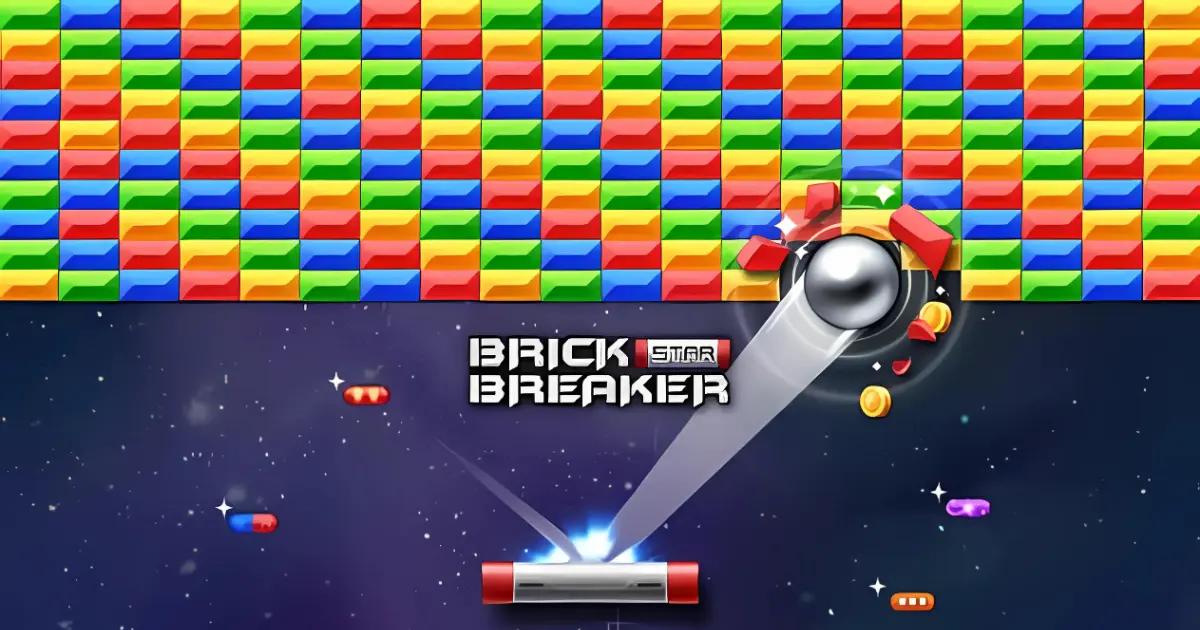
Brick Breaker Star takes a space-themed approach, combining traditional mechanics with modern visual effects and power-up systems. The game includes boss battles and special challenge modes that add variety to the standard formula. Its free-to-play model with optional purchases makes it accessible while supporting ongoing development.
For Android users specifically, several brick breaker apk files offer ad-free, premium experiences. These downloadable versions often include offline play, making them perfect for gaming without internet connectivity. Always download from reputable sources to ensure security and avoid malware.
PC and Browser Options
The brick breaker game for pc category includes both downloadable titles and browser-based options. Ricochet Infinity offers one of the most comprehensive PC experiences, with over 200 levels, a level editor, and beautiful graphics that modernize the classic formula without abandoning its roots. The game supports custom level packs created by the community, providing virtually unlimited content.
Browser-based options allow you to play block breaker online without installations. Websites like Poki, CrazyGames, and Miniclip host multiple versions, from faithful recreations to creative variations. These platforms typically offer brick breaker game unblocked versions that work in school and office environments where game downloads might be restricted.
Block Blast represents a modern twist on the formula, combining block-breaking mechanics with match-three puzzle elements. While not a pure brick breaker game, it demonstrates how the core concepts can be adapted and merged with other genres to create fresh experiences.
Specialized and Unique Versions
Brick Breaker LEGO editions incorporate the popular building block brand’s aesthetic and characters, creating a family-friendly version that appeals to younger players. These versions often include simplified controls and more forgiving difficulty curves, making them excellent introductions to the genre for children.
Block Breaker 2 and other sequel titles build upon original formulas with enhanced graphics, additional power-ups, and more complex level designs. These games cater to players who’ve mastered basic versions and seek greater challenges and variety.
For those interested in retro gaming, emulators allow access to the old brick breaker game for pc titles from the 1990s and early 2000s. These versions offer historical perspective on the genre’s evolution and often include features that modern games have abandoned in favor of streamlined experiences.
Where to Play Block Breaker Online for Free
Finding places to play block breaker online for free has never been easier, with numerous platforms offering instant access without downloads, registrations, or payments. Understanding where to find quality versions helps you avoid low-quality clones and potential security risks.
Official Browser-Based Versions
The Google Breakout Easter egg remains one of the most accessible options. Simply search for “Atari Breakout” in Google Images, and the search results transform into a playable game. This clever implementation uses the image thumbnails as blocks, creating a unique visual experience. While relatively simple compared to dedicated games, it’s perfect for quick sessions and requires no setup whatsoever.
Many game developers offer free browser versions of their titles as marketing for premium mobile apps. These block breaker game online free options typically include a selection of levels with the full experience available through app downloads. They serve as excellent demos, allowing you to test gameplay before committing to downloads or purchases.
Gaming Portals and Websites
Established gaming portals host extensive collections of brick breaker online games. Websites like Kongregate, Armor Games, and Newgrounds feature both classic recreations and innovative variations. These platforms typically use HTML5 technology, ensuring compatibility across devices and browsers without requiring Flash or other deprecated plugins.
Educational gaming sites often include brick game online free versions designed for school environments. These versions emphasize the puzzle-solving and hand-eye coordination aspects while maintaining appropriate content for all ages. They’re particularly useful for accessing games in restricted network environments.
Retro gaming websites preserve classic versions, offering authentic experiences of the early 2000s brick breaker game titles that defined the genre for many players. These archives serve both nostalgic purposes and educational functions, documenting gaming history and preserving cultural artifacts.
Mobile App Stores
Both Google Play Store and Apple App Store feature numerous brick breaker free options. Searching for “block breaker game free” yields dozens of results, from simple recreations to complex modern interpretations. Most free versions include advertisements, with optional purchases to remove ads or unlock premium features.
When selecting a block breaker game download, check user reviews and ratings to identify quality options. Look for games with regular updates, indicating active developer support. Be cautious of apps requesting excessive permissions or featuring intrusive advertising that disrupts gameplay.
Many developers offer both free and premium versions of their games. The free version typically includes core gameplay with ads, while the premium version removes advertisements and may include additional levels or features. This model allows you to try before buying, ensuring the game meets your expectations before financial commitment.
Download Options for Offline Play
For players seeking block breaker game free download options for offline play, several reputable sources exist. Steam offers both free and paid brick breaker games for PC, with the advantage of automatic updates and cloud save features. Many classic titles are available at minimal cost during sales, providing excellent value.
The brick breaker game download process varies by platform. PC users can find standalone executables on developer websites or through digital distribution platforms. Mobile users should stick to official app stores to ensure security and compatibility. Avoid third-party app stores or websites offering “cracked” versions, as these often contain malware or violate copyright laws.
Open-source versions of brick breaker games provide free, legal alternatives with the added benefit of community modifications and improvements. These projects often include source code, allowing technically inclined players to customize their experience or learn from the implementation.
Why Block Breaker Never Gets Old: The Psychology of Simple Games
The enduring appeal of the block breaker game defies conventional wisdom about gaming trends. While graphics improve and new technologies emerge, this decades-old concept continues attracting new players and retaining devoted fans. Understanding the psychological principles behind this longevity reveals why simple games often outlast their complex counterparts.
The Power of Flow State
Psychologist Mihaly Csikszentmihalyi’s concept of “flow”—complete immersion in an activity—explains much of the brick breaker game’s addictive nature. The game creates perfect conditions for flow by balancing challenge and skill. Early levels build competence without overwhelming players, while later stages push abilities to their limits without causing frustration.
Flow states are characterized by losing track of time and experiencing deep satisfaction from the activity itself. The block breaker game facilitates this through immediate feedback (blocks breaking, scores increasing), clear goals (clear all blocks), and a sense of control (your actions directly determine outcomes). These elements combine to create the “just one more game” phenomenon that keeps players engaged far longer than intended.
The game’s rhythm contributes to flow induction. The repetitive motion of moving the paddle, combined with the visual and audio feedback of breaking blocks, creates a meditative quality. This rhythmic engagement relaxes the conscious mind while keeping reflexes sharp, producing a pleasurable mental state that players seek to recreate.
Mastery and Progression
Humans are inherently driven to improve and master skills. The brick breaker game provides clear, measurable progression through high scores and level completion. Unlike many modern games with complex skill trees and overwhelming options, block breaker offers straightforward improvement metrics—you’re either getting better or you’re not, and the evidence is immediately apparent.
This transparency creates a satisfying feedback loop. Players can directly attribute success to skill development rather than random chance or pay-to-win mechanics. When you beat a difficult level or achieve a new high score, you know it resulted from improved reflexes, better strategy, or enhanced pattern recognition. This authentic achievement feels more rewarding than artificial progression systems.
The game’s skill ceiling is remarkably high despite simple mechanics. Novices can enjoy basic gameplay while experts discover advanced techniques like tunneling, angle manipulation, and optimal power-up usage. This depth ensures the game remains challenging even after hundreds of hours, preventing the boredom that comes from complete mastery.
Nostalgia and Cultural Continuity
For many players, the brick breaker game evokes powerful nostalgia. Whether remembering arcade visits, playing on early mobile phones, or discovering it on a parent’s computer, these games connect to formative gaming experiences. Nostalgia isn’t merely sentimental—research shows it provides psychological benefits including increased optimism, social connectedness, and meaning in life.
The game serves as cultural continuity across generations. Parents who played Breakout in arcades can share the experience with children playing modern mobile versions. This intergenerational appeal is rare in gaming, where technological advancement often creates barriers between age groups. The brick breaker original concept transcends these barriers through timeless mechanics that work equally well on any platform.
Accessibility and Universal Design
The block breaker game’s simplicity makes it universally accessible. Unlike games requiring extensive tutorials, complex controls, or significant time investment, anyone can understand and play within seconds. This low barrier to entry welcomes players regardless of gaming experience, age, or technical proficiency.
The game works on virtually any device with a screen and input method. From arcade cabinets to smartphones, from powerful gaming PCs to basic browsers, the core experience translates seamlessly. This platform-agnostic nature ensures the game remains accessible as technology evolves, never becoming obsolete due to hardware requirements.
Short session lengths accommodate modern lifestyles. A complete game takes minutes rather than hours, fitting perfectly into breaks, commutes, or moments of downtime. This convenience factor contributes significantly to sustained popularity—players can enjoy meaningful gaming experiences without major time commitments.
The Satisfaction of Destruction
There’s primal satisfaction in breaking things, and the brick breaker game provides a safe, consequence-free outlet for this impulse. The visual and audio feedback of shattering blocks triggers reward centers in the brain. Each successful hit provides a small dopamine release, creating positive reinforcement that encourages continued play.
The game offers controlled chaos. While you direct the action, the ball’s bouncing introduces unpredictability that keeps each moment engaging. This balance between control and randomness prevents both boredom (from complete predictability) and frustration (from total randomness). Players feel agency while experiencing enough variation to maintain interest.
Block Breaker vs. Similar Games: Arkanoid, Brick Breaker, and More
The block breaker game genre includes numerous titles that share core mechanics while offering distinct experiences. Understanding the differences helps players find versions that match their preferences and reveals how developers have innovated within the formula’s constraints.
Breakout: The Original Blueprint
Atari’s 1976 Breakout established the template that all subsequent games follow. Its minimalist design featured eight rows of blocks in two colors, a simple paddle, and a single ball. The game’s brilliance lay in its purity—no power-ups, no special blocks, just skill-based gameplay that rewarded precision and persistence.
Modern players might find original Breakout austere compared to contemporary versions, but this simplicity has advantages. Without power-ups or special mechanics, success depends entirely on player skill. The game’s difficulty curve is steep, with later levels featuring faster ball speeds and fewer blocks, demanding near-perfect play.
Breakout’s historical significance extends beyond gaming. The collaboration between Steve Jobs and Steve Wozniak on its development became part of Silicon Valley lore, with Wozniak’s efficient circuit design demonstrating the engineering brilliance that would later create Apple Computer. Playing Breakout connects you to this technological heritage.
Arkanoid: The Genre Evolution
Taito’s 1986 Arkanoid revolutionized the brick breaker formula by introducing power-ups, enemy obstacles, and varied block types. The game’s “Vaus” paddle could catch power-up capsules that fell from destroyed blocks, adding strategic depth to the basic mechanics. Should you risk missing the ball to catch a valuable power-up? This decision-making layer elevated the genre.
Arkanoid’s level designs were more creative than Breakout’s simple rows, featuring patterns, shapes, and strategic arrangements that required planning beyond simple reflexes. Some levels included indestructible blocks that served as obstacles, forcing players to find specific angles and approaches. This puzzle element complemented the action-oriented gameplay.
The game introduced enemies that moved across the screen, adding another layer of complexity. Players had to avoid these obstacles while maintaining ball control, creating moments of intense multitasking. Later levels combined all these elements—fast balls, complex layouts, enemies, and strategic power-up usage—into genuinely challenging experiences that tested multiple skills simultaneously.
Mobile Brick Breaker Variations
The brick breaker android ecosystem includes hundreds of variations, each adding unique twists to the formula. Some versions incorporate RPG elements, allowing paddle upgrades and character progression. Others add physics-based mechanics where destroyed blocks fall and can crush remaining blocks below, creating chain reactions.
Touch-screen controls fundamentally changed how players interact with brick breaker games. Direct paddle manipulation through dragging feels more intuitive than keyboard or controller input, creating a tactile connection between player and game. Some developers exploit this by adding gesture controls for special abilities or allowing players to “draw” the ball’s path.
Free-to-play mobile versions often include energy systems, daily challenges, and social features absent from classic versions. While these additions can enhance engagement, they sometimes conflict with the pick-up-and-play simplicity that made the genre appealing. The best mobile versions balance modern features with respect for the core gameplay loop.
Modern Innovations and Hybrid Games
Contemporary developers continue innovating within the brick breaker framework. Some games combine block breaking with match-three mechanics, requiring players to create color combinations while maintaining ball control. Others incorporate narrative elements, with story progression tied to level completion and character development.
Physics-based variations introduce realistic ball behavior, curved surfaces, and environmental effects like wind or gravity changes. These additions create new strategic possibilities—using curved surfaces to redirect balls at sharp angles, or timing shots to account for shifting gravity. While more complex than traditional versions, they demonstrate the formula’s flexibility.
Competitive multiplayer versions pit players against each other in real-time, racing to clear blocks faster or sabotaging opponents by sending difficult blocks to their screens. This social dimension adds excitement and replayability, though it fundamentally changes the solitary, meditative quality that many players value in traditional brick breaker games.
Choosing Your Preferred Version
Selecting between different brick breaker game variations depends on personal preferences. Purists seeking the original experience should choose faithful Breakout recreations or the brick breaker classic versions that preserve the minimalist design. These games offer the most direct skill-testing experience without distractions.
Players wanting depth and variety benefit from Arkanoid-style games with power-ups and complex levels. These versions provide longer-term engagement through varied challenges and strategic decision-making. The learning curve is steeper, but mastery feels more rewarding due to the additional mechanics to master.
Casual mobile players might prefer modern free-to-play versions with progression systems, daily challenges, and social features. While these include monetization elements, they also offer regular content updates and community features that extend the game’s lifespan. Just be aware of how free-to-play mechanics might affect the core gameplay experience.
Ultimately, the beauty of the brick breaker genre is its variety. You can enjoy the brick breaker original formula one day and experiment with innovative modern variations the next. The core mechanics remain satisfying regardless of which version you choose, ensuring that somewhere in this vast genre, there’s a perfect block breaker game for every player.
The block breaker game has proven its timeless appeal through nearly five decades of continuous play across multiple technological generations. From Atari’s original Breakout to modern mobile interpretations, the fundamental satisfaction of bouncing a ball to break blocks remains as engaging today as it was in 1976. Whether you’re seeking nostalgic recreation of the games you remember, looking for strategic depth through advanced techniques, or simply want a quick, accessible gaming experience, the brick breaker genre offers something for everyone. Its perfect balance of simplicity and depth, accessibility and challenge, ensures that this classic game will continue captivating players for decades to come. So grab your paddle, launch that ball, and discover why millions of players across generations have found endless entertainment in this deceptively simple yet endlessly engaging game.
Frequently Asked Questions
How do you play block breaker?
To play block breaker game, you control a paddle at the bottom of the screen that bounces a ball upward to destroy blocks arranged at the top. Move the paddle left and right to keep the ball in play and prevent it from falling off the screen. The goal is to clear all blocks by hitting them with the ball, collecting power-ups along the way, and advancing through increasingly difficult levels.
What type of game is Brick Breaker?
Brick Breaker is an arcade-style puzzle game that combines elements of action and strategy. The block breaker game falls into the “breakout” genre, which originated in the 1970s and focuses on ball-and-paddle mechanics to destroy obstacles. It’s considered a casual game that’s easy to learn but challenging to master, making it perfect for quick gaming sessions or extended play.
What does each block do in Google Block Breaker?
In Google Block Breaker, different colored blocks typically have varying point values and durability levels. Standard blocks break with one hit, while harder blocks may require multiple hits and change color as they weaken. Some special blocks release power-ups when destroyed, such as multi-ball, paddle expansion, or laser shooters that enhance your gameplay and help you clear levels faster.
What is the best power-up in a brick breaker?
The multi-ball power-up is generally considered the best in most block breaker game versions because it multiplies your chances of hitting blocks and clearing levels quickly. The extended paddle power-up is also highly valuable as it makes the game significantly easier by giving you more margin for error. Laser or shooting power-ups are excellent for precision targeting of specific blocks that are hard to reach with the ball alone.
What are the rules for Google Block Breaker?
The basic rules are simple: use your paddle to keep the ball bouncing and break all the blocks without letting the ball fall past your paddle. You typically start with three lives, losing one each time the ball falls off the screen. Clear all blocks to advance to the next level, where block patterns become more complex and the ball speed increases, testing your reflexes and strategic planning.
Can I play block breaker game online for free?
Yes, you can play the block breaker game online for free through various platforms including browser-based versions, the Google Easter egg version, and numerous gaming websites. Many mobile apps also offer free versions with optional ads or in-app purchases. The original spirit of the game remains accessible without cost, making it one of the most widely available classic games on the internet.
What is the brick breaker game on TikTok?
The brick breaker game trending on TikTok is typically a modern mobile version where players share their high scores, satisfying block-clearing moments, and challenging level completions. These viral videos often showcase the ASMR-like satisfaction of watching blocks disappear in cascading patterns or demonstrate impressive trick shots and strategies. The TikTok popularity has introduced the classic block breaker game to a new generation of players.
What's the best strategy for scoring high in block breaker?
To score high in block breaker game, aim for the top corners and sides first to create angles that let the ball bounce around the top section longer, clearing multiple blocks per bounce. Prioritize collecting power-ups, especially multi-ball and paddle extensions, as they dramatically increase your clearing efficiency. Focus on keeping the ball in play rather than rushing, and try to create “tunnels” through the blocks that allow the ball to bounce repeatedly in the upper area.
Where can I download the original Block Breaker game?
You can download classic block breaker game versions from app stores for both iOS and Android devices, with many faithful recreations of the original available. Search for “Brick Breaker” or “Block Breaker” in your device’s app store to find both retro versions and modern adaptations. Many are free to download, while premium versions offer ad-free experiences and additional features that enhance the classic gameplay.
You May Also Like

Year of the Snake Google Game – Play the Lunar New Year Doodle

Basketball Team Names: 500+ Funny, Cool & Unique Ideas