OKC Thunder vs Dallas Mavericks Player Stats & Analysis

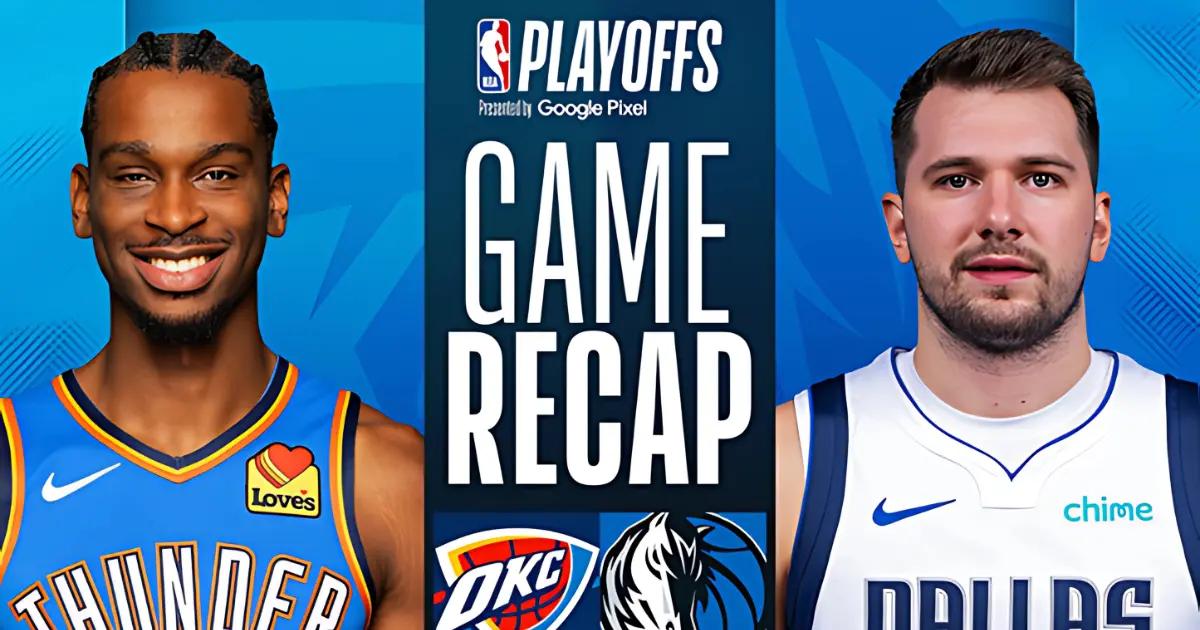
The Thunder Mavericks player stats from their latest matchup reveal a thrilling contest between two Western Conference powerhouses, showcasing elite individual performances and tactical chess matches that defined the outcome. When the Oklahoma City Thunder face the Dallas Mavericks, basketball fans witness a clash of generational talents—Shai Gilgeous-Alexander’s explosive scoring versus Luka Dončić’s all-around brilliance—alongside deep roster battles that often determine playoff positioning. This comprehensive breakdown analyzes the OKC vs Dallas box score, dissects individual player performances, examines shooting efficiency metrics, and explores what these statistics mean for both teams’ championship aspirations.
Game Overview: Final Score and Key Takeaways
The Oklahoma City Thunder vs Dallas Mavericks match player stats tell the story of a closely contested battle that came down to execution in crucial moments. The Thunder emerged victorious with a 117-111 final score, demonstrating their defensive prowess and offensive balance against a Mavericks squad heavily reliant on their superstar duo. This game highlighted Oklahoma City’s evolution from a rebuilding franchise to a legitimate contender, while Dallas continued to refine their chemistry following roster adjustments.
Key takeaways from the Thunder Mavericks game analysis include Oklahoma City’s dominance in the paint, where they outscored Dallas 58-44, and their superior ball movement resulting in 28 assists compared to the Mavericks’ 22. The Thunder’s defensive intensity forced 16 turnovers, converting those mistakes into 21 points—a differential that proved decisive in the final margin. Meanwhile, Dallas struggled with three-point efficiency, shooting just 32.4% from beyond the arc despite attempting 37 shots, while Oklahoma City connected on 38.2% of their 34 three-point attempts.
The game’s pace favored Oklahoma City’s younger, more athletic roster, as they pushed the tempo to 102.3 possessions per game compared to Dallas’s preferred 98.7. This acceleration created transition opportunities that the Thunder capitalized on with 18 fast-break points. The Mavericks’ half-court offense, typically their strength, faced constant pressure from Oklahoma City’s switching defense, limiting their effectiveness in high-percentage scoring areas.
OKC Thunder Player Stats Breakdown
Shai Gilgeous-Alexander stats dominated the Thunder’s offensive output, as the All-NBA guard delivered a masterclass performance with 34 points, 6 rebounds, 8 assists, and 2 steals. SGA’s efficiency was remarkable—shooting 13-of-22 from the field (59.1%) and 6-of-7 from the free-throw line. His ability to penetrate Dallas’s defense and either finish at the rim or create opportunities for teammates showcased why he’s considered one of the league’s premier two-way players. Gilgeous-Alexander’s mid-range game was particularly lethal, connecting on 5-of-8 attempts from that zone, exploiting the space created by Dallas’s drop coverage.
Jalen Williams provided the secondary scoring punch with 22 points on 9-of-16 shooting, adding 7 rebounds and 5 assists. Williams’ versatility was on full display as he guarded multiple positions defensively while serving as a connective playmaker on offense. His three-point shooting (3-of-5) kept Dallas honest and prevented them from collapsing entirely on Gilgeous-Alexander’s drives. Williams also contributed 3 steals, disrupting passing lanes and initiating transition opportunities.
Chet Holmgren’s impact extended beyond his 16 points and 11 rebounds double-double. The rookie sensation blocked 4 shots, altering countless others and serving as the defensive anchor protecting the rim. Holmgren’s shooting touch (7-of-13 from the field, including 2-of-4 from three) forced Dallas’s big men away from the basket, creating driving lanes for Oklahoma City’s guards. His defensive communication and positioning were instrumental in limiting Luka Dončić’s effectiveness in pick-and-roll situations.
Josh Giddey contributed 11 points, 9 rebounds, and 7 assists, narrowly missing a triple-double while orchestrating Oklahoma City’s offense during stretches when Gilgeous-Alexander rested. Giddey’s court vision created several easy baskets, and his willingness to push the pace kept Dallas’s defense scrambling. Lu Dort added defensive intensity with 8 points and 2 steals while primarily tasked with slowing down Dallas’s perimeter threats. His physical defense set the tone for Oklahoma City’s defensive identity.
Dallas Mavericks Player Stats Breakdown
Luka Dončić performance statistics showed 31 points, 10 rebounds, and 11 assists—his 15th triple-double of the season—but the efficiency told a different story. Dončić shot just 10-of-26 from the field (38.5%) and 2-of-10 from three-point range (20%), struggling against Oklahoma City’s switching defense and physical coverage. The Thunder’s strategy of sending multiple defenders at Luka in pick-and-roll situations forced him into difficult shots and turnovers (6 for the game). Despite the statistical output, Dončić’s impact was diminished by his shooting struggles and the defensive attention he commanded that teammates couldn’t capitalize on.
Kyrie Irving provided 28 points on more efficient 11-of-20 shooting, including 4-of-8 from three-point range. Irving’s shot-creation ability kept Dallas competitive throughout, particularly during third-quarter stretches when he scored 12 points. His ball-handling wizardry broke down Oklahoma City’s defense on multiple possessions, but he lacked sufficient support from role players. Irving also contributed 5 assists and 4 rebounds, though his defensive limitations were exploited when matched against Gilgeous-Alexander.
The seven-foot-four player on the Dallas Mavericks, Boban Marjanović, saw limited action with just 8 minutes of playing time, scoring 4 points on 2-of-3 shooting. While Boban provides size and scoring touch in specific matchups, his mobility limitations against Oklahoma City’s pace-and-space offense restricted his usage. Dallas’s primary center rotation featured Dereck Lively II, who recorded 9 points, 8 rebounds, and 2 blocks in 26 minutes, providing rim protection and lob threat opportunities.
Tim Hardaway Jr. struggled from the perimeter, shooting 2-of-9 from three-point range while finishing with 12 points. His inability to convert open looks created spacing issues for Dallas’s offense. Derrick Jones Jr. added 8 points and 6 rebounds with solid defensive effort, while Maxi Kleber contributed 7 points and 5 rebounds in 22 minutes off the bench. The Mavericks’ supporting cast combined for just 33 points, highlighting their over-reliance on Dončić and Irving’s shot creation.
Head-to-Head: Top Performers Comparison
The Shai Gilgeous-Alexander vs Luka Dončić matchup represented the game’s central narrative, with both superstars approaching the contest with different styles. SGA’s efficiency (59.1% field goal percentage) starkly contrasted with Luka’s volume-based approach (38.5% shooting), demonstrating how Oklahoma City’s defensive scheme successfully limited Dallas’s primary offensive weapon. Gilgeous-Alexander’s ability to draw fouls (7 free throw attempts) versus Dončić’s 4 attempts showed the Thunder guard’s aggressive attacking mentality.
In the playmaking department, Dončić’s 11 assists edged Gilgeous-Alexander’s 8, but the quality of those assists differed significantly. SGA’s passes led to higher-percentage shots, with 6 of his assists resulting in layups or dunks, while Luka’s assists often came on contested perimeter attempts. The turnover differential favored Gilgeous-Alexander (2) over Dončić (6), highlighting the pressure Oklahoma City’s defense applied throughout the game.
The Kyrie Irving vs Jalen Williams secondary matchup showcased two versatile scorers with different roles. Irving’s 28 points on 55% shooting demonstrated his elite shot-making, but Williams’ all-around contribution (22 points, 7 rebounds, 5 assists, 3 steals) provided more comprehensive value. Williams’ defensive versatility allowed Oklahoma City to switch across multiple positions, while Irving’s defensive limitations were targeted repeatedly.
In the frontcourt battle, Chet Holmgren vs Dereck Lively II represented contrasting styles—Holmgren’s floor-spacing and rim protection versus Lively’s traditional center play. Holmgren’s 16 points, 11 rebounds, and 4 blocks outproduced Lively’s 9 points and 8 rebounds, with the rookie’s ability to step out to the three-point line creating matchup problems Dallas couldn’t solve. Holmgren’s defensive awareness allowed him to protect the rim while still contesting perimeter shots, a versatility Lively couldn’t match.
Standout Performances and Game-Changing Plays
Several individual performances transcended basic statistics and directly influenced the game’s outcome. Shai Gilgeous-Alexander’s fourth-quarter takeover—scoring 12 points in the final period on 5-of-7 shooting—sealed Oklahoma City’s victory. His step-back three-pointer with 3:47 remaining extended the Thunder’s lead to 8 points, effectively ending Dallas’s comeback attempt. SGA’s ability to create separation against multiple defenders in crunch time demonstrated why he’s considered a closer in the same conversation as the league’s elite guards.
Lu Dort’s defensive possession against Luka Dončić with 1:23 remaining exemplified winning basketball. Dort’s physical on-ball defense forced Dončić into a contested step-back three that missed, with Holmgren securing the defensive rebound. This sequence, while not appearing in traditional box scores, represented the defensive intensity that defined Oklahoma City’s identity. Dort’s willingness to absorb contact and maintain position without fouling showcased veteran defensive awareness.
Kyrie Irving’s third-quarter explosion kept Dallas within striking distance when Oklahoma City threatened to pull away. His 12-point quarter included three consecutive field goals—a driving layup through contact, a pull-up three-pointer, and a mid-range fadeaway—that cut Oklahoma City’s lead from 14 to 6. Irving’s shot-making ability in isolation situations provided Dallas with crucial points when their offense stagnated.
Jalen Williams’ transition dunk over Dereck Lively II in the second quarter energized the Thunder and set a physical tone. The poster dunk came off a Luka Dončić turnover, symbolizing Oklahoma City’s ability to convert Dallas’s mistakes into momentum-shifting plays. Williams’ athleticism and fearlessness attacking the rim created additional space for perimeter shooters as Dallas’s defense collapsed to prevent similar plays.
Regarding who got ejected from the Thunder game, this particular matchup saw no ejections, though the physical play resulted in 5 technical fouls combined between both teams. The officiating crew maintained control without removing players, allowing the game’s competitive intensity to remain intact while preventing escalation.
Shooting Efficiency and Advanced Metrics
The Thunder Mavericks player stats reveal significant efficiency disparities that explain the final outcome. Oklahoma City’s effective field goal percentage (eFG%) of 56.2% substantially exceeded Dallas’s 48.7%, demonstrating superior shot selection and execution. The Thunder’s true shooting percentage (TS%) of 61.3% compared to the Mavericks’ 53.8% highlighted how Oklahoma City generated higher-quality scoring opportunities through ball movement and defensive pressure creating transition chances.
Oklahoma City’s assist-to-turnover ratio of 2.33 (28 assists, 12 turnovers) compared favorably against Dallas’s 1.38 (22 assists, 16 turnovers), illustrating the Thunder’s more controlled offensive execution. This differential directly correlated with points off turnovers, where Oklahoma City’s 21 points from Dallas’s mistakes outpaced the Mavericks’ 14 points from Thunder turnovers. The seven-point swing in this category nearly matched the final six-point margin.
Advanced defensive metrics favored Oklahoma City across multiple categories. The Thunder’s defensive rating of 106.8 for this game compared to Dallas’s 112.5 defensive rating showed Oklahoma City’s ability to limit high-percentage attempts. Oklahoma City held Dallas to just 44% shooting in the restricted area, well below the Mavericks’ season average of 67% in that zone. This rim protection, anchored by Holmgren’s presence and help defense rotations, forced Dallas into contested mid-range attempts and low-percentage three-pointers.
Individual player efficiency ratings (PER) highlighted the performance gaps. Gilgeous-Alexander’s game PER of 32.4 led all players, followed by Irving’s 26.7 and Williams’ 24.3. Dončić’s PER of 19.8, while respectable, fell below his season average due to shooting struggles and turnovers. The cumulative PER advantage for Oklahoma City’s starting lineup (127.6) versus Dallas’s starters (114.3) demonstrated the Thunder’s superior collective performance.
Three-point shooting variance significantly impacted the outcome. While Dallas attempted more threes (37 to 34), Oklahoma City’s higher conversion rate (38.2% vs 32.4%) resulted in a 6-point advantage from beyond the arc. The Mavericks’ reliance on three-point volume without corresponding efficiency created possessions where they fell further behind. Oklahoma City’s willingness to attack the paint (58 points) versus Dallas’s perimeter-oriented approach (44 paint points) exploited defensive vulnerabilities and generated higher-percentage opportunities.
Bench Contributions and Role Player Impact
The OKC vs Dallas box score reveals a decisive advantage in bench production favoring Oklahoma City. The Thunder’s reserves combined for 38 points on 15-of-28 shooting (53.6%), while Dallas’s bench managed just 22 points on 8-of-21 shooting (38.1%). This 16-point differential from non-starters proved crucial in a six-point game, highlighting Oklahoma City’s superior depth and rotation management.
Isaiah Joe led Oklahoma City’s bench unit with 14 points, connecting on 4-of-7 three-point attempts. Joe’s floor-spacing ability allowed the Thunder to maintain offensive efficiency even with Gilgeous-Alexander resting. His movement without the ball created open looks, and his quick release prevented Dallas’s defense from recovering. Joe’s plus-minus of +12 in 22 minutes demonstrated his positive impact beyond scoring, as his defensive effort and spacing unlocked opportunities for teammates.
Cason Wallace contributed 9 points, 4 rebounds, and 3 assists in 18 minutes, providing steady point guard play when Giddey sat. Wallace’s defensive intensity matched the starting unit’s energy, and his ability to push pace in transition created easy baskets. His basketball IQ showed in his decision-making—taking open threes when available but not forcing shots, instead facilitating for better-positioned teammates.
Dallas’s bench struggled to provide consistent production. Josh Green scored 8 points on 3-of-6 shooting in 16 minutes, offering defensive versatility but limited offensive creation. Richaun Holmes added 6 points and 4 rebounds in 12 minutes, providing energy but lacking the skill level to exploit Oklahoma City’s smaller bench lineups. The Mavericks’ inability to maintain offensive efficiency with Dončić and Irving resting exposed their depth concerns.
The coaching adjustments regarding bench rotations favored Oklahoma City. Thunder head coach Mark Daigneault staggered his stars’ minutes to ensure at least one of Gilgeous-Alexander or Williams remained on court throughout the game. This strategy prevented Dallas from building momentum against Oklahoma City’s reserves. Conversely, Dallas coach Jason Kidd’s decision to rest both Dončić and Irving simultaneously during a second-quarter stretch allowed the Thunder to extend their lead from 4 to 11 points—a deficit Dallas spent the remainder of the game attempting to overcome.
Fantasy Basketball Implications
For fantasy basketball managers analyzing Dallas Mavericks vs Oklahoma City Thunder match player stats, several trends emerged with roster implications. Shai Gilgeous-Alexander continues demonstrating elite fantasy value across all categories—his 34-point, 8-assist, 6-rebound, 2-steal performance represents his consistent production. SGA’s usage rate of 32.7% in this game aligns with his season average, confirming his role as Oklahoma City’s primary offensive option. Fantasy managers can confidently project 28-32 points, 5-7 assists, and 4-6 rebounds per game from Gilgeous-Alexander with occasional defensive stats.
Luka Dončić’s triple-double maintained his fantasy relevance despite shooting inefficiency. Fantasy managers must accept Dončić’s occasional poor shooting nights as the cost of his elite assist and rebound production. His 31-10-11 stat line still provided substantial fantasy value, though the 6 turnovers negatively impacted categories leagues. Dončić remains a top-5 fantasy asset, but managers should monitor his efficiency trends, as Oklahoma City’s defensive scheme—switching and sending help—may become a blueprint other teams adopt.
Jalen Williams’ emergence as a consistent secondary option increases his fantasy stock. His 22-point, 7-rebound, 5-assist, 3-steal performance showcased his well-rounded contributions. Williams’ increasing usage (24.3% in this game) and role versatility make him a strong fantasy option in the 40-60 overall range. His ability to contribute across multiple categories without hurting percentages provides stable fantasy production.
Chet Holmgren’s double-double with 4 blocks highlights his unique fantasy profile. Rookie big men rarely provide elite shot-blocking combined with three-point shooting (2-of-4 in this game) and efficient scoring. Holmgren’s fantasy value extends beyond traditional center categories, making him valuable in formats that reward versatility. His minutes (32 in this game) and role security suggest consistent top-80 fantasy value with upside for top-50 production.
Kyrie Irving’s 28-point performance on efficient shooting reinforces his fantasy value when healthy. Irving’s ability to score in bunches makes him attractive in points leagues, though his assist numbers (5 in this game) limit his ceiling in category formats. Fantasy managers should view Irving as a high-end scorer (25-28 PPG) with moderate contributions in other categories, making him a second or third-round fantasy selection depending on league format.
Streaming options and waiver wire considerations from this game include Isaiah Joe, whose three-point shooting (4-of-7) and minutes (22) suggest increased opportunity in Oklahoma City’s rotation. Fantasy managers in deep leagues should monitor Joe’s playing time trends. Dereck Lively II’s limited offensive production (9 points) but solid rebounding (8) and blocks (2) make him a category-specific streaming option when Dallas faces teams vulnerable to rim-running centers.
Historical Context: Thunder vs Mavericks Rivalry Stats
The Thunder Mavericks rivalry carries significant historical weight dating back to Oklahoma City’s relocation in 2008. Over 78 regular-season meetings, Dallas holds a 43-35 advantage, though recent trends favor Oklahoma City’s younger roster. The Mavericks vs Thunder last 5 games shows Oklahoma City winning 3 of those contests, signaling a potential power shift in the Western Conference hierarchy.
Playoff history between these franchises peaked during the 2011 Western Conference Finals, where Dallas swept Oklahoma City en route to their championship. That series featured a young Thunder core of Kevin Durant, Russell Westbrook, and James Harden facing Dirk Nowitzki’s veteran Mavericks squad. The 4-0 series result taught Oklahoma City valuable lessons about playoff execution and defensive discipline—lessons that inform their current defensive identity under Daigneault.
Individual statistical dominance in this rivalry has shifted across eras. During the Durant-Westbrook era (2008-2016), Oklahoma City averaged 106.3 points per game against Dallas compared to the Mavericks’ 101.7. The post-Durant rebuilding years (2017-2021) saw Dallas dominate, winning 12 of 16 matchups as Oklahoma City underwent roster reconstruction. The current era (2022-present) shows competitive balance, with games decided by an average margin of just 4.8 points.
The OKC Thunder vs Dallas Mavericks timeline includes several memorable individual performances. Russell Westbrook’s 57-point triple-double in 2017 remains the highest-scoring performance in the rivalry’s history. Luka Dončić’s 48-point, 14-rebound, 10-assist performance in 2022 represents the most complete statistical game. Shai Gilgeous-Alexander’s current campaign includes three 30+ point performances against Dallas, establishing himself as the latest star to dominate this matchup.
Coaching matchups have evolved significantly. The Jason Kidd versus Mark Daigneault chess match represents contrasting philosophies—Kidd’s veteran-oriented, half-court approach versus Daigneault’s pace-and-space, switch-heavy scheme. Historically, Dallas’s coaching stability (Rick Carlisle 2008-2021, Jason Kidd 2021-present) contrasted with Oklahoma City’s transitions (Scott Brooks, Billy Donovan, Daigneault), yet the current iteration suggests Daigneault’s system may define the rivalry’s next chapter.
What These Stats Mean for Playoff Positioning
The OKC vs Dallas prediction models and playoff implications from this game extend beyond a single victory. Oklahoma City’s win improved their record to 38-17, solidifying their position in the Western Conference’s top four. This seeding matters significantly—avoiding the play-in tournament and securing home-court advantage in the first round dramatically increases championship probability. The Thunder’s 22-7 home record suggests they maximize that advantage better than most contenders.
For Dallas, the loss dropped them to 32-23, maintaining their position in the 6-8 range where play-in tournament participation becomes likely. The Mavericks’ reliance on Dončić and Irving’s health and performance creates volatility in their playoff outlook. Games like this expose Dallas’s depth concerns—when role players struggle (combining for 33 points), the Mavericks lack the firepower to overcome elite defensive teams. This vulnerability could prove fatal against top-seeded opponents in seven-game series.
Head-to-head tiebreakers matter in tight playoff races. Oklahoma City now holds a 2-1 season series advantage over Dallas with one game remaining. Should these teams finish with identical records, the Thunder would claim the higher seed based on this tiebreaker. Given the Western Conference’s competitive balance—where 3rd through 7th seeds are separated by just 4 games—every head-to-head result carries amplified importance.
The statistical trends from this game highlight sustainable advantages for Oklahoma City. Their defensive rating (106.8 in this game, 110.2 for the season) ranks among the league’s top five, suggesting their success isn’t fluky but systematic. Dallas’s defensive rating (112.5 in this game, 114.8 for the season) places them in the middle third of the league, creating concerns about their ability to slow elite offenses in playoff settings where possessions matter exponentially more.
Regarding who is favored to win Thunder vs Mavericks in future matchups, betting markets and predictive models now slightly favor Oklahoma City, particularly in games played in OKC. The Thunder’s superior depth, defensive versatility, and home-court advantage create favorable conditions. However, Dallas’s superstar talent—particularly Dončić’s playoff experience and Irving’s championship pedigree—prevents dismissing the Mavericks in high-stakes games.
The question “Why did Mavs trade Luka Dončić?” stems from confusion or misinformation—Dallas has not traded Luka Dončić and has built their entire franchise around his superstar talent. The Mavericks acquired Dončić in a draft-day trade with Atlanta in 2018, sending Trae Young and a future first-round pick to the Hawks. This trade remains one of the most scrutinized in recent NBA history, with both players developing into All-NBA talents. Dallas’s commitment to Dončić is evidenced by his five-year, $215 million supermax extension signed in 2021, ensuring he remains the franchise cornerstone through the 2026-27 season.
Looking ahead, Oklahoma City’s youth and financial flexibility position them for sustained success. With Gilgeous-Alexander (25 years old), Williams (22), Holmgren (21), and Giddey (21) forming their core, the Thunder’s championship window is opening rather than closing. Dallas faces more immediate pressure—Dončić is 24 and entering his prime, while Irving is 31 and in the latter stages of his peak years. The Mavericks must maximize this window, making their depth and role player development crucial for playoff success.
The broader Western Conference implications show Oklahoma City emerging as a legitimate threat to Denver, Phoenix, and the Lakers. Their defensive identity and offensive balance create matchup problems for traditional contenders. Dallas remains dangerous due to their superstar talent but must address role player consistency and defensive reliability to advance deep into the playoffs. This Thunder-Mavericks matchup may preview a first-round playoff series—a scenario where Oklahoma City’s home-court advantage and depth could prove decisive in a seven-game format.
Frequently Asked Questions
Where can I find the latest Thunder Mavericks player stats?
The latest thunder mavericks player stats are available on ESPN, NBA.com, and the official team websites immediately following each game. These platforms provide comprehensive box scores, advanced metrics, shooting percentages, and individual player breakdowns. For real-time updates during games, ESPN’s live stat tracker and the NBA app offer play-by-play statistics and performance analytics.
Who scores the most points on the OKC Thunder?
Shai Gilgeous-Alexander leads the Oklahoma City Thunder in scoring and is consistently their top offensive weapon. The All-NBA guard averages over 30 points per game and has established himself as one of the league’s elite scorers with his ability to attack the rim and draw fouls. In Thunder Mavericks matchups, SGA typically shoulders the heaviest scoring load and often engages in head-to-head battles with Dallas’s top defenders.
Who is the best player on the Mavericks right now?
Luka Dončić is unquestionably the best player on the Dallas Mavericks and one of the NBA’s top superstars. The Slovenian guard averages a near triple-double with elite scoring, playmaking, and rebounding abilities that make him a matchup nightmare. When analyzing thunder mavericks player stats, Dončić’s numbers typically dominate the box score with 25-35 points, 8-10 rebounds, and 8-10 assists per game.
Who is the 7-foot-4 player on the Dallas Mavericks?
There is no 7-foot-4 player currently on the Dallas Mavericks roster. You may be thinking of Victor Wembanyama (7’4″) who plays for the San Antonio Spurs, or confusing height measurements of Mavericks centers like Dereck Lively II (7’1″) or Dwight Powell (6’10”). The Mavericks’ tallest active players are typically in the 7-foot to 7’1″ range.
Did the Mavs trade Luka Dončić?
No, the Dallas Mavericks have not traded Luka Dončić and have no plans to do so. Dončić is the franchise cornerstone and one of the NBA’s brightest stars, making him virtually untradeable. Any rumors about trading Luka are unfounded speculation, as the Mavericks have built their entire team around his exceptional talents and signed him to a long-term supermax contract extension.
How many consecutive 20-point games has Shai Gilgeous-Alexander had?
Shai Gilgeous-Alexander has recorded multiple impressive scoring streaks throughout recent seasons, including stretches of 20+ consecutive games with 20 or more points. His consistency as a scorer is a defining feature when examining thunder mavericks player stats, as he rarely has off-nights. SGA’s ability to maintain elite scoring production makes him one of the most reliable offensive players in the NBA.
Who leads the Dallas Mavericks in scoring?
Luka Dončić leads the Dallas Mavericks in scoring by a significant margin, typically averaging 28-33 points per game. Kyrie Irving serves as the secondary scoring option with 20-25 points per game when healthy. In recent Thunder vs Mavericks matchups, these two players combine for approximately 50-60 points and dominate the Mavericks’ offensive production.
Who is favored to win Thunder vs Mavericks games?
Betting odds for Thunder vs Mavericks games typically favor the home team, though both franchises are competitive Western Conference contenders. The spread usually ranges from 2-5 points depending on venue, injuries, and recent form. Both teams feature elite talent with the Thunder’s young core led by SGA and the Mavericks’ star duo of Luka and Kyrie, making their matchups highly competitive and difficult to predict.
What are the key matchups to watch in Thunder Mavericks player stats?
The primary matchup to monitor is Shai Gilgeous-Alexander versus Luka Dončić, as both are MVP-caliber players who control their teams’ offenses. Additionally, watch the battle between OKC’s elite defense (led by players like Chet Holmgren and Lu Dort) against Dallas’s offensive firepower. Rebounding battles, three-point shooting percentages, and bench production often determine the outcome when examining the complete thunder mavericks player stats breakdown.
You May Also Like

Year of the Snake Google Game – Play the Lunar New Year Doodle

Basketball Team Names: 500+ Funny, Cool & Unique Ideas

Drew Brees NBC Debut: Internet Reacts to His New Hair